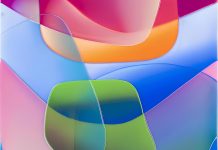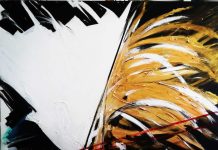

All’interno del variegato e poliedrico mondo dell’arte contemporanea, esistono autori che tendono, per propria inclinazione naturale, a sfuggire a qualsiasi tipo di inquadramento, sia dal punto stilistico che da quello esecutivo, poiché per loro creare equivale a mescolare le più autentiche essenze, le varie sfaccettature da cui non potrebbero prescindere e in virtù delle quali riescono a infondere un tocco innovativo e unico alla loro produzione. Se poi provengono da esperienze di studio e di approfondimento diverse da quella dell’arte tradizionale, ecco che l’impatto visivo include sperimentazioni in grado di coinvolgere e sorprendere per la loro originalità. Marina Mincuzzi appartiene a questa categoria di creativi e nel suo approccio stilistico mescola tecniche eterogenee che si ispirano a correnti del passato ma che attraverso la sua visionarietà riescono a infondere un punto di vista moderno e glamour.
L’attitudine a sperimentare l’interconnettività dell’arte cominciò a emergere intorno ai primi decenni del Novecento quando il Dadaismo volle includere, all’interno del suo proposito di rappresentare l’anti-arte in maniera irriverente e dissacratoria, anche la fotografia, il teatro e materiali di uso quotidiano che decretarono una netta rottura con tutta l’arte tradizionale. Le intuizioni dei suoi esponenti furono accolte e ampliate non solo dal Surrealismo, quasi considerato erede diretto per la tendenza a inglobare nella poetica espressiva anche i nuovi mezzi tecnologici come la fotografia, il cinema, la letteratura, bensì anche da quei movimenti che vedevano nell’associazione tra vari metodi esecutivi il futuro dell’arte stessa. La scuola della Bauhaus per esempio introdusse anche la tessitoria, la grafica, la pubblicità per creare un luogo dove le idee innovative potessero avere le basi per dar vita a un’evoluzione della creatività più al passo con i tempi.
Dopo il periodo dei conflitti mondiali, dunque con un ritrovato ottimismo e una serenità che indusse gli artisti a scegliere di guardare verso il futuro e verso la nuova classe media emergente, alcune nuove correnti come la Pop Art e il Nouveau Réalisme sperimentarono inediti metodi per parlare un linguaggio artistico che fosse facilmente comprensibile e utilizzando tecniche inedite come il collage di ritagli di giornali e di riviste grazie a cui l’attualità e le nuove abitudini potessero entrare all’interno di un’opera, in particolar modo nelle opere dello statunitense Robert Rauschenberg e dell’inglese Richard Hamilton pop artists di spicco nella scena mondiale. Per quanto riguarda la seconda corrente grandi rappresentanti furono invece Mimmo Rotella, affichiste contraddistinto da una particolare tecnica di décollage e assemblage di manifesti pubblicitari degli anni Sessanta e Settanta, strappati e poi posizionati in maniera confusa sulla tela, mentre una inedita tecnica mosaicista in cui frammenti di ceramica, di specchi e di vetri colorati venivano utilizzati per strutturare sculture, caratterizzarono i lavori di Niki de Saint Phalle, in particolar modo in quello che viene considerato uno dei suoi capolavori, Il Giardino dei Tarocchi. In quel periodo si andava sempre più consolidando anche la tecnica fotografica, grazie alle esperienze pioneristiche dei grandi autori dei primi decenni del Novecento come Robert Doisneau ed Henri Cartier-Bresson che mostrarono quanto la fotografia avesse caratteristiche riconducibili a una poetica forma d’arte.
Tutto dunque, nella seconda metà del Novecento, era in perpetua evoluzione gettando le basi per una libertà espressiva in virtù della quale gli interpreti contemporanei hanno la possibilità di misurarsi con vari mezzi scegliendo di fonderli per generare quell’evoluzione sperimentale che aveva avuto inizio agli albori del Ventesimo secolo, includendo anche elementi e conoscenze sviluppatisi in periodi più recenti. L’artista Marina Mincuzzi mostra l’attitudine ad assorbire dentro di sé le sue diverse anime, quella dei primi anni di studio come disegnatrice di moda, quella di abile esecutrice di micro mosaici preziosi che ha brevettato con il nome di Art Texture Mosaic, quella di fotografa e infine quella di pittrice, senza che nessuna di queste sfaccettature prevalga o sia messa in secondo piano rispetto all’altra, bensì riuscendo a farle coesistere e manifestarsi in uno stile artisti che dal punto di vista formale può essere ricondotto all’Espressionismo, ma di fatto racchiude in sé le esperienze attuative dei movimenti finora menzionati: la Pop Art per il collage, la fotografia e il Nouveau Réalisme per la ricomposizione in forme diverse di ciò che in principio viene frammentato. In qualche modo in lei emerge anche un aspetto Arts and Crafts poiché fu proprio la corrente nata in Inghilterra a permettere alla sapienza artigiana, inclusa quella del ricamo, di entrare di diritto nell’ambito dell’arte, e in fondo i mosaici di Marina Mincuzzi, minuziosamente eseguiti a mano cucendo insieme micro perline colorate, non può non essere ricondotta all’abilità decorativa del ricamo.
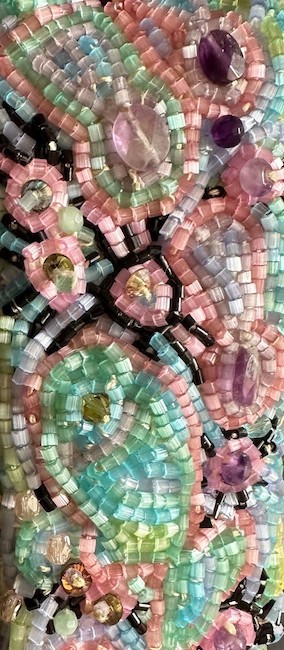
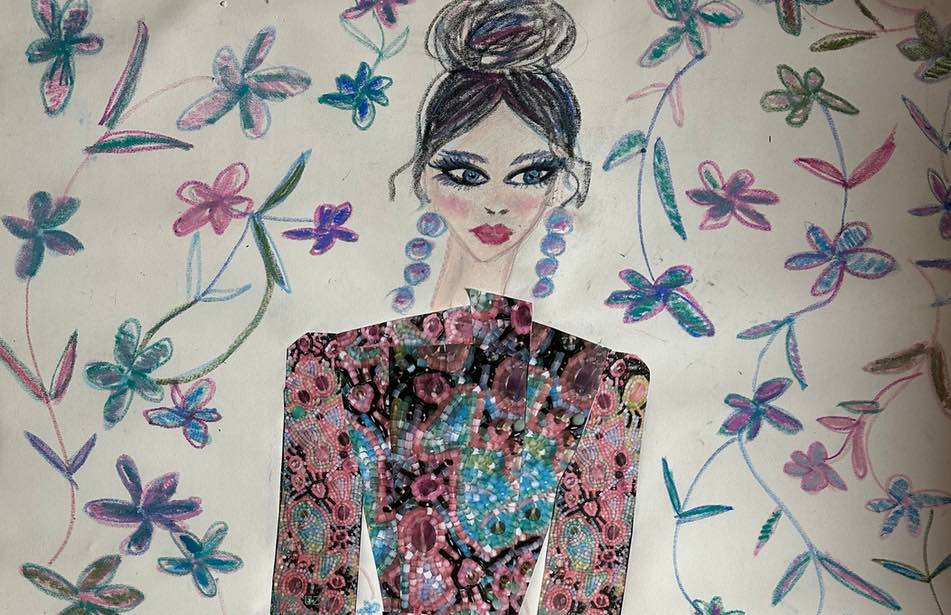
L’autrice riprende in mano i lavori eseguiti durante il periodo di studio come disegnatrice di moda decidendo di dare loro una nuova vita, e li rielabora introducendo frammenti fotografici dei suoi mosaici, di fatto integrando altre due delle sue abilità tecniche, e infine agendo dal punto di vista pittorico attraverso l’apposizione di un colore composto da pittura a tempera e pastelli a olio su tela, come se solo attraverso la mescolanza la sua attitudine espressiva potesse trovare appagamento. Dal punto di vista puramente visivo le opere, così come i mosaici, mostrano l’animo sognante di Marina Mincuzzi, quella semplice spontaneità che la induce a raccontare un mondo dove la leggerezza della donna divenga affine alla bellezza della natura, come se fossero un unicum in grado di emanare sensazioni di elegante serenità e di soave regalità. Le opere fanno riferimento al mondo acquatico- floreale dove ogni particolare dei mosaici, introdotti a comporre gli abiti delle donne protagoniste, diviene prezioso elemento irrinunciabile grazie a cui le ragazze raccontate possono sentirsi avvolte di preziosità ma anche dell’armonia del mondo marino a cui ognuna di loro è associata.
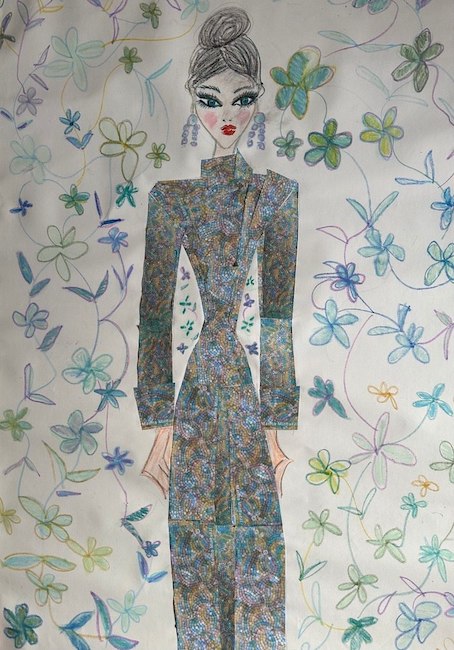
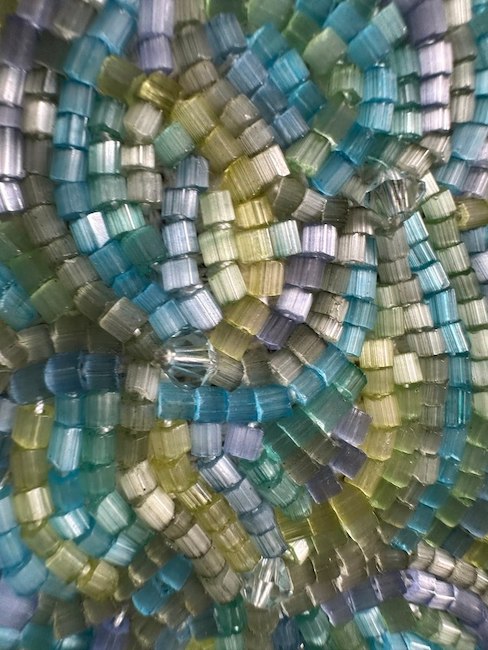
Donna su Tela Acqua Marina dunque racconta la magia dell’inafferrabilità della superficie del mare, il costante movimento delle onde, quello scorrere costante che costituisce in fondo, dal punto di vista filosofico, l’essenza stessa della vita; la giovane donna guarda dritta davanti a sé, come se volesse mostrare quanto un atteggiamento aperto e accogliente nei confronti di tutto ciò che accade possa condurre verso nuove possibilità e verso una dimensione in cui, come mostra lo sfondo, l’acqua può convivere con la terra, con i fiori e le piante che di fatto possono nascere e crescere grazie a lei. L’eleganza dell’abito e della posa della ragazza mostrano chiaramente il forte legame di Marina Mincuzzi con il mondo della moda, quell’ambito superficiale ed evanescente che tuttavia, grazie all’evocazione del concetto filosofico e al percorso di introspezione e di maturazione artistica e personale compiuto dall’autrice, diventa concreto proprio attraverso quel collage che è essenza stessa dell’opera.
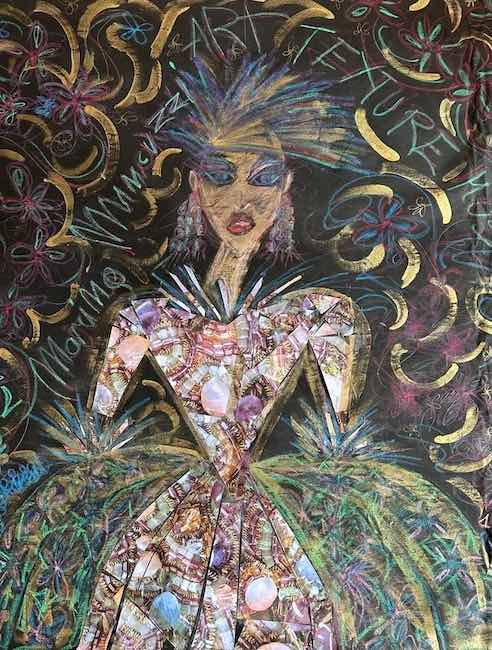
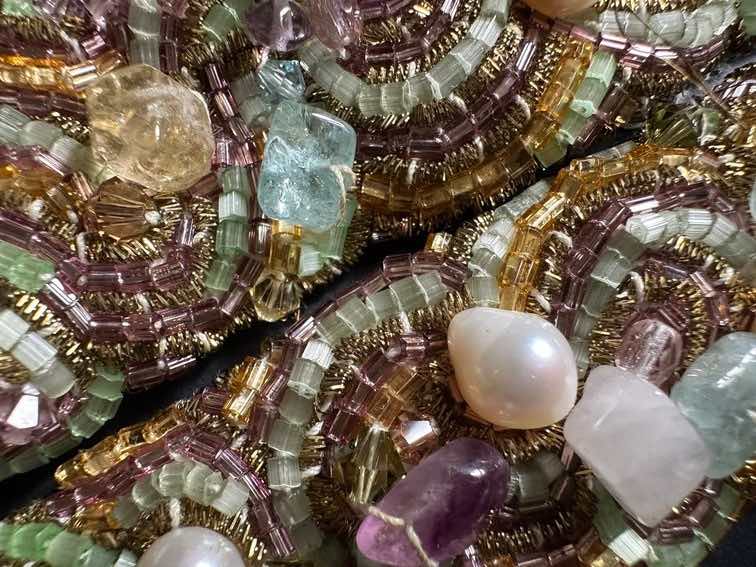
Donna su Tela Giardini Marini sembra essere un’esplosione di energia, di eccentricità che si traduce nel modello dell’abito, simile a quello di una principessa rock, indossato con sicurezza e stile, nel taglio dei capelli decisamente originale e fuori dagli schemi, e infine nello sfondo in cui tocchi di foglia oro impreziosiscono le sensazioni che vengono emanate nella loro poliedricità e complessità. In questo lavoro Marina Mincuzzi vuole mostrare un altro lato dell’essere donna, quello forse meno delicato ma più grintoso perché nel corso delle circostanze della vita l’essenza femminile ha bisogno di tirare fuori anche le unghie rivelando all’esterno che può rialzarsi da qualsiasi difficoltà e che l’esperienza le ha insegnato a non avere paura. Oppure desidera raccontare le differenti personalità che contraddistinguono un’essenza femminea che non risponde più a un comun denominatore, che rompe gli schemi rispetto al passato e ha il coraggio di mostrarsi così come è, senza veli e senza temere di non rispondere ai canoni prestabiliti.
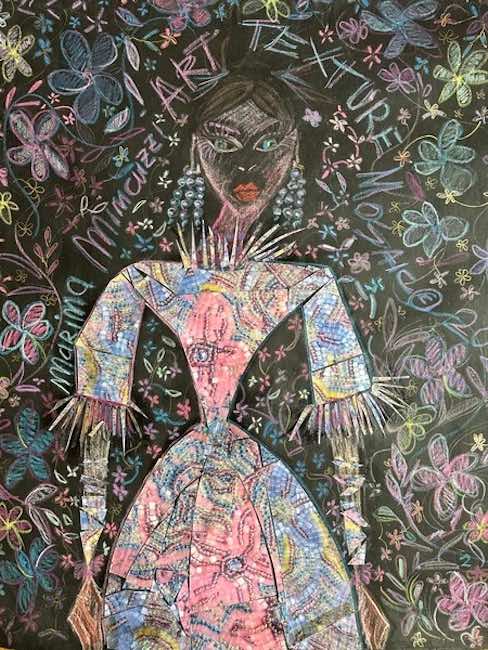
In Donna su Tela Fiori Marini la figura della ragazza è ammorbidita, appare più romantica rispetto alla protagonista del lavoro precedente, eppure quello sfondo nero che Marina Mincuzzi utilizza sembra suggerire di non lasciarsi ingannare dall’apparenza, di non confondere la delicatezza dell’aspetto e delle tonalità pastello dell’abito con una mancanza di forza o di determinazione; il contrasto diviene così rivelatorio di quanto anche l’apparenza più docile possa nascondere il coraggio di dire ciò che si pensa, di fare ciò che si vuole e di essere ciò che si desidera, senza per questo dover apparire dure nell’apparenza esteriore, esattamente come un fiore d’acciaio.
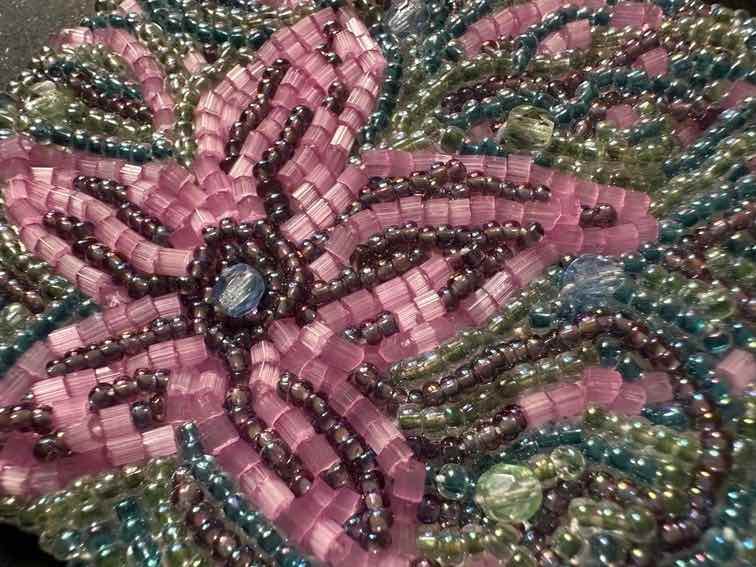
Anche qui, come per le altre opere pittoriche, l’abito è costituito da un collage di fotografie dei dettagli del mosaico a cui fa riferimento, andando a generare quell’associazione imprescindibile ma anche separabile tra l’opera manufatturiera del mosaico e quella pittorica di quadri che hanno una propria anima e un proprio senso espressivo. Marina Mincuzzi ha al suo attivo la partecipazione a mostre collettive presso gallerie, spazi istituzionali e musei come il Sinte-janshospitaal di Bruges, Meam Barcellona e i musei di San Salvatore in Lauro Roma. È stata inserita nell’edizione 2024 dell’Atlante dell’Arte Contemporanea Giunti in corporate con il Metropolitan Museum di New York e nell’edizione 2026 MoMa edition e nel novembre 2024 ha ricevuto un attestato al merito artistico per Marina Mincuzzi Texture Art Mosaic nel Padiglione Grenada a conclusione della Biennale di Venezia.
MARINA MINCUZZI-CONTATTO
Email: marina.mincuzzi@icloud.com
Sito web: www.fineartamerica.com/profiles/marina-mincuzzi
www.mwmarina.wixsite.com/marinamincuzzidesign
Linkedin: www.linkedin.com/in/marina-mincuzzi-2b105635/
Instagram: www.instagram.com/art_texture_mosaic_/
Photography, mosaic, drawing and painting fused together in Marina Mincuzzi’s Expressionism
Within the varied and multifaceted world of contemporary art, there are authors who tend, by their own natural inclination, to escape any type of classification, both from a stylistic and executive point of view, since for them creating is equivalent to mixing the most authentic essences, the various facets from which they could not ignore and by virtue of which they manage to infuse an innovative and unique touch to their production. If, moreover, they come from educational and intellectual backgrounds different from those of traditional art, their visual impact incorporates experiments capable of engaging and surprising viewers with their originality. Marina Mincuzzi belongs to this category of creatives, and in her stylistic approach she blends diverse techniques inspired by movements of the past, yet through her visionary perspective manages to offer a modern and glamorous viewpoint.
The attitude to experiment with the interconnectivity of art began to emerge around the first decades of the twentieth century when Dadaism wanted to include, within its aim of representing anti-art in an irreverent and desecrating way, also photography, theatre and everyday materials which decreed a clear break with all traditional art. The insights of its leading figures were embraced and expanded not only by Surrealism, which is often regarded as its direct heir due to its tendency to incorporate new technological media such as photography, film, and literature into its expressive poetics, but also by those movements that saw in the combination of various creative methods, the future of art itself. The Bauhaus school, for example, also introduced textile design, graphic and advertising to create a space where innovative ideas could find the foundation to give rise to an evolution of creativity more in step with the times.
After the period of world wars, and thus with a renewed optimism and serenity that led artists to look toward the future and the emerging new middle class, some new movements, such as Pop Art and Nouveau Réalisme, experimented with novel methods to speak an artistic language that was easily understandable, using innovative techniques like the collage of newspaper and magazine clippings, through which current events and new habits could enter into a work, particularly in those of the American Robert Rauschenberg and the Englishman Richard Hamilton, leading pop artists on the global scene. As for the second movement, its leading figures included Mimmo Rotella, an affichiste artist known for his distinctive technique of décollage and assemblage using advertising posters from the 1960s and 1970s torn and then arranged in a chaotic manner on the canvas, while an innovative mosaic technique in which fragments of ceramic, mirrors, and colored glass were used to construct sculptures characterized the works of Niki de Saint Phalle, particularly in what is considered one of her masterpieces, The Tarot Garden.
During that period, photographic technique was also becoming increasingly established, thanks to the pioneering work of the great photographers of the early decades of the 20th century, such as Robert Doisneau and Henri Cartier-Bresson, who demonstrated how photography possessed characteristics attributable to a poetic art form. Thus, in the second half of the twentieth century, everything was in a state of perpetual evolution, laying the groundwork for a freedom of expression that allows contemporary artists to engage with various mediums, choosing to blend them to generate the experimental evolution that began at the dawn of the Twentieth century while also incorporating elements and knowledge developed in more recent times. The artist Marina Mincuzzi demonstrates an ability to absorb her various artistic identities, those from her early years as a fashion designer, as a skilled creator of exquisite micro-mosaics which she has patented under the name Art Texture Mosaic, as a photographer, and finally as a painter without allowing any of these facets to dominate or be overshadowed by the others, but rather by making them coexist and manifest in an artistic style that, from a formal standpoint, can be traced back to Expressionism, yet in fact embodies the practical experiences of the movements mentioned thus far: Pop Art for collage, photography, and Nouveau Réalisme for the recomposition in various forms of what is initially fragmented.
In some ways in her artworks also emerges an Arts and Crafts aspect, since it was precisely this movement, born in England, that allowed artisanal skills, including that of embroidery, to rightfully enter the realm of art and, after all, Marina Mincuzzi’s mosaics, meticulously executed by hand by sewing together tiny colored beads, cannot help but be traced back to the decorative skill of embroidery. The artist revisits the works she created during her studies as a fashion designer, deciding to breathe new life into them, and reworks them by incorporating photographic fragments of her mosaics, thus integrating two more of her technical skills and finally working from a painterly perspective by applying a color composed of tempera paint and oil pastels on canvas, as if only through this blending could her expressive talent find fulfillment. From a purely visual standpoint, the works, like the mosaics, reveal Marina Mincuzzi’s dreamy spirit, that simple spontaneity that leads her to depict a world where a woman’s lightness becomes akin to the beauty of nature, as if they were a singular entity capable of emanating sensations of elegant serenity and gentle regality. The works draw on the aquatic-floral world where every detail of the mosaics, incorporated into the garments of the female protagonists, becomes a precious, indispensable element through which the women depicted can feel enveloped in preciousness but also in the harmony of the marine world with which each of them is associated.
Woman on Canvas Marine Water thus captures the magic of the sea’s elusive surface, the constant movement of the waves, that ceaseless flow which, from a philosophical perspective, ultimately constitutes the very essence of life; the young woman looks straight ahead, as if to show how an open and welcoming attitude toward everything that happens can lead to new possibilities and to a dimension where, as the background shows, water can coexist with the earth, with the flowers and plants that can indeed be born and grow thanks to it. The elegance of the dress and the girl’s pose clearly reveal Marina Mincuzzi’s strong connection to the world of fashion, that superficial and evanescent realm which, however, thanks to the evocation of the philosophical concept and the journey of introspection and artistic and personal maturation undertaken by the artist, becomes tangible precisely through that collage which is the very essence of the work. Woman on Canvas Marine Gardens seems to be an explosion of energy, of eccentricity that translates into the model of the dress, similar to that of a rock princess, worn with confidence and style in the decidedly original and unconventional haircut, and finally in the background in which touches of gold leaf embellish the sensations that are emanated in their versatility and complexity. In this work Marina Mincuzzi wants to show another side of being a woman, perhaps less delicate but more gritty because in the course of life’s circumstances the feminine essence also needs to show its claws, revealing to the outside world that it can get up from any difficulty and that experience has taught her not to be afraid.
Or perhaps she wishes to depict the diverse personalities that define a feminine essence that no longer conforms to a common denominator, that breaks with the patterns of the past and has the courage to show itself as it is, unmasked and without fear of failing to meet pre-established standards. In Woman on Canvas Marine Flowers the figure of the girl is softened, she appears more romantic than the protagonist of the previous work, yet the black background Marina Mincuzzi uses seems to suggest not to be deceived by appearances, not to confuse the delicacy of her look and the pastel tones of her dress with a lack of strength or determination; the contrast thus becomes revealing of how even the most docile appearance can hide the courage to say what one thinks, to do what one wants and to be what one desires, without having to appear hard in external appearance, exactly like a steel flower.
Here too, as with her other paintings, the work consists of a collage of photographs depicting details of the mosaic to which it refers, thereby creating that inseparable yet distinct association between the craftsmanship of the mosaic and the painterly quality of the paintings, which possess their own spirit and expressive meaning. Marina Mincuzzi has participated in group exhibitions at galleries, institutional spaces, and museums such as the Sint-Janshospitaal in Bruges, MEAM in Barcelona, and the San Salvatore in Lauro Museum in Rome. She was included in the 2024 edition of the Giunti Atlas of Contemporary Art, in partnership with the Metropolitan Museum of Art in New York, and in the 2026 MoMA edition; in November 2024, she received a certificate of artistic merit for Marina Mincuzzi Texture Art Mosaic at the Grenada Pavilion at the conclusion of the Venice Biennale.