
 La capacità di sorridere di se stessi e di tutto ciò che appartiene all’essere umano, ma soprattutto lo sguardo dissacratorio con cui è possibile approcciare la quotidianità, caratterizza quegli autori che hanno la tendenza a compiere una forte autocritica attraverso una spiccata ironia in virtù della quale danno un punto di vista inedito e in grado di sfidare le regole tradizionali dell’estetica e dell’equilibrio rappresentativo per fornire una versione eccentrica e intuitivamente attrattiva della quotidianità moderna. Grazie alla libertà narrativa dell’era artistica contemporanea, gli autori possono lasciarsi ispirare dalle innovazioni ed evoluzioni avvenute nel secolo scorso, sia dal punto di vista prettamente esecutivo ma anche per quell’apertura alla contaminazione e alla trasversalità che aveva già contraddistinto molti movimenti della seconda metà del Novecento. Hervé Dirosa nasce artisticamente proprio in quel periodo e attinge alla cultura popolare e metropolitana per dare vita a uno stile assolutamente personale ed eccentrico.
La scappatoia di utilizzare una figurazione caricaturale o di raccontare scene improbabili per dare la propria visione della realtà in periodi in cui non era possibile esprimere liberamente il pensiero su determinate tematiche, fu utilizzata in modo innovativo nel cinquecento da Hieronymus Bosch che attraverso personaggi deformi e scene prive di prospettiva e di profondità, intendeva criticare le rigide regole morali di una chiesa che dimenticava la vera natura umana incapace di rispettare dogmi troppo lontani dalla sua istintualità. A questo singolare e innovativo artista si ispirarono sia gli appartenenti al Simbolismo, in particolar modo Odilon Redon per la parte della deformazione dei personaggi che addirittura trasformava in inquietanti esseri antropomorfi, e Félicien Rops per tutta la parte dell’evidenziazione degli istinti primordiali nel suo caso soprattutto quelli sessuali, e sia gli artisti del successivo Surrealismo dove a essere messa in evidenza era tutta quella dimensione onirica e inconscia che generava incubi mostruosi e inquietanti e dove l’attenzione era focalizzata sull’essere umano più che sulla società che lo circondava. Anche l’Espressionismo ebbe autori che fecero della rappresentazione grottesca la loro traccia identificativa: George Grosz, Oskar Kokoschka, James Ensor, esplorarono le diverse sfumature della trasformazione dei tratti per raccontare l’interiorità superficiale, ipocrita e arrivista della borghesia della loro epoca. Con la fine del periodo bellico e l’inizio di diversi decenni di pace, il mondo cominciò a conoscere un benessere che gli permise di guardare al futuro con serenità e fiducia ma anche di mettere da parte la gravità degli accadimenti e avere un approccio alla vita più leggero e spensierato. Fu proprio in quella fase che nacque la cultura cosiddetta Popolare, abbreviata con Pop, che diede spazio a varie espressioni artistiche, dunque non più solo la pittura ma anche i fumetti, il cinema, la musica accessibile a tutti, creando un mondo parallelo che l’arte non poteva ignorare, al contrario se ne lasciò contaminare.
Ed è esattamente in questo contesto che vide la luce il Pop Surrealismo, un movimento in cui il mondo dei fumetti, le mode underground e l’approccio immaginativo neogotico si fondevano per raccontare un universo sinistro oppure divertente a un primo sguardo ma più inquietante se ci si soffermava sulle immagini; in Francia questo tipo di pittura ebbe un’accezione leggera, tesa al divertimento e all’ironia dissacrante più che al lato angosciante del Surrealismo, mettendo in primo piano quel grottesco che tanto aveva contraddistinto gli autori del passato. L’artista Hervé Dirosa è stato tra i fondatori, negli anni Ottanta del Novecento, del movimento della Figurazione Libera dove la pittura traeva ispirazione dal mondo dei fumetti, dai graffiti, dalla pubblicità e dai cartoni animati; la sua arte aveva e ha la caratteristica di essere libera, di facile interpretazione, affatto elitaria e dissacrantemente divertente proprio in virtù dell’esteso utilizzo della rappresentazione grottesca, del racconto stravagante e bizzarro di una realtà contemporanea fatta di spensieratezza, di atmosfere giocose e di descrizione ironica e irriverente delle piccole abitudini contemporanee, del mare per lui sempre fonte di grande ispirazione, e dello sguardo su un’umanità che non riesce a rinunciare alla vicinanza, a costituire una comunità perché è solo insieme che si può assaporare il bello dell’esistenza.
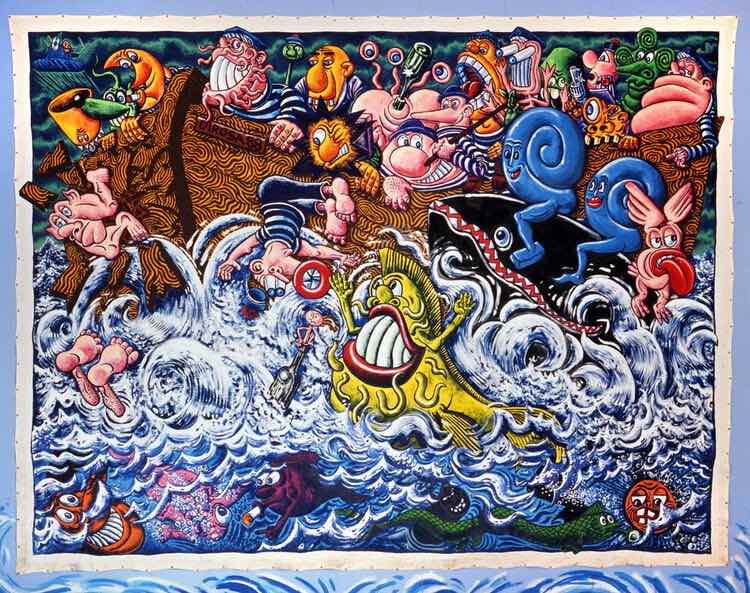
Dopo un lungo percorso all’interno del contesto della Figurazione Libera, Hervé Dirosa ha compiuto un tour mondiale che lo ha portato in Tunisia, Bulgaria, Ghana, Benin, Etiopia, Vietnam, Sudafrica, Corsica, Cuba, Messico, Stati Uniti, Camerun e Israele, permettendogli di entrare in contatto con artigiani, artisti e iconografie appartenenti ai vari paesi e a seguito del quale ha modificato il suo stile sviluppando un proprio universo narrativo singolare ed eccentrico, popolato da personaggi ricorrenti rendendolo un pioniere dell’Arte Modesta di cui ha fondato un museo a Sète, suo paese di nascita e località vicina a Bordeaux.
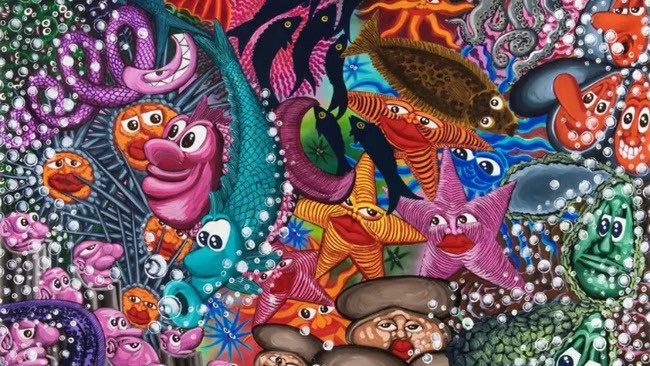
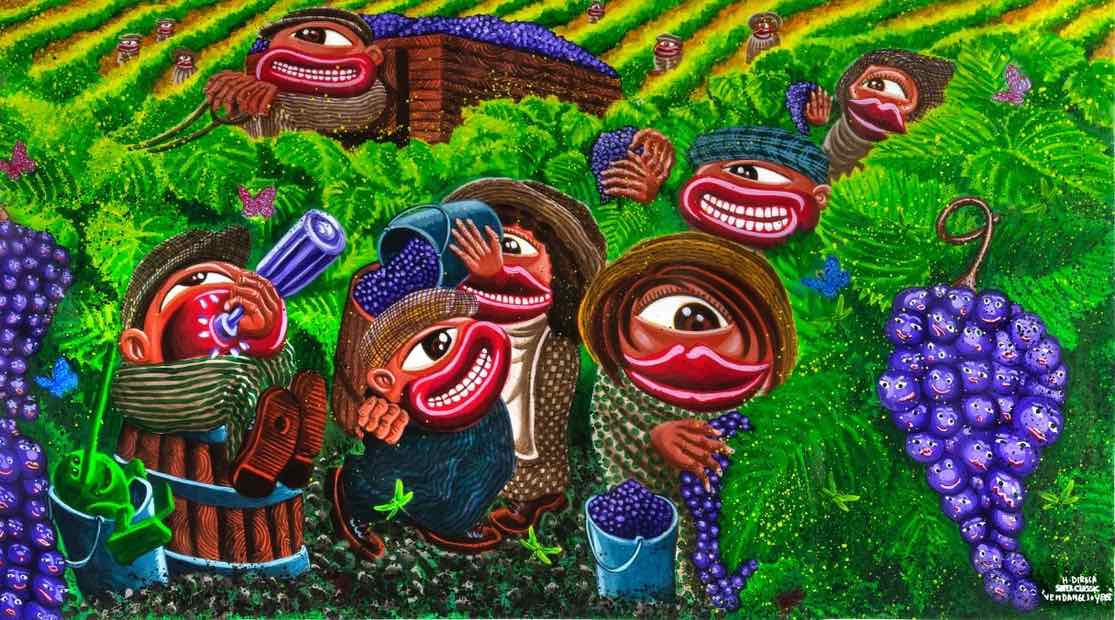
Il suo universo creativo è a sua volta privo di prospettiva, spesso i personaggi occupano l’intera tela dall’alto in basso, attinge al mondo dei fumetti e soprattutto dona loro un aspetto mostruoso ma simpatico, ispirandosi alla mitologia greca dei ciclopi nella reinterpretazione contemporanea data dai fumetti di animazione, confermando la sua attitudine al divertimento, al sorriso, alla capacità di scegliere una semplicità quasi fanciullesca che lo allontanano dall’intellettualismo concettuale di tanta arte contemporanea attuale.
Per lui l’ermetismo non è un’opzione, né tanto meno l’assenza di quella manualità che lo lega fortemente alla pittura figurativa – anche se nel suo percorso ha sperimentato anche la scultura, l’arazzo, l’affresco, l’argenteria a sbalzo –, piuttosto le sue immagini costruiscono un mondo fantastico dove il brutto e l’insolito diventano normalità persino piacevole allo sguardo, sottolineando quanto in fondo non sia l’esteriorità a dover essere prioritaria, bensì l’interiorità e il desiderio di approfittare del lato positivo di ogni esperienza.
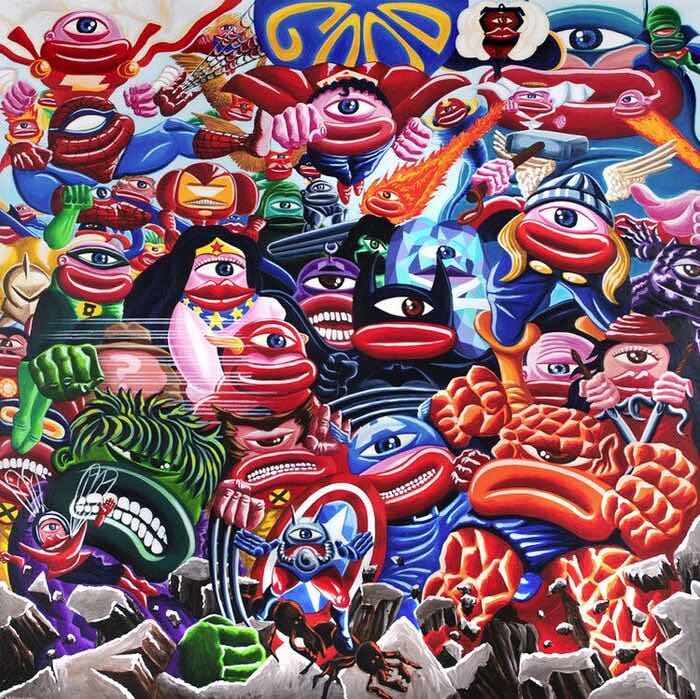
Essendo anche autore di fumetti, i dipinti di Hervé Dirosa sembrano esattamente un filo rosso di unione tra le due tecniche artistiche, la pittura e il fumetto, dove una diviene il complemento e l’estensione dell’altra; in Good emerge infatti un’interpretazione eccentrica di tutti quei supereroi che sono diventati un punto di riferimento Pop di moltissime generazioni a partire dagli anni Cinquanta del Ventesimo secolo. Qui sono presenti tutti i più grandi, quelli che nel tempo sono anche diventati protagonisti di film d’azione, ma trasformati attraverso la dissacrante e ironica lente di Hervé Dirosa che tuttavia, pur rendendoli ciclopi dalle bocche enormi, dunque caricature del loro vero aspetto sempre affascinante e avvenente, non trascura di sottolineare quanto essi incarnino il ruolo di protettori dell’umanità, quasi invocandone sottilmente una loro reale venuta sulla terra per salvare il mondo.
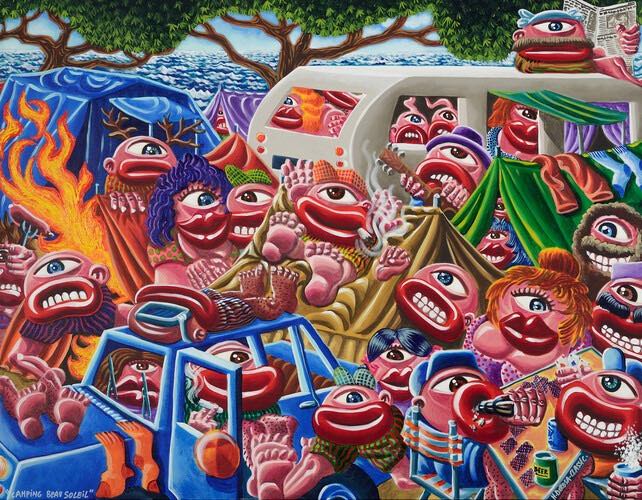
Camping Beausoleil parla invece di estate, dell’abitudine a riversarsi sulle spiagge, anche se gremite, per approfittare dei benefici del sole, della vita all’aria aperta, della libertà che si respira quando si può vivere in costume e ciabatte, pensando solo alle grigliate e alle chiacchiere piacevoli. L’umanità descritta da Hervé Dirosa è chiassosa, irrispettosa del vicino, forse anche un po’ pettegola e ficcanaso, eppure nessuno dei tanti personaggi presenti appare disturbato da quel sovraffollamento, al contrario sono tutti sereni e divertiti persino dal rumore circostante. Il mare è lontano, come se l’autore volesse sottolineare che ciò che più conta a volte è essere parte di una società che si incontra per condividere la leggerezza e l’atmosfera di condivisione, più che il paesaggio stesso che, paradossalmente, viene lasciato alle spalle del punto di osservazione verso cui sono rivolti tutti i protagonisti.
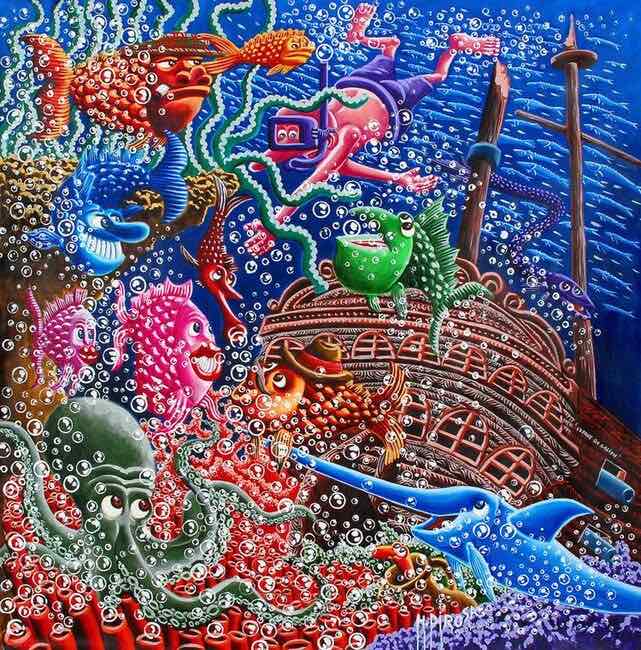
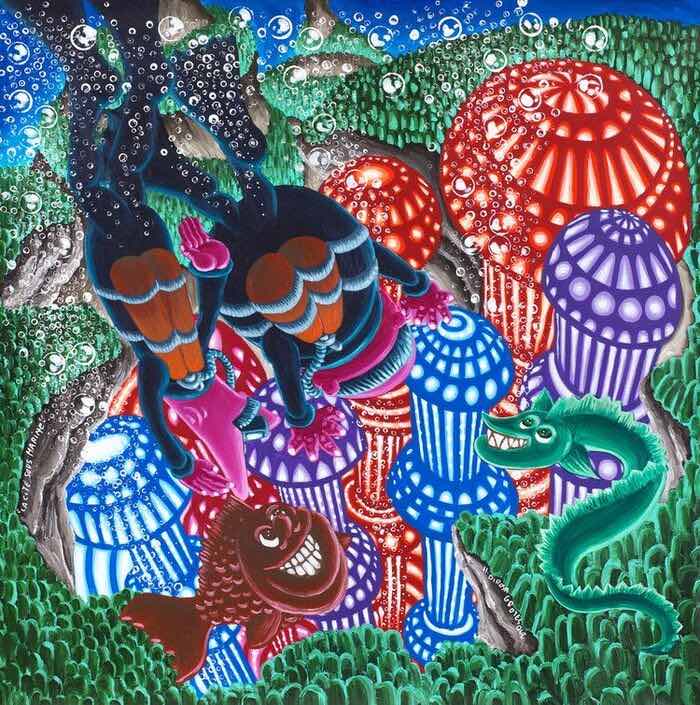
L’épave du galion (Il relitto del galeone) racconta del mondo sottomarino, quello tanto caro a Hervé Dirosa al punto di avergli dedicato molte tele, perché enfatizza la semplicità emozionale su cui l’autore basa il suo intero approccio espressivo, descrivendo la scena come appartenesse a un sogno infantile, al processo di visualizzazione che avviene durante la lettura di una fiaba dove i pesci sono vivi, hanno abitudini e atteggiamenti umani, personalità sfaccettate e curiosità nei confronti dell’intruso, l’uomo che si sta immergendo per andare a studiare il relitto, perché diviene elemento disturbante in un ambiente che ha saputo convivere anche con una presenza ingombrante come quella di un’antica nave affondata. Lo sguardo dell’artista è dunque divertito e sognante, lo stesso di un bambino che sa meravigliarsi e giocare in ogni frangente della vita.
Le opere di Hervé Dirosa sono state presentate in oltre 200 mostre personali e sono conservate in importanti collezioni pubbliche e private in Europa, America e Asia. Attualmente vive e lavora a Lisbona, in Portogallo.
HERVÉ DIROSA-CONTATTI
Email: info@louiscarre.fr
Sito web: www.dirosa.org/
Instagram: www.instagram.com/hervedirosa/
Hervé Dirosa’s grotesque and amusing scenes, between Figuration Libre and Modest Art
The ability to laugh at oneself and at everything that pertains to the human condition, but above all the irreverent gaze with which one can approach everyday life, characterizes those artists who tend to engage in strong self-criticism through a marked irony, by virtue of which they offer a fresh perspective capable of challenging the traditional rules of aesthetics and representational balance to provide an eccentric and intuitively appealing version of modern daily life. Thanks to the narrative freedom of the contemporary artistic era, artists can draw inspiration from the innovations and developments of the past century, both from a purely technical standpoint and in terms of that openness to cross-pollination and interdisciplinary approaches that had already distinguished many movements of the second half of the twentieth century. Hervé Dirosa emerged artistically during that very period and draws on popular and metropolitan culture to create a style that is utterly personal and eccentric.
The tactic of using caricature or depicting improbable scenes to convey one’s vision of reality during periods when it was impossible to freely express one’s thoughts on certain topics was employed in an innovative way in the sixteenth century by Hieronymus Bosch, who through deformed figures and scenes devoid of perspective and depth sought to criticize the rigid moral rules of a church that had forgotten true human nature, which was incapable of respecting dogmas too far removed from its instincts. This singular and innovative artist inspired both the authors belonging to Symbolism, particularly Odilon Redon who distorted his characters to the point of transforming them into disturbing anthropomorphic beings and Félicien Rops for all the part of the underlining primordial instincts in his case, primarily sexual ones, as well as the artists of the subsequent Surrealism where the focus was on the dreamlike and unconscious dimension that generated monstrous and disturbing nightmares, and where attention was centered on the human being rather than the society surrounding them.
Expressionism too had artists who made grotesque representation their defining hallmark: George Grosz, Oskar Kokoschka, and James Ensor explored the various nuances of distorted features to portray the superficial, hypocritical, and opportunistic nature of the bourgeoisie of their time. With the end of the war and the beginning of several decades of peace, the world began to experience a prosperity that allowed it to look to the future with serenity and confidence, but also to set aside the gravity of past events and adopt a lighter, more carefree approach to life. It was precisely during this phase that emerged the so-called Popular culture, abbreviated as Pop, giving rise to various artistic expressions, no longer just painting but also comics, cinema, and music accessible to all, creating a parallel world that art could not ignore, on the contrary, it allowed itself to be influenced by it. And it was precisely in this context that was born Pop Surrealism, a movement in which the world of comics, underground trends, and the neo-Gothic imaginative approach merged to depict a universe that was sinister or amusing at first glance but more unsettling upon closer inspection of the images; in France, this type of painting took on a lighthearted tone, focused on entertainment and irreverent irony rather than the distressing side of Surrealism, bringing to the forefront the grotesque that had so distinguished the artists of the past.
The artist Hervé Dirosa was one of the founder, in the 1980s, of the Free Figuration movement, in which painting drew inspiration from the world of comic books, graffiti, advertising, and cartoons; his art had and has the charactersitic of being free, easy to interpret, not at all elitist and irreverently funny precisely by virtue of the extensive use of grotesque representation, of the extravagant and bizarre story of a contemporary reality made of lightheartedness, of playful atmospheres and of ironic description of small contemporary habits, of the sea for him always a source of great inspiration, and of the gaze on a humanity that cannot give up closeness, to form a community because it is only together that one can savour the beauty of existence.
After a long journey within the context of Figuration Libère, Hervé Dirosa undertook a world tour that took him to Tunisia, Bulgaria, Ghana, Benin, Ethiopia, Vietnam, South Africa, Corsica, Cuba, Mexico, the United States, Cameroon, and Israel, allowing him to connect with artisans, artists, and iconographies from various countries, and after which he transformed his style, developing his own unique and eccentric narrative universe populated by recurring characters, making him a pioneer of Modest Art, for which he founded a museum in Sète, his hometown near Bordeaux. His creative universe is, in turn, devoid of perspective, often the characters occupy the entire canvas from top to bottom, he draws from the world of comics and, above all, gives them a monstrous yet endearing appearance, drawing inspiration from the Greek mythology of the Cyclopes as reinterpreted in contemporary animated comics, confirming his penchant for fun, for a smile, and his ability to choose an almost childlike simplicity that sets him apart from the conceptual intellectualism of much contemporary art today.
For him, hermeticism is not an option, nor is the absence of that manual skill that binds him strongly to figurative painting—even though in his career he has also experimented with sculpture, tapestry, fresco, and repoussé silverwork—rather, his images construct a fantastical world where the ugly and the unusual become a normality that is even pleasing to the eye, underscoring how, ultimately, it is not outward appearance that should take precedence, but rather inner depth and the desire to embrace the positive side of every experience. Being a comic book author as well, Hervé Dirosa’s paintings seem to serve as a common thread linking the two artistic techniques, painting and comics, where one becomes the complement and extension of the other; in Good, we see an eccentric interpretation of all those superheroes who have become a pop culture icon for countless generations since the 1950s.
Here are present all the greatest heroes, those who over time have also become protagonists of action films, but transformed through Hervé Dirosa’s irreverent and ironic lens who anyway, despite turning them into cyclopses with enormous mouths thus caricatures of their usual fascinating and attractive appearance, he does not fail to underline how much they embody the role of protectors of humanity, almost subtly invoking their real coming to earth to save the world. Camping Beausoleil, on the other hand, speaks of summer, of the habit of flocking to the beaches, even when they’re packed, to enjoy the benefits of the sun, of life in the open air, of the freedom one feels when living in swimsuits and flip-flops, thinking only of barbecues and pleasant chatter. The humanity depicted by Hervé Dirosa is boisterous, disrespectful of neighbors, perhaps even a bit gossipy and nosy, yet none of the many characters present seem bothered by the overcrowding, on the contrary, they are all serene and even amused by the surrounding noise. The sea is far away, as if the artist wanted to emphasize that what matters most at times is being part of a community that comes together to share a sense of lightheartedness and camaraderie, rather than the landscape itself, which paradoxically is left behind the vantage point toward which all the figures are facing.
L’épave du galion (The Wreck of the Galleon) tells of the underwater world, so dear to Hervé Dirosa that he has dedicated many canvases to it, because it emphasizes the emotional simplicity upon which the artist bases his entire expressive approach describing the scene as if it belonged to a child’s dream, to the visualization process that occurs while reading a fairy tale where the fish are alive, possess human habits and attitudes, multifaceted personalities, and curiosity toward the intruder, the man diving down to study the wreck, because he becomes a disruptive element in an environment that has managed to coexist even with a cumbersome presence like that of an ancient sunken ship. The artist’s gaze is thus amused and dreamy, the same as that of a child who knows how to marvel and play in every situation of life. Hervé Dirosa’s artworks have been presented in over 200 solo exhibitions and are held in major public and private collections in Europe, America, and Asia. He currently lives and works in Lisbon, Portugal.