
La ricerca del sé è un processo che contraddistingue l’arte più recente, in particolar modo quella iniziata con il Novecento e proseguita nella contemporaneità, poiché l’uomo, come l’artista ha bisogno di riflettere, meditare sul disorientamento provocato da una realtà moderna sempre più complessa e sfaccettata. La figura femminile, all’interno di questo tipo di approccio introspettivo, è quella che ha affrontato i cambiamenti più radicali in un tempo relativamente breve, in particolar modo nel secolo attuale in cui oltre a fronteggiare gli stravolgimenti culturali di una società in rapida trasformazione, si è dovuta confrontare anche con la diaspora che contraddistingue un mondo ormai fortemente globalizzato che da un lato spinge verso l’internazionalizzazione ma dall’altro mette in crisi le radici e le tradizioni dei paesi di origine. Anushka Mirchandani affronta questi temi in tutta la sua produzione artistica per la quale utilizza uno stile in cui l’evanescenza entra in fusione con l’ambiente circostante che accoglie ma al contempo sfuma quelle radici impossibili da conservare né da dimenticare.
L’Espressionismo è stato uno dei movimenti più rivoluzionari del Ventesimo secolo sia dal punto di vista formale e della rappresentazione della realtà, sia da quello dell’intenzione pittorica, non più legata solo e unicamente all’estetica e alla resa oggettiva delle immagini bensì orientata all’introduzione di una soggettività che permetteva agli autori di pervadere le tele con le loro emozioni personali e altresì di lasciare che i protagonisti delle scene esprimessero pensieri, sensazioni, paure e ansie liberamente, senza alcun filtro razionale che avrebbe costituito un limite. Questo movimento fu necessario per rompere gli schemi con la tradizione accademica così come per concedere agli artisti di adeguarsi al cambiamento dei tempi, di raccontare il senso di disorientamento di un periodo, quello a cavallo delle due guerre, che portò molta sofferenza, perdita delle certezze e destabilizzazione generale. In particolare fu in nord Europa che si manifestarono le sfaccettature più cupe della corrente pittorica attraverso le opere del norvegese Edvard Munch, dove le ambientazioni scure e i colori completamente decontestualizzati infondevano il senso di angoscia percepito dall’autore; il danese Emil Nolde a sua volta mostrò l’attitudine a rappresentare la realtà attraverso un filtro cromatico intenso e quasi travolgente per descrivere i paesaggi del suo paese. In Belgio James Ensor mise invece in luce la natura più animalesca e ipocrita di una società che non esitava a prevaricare e a calpestare il prossimo qualora fosse stato necessario; in lui la gamma cromatica era più tenue, così come le linee grafiche si assottigliavano proprio per mettere in evidenza la vicinanza a una realtà assurda e crudele. Ma a mostrare l’accezione più esistenzialista dell’Espressionismo fu Egon Schiele che stemperò le tonalità, adottando una tavolozza cromatica terrosa, e i contorni per evidenziare l’inconsistenza di un essere umano fragile e spaventato dagli eventi esterni a cui non restava che aggrapparsi al suo lato più selvaggio, quello sessuale, per combattere il timore costante della morte. Le sue figure erano esili, inconsistenti, in costante bilico tra il resistere e il lasciarsi andare a un destino segnato, senza possibilità di poterne determinare le evoluzioni. Anche lo svizzero Alberto Giacometti, nella sua scultura, si fece voce narrante dell’esilità di un individuo spaventato dal futuro, sottile al punto di sembrare costantemente in bilico su se stesso, come se un soffio di vento fosse in grado di portarlo via cancellandone la storia e la memoria. Ma quella prima metà del Novecento fu anche il periodo in cui gli artisti ebbero una maggiore opportunità di muoversi, scoprire, viaggiare, aggiungendo alle loro tele ispirazioni primitiviste e orientali che anticiparono l’esigenza di contaminazione e di scoperta poi sviluppatasi e ampliatasi con l’avvicinarsi alla seconda metà del secolo che ha cominciato ad assistere a quell’attitudine alla migrazione, inizialmente determinata dalla ricerca di un futuro migliore e poi proseguita come vero e proprio approccio alla vita. L’artista indiana Anoushka Mirchadani affronta la stessa tematica esistenzialista collegandola al mondo femminile, quello che vive in prima persona e che l’ha spinta a trasferirsi negli Stati Uniti all’età di diciotto anni per trovare un’identità professionale che probabilmente in India non sarebbe riuscita a trovare.
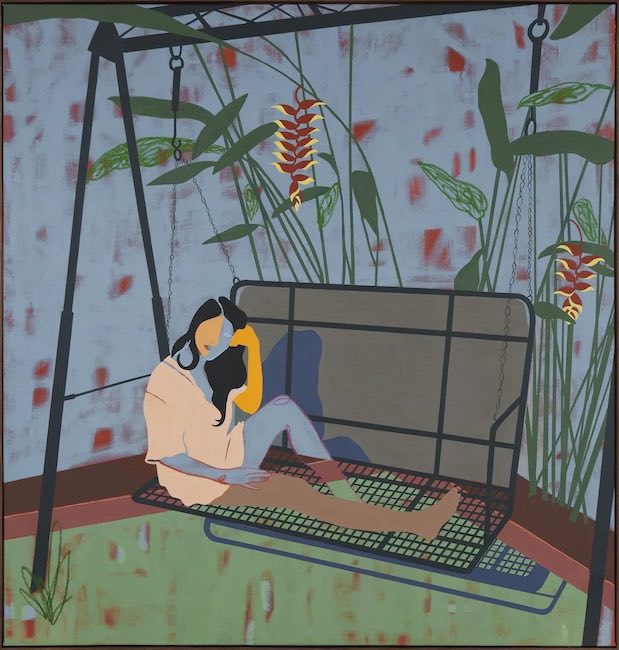
Questo trasferimento radicale l’ha portata a scoprire un mondo completamente diverso da quello fortemente tradizionale del suo paese, generando in lei una sorta di respiro più ampio e un soffio di innovazione nelle abitudini, negli usi e nei costumi che l’hanno fatta sentire più libera. Ma dall’altro non ha potuto fare a meno di avvertire il disorientamento della perdita delle certezze e delle radici che ha tradotto dal punto di vista artistico con un Espressionismo in cui a emergere in modo molto chiaro è il contrasto tra il nuovo che quotidianamente vive e l’evanescenza di tutto ciò che sta lentamente perdendo pur rimanendo in qualche modo parte di sé.
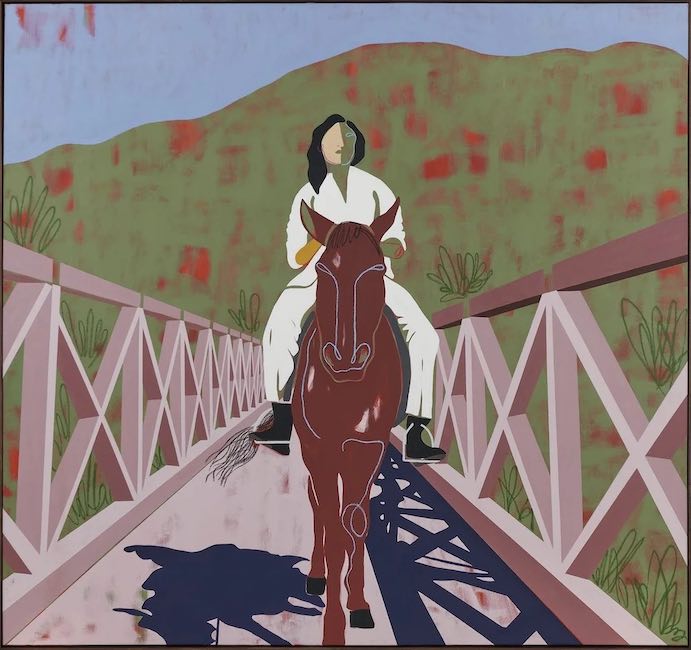
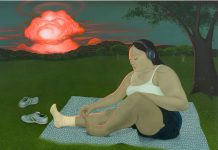
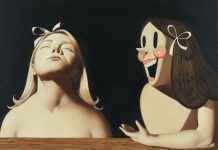
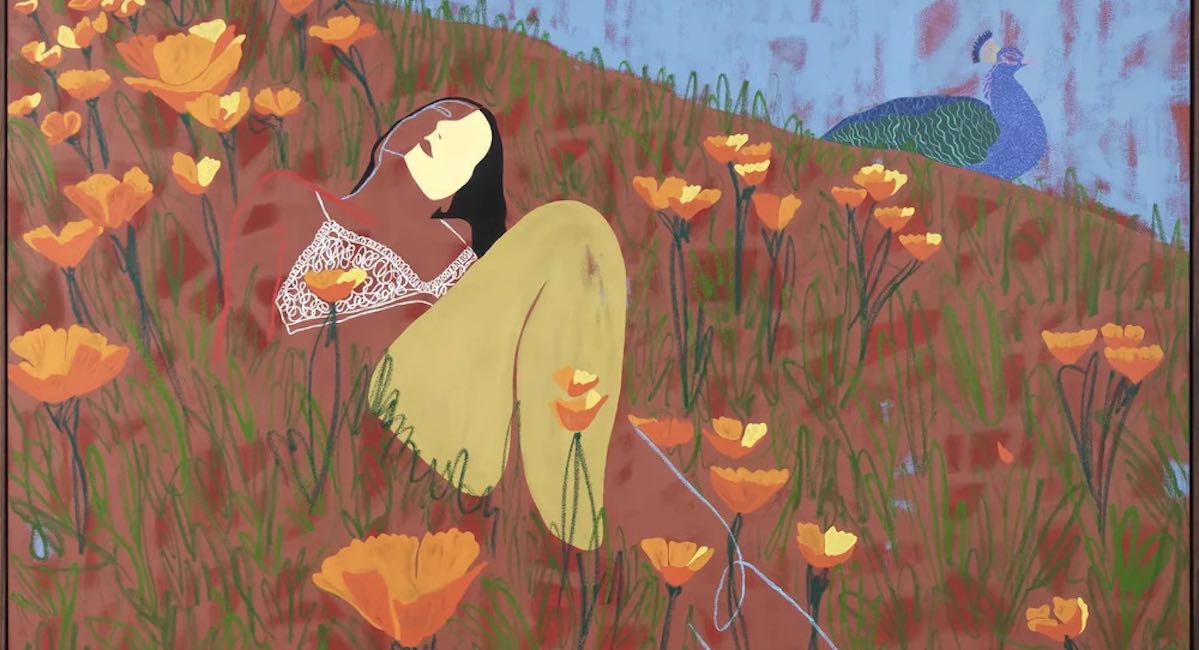
Le sue protagoniste infatti non sono descritte in maniera specifica, nei loro volti non ci sono dettagli di riconoscibilità per il desiderio di Anoushka Mirchandani di estendere quelle sensazioni a tutte le persone che, come lei, scelgono, o sono costrette a farlo, di lasciare l’universo familiare e conosciuto per affrontare un cammino diverso, entusiasmante ma al contempo eradicante; non solo, nelle ambientazioni di stile quasi grafico, l’autrice sottolinea l’inconsistenza di alcune parti del corpo, come se attraverso la dissolvenza raccontasse quanto un lato di sé e dei suoi personaggi sia rimasto in qualche modo legato la paese di provenienza, lontano eppure ancora presente. Dunque i suoi dipinti sono costantemente in bilico tra occultamento e rivelazione, esprimono la stratificazione che indissolubilmente appartiene alla natura umana e che Anoushka Mirchandani rappresenta attraverso la presenza di figure sospese tra riposo e azione come se le sue donne sicure di sé fossero indifferenti alle aspettative di modestia o moderazione che appartengono alla tradizione indiana.
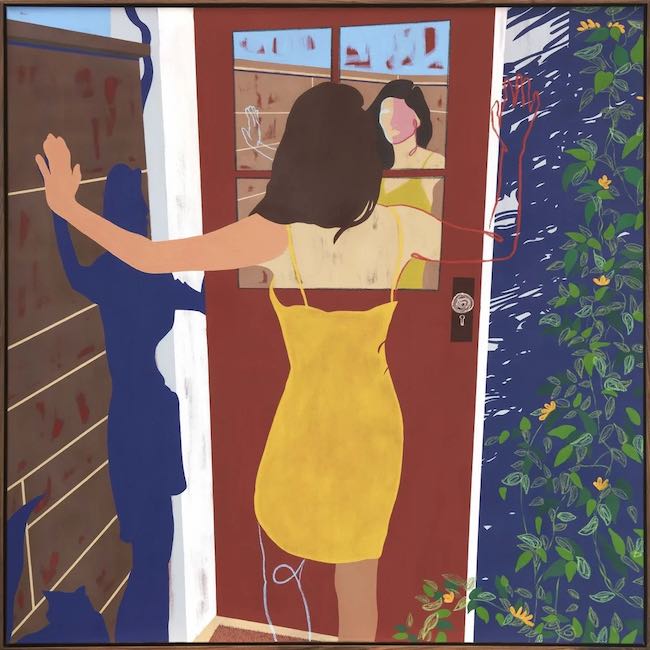
Di contro però i loro corpi si dissolvono nelle forme circostanti, delineati con evocazioni realizzate in pastello a olio o pastello secco stimolando la riflessione sulla visibilità e la vulnerabilità, alla ricerca di quali parti vengono represse e quali invece manifestate in un ambiente nuovo e diverso da quello di origine. Le sue figure sono spesso in attesa, a volte sognano, a volte fantasticano e altre stanno semplicemente godendo del tempo libero da dedicare a se stesse eppure, suggerisce l’autrice, la parte più trasparente induce a pensare a una fuga, all’appartenenza a un altro luogo in cui non possono fare a meno di pensare, malgrado la consapevolezza di aver compiuto quel passaggio che renderebbe impossibile tornare indietro.
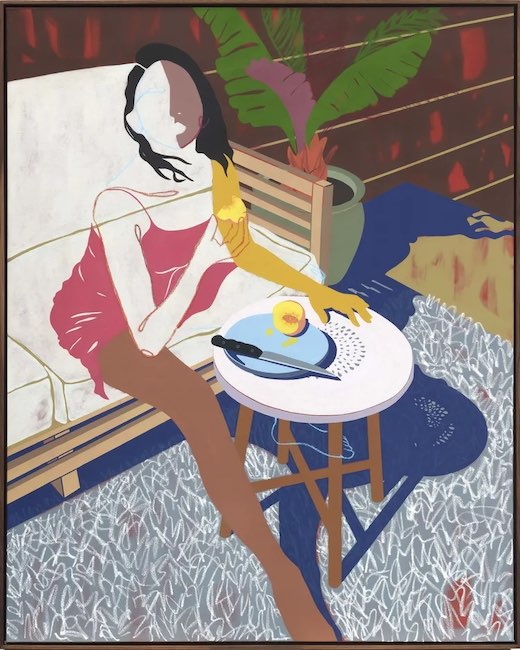
I colori sono utilizzati in modo piatto, bidimensionale, i contorni sono sottili ma netti e visibili, quasi a voler contenere la sensazione di essere in una terra di mezzo tra due diversi mondi che non possono convivere, non riescono, potrebbero farlo solo nel ricordo e nella nostalgia ma non riuscirebbero mai a coabitare all’interno di uno stile di vita tanto diverso. Eppure molte persone che hanno compiuto il suo stesso percorso hanno saputo mantenersi più saldi alle loro tradizioni, pertanto la riflessione estesa di Anoushka Mirchandani si trasforma in una manifestazione introspettiva e personale, forse è sua l’incapacità di far convivere le sue due anime, quella che desidera conformarsi al mondo occidentale e quella che malgrado le ricorda da dove ha iniziato e da dove viene.
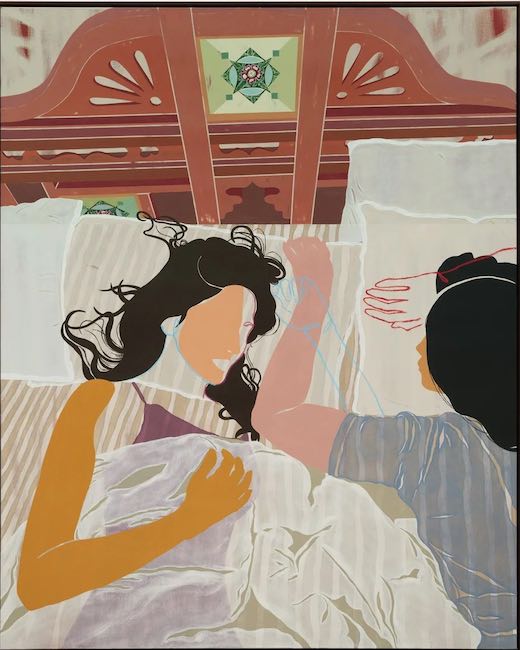
Anima quest’ultima che si manifesta nella gamma cromatica festosa, solare, luminosa, variopinta tanto quanto lo sono le vesti delle donne indiane e che tradisce tutto ciò che è radicato all’interno di sé; la mescolanza tra la metropolitanità delle ambientazioni e quei colori intensi e vividi sono un tratto distintivo a cui si sovrappone la trasparenza di alcuni dettagli, sottolineati attraverso l’utilizzo di pastelli a stick e pastelli a olio funzionali a suggerire la leggerezza e l’esiguità di un essere umano, sia esso femminile che maschile, orientato alla necessità di conformarsi a regole e abitudini del paese in cui nasce e che poi, nel momento in cui se ne allontana, non può fare a meno di domandarsi se le nuove siano migliori o peggiori.
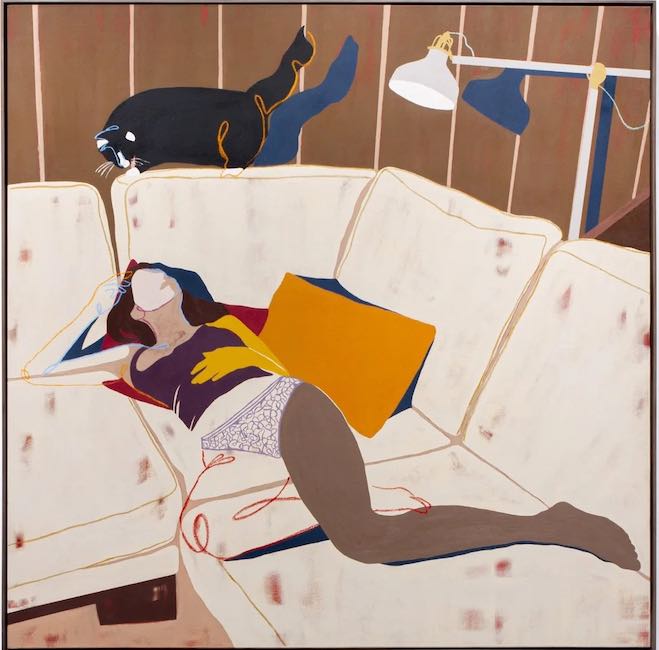
La risposta di Anoushka Mirchandani sembra propendere per la prima opzione eppure al di sotto dell’evidenza di primo impatto, l’insicurezza e il dubbio sembrano correre sottilmente e invadere lo spazio ordinato e patinato dentro cui le protagoniste si muovono; non esiste la possibilità di rinunciare o cancellare completamente ciò che appartiene all’individuo in modo atavico, una parte di quel mondo lontano sarà sempre all’interno di sé e questo costituisce in qualche modo una certezza rassicurante, anche laddove si è scelto di rinunciarvi in maniera netta e definitiva.
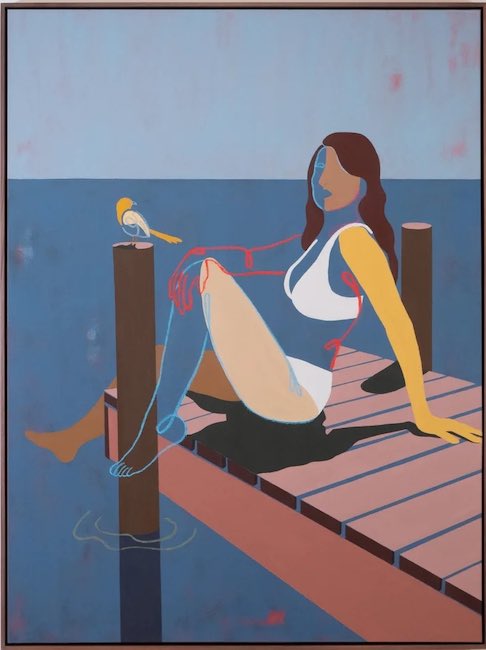
Anoushka Mirchandani ha al suo attivo mostre personali a New York, a Mumbai, a Los Angeles, a Londra, e a San Francisco, e le sue opere fanno parte delle collezioni dell’Asian Art Museum di San Francisco, del Museum of Art and Photography di Bangalore e della Northwestern University di Chicago.
ANOUSHKA MIRCHANDANI-CONTATTI
Email: studio@anoushkamirchandani.com
Sito web: www.anoushkamirchandani.com/
Instagram: www.instagram.com/anoushka
Between a sense of belonging and the loss of roots in Anoushka Mirchandani’s Expressionism
The search for the self is a process that characterizes recent art, particularly that which began in the 20th century and has continued into the contemporary era since human beings, like artists, need to reflect and meditate on the disorientation caused by an increasingly complex and multifaceted modern reality. Within this introspective approach, the female figure is the one who has faced the most radical changes in a relatively short time, especially in the current century, in which, in addition to facing the cultural upheavals of a rapidly transforming society, she has also had to contend with the diaspora that characterizes a now highly globalized world that, on the one hand drives internationalization but on the other, undermines the roots and traditions of countries of origin. Anushka Mirchandani addresses these themes throughout her artistic production, employing a style in which evanescence merges with the surrounding environment that embraces yet simultaneously blurs those roots impossible to preserve or forget.
Expressionism was one of the most revolutionary movements of the 20th century, both from the standpoint of form and the representation of reality, and in terms of painterly intent, no longer tied solely to aesthetics and the objective rendering of images but rather oriented toward the introduction of a subjectivity that allowed artists to infuse their canvases with their personal emotions and also to let the subjects of the scenes freely express their thoughts, feelings, fears, and anxieties, without any rational filter that might have imposed a limitation. This movement was necessary to break with academic tradition as well as to allow artists to adapt to changing times, to convey the sense of disorientation of a period, the interwar years, that brought great suffering, a loss of certainties, and general destabilization. In particular, it was in Northern Europe that the darkest facets of this artistic movement emerged through the works of the Norwegian Edvard Munch, where gloomy settings and completely decontextualized colors conveyed the sense of anguish felt by the artist; the Danish Emil Nolde, in turn, demonstrated a tendency to represent reality through an intense and almost overwhelming chromatic filter to depict the landscapes of his country. In Belgium James Ensor, on the other hand, highlighted the more animalistic and hypocritical nature of a society that did not hesitate to oppress and trample on others whenever necessary; his color palette was more subdued, and his graphic lines grew thinner precisely to emphasize the proximity to an absurd and cruel reality. But it was Egon Schiele who best exemplified the most existentialist interpretation of Expressionism, softening the tones, adopting an earthy color palette, and using contours to highlight the fragility of a human being frightened by external events and who had no choice but to cling to his wildest, most sexual side to combat the constant fear of death. His figures were slender, insubstantial, constantly poised between resisting and surrendering to a predetermined fate, with no possibility of determining its course. The Swiss artist Alberto Giacometti, too, in his sculpture, became the narrative voice of the frailty of an individual frightened by the future, so slender as to seem constantly teetering on the brink of collapse, as if a breath of wind were capable of carrying him away, erasing his history and memory. But that first half of the 20th century was also the period when artists had greater opportunities to move, explore, and travel, infusing their canvases with primitivist and Eastern inspirations that foreshadowed the need for cultural exchange and discovery that later developed and expanded as the second half of the century approached, a period that began to witness a propensity for migration, initially driven by the search for a better future and later evolving into a genuine way of life. Indian artist Anoushka Mirchadani addresses this same existential theme by linking it to the female experience, the one she lives firsthand and that prompted her to move to the United States at the age of eighteen to find a professional identity she likely would not have been able to find in India. This radical move led her to discover a world completely different from the deeply traditional one of her homeland, giving her a broader perspective and a breath of fresh air in terms of habits, customs, and traditions which made her feel freer. But on the other side, she could not help but feel the disorientation that comes from the loss of certainties and roots, feeling that she translated artistically into an Expressionism in which the contrast between the new realities she experiences daily and the evanescence of everything she is slowly losing, while it remains in some way a part of her, emerges very clearly. In fact, her protagonists are not depicted in any specific way, their faces lack recognizable details, reflecting Anoushka Mirchandani’s desire to extend those feelings to all people who, like her, choose or are forced to leave the familiar, known world to embark on a different journey, one that is exciting yet simultaneously uprooting; moreover, in settings with an almost graphic style, the artist emphasizes the insubstantiality of certain body parts, as if, through this fading effect, she were conveying how one aspect of herself and her characters remains somehow tied to their homeland, distant yet still present. Thus her paintings constantly hover between concealment and revelation, they express the layering that is inextricably linked to human nature, which Anoushka Mirchandani depicts through figures suspended between rest and action, as if her self-assured women were indifferent to the expectations of modesty or restraint inherent in Indian tradition. In contrast, however, their bodies dissolve into the surrounding forms, outlined with evocative strokes of oil pastel and dry pastel, prompting reflection on visibility and vulnerability, as seeking to discern which parts are repressed and which are instead revealed in a new environment different from their original one. Her figures are often waiting, sometimes they dream, sometimes they fantasize, and at other times they are simply enjoying their free time devoted to themselves yet, the artist suggests, the most transparent aspect of these figures suggests an escape, a sense of belonging to another place they cannot help but think of, despite the awareness that they have made the transition that would make it impossible to turn back. The colors are used in a flat, two-dimensional way, the outlines are thin yet sharp and visible, as if to convey the sensation of being in a liminal space between two different worlds that cannot coexist, it’s simply impossible, they might do so only in memory and nostalgia, but they would never be able to cohabit within such a vastly different way of life. Yet many people who have followed the same path as hers have managed to hold more firmly to their traditions, thus Anoushka Mirchandani’s broader reflection becomes an introspective and personal expression, perhaps it is her own inability to reconcile her two souls, the one that wishes to conform to the Western world and the one that despite everything reminds her of where she began and where she comes from. This latter aspect manifests itself in a festive, sunny, luminous, and colorful palette, as vibrant as the garments of Indian women, and reveals everything that is deeply rooted within her; the blend of metropolitan settings and those intense, vivid colors, is a distinctive feature overlaid by the transparency of certain details emphasized through the use of pastel sticks and oil pastels which serve to suggest the lightness and smallness of a human being, whether female or male, driven by the need to conform to the rules and customs of the country where they were born and who, the moment they leave it behind, cannot help but wonder whether the new ones are better or worse. Anoushka Mirchandani’s answer seems to lean toward the former, yet beneath the surface evidence, insecurity and doubt seem to run subtly and invade the orderly, polished space within which the protagonists move; there is no possibility of completely renouncing or erasing what belongs to the individual in an atavistic way, a part of that distant world will always remain within oneself, and this constitutes, in a way, a reassuring certainty even when one has chosen to renounce it cleanly and definitively. Anoushka Mirchandani has held solo exhibitions in New York, Mumbai, Los Angeles, London, and San Francisco, and her works are part of the collections of the Asian Art Museum in San Francisco, the Museum of Art and Photography in Bangalore, and Northwestern University in Chicago.