
Nell’arte contemporanea esistono autori che mostrano una spiccata attitudine a esplorare la realtà attraverso un approccio pittorico fortemente figurativo, perché per loro osservare ciò che è diviene il mezzo per attraversare la linea temporale e tendere verso una dimensione fatta di enigmi, di misteri, di magia sottile e di poesia che si manifestano nel momento in cui tutti gli elementi tangibili e riscontrabili nell’intorno possono assumere un significato diverso, intrinseco ai concetti esistenziali che si ripetono immutabili epoca dopo epoca, secolo dopo secolo fino a raggiungere il presente, oltrepassarlo e spostarsi verso un futuro che manterrà i medesimi significati, gli stessi interrogativi sospesi e senza risposte che stimolano la riflessione e la curiosità umana. Greta Gurizzan mostra questa poetica espressiva che la induce a dare vita a opere fortemente simboliche, psicologiche e in bilico tra un presente ipertecnologico e schematico e un passato molto più morbido, simbolico e quasi lirico nella sua delicatezza.
Gli inizi del Ventesimo secolo furono un periodo di assoluta rivoluzione dal punto di vista espressivo poiché i movimenti avanguardisti intendevano generare un distacco totale da tutte le regole pittoriche precedenti per adeguare l’arte al cambiamento dei tempi, alla velocità e alle innovazioni che si stavano delineando in tutti gli ambìti, e per questo l’arte non poteva restare esclusa da questo vento nuovo. Tra tutti gli stili che si focalizzarono sulla rinuncia alla figurazione o alla sua trasformazione visiva e interpretativa, come il Futurismo, il Cubismo e tutta la corrente astrattista, ve ne furono due che invece si soffermarono proprio sul visibile trasportato in una dimensione irreale, inquieta, diversa perché ciò che contava era mettere in risalto il mondo onirico, gli incubi e le inquietudini che affioravano nella fase del sonno.
Il Surrealismo ingannava lo sguardo attraverso immagini apparentemente familiari, come cieli limpidi e paesaggi desertici, introducendo però gli elementi distorsivi che erano la focalizzazione principale attraverso cui gli interpreti come Salvador Dalì e Yves Tanguy mostravano figure inquietanti, morfologicamente spaventose, oggetti distorti e liquefatti che inducevano l’osservatore a entrare in quelle dimensioni per riflettere sulle proprie stesse paure. Parallelamente al Surrealismo nacque un movimento che nell’intenzione del suo fondatore, Giorgio De Chirico, si opponeva a quelle tematiche inquietanti, e che voleva invece esplorare la realtà alienante dell’epoca con un passato ricco di cultura, di segreti silenziosi, di enigmi irrisolti che doveva essere portata alla luce attraverso una narrazione asciutta, quasi priva della presenza dell’uomo poiché spesso elemento di rottura con l’armonia degli ambienti. I suoi paesaggi cittadini desolatamente vuoti, la rigorosità geometrica delle sue piazze e dei suoi monumenti antichi erano magicamente sospesi nel tempo, i busti di marmo e le colonne antiche costantemente presenti, i manichini, sembravano sottolineare la contrapposizione tra il trascorrere dei secoli e una immortalità dell’essenza del passato che sarebbe sopravvissuta ancora e ancora, presente dopo presente.
A unire e fondere l’opposizione tra la Metafisica di De Chirico e le tematiche surrealiste fu il maestro belga René Magritte che diede vita a un Surrealismo Metafisico in cui gli incubi e le paure più profonde erano lasciate in disparte per dare più rilievo agli enigmi sottili che appartengono alla realtà, alle stranezze osservate ironicamente dall’autore e narrate con uno stile limpido nei tratti, in alcuni casi riprendendo la schematicità geometrica e il silenzio suggestivo di De Chirico, ma funzionali a stimolare una riflessione profonda proprio in virtù di quella singolarità visiva che rendeva magnetiche le sue tele. L’artista bresciana Greta Gurizzan rientra esattamente nella stessa sfaccettatura stilistica di René Magritte, quel Surrealismo Metafisico che tuttavia in lei si manifesta mostrando in maniera più incisiva la composizione geometrica della Metafisica, quasi quest’ultima fosse indispensabile per rappresentare l’ordine razionale e tecnologico su cui è basata la società contemporanea, affiancato da una dimensione magica e poetica in virtù della quale il mito entra all’interno delle composizioni rompendo lo schema geometrico per mostrare la morbidezza armonica che avvolge la storia e i concetti più cari all’umanità, quelle domande a cui l’uomo non ha ancora trovato una risposta proprio a causa della loro sfuggevolezza.
Dal punto di vista realizzativo le tele di Greta Gurizzan sono piene di quell’alternanza tra luce e ombra che accresce la sensazione di profondità e di prospettiva già pienamente esplicitata attraverso le linee e i volumi perfettamente intersecati, mentre la morbidezza è data dalla sinuosità delle figure simboliche sempre presenti così come dalle linee con cui tratteggia gli sfondi che rendono fluttuanti i mari e i cieli che ospitano le ambientazioni immaginarie e suggestive.
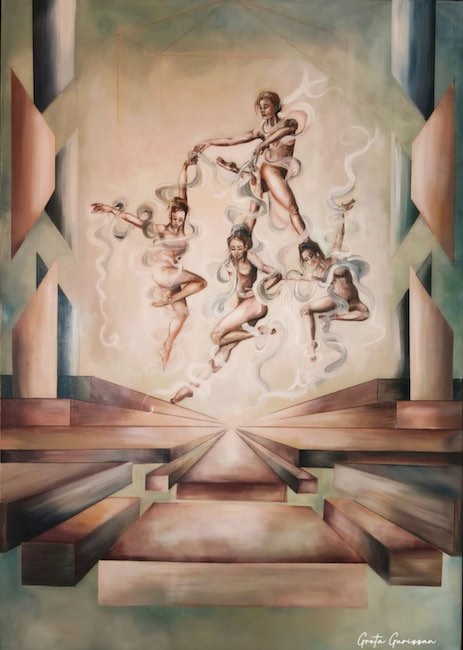
L’autrice esplora i concetti più universali ma anche il tema della morale e della vita ultraterrena sottolineando quanto le credenze e le leggende del passato aleggino nella memoria ancestrale anche in una società contemporanea che vorrebbe essere assolutamente pragmatica e materialistica pur non riuscendo a dimenticare quelle origini antiche che appartengono indissolubilmente all’evoluzione dell’anima. È questa l’essenza delle sue opere, quella linea temporale che si espande connettendosi e avvolgendo le atmosfere con la sua poesia mistica, spirituale, quasi fosse simbolo dell’identità stessa dell’essere umano; dove la morbidezza simbolica è più predominante, gli sfondi sono impalpabili, aerei, soffici come se sostenessero le architetture che appaiono così sospese nel nulla, sollevate dalla materialità della terra e tese verso il raggiungimento di una consapevolezza spirituale.
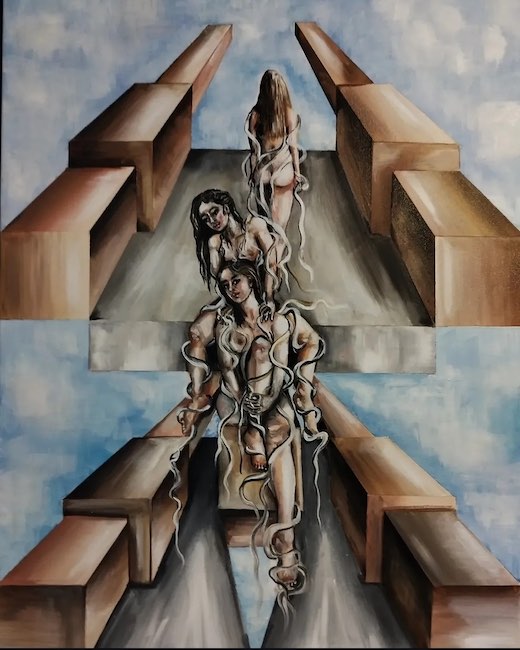
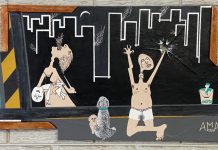
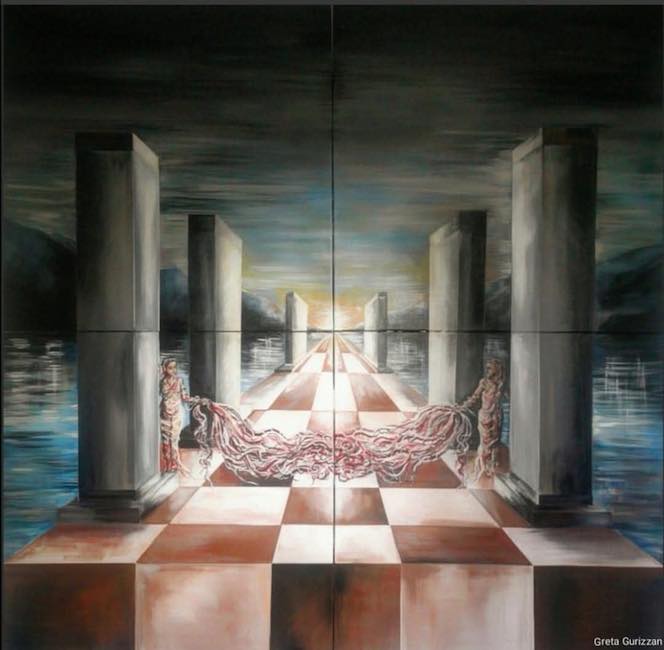
Eutarkeia si lega fortemente a quest’ultimo concetto poiché il senso della tela è legato al significato greco della parola, quell’autarchia principio filosofico dell’indipendenza dai bisogni materiali esterni e dai condizionamenti della società, considerata la chiave per raggiungere la vera felicità e la pace interiore, tanto nell’antica Grecia a cui si riferisce il mito, quanto in quella attuale, troppo materialistica per consentire all’individuo di comprendere l’importanza di considerare la felicità come uno stato dell’anima slegato da ogni bene oggettivo e tangibile. La rappresentazione sembra indicare una direzione perché i blocchi di cemento, così come la colata di asfalto sottostante ai piedi delle figure, sono predisposti geometricamente verso una via di fuga che si trova al centro della tela e va verso il punto focale opposto a quello dell’osservatore, quasi a indicare che il cammino per spogliarsi dalle convenzioni comuni è lungo e complesso ma al contempo lineare se si è in grado di cogliere l’essenziale e la purezza dell’intenzione.
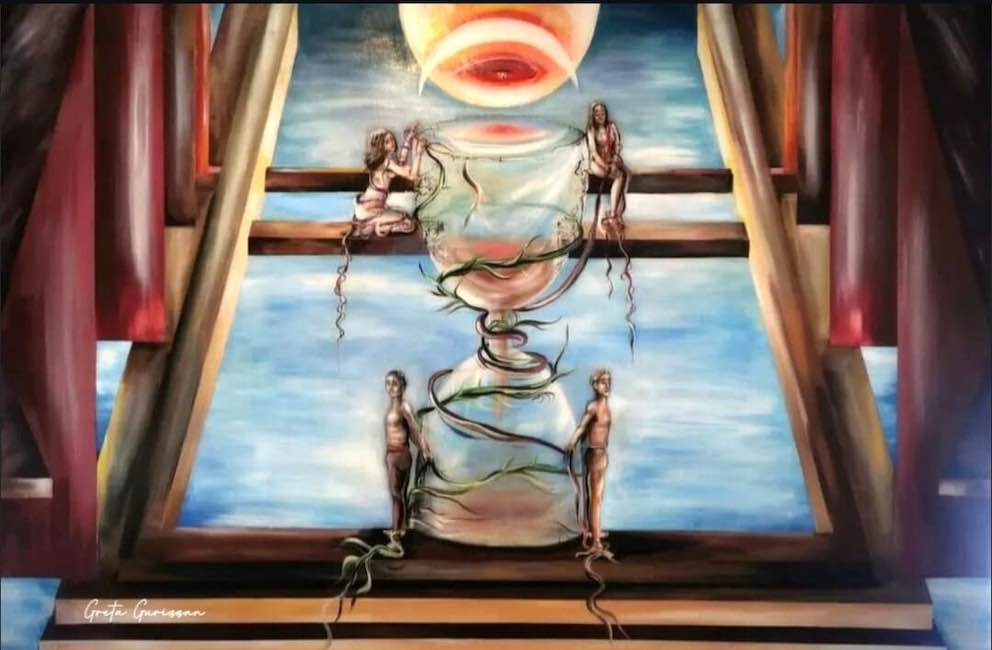
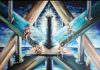
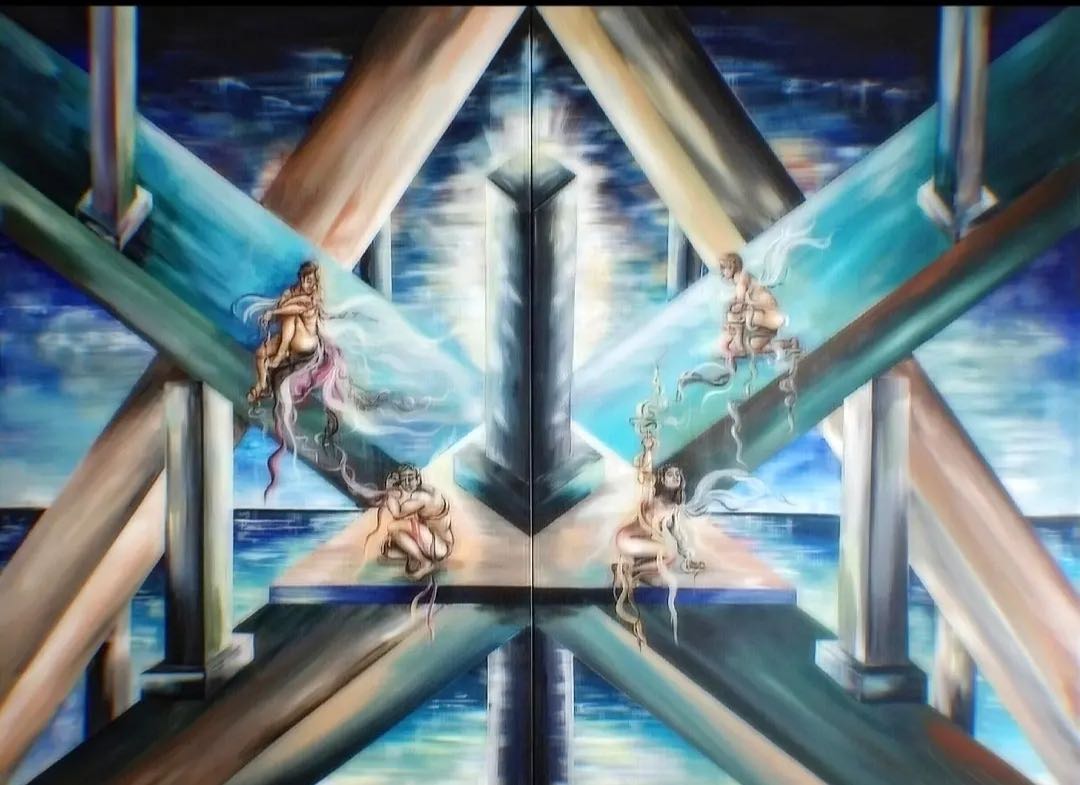
Il dipinto Kronos si sofferma invece sulla tematica del tempo, di quell’astrazione misteriosa e inafferrabile che l’uomo da sempre cerca di catturare, di fermare, di gestire senza risultato poiché esso è superiore a qualsiasi dominio, a qualunque tentativo di controllo; la clessidra è il suo simbolo più forte e incisivo, e qui Greta Gurizzan sembra quasi volerla lasciare sospesa, avvolta dalla presenza di piccoli folletti equivalenti alle divinità che nell’orfismo, movimento religioso misterico dell’antica Grecia, stabiliscono insieme a Kronos i differenti princìpi del tempo. L’autrice sottolinea le differenti considerazioni su tempo che può essere suddiviso tra quello misurabile e suddivisibile tra passato, presente e futuro, quello qualitativo che mette in risalto il tema dell’attimo fuggente, l’occasione da cogliere, quell’irripetibile momento giusto che non torna più, e infine l’eternità, il tempo cosmico e infinito, il più sacro, l’eterno presente che non si esaurisce mai e che attraversa l’alternarsi degli anni e dei secoli. L’impalcatura su cui poggia la clessidra è sospesa e sembra tendere verso un piccolo cosmo forse simboleggiante la dimensione dove lo scorrere non ha più senso e tutto sembra assumere un significato diverso, dilatato come se fosse guardato da un punto di vista superiore.
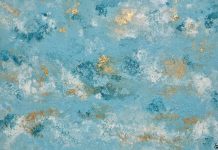
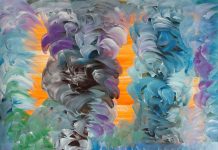
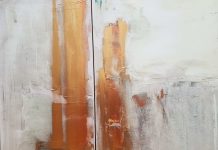
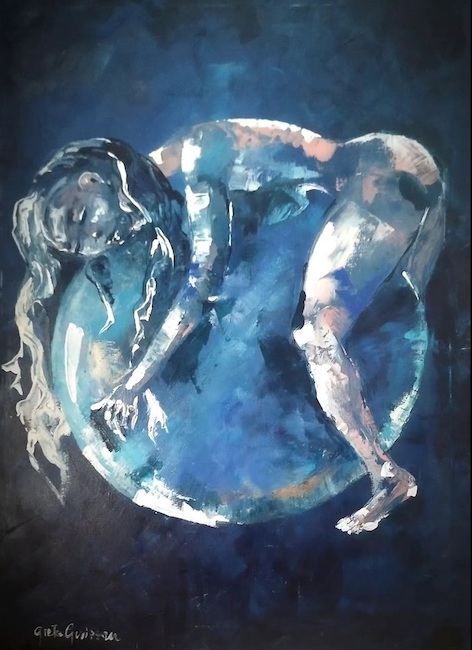
Greta Gurizzan affianca da qualche anno la pittura a pennello, con la quale esprime magistralmente la sua anima surrealista-metafisica, alla tecnica a spatola stratigrafica elaborata dal maestro Mario Salvo, e che le consente un approccio espressivo più istintivo, spontaneo, in cui il gesto esecutivo diviene parte imprescindibile di un dipinto su cui si apportano strati di colore poi scavati e graffiati come a volerne tirare fuori i diversi livelli di coscienza e di conoscenza.
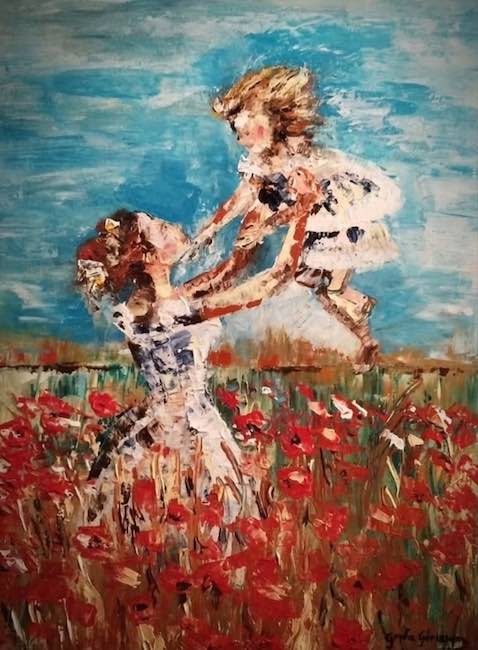
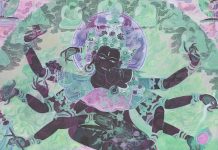
L’opera Amore e papaveri appartiene a questa seconda linea produttiva in cui il dettaglio si perde, tanto quanto la definizione, per lasciare spazio all’intuizione guidata dall’interiorità con un processo che parte dall’esecutrice fino a giungere al fruitore che ne riceve la medesima essenzialità emanata. Qui la meditazione e il concetto metafisico delle opere precedenti si perde per lasciare spazio a quell’emozione spontanea suscitata da un gesto semplice e genuino quanto comune in quel legame forte e indissolubile che si genera tra madre e figlia.
Greta Gurizzan, oggi segretaria, coordinatrice e direttore tecnico dell’associazione Gruppo Stratigrafici, ha al suo attivo la partecipazione a mostre personali con patrocinio morali ed istituzionali, a mostre collettive e fiere d’arte su tutto il territorio italiano.
GRETA GURIZZAN-CONTATTI
Email: gretagurizzan@gmail.com
Sito web: www.gretaerte.com
Facebook: www.facebook.com/greta.gurizzan.5
Instagram: www.instagram.com/soulartgretagurizzan/
Greta Gurizzan’s Metaphysical Surrealism, symbolism and mythological figures poised between the past and the eternal present
In contemporary art there are artists who demonstrate a marked aptitude for exploring reality through a strongly figurative painterly approach, because for them observing what is becomes the means to cross the timeline and reach toward a dimension made up of enigmas, mysteries, subtle magic, and poetry which manifest when all the tangible and observable elements in the surroundings can take on a different meaning, intrinsic to the existential concepts that repeat themselves unchanged era after era, century after century, until they reach the present, transcend it, and move toward a future that will retain the same meanings, the same unresolved, unanswered questions that stimulate human reflection and curiosity. Greta Gurizzan embodies this expressive poetics, which leads her to create works that are highly symbolic and psychological, poised between a hyper-technological and schematic present and a past that is far softer, more symbolic, and almost lyrical in its delicacy.
The early twentieth century was a period of absolute revolution from an expressive standpoint, as the avant-garde movements sought to break completely with all previous rules of painting in order to adapt art to the changing times, the pace of life, and the innovations emerging in every field, for this reason, art could not remain untouched by this new wave. Among all the styles that focused on abandoning figuration or on its visual and interpretive transformation such as Futurism, Cubism, and the entire abstract movement, there were two that instead focused precisely on the visible transported into an unreal, restless, and different dimension because what mattered was highlighting the dream world, the nightmares, and the anxieties that surfaced during sleep. Surrealism deceived the eye through seemingly familiar images such as clear skies and desert landscapes, while introducing distorting elements that served as the primary focus through which artists like Salvador Dalí and Yves Tanguy depicted unsettling, morphologically frightening figures, as well as distorted and liquefied objects that led the viewer to enter those dimensions and reflect on their own fears. Alongside Surrealism emerged a movement that, according to the intention of its founder Giorgio De Chirico, was intended to stand in opposition to those unsettling themes and which instead sought to explore the alienating reality of the era through a past rich in culture, silent secrets, and unsolved enigmas, that was to be brought to light through a spare narrative, almost devoid of human presence since humans often disrupted the harmony of the settings. His desolately empty cityscapes and the geometric rigor of his squares and ancient monuments were magically suspended in time; the ever-present marble busts and ancient columns, along with the mannequins, seemed to underscore the contrast between the passing of the centuries and the immortality of the essence of the past that would survive again and again, moment after moment.
It was the Belgian master René Magritte who united and fused the opposition between De Chirico’s Metaphysical Art and Surrealist themes, giving rise to a Metaphysical Surrealism in which nightmares and the deepest fears were set aside to give greater prominence to the subtle enigmas inherent in reality, to the oddities observed ironically by the artist and narrated with a style of clear, precise lines in some cases echoing De Chirico’s geometric schematism and evocative silence, yet designed to stimulate deep reflection precisely by virtue of that visual singularity that made his works so magnetic. The Brescia-based artist Greta Gurizzan fits perfectly into the same stylistic vein as René Magritte, that Metaphysical Surrealism which, however, manifests itself in her work by highlighting the geometric composition of Metaphysical Art in a more incisive way, as if the latter were indispensable for representing the rational and technological order upon which contemporary society is based, accompanied by a magical and poetic dimension through which myth enters the compositions, breaking the geometric pattern to reveal the harmonious softness that envelops the stories and concepts most dear to humanity, those questions to which humankind has not yet found an answer precisely because of their elusiveness. From a technical point of view Greta Gurizzan’s canvases are filled with that interplay of light and shadow that enhances the sense of depth and perspective already fully expressed through the perfectly intersecting lines and volumes, while the softness stems from the sinuousness of the ever-present symbolic figures as well as from the lines with which she sketches the backgrounds, making the seas and skies that host these evocative, imaginary settings appear to float. The author explores the most universal concepts as well as the themes of morality and the afterlife, emphasizing how the beliefs and legends of the past linger in our ancestral memory, even in a contemporary society that aspires to be utterly pragmatic and materialistic, yet cannot forget those ancient origins that are inextricably linked to the evolution of the soul.
This is the essence of her works, that timeline that expands, connecting and enveloping atmospheres with her mystical, spiritual poetry, as if it were a symbol of human identity itself; where symbolic softness predominates, the backgrounds are intangible, ethereal, and soft, as if supporting the architectural forms that appear suspended in nothingness, lifted from the materiality of the earth and reaching toward the attainment of spiritual awareness. Eutarkeia is strongly linked to this latter concept, as the sense of the canvas is tied to the Greek meaning of the word, that autarky wich is the philosophical principle of independence from external material needs and societal conditioning, considered the key to achieving true happiness and inner peace, both in ancient Greece to which the myth refers, and in the present day which is far too materialistic to allow the individual to grasp the importance of viewing happiness as a state of the soul detached from any objective, tangible possession. The composition seems to suggest a direction because the concrete blocks, as well as the pool of asphalt at the figures’ feet, are geometrically arranged toward an escape route located at the center of the canvas and leading toward a focal point opposite that of the viewer, almost as if to suggest that the path to freeing oneself from common conventions is long and complex, yet at the same time straightforward if one is able to grasp the essence and purity of intention.
The painting Kronos, on the other hand, focuses on the theme of time,t hat mysterious and elusive abstraction that humanity has always sought to capture, halt, and manage without success, since time transcends all dominion and any attempt at control; the hourglass is its strongest and most striking symbol, and here Greta Gurizzan seems almost to want to leave it suspended, enveloped by the presence of tiny sprites equivalent to the deities who in Orphism, a mystery religion of ancient Greece, establish together with Kronos the various principles of time. The author highlights the different perspectives on time, which can be divided into measurable time subdivided into past, present, and future, and qualitative time which highlights the theme of the fleeting moment, the opportunity to be seized, that unrepeatable, perfect moment that will never return, and finally eternity, cosmic and infinite time, the most sacred, the eternal present that never ends and spans the passing of years and centuries. The scaffolding on which the hourglass rests is suspended and seems to reach toward a small cosmos, perhaps symbolizing the dimension where the passage of time no longer makes sense and everything seems to take on a different meaning, expanded as if viewed from a higher vantage point.
For several years now, Greta Gurizzan has been combining brush painting, through which she masterfully expresses her surrealist-metaphysical spirit with the stratigraphic palette knife technique developed by the master Mario Salvo, which allows her a more instinctive, spontaneous expressive approach, in which the executive gesture becomes an indispensable part of a painting onto which layers of color are applied and then carved out and scratched, as if to draw out the different levels of consciousness and knowledge. The work Love and poppies belongs to this second line of work, in which detail is lost, so much as is definition, to make room for intuition guided by inner reflection, through a process that begins with the artist and extends to the viewer who receives the same sense of essentiality that the work radiates. Here, the meditation and metaphysical concept of the earlier works give way to the spontaneous emotion evoked by a gesture as simple, genuine, and common as the strong, unbreakable bond that forms between mother and daughter. Greta Gurizzan, currently secretary, coordinator, and technical director of the Gruppo Stratigrafici association, has participated in solo exhibitions with moral and institutional patronage, as well as group exhibitions and art fairs throughout Italy.