

La riflessione sulla fugacità della vita in relazione all’inseguimento dei valori di superficie della società contemporanea conduce alcuni artisti a compiere un’analisi profonda sull’essenza su cui si basa una modernità troppo individualista e al contempo globalizzata che spesso induce l’individuo a sentirsi isolato e inadeguato pur aderendo alle linee guida generaliste dentro cui crede di sentirsi al sicuro. Il tipo di stile che più si adegua a un punto di vista tanto intenso e introspettivo sul vivere attuale rifiuta ogni tipo di riferimento estetico, di equilibrio armonico, per concentrarsi invece su tutte quelle incertezze, quelle fragilità e paure di non essere capaci di essere se stessi, privilegiando pertanto un’apparenza evanescente quanto distorta. Questa è la caratteristica principale delle tele di George Rouy che sembra scegliere di rinunciare alla fisicità per raccontare la fugacità del corpo terreno, per mostrarne l’evoluzione che esso inevitabilmente compie davanti agli eventi che si susseguono.
Il sopraggiungere del Ventesimo secolo portò con sé la tendenza per molti artisti a considerare non più solo la parte estetica e armonica della pittura e della scultura, bensì a immettere nel panorama culturale la possibilità di una rottura con ogni canone precedentemente considerato irrinunciabile per dare voce a quel ruggito interiore, a quei moti dell’anima che alcuni autori cominciavano a considerare essenziali per il gesto plastico e per la creatività. L’irruenza cromatica dei Fauves, per i quali tutto doveva essere ricondotto all’immediatezza istintiva di ogni singola sensazione dell’esistenza, fu ben presto attenuata dal punto di vista formale anche se forse persino enfatizzata da quello sostanziale, trasformandosi in Espressionismo, un movimento che si diffuse molto velocemente in tutta Europa proprio per la sua capacità di interpretare e dare voce alle inquietudini dell’uomo di quel tempo instabile e contraddistinto da guerre e trasformazioni sociali. La mitigazione cromatica caratterizzò in particolar modo la produzione pittorica dell’artista austriaco Egon Schiele, concentrato prevalentemente sulla narrazione della sofferenza di un corpo che poteva trovare solo nel piacere fisico il sollievo a un’incertezza del vivere generata dagli eventi esterni.
La deformità era pertanto manifestazione di quella difficoltà esistenziale, sottolineando in maniera incisiva il rapporto tra interiorità ed esteriorità, proprio come l’Espressionismo richiedeva; qualche decennio dopo, a seguito della fine del secondo conflitto mondiale, la tematica di Schiele fu ripresa e accresciuta dagli esponenti della Scuola di Londra, in particolar modo e seppur in maniera diversa, da Lucian Freud e da Francis Bacon. In entrambi gli autori infatti ciò che doveva emergere era il senso di incertezza, di sofferenza interiore e di provvisorietà della vita a discapito di qualunque ricerca della bellezza, dell’armonia o dell’estetica cromatica perché a dover gridare era appunto il senso di sofferenza dell’essere umano. Lucian Freud si legò più fortemente alla figurazione di Schiele, anche se nel suo caso l’osservazione si soffermava sull’imperfezione, sulla corpulenza, su un’intimità che non era ricerca dei sensi e del piacere fisico bensì semplicemente costituiva uno spogliarsi, un mettersi a nudo per osservarsi nella pienezza delle proprie vulnerabilità; Francis Bacon invece interpretò il tema del movimento soffermandosi su una deformità a volte estrema, condizionata dalle vicissitudini della sua vita personale oltre che dalla riflessione sulla crudeltà dei tempi in cui era stato costretto a vivere, inducendolo a scegliere una gamma cromatica cupa, sinistra e caratterizzando i suoi personaggi con mutilazioni, con malformazioni mostruose che intendevano sottolineare lo smarrimento interiore dell’uomo moderno e l’incapacità di accettare una diversità provata in prima persona, la sua omosessualità, e ostacolata dalla sua famiglia e dalla società. L’artista inglese George Rouy appartiene alla nuova generazione di autori che vanno a personalizzare e reinterpretare le linee guida dell’Espressionismo originario attualizzandole alle tematiche odierne, quelle appartenenti a un vivere contemporaneo complesso, più social eppure paradossalmente meno sociale rispetto al passato, perché la generalizzazione che fuoriesce nella modernità induce l’individuo a sentirsi sempre più isolato all’interno delle proprie paure, incertezze, debolezze.
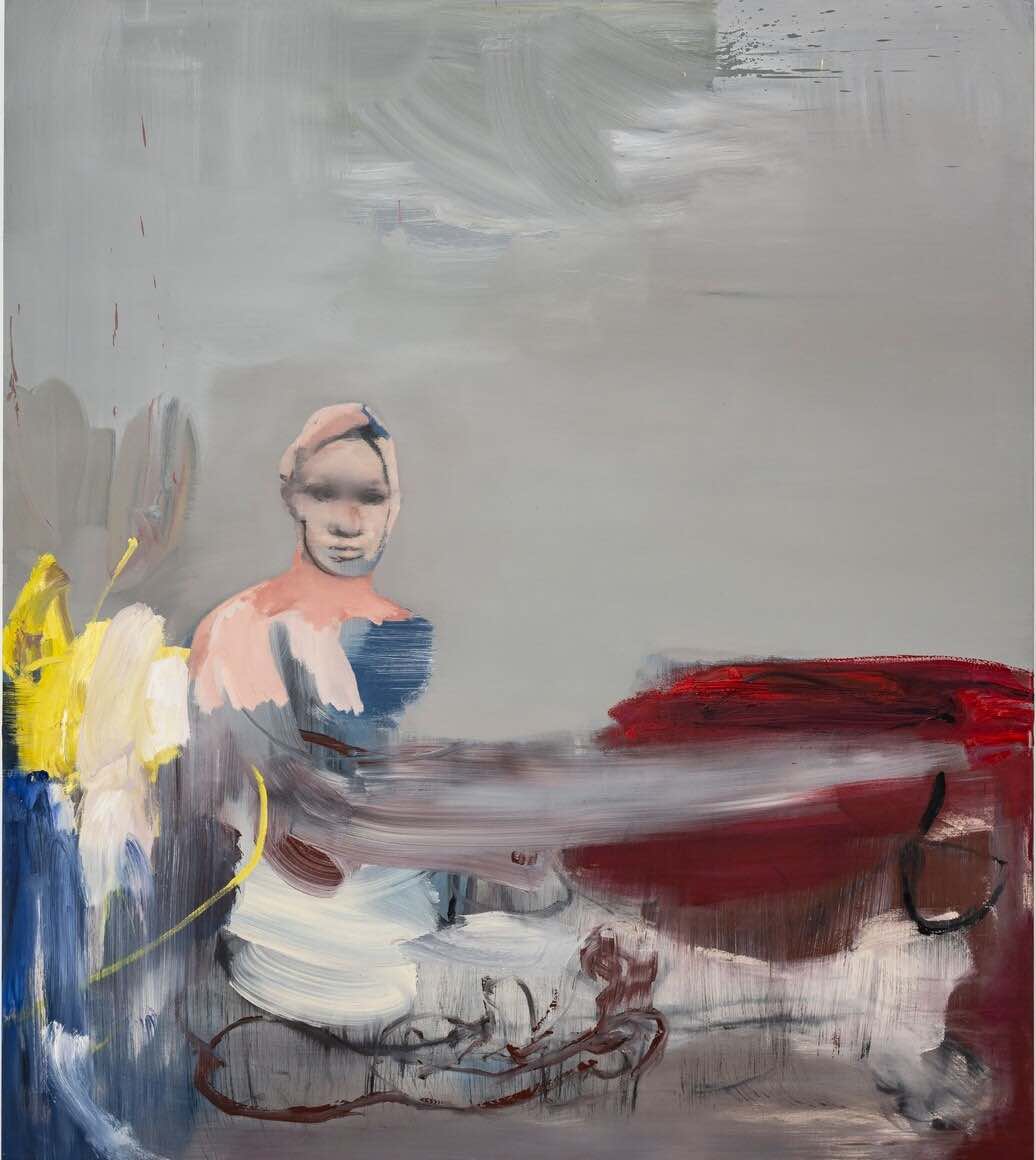
Nella sua pittura dunque i corpi non vengono più raccontati nelle loro imperfezioni come fece Lucian Freud, né vengono mutilati e deformati come nelle tele di Francis Bacon, con lui vengono cancellati, come a sottolineare da un lato la transitorietà e il carattere di temporaneità, dall’altro l’impossibilità di rimanere uguali a se stessi togliendo così all’essere umano quelle convinzioni a cui spesso si aggrappa.
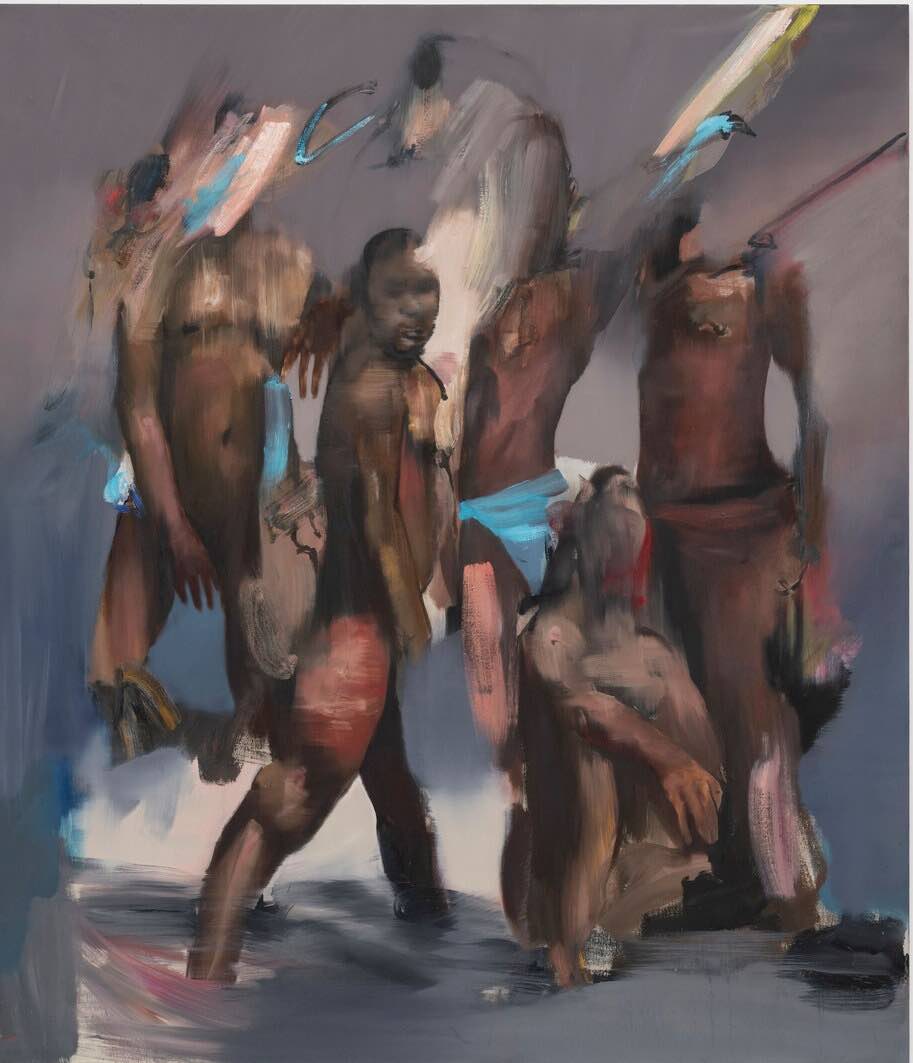
La necessità di appartenere a un gruppo o a un ideale induce George Rouy a comporre immagini in cui l’uomo cerca la prossimità, cerca una folla dentro cui provare a identificarsi, con cui condividere quel male di vivere che viene costantemente addormentato con la tecnologia, con regole inammissibili per il singolo eppure accettabili se partecipate e comuni all’insieme a cui si sceglie di appartenere.
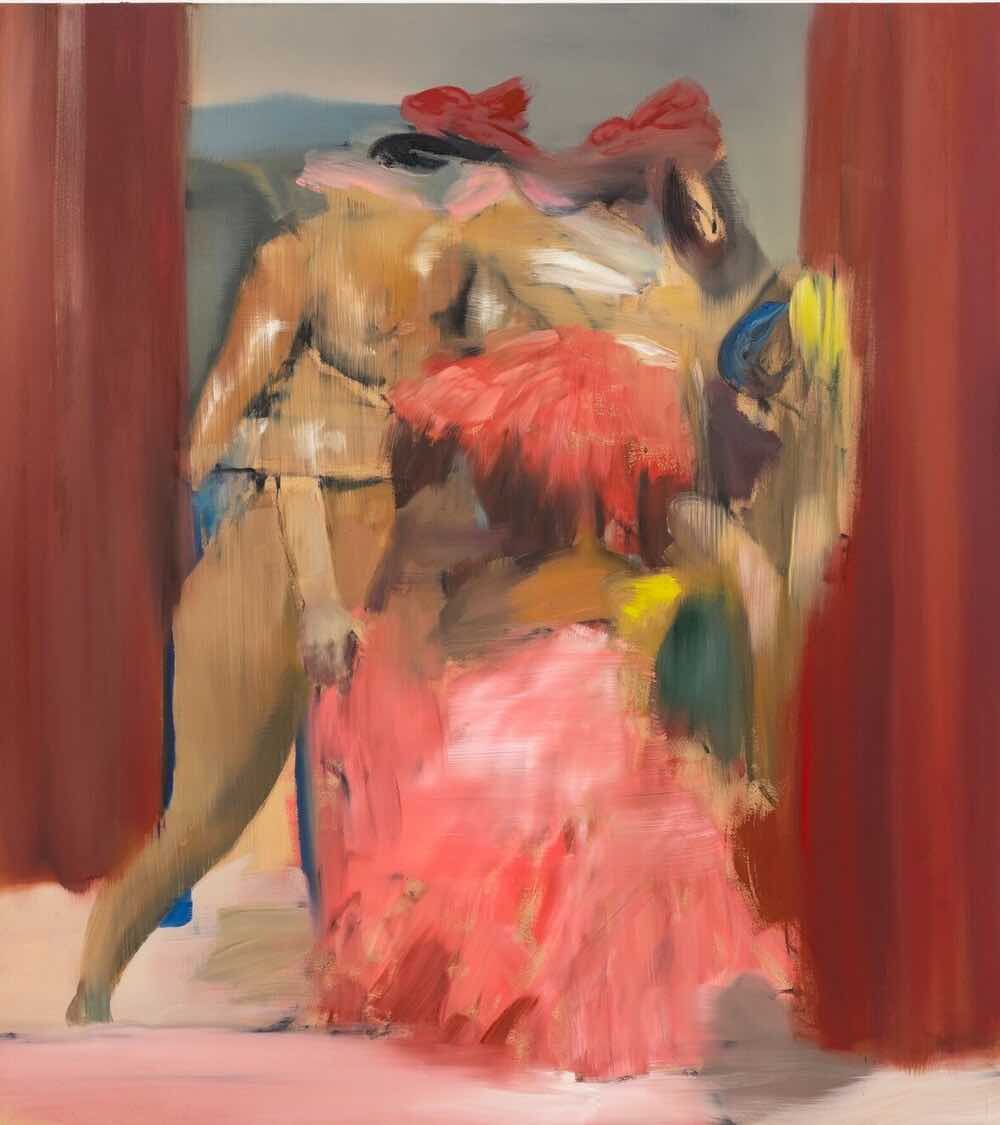
Eppure quell’identificazione sfugge, si dissolve rendendo tutto inafferrabile, sfumato, indefinito proprio perché nessun gruppo potrà mai colmare il vuoto avvertito dal singolo quando perde il contatto con il vero sé.
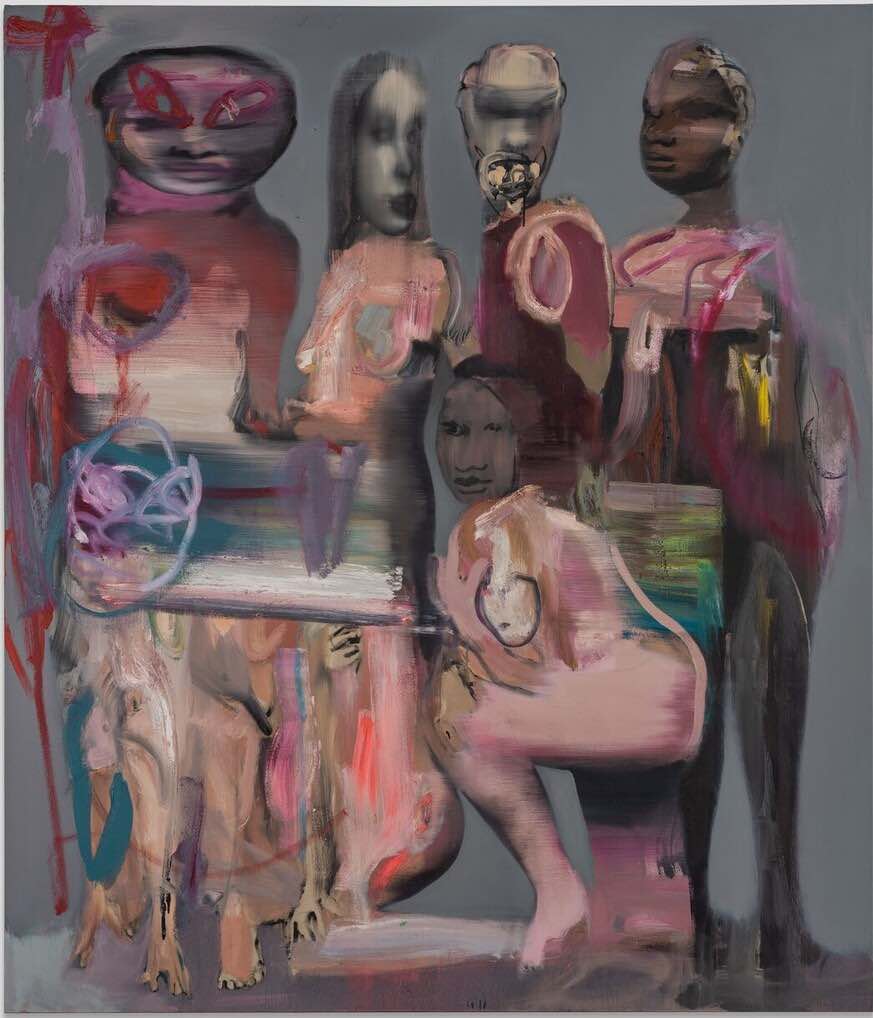
Drop dead gorgeous with teeth mostra un insieme di soggetti diversi tra loro che apparentemente condividono una circostanza, un evento in cui si trovano al fianco l’uno dell’altra; nonostante quella vicinanza fisica, tuttavia appaiono completamente distanti, assorti ciascuno nei propri pensieri, nelle riflessioni e considerazioni che rendono la scena una composizione assemblata, una riunione di tante solitudini solo apparentemente in connessione ma di fatto racchiuse dentro il proprio individualismo. La morte citata nel titolo è dunque quella del senso di comunità, della condivisione di intenti e di ideali appartenenti al secolo precedente ma che sembrano essere scomparsi nel complesso vivere del presente; i denti messi in evidenza in uno dei personaggi forse vorrebbero sottolineare l’estraneità che spesso si percepisce davanti a un evento traumatico o doloroso perché nella società contemporanea si tende troppo a rimanere sulla superficie, a non compartecipare alle emozioni degli altri e la sottostante cancellazione dei corpi è dunque quella di una civiltà che ha perduto ogni riferimento e ogni valore morale.
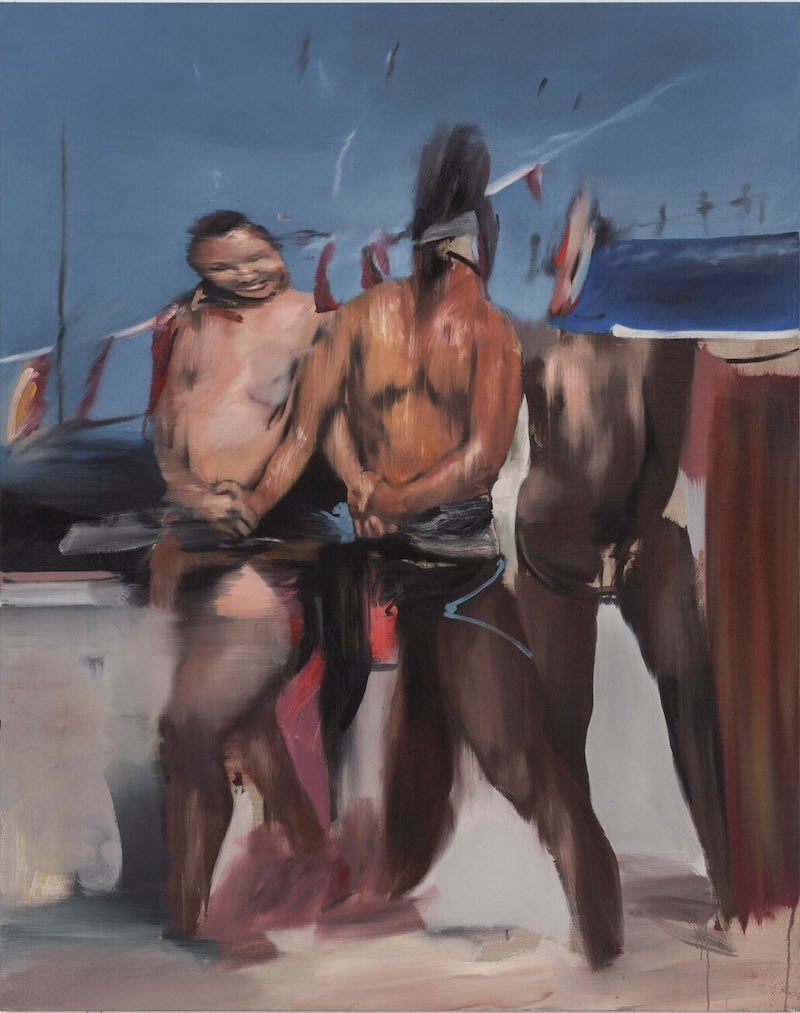
In Trauma bond invece, la prossimità è obbligata, i protagonisti sembrano essere uniti tra loro da una corda che evoca la schiavitù dei secoli scorsi per farla diventare simbolo di tutte quelle zavorre che l’essere umano porta con sé anche nell’epoca attuale dove in teoria si è potuto mettere fine a ostacoli e luoghi comuni; ciononostante sopravvive quel legame traumatico con una ferita atavica, con la necessità di continuare a farsi imprigionare da nuove regole, da nuovi punti di vista che non provengono più dall’esterno bensì dall’interno della propria anima. Da un altro punto di vista però, l’opera può essere anche simbolo di tutti quei rapporti da cui è difficile uscire, malgrado la consapevolezza di quanto possano essere sbagliati, e che impediscono all’individuo di prendere in mano la propria vita e di percorrere il cammino più affine alla propria natura. Gli uomini raccontati da George Rouy infatti sembrano volersi staccare gli uni dagli altri, sensazione che si intravede dalle posture cancellate, pur essendo incapaci di farlo davvero.
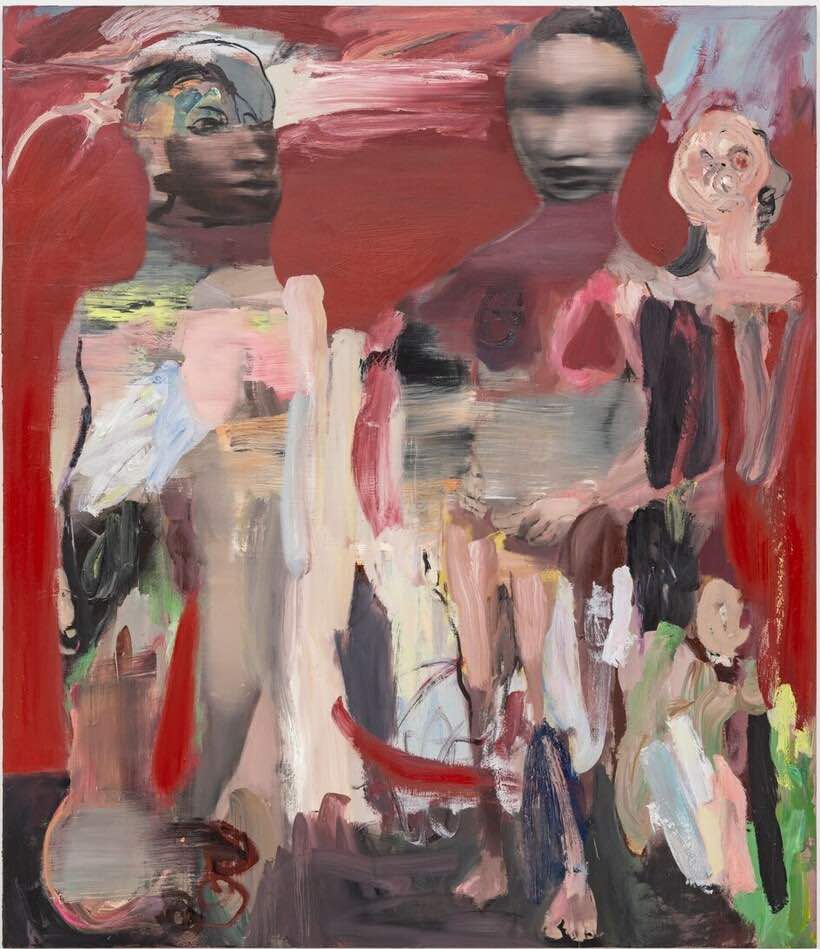
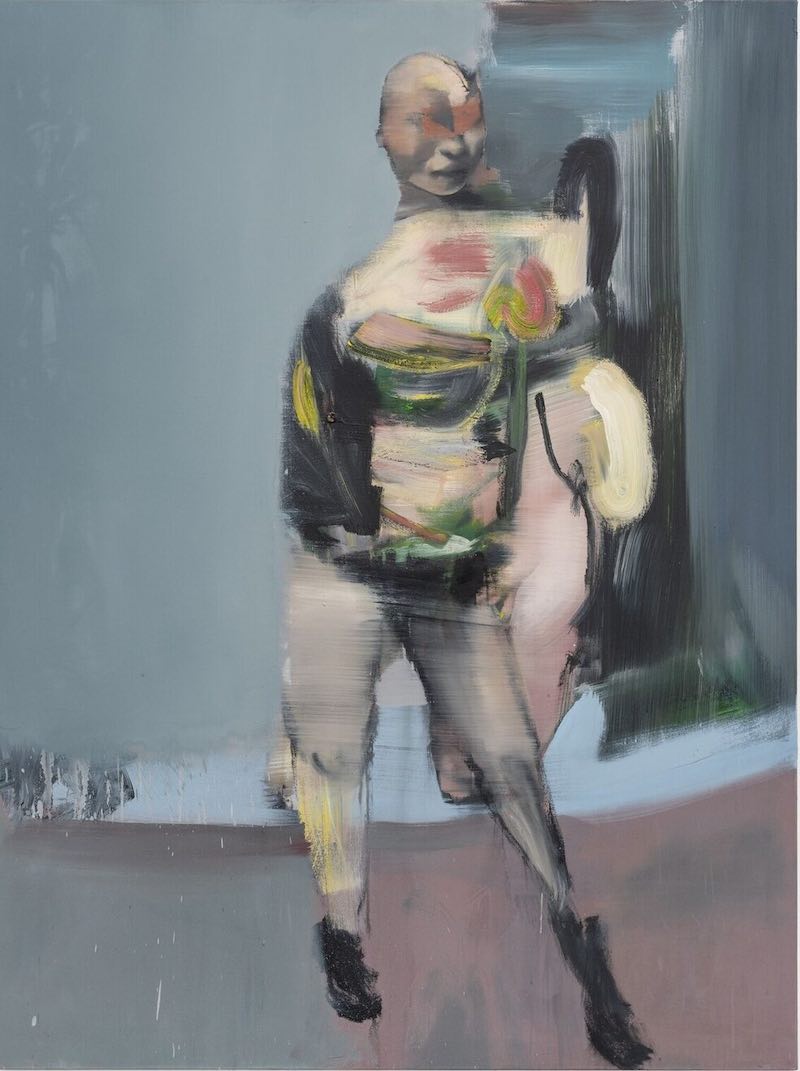
Backdrop racconta di un passato che resta attaccato come fosse una seconda pelle, di qualcosa di indimenticabile che accompagna il presente a dispetto dell’esigenza di lasciarlo alle spalle; la figura sullo sfondo incombe sulle due in primo piano, come se non volesse dissolvere la sua presenza inquinando in tal modo le possibilità che potrebbero delinearsi e concretizzarsi se i due protagonisti fossero in grado di vivere nella piena spontaneità. Nelle difficoltà relazionali è spesso comune trovarsi a dover combattere contro ferite, convinzioni, pregiudizi provocati esattamente da esperienze che hanno segnato il cammino precedente e da cui è difficile distaccarsi con obiettività perché il segno lasciato è più incisivo della consapevolezza di trovarsi davanti a qualcuno di completamente differente. Il tema affrontato da George Rouy in questa opera è ancora una volta ambivalente poiché da un’osservazione più esistenziale mette l’accento sulle difficoltà delle relazioni contemporanee dove superare le ferite del passato diviene di anno in anno più complesso, mentre da un punto di vista più generale racconta una società che pur modernizzandosi e oltrepassando i blocchi più radicati non riesce comunque a non portare con sé quel bagaglio che può essere sia un peso che una salvezza.
George Rouy ha al suo attivo un percorso espositivo che lo ha visto protagonista in gallerie di tutto il mondo – Londra, Parigi, Berlino, Praga, Los Angeles, Malaga, New York -, e le sue opere fanno parte di collezioni di musei negli Stati Uniti, in Europa e in Cina.
GEORGE ROUY-CONTACTS
Sito web: www.hauserwirth.com/artists/george-rouy/
Instagram: www.instagram.com/georgerouy/
The erased bodies of George Rouy, between mass identity and awareness of the transience of existence
Reflection on the fleeting nature of life in relation to the pursuit of superficial values in contemporary society leads some artists to conduct a profound analysis of the essence underlying a modernity that is overly individualistic and at the same time globalized, often causing individuals to feel isolated and inadequate even while adhering to general guidelines within which they believe they can feel safe. The style that best suits such an intense and introspective view of contemporary life rejects any kind of aesthetic reference or harmonious balance, focusing instead on all those uncertainties, fragilities, and fears of not being able to be oneself, thus favoring an appearance that is as evanescent as it is distorted. This is the main characteristic of George Rouy’s canvases, which seem to choose to renounce physicality in order to recount the fleeting nature of the earthly body, to show the evolution it inevitably undergoes in the face of successive events.
The advent of the 20th century brought with it a tendency for many artists to consider not only the aesthetic and harmonious aspects of painting and sculpture, but rather to introduce into the cultural landscape the possibility of breaking with every canon previously considered indispensable in order to give voice to that inner roar, to those stirrings of the soul that some authors were beginning to consider essential for artistic expression and creativity. The chromatic impetuosity of the Fauves, for whom everything had to be traced back to the instinctive immediacy of every single sensation of existence, was soon attenuated from a formal point of view, although perhaps even emphasized from a substantial one, transforming itself into Expressionism, a movement that spread very quickly throughout Europe precisely because of its ability to interpret and give voice to the anxieties of people living in those unstable times, marked by wars and social upheaval.
Chromatic mitigation particularly characterized the pictorial production of the Austrian artist Egon Schiele, who focused mainly on narrating the suffering of a body that could only find relief from the uncertainty of life generated by external events in physical pleasure. Deformity was therefore a manifestation of that existential difficulty, incisively emphasizing the relationship between interiority and exteriority, just as Expressionism required; a few decades later, following the end of World War II, Schiele‘s theme was taken up and expanded upon by members of the School of London, particularly, albeit in different ways, by Lucian Freud and Francis Bacon.
In fact, what emerged in both artists was a sense of uncertainty, inner suffering, and the transience of life, to the detriment of any search for beauty, harmony, or chromatic aesthetics, because it was precisely the suffering of human beings that needed to be shouted out loud. Lucian Freud was more strongly linked to Schiele‘s figurative style, although in his case the observation focused on imperfection, corpulence, and an intimacy that was not a search for the senses and physical pleasure but simply a stripping down, a laying bare of oneself in order to observe oneself in the fullness of one’s vulnerabilities; Francis Bacon, on the other hand, interpreted the theme of movement by focusing on sometimes extreme deformity, conditioned by the vicissitudes of his personal life as well as by his reflection on the cruelty of the times in which he was forced to live, leading him to choose a dark, sinister and characterizing his characters with mutilations and monstrous deformities that were intended to emphasize the inner confusion of modern man and his inability to accept diversity experienced firsthand, his homosexuality, which was hindered by his family and society.
The English artist George Rouy belongs to a new generation of artists who personalize and reinterpret the guidelines of original Expressionism, updating them to today’s themes, those belonging to a complex contemporary life, more social and yet paradoxically less socializing than in the past, because the generalization that emerges in modernity leads individuals to feel increasingly isolated within their own fears, uncertainties, and weaknesses. In his painting, therefore, bodies are no longer depicted in their imperfections as Lucian Freud did, nor are they mutilated and deformed as in Francis Bacon‘s canvases, with him they are erased, as if to emphasize on the one hand transience and temporality and, on the other the impossibility of remaining true to oneself, thus stripping human beings of the convictions to which they often cling.
The need to belong to a group or an ideal leads George Rouy to compose images in which man seeks closeness, seeks a crowd with which to identify, with which to share that malaise that is constantly numbed by technology, by rules that are unacceptable to the individual but acceptable when shared and common to the group to which one chooses to belong. Yet that identification eludes, dissolving and making everything elusive, blurred, and undefined, precisely because no group can ever fill the void felt by the individual when they lose touch with their true self. Drop Dead Gorgeous with Teeth shows a group of different subjects who apparently share a circumstance, an event in which they find themselves side by side; despite that physical proximity, however, they appear completely distant, each absorbed in their own thoughts, reflections, and considerations that make the scene an assembled composition, a gathering of many solitudes only apparently connected but in fact enclosed within their own individualism.
The death mentioned in the title is therefore that of the sense of community, of shared intentions and ideals belonging to the previous century but which seem to have disappeared in the complex life of the present; the teeth highlighted in one of the characters perhaps aim to emphasize the sense of alienation that is often felt when faced with a traumatic or painful event, because in contemporary society there is a tendency to remain on the surface, to not share in the emotions of others, and the underlying erasure of bodies is therefore that of a civilization that has lost all reference points and moral values. In Trauma Bond, on the other hand, proximity is obligatory, the protagonists seem to be united by a rope that evokes the slavery of past centuries, becoming a symbol of all the burdens that human beings carry with them even in the present day, when in theory it has been possible to put an end to obstacles and clichés; nevertheless, that traumatic bond survives with an atavistic wound, with the need to continue to be imprisoned by new rules, by new points of view that no longer come from outside but from within one’s own soul.
From another point of view, however, the work can also be a symbol of all those relationships that are difficult to escape, despite the awareness of how wrong they may be, and which prevent individuals from taking control of their own lives and following the path most suited to their nature. The men depicted by George Rouy seem to want to detach themselves from each other, a feeling that can be glimpsed in their erased postures, even though they are unable to do so in reality. Backdrop tells of a past that clings like a second skin, of something unforgettable that accompanies the present despite the need to leave it behind; the figure in the background looms over the two in the foreground, as if unwilling to dissolve its presence, thus polluting the possibilities that could emerge and materialize if the two protagonists were able to live in complete spontaneity.
In relationship difficulties, it is often common to find oneself having to fight against wounds, beliefs, and prejudices caused precisely by experiences that have marked the previous path and from which it is difficult to detach oneself objectively because the mark left is more incisive than the awareness of being in front of someone completely different. The theme addressed by George Rouy in this work is once again ambivalent because, from a more existential observation, it emphasizes the difficulties of contemporary relationships, where overcoming the wounds of the past becomes more complex with each passing year, while from a more general point of view, he describes a society that despite modernizing and overcoming deeply rooted obstacles, he cannot help but carry with him a burden that can be both a weight and a salvation. a has exhibited his work in galleries around the world—London, Paris, Berlin, Prague, Los Angeles, Malaga, New York—and his paintings are part of museum collections in the United States, Europe, and China.