
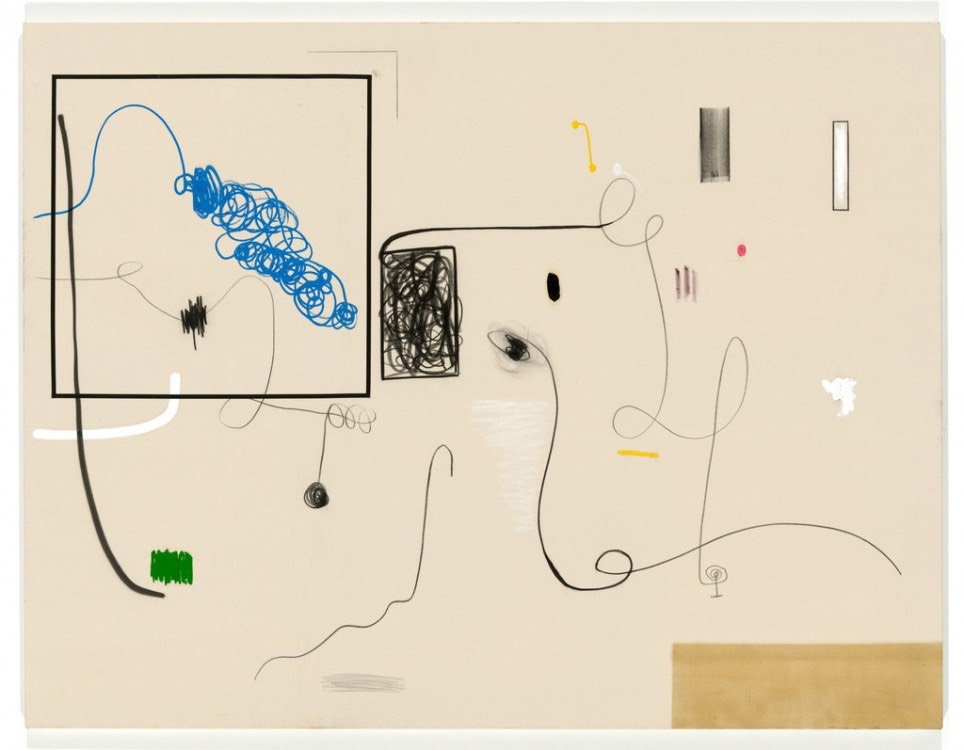
Ridurre all’essenziale l’apporto figurativo o cromatico con la tela equivale a trasportare il fruitore in un mondo di concetto, di sottrazione attraverso la quale è possibile lasciarsi andare in maniera quasi ancestrale perché in qualche modo le prime espressioni artistiche furono proprio quei segni incisi sulla pietra che vennero chiamati graffiti e che furono testimonianza di una civiltà primitiva e inconosciuta se non attraverso quell’eredità lasciata sulla roccia. Gli autori che scelgono di ripercorrere quel segno primordiale per contraddistinguere la propria pittura mostrano pertanto il desiderio di tornare verso un linguaggio basico che tuttavia riesce a comunicare in maniera incisiva catalizzando l’attenzione sui pochi colori, sulle figure geometriche e talvolta sfumate, ma soprattutto su quelle linee sottili che corrispondono a un gesto istintivo e immediato. Christian Rosa appartiene a questo gruppo di artisti e si collega, divenendone l’erede, a tutto quel cammino astrattista che rivoluzionò la pittura del secolo scorso.
Agli inizi del Novecento si consolidarono diverse e divergenti correnti avanguardiste che intendevano rompere ogni equilibrio antecedente, ogni ordine pittorico e artistico prestabilito per entrare nel nuovo mondo, quello delle innovazioni, quello della velocità del progresso, quello dell’avvento della tecnologia, in cui l’arte tradizionale appariva quasi fuori dal tempo. Parallelamente al Futurismo e al Cubismo dunque, si distinsero i movimenti astrattisti che volevano affermare con forza la supremazia del gesto plastico su ogni riferimento che l’occhio poteva cogliere nella realtà; l’essenzialità delle figure danzanti di Wassily Kandinsky, considerato il padre dell’Astrattismo, dove l’aspetto visivo era essenzializzato ma fortemente legato all’emozionalità delle note musicali con cui l’artista accompagnava il gesto esecutivo, trovarono sponda nel Suprematismo russo di Kazimir Malevič che sottrasse tonalità e forme pur mantenendo quell’aspetto disequilibrato delle figure raccontate solo attraverso i colori primari. Nel caso di Malevi a prevalere erano le forme geometriche posizionate in maniera a volte confusa e assemblata a caso, in altre più ordinate da cui emergevano gli sfondi neutri. Lasciando da parte il rigore razionalista del De Stijl di Piet Mondrian, fu sorprendentemente un surrealista, Joan Mirò, a collegarsi all’approccio segnico ed essenziale di Kandinsky e di Malevi
introducendo però le linee curve che caratterizzavano la sua arte e quel tocco fanciullesco che andava a toccare le corde del bambino nascosto dentro ciascun adulto. Le basi bianche o neutre erano sfondi perfetti per mettere in evidenza quel mondo di pesci, uccelli, occhi e figure immaginarie che fluttuavano libere sulle sue tele. Qualche decennio dopo, l’Espressionismo Astratto, sottolineando l’importanza dell’emozione e della soggettività in un’opera d’arte da recuperare rispetto al distacco dei grandi movimenti astrattisti dei primi anni del Novecento, ebbe un filone di pittura segnica interessante perché con un’accezione diversa da quella degli autori citati finora e cioè introducendo le sensazioni profonde funzionali a rivelare l’interiorità dell’esecutore dell’opera. Pertanto l’impatto suggestivo fatto di sfere ripetute e con colori intensi ma multitono accompagnate da segni fortemente marcati di Adolph Gottlieb coesisteva con la delicatezza delle linee sottili e dei tratti delicati su basi neutre di Cy Twombly che lasciava fuoriuscire l’impalpabilità poetica della sua naturale espressività. All’interno di questa dimensione artistica non si può ignorare l’aspetto fortemente evocativo e al contempo enigmatico delle opere di questi autori poiché se è vero che da un lato vanno a stimolare l’interazione, il dialogo immediato con l’osservatore, lo è anche che attingono a un istintualità del sentire riconducibile alla connessione primordiale con la spontaneità che si allontana completamente da ogni logica in cui a predominare sarebbe la mente.
L’artista brasiliano Christian Rosa raccoglie l’eredità espressiva degli autori appena citati per dare vita a uno stile personale e a metà strada tra il Surrealismo Astratto di Joan Mirò e la delicatezza visiva di Cy Twombly che sintetizza con tele persino più essenziali, meno sfumate rispetto al secondo, e meno piene rispetto al primo, aderendo pertanto all’Astrattismo Minimalista che in lui assume un’accezione dinamica e al contempo piena di riferimenti agli artisti che hanno avuto un ruolo importante nella sua formazione pittorica.
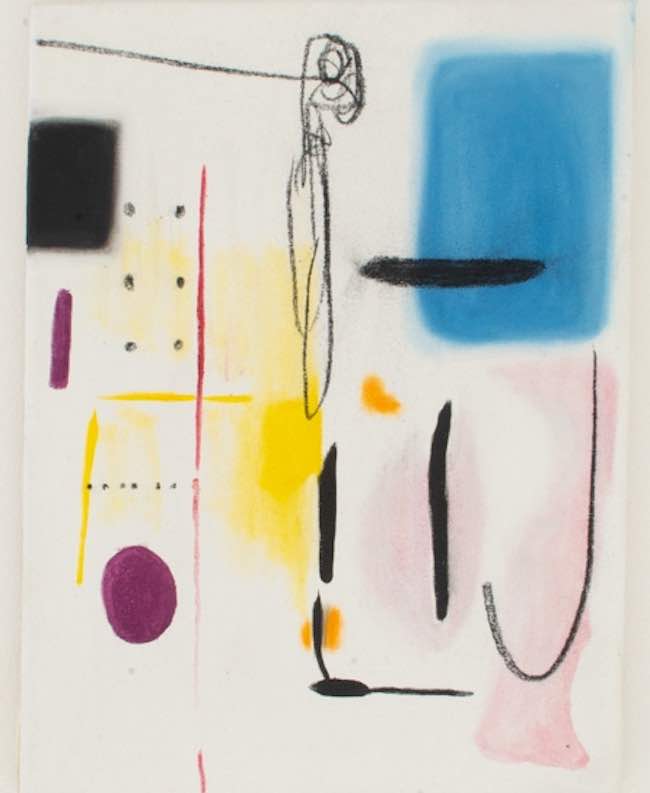
Ma lo fa a modo suo, con l’ermetismo che contraddistingue un Astrattismo tradizionale, legato alle basi espressive lasciate da Wassily Kandinsky in cui le linee erano collegamento tra le varie figure, come se a essere evidenziata dovesse essere la connessione tra i vari elementi che componevano la tela; in Christian Rosa le linee sinuose o in altri casi rette e rigorose, congiungono i tasselli colorati riconducibili alle idee, ai pensieri, alle molteplici opinioni esistenti nella società attuale o ai punti di vista dei maestri a cui sceglie di dedicare una tela.
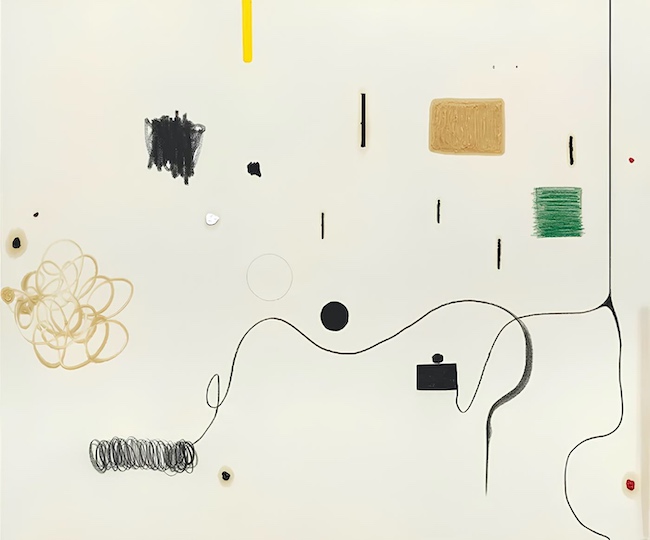
Sì perché in molti titoli Christian Rosa rende omaggio ai grandi autori del passato, o suoi contemporanei, o che hanno costituito un riferimento fondamentale per la sua formazione, introducendo in maniera stilizzata, come è nelle sue corde espressive, piccoli dettagli che contraddistinguono la loro opera artistica.
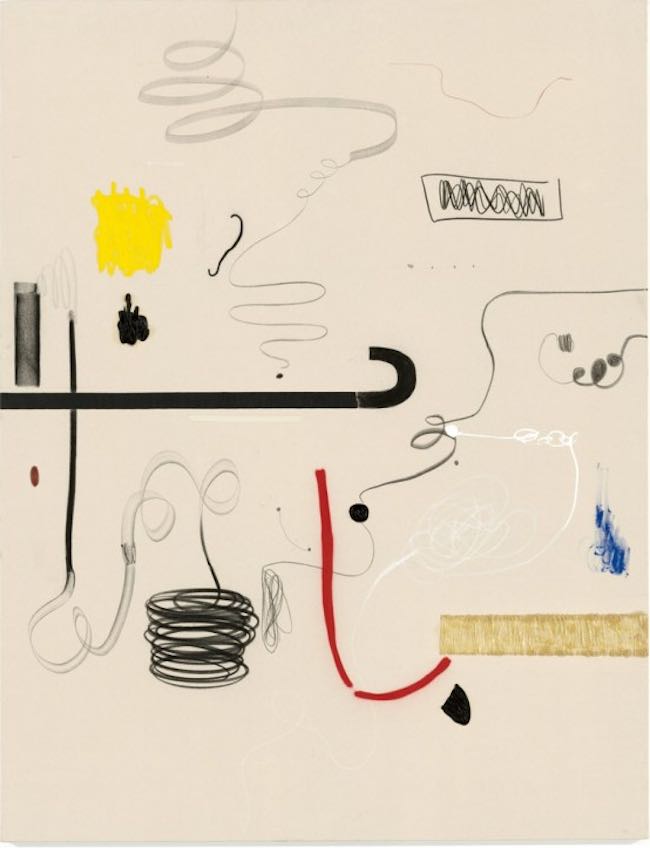
Nel dipinto Oh shit, Ostrovsky cita il grande drammaturgo considerato il fondatore del teatro russo moderno che con le sue opere parlava del mondo dei mercanti, degli artigiani, dei piccoli borghesi che nonostante la loro capacità economica rimanevano rozzi, o sfruttati come nel caso degli impiegati; in questa tela Christian Rosa evoca quel mondo di fine Ottocento, quei dettagli di cui le opere del drammaturgo erano ricche e ne mette in scena i dettagli immaginativi, quelli che secondo lui erano posti attentamente sotto la lente di ingrandimento di Ostrovsky che pur non giudicando in qualche modo sapeva sagacemente cogliere vizi e virtù dei suoi personaggi. Dunque l’espressione legata al titolo lascia emergere il timore di vederlo arrivare per analizzare la contemporaneità come avrebbe fatto lui.
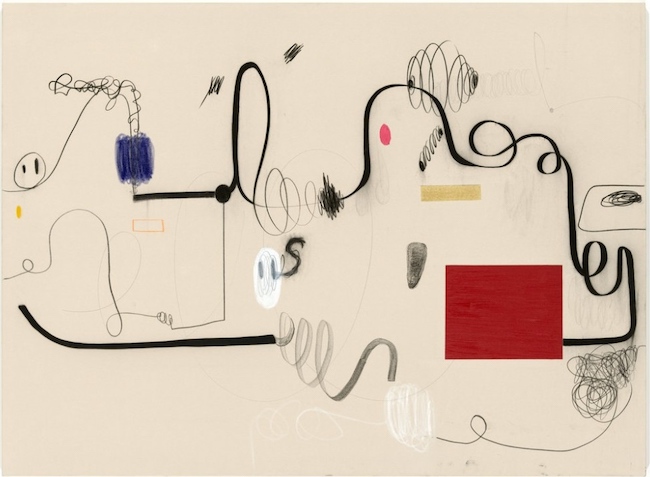
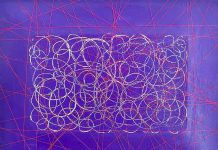
In Daniel Richter wouldn’t say so, l’autore rimarca le profonde differenze espressive tra il maestro presso cui ha studiato e si è formato, decisamente espressionista nello stile, e il suo approccio pittorico che si sposta completamente verso l’Astrattismo Minimalista a cui non manca tuttavia la connessione con l’emozionalità, con quella leggerezza impalpabile a cui si lega anche la sottile ironia di Christian Rosa che rende pertanto le sue tele non solo un viaggio di sensazioni bensì anche di congiunzione con la consapevolezza di sé. Qui la tela grezza, che è la base distintiva delle sue tele, mette in evidenza linee particolarmente flessuose, quasi a spirale in alcuni tratti, realizzate sia con la matita a carboncino che con il bastonino a olio, mentre le figure interconnesse tra loro sembrano voler essere l’estremizzazione degli insegnamenti del maestro che, citando il titolo, non si sarebbe espresso allo stesso modo.
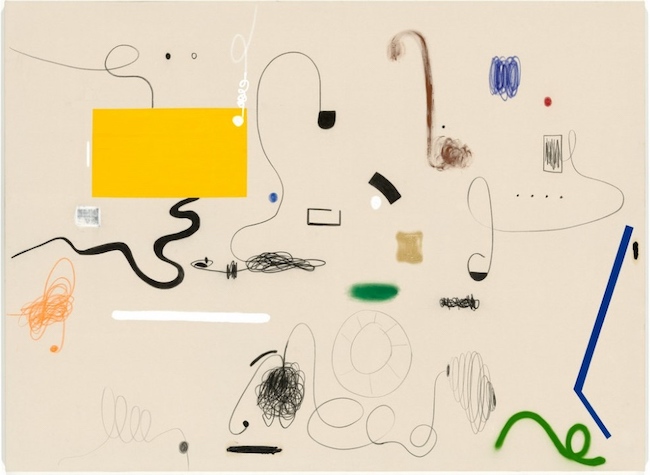
Con il dipinto Google Maps invece Christian Rosa si colloca nella contemporaneità, nella tendenza ormai consolidata ad affidarsi alla tecnologia per navigare in un mondo di cui non si ricorda più nulla, dove non si è capaci di orientarsi se non ricorrendo ai cellulari o ai tablet; questo se da un lato rivela la giovane età dell’autore, non gli impedisce tuttavia di avere uno sguardo critico nei confronti dell’incapacità dell’essere umano odierno di perdersi prima di trovare il modo di ritrovarsi. E dunque il rettangolo giallo che evoca lo schermo del pc, rappresenta quella comodità a cui non si vuole più rinunciare perché parte di un’abitudine ormai indispensabile nella vita, mentre tutti gli altri elementi sembrano costituire il dubbio che se dovesse mancare la connessione probabilmente in molti pochi sarebbero in grado di prendere in mano le vecchie mappe fisiche e lasciarsi guidare da esse.
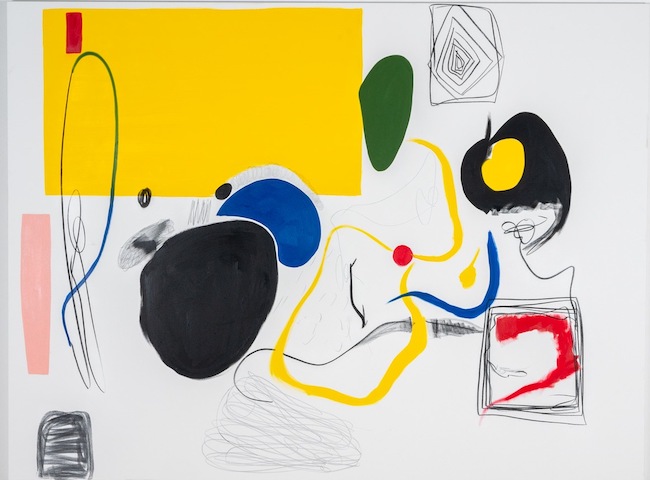
Untitled 2024 è forse l’opera più vicina a Mirò dal punto di vista visivo, poiché la neutralità dello sfondo qui perde spazio per dare priorità alle tonalità forti e intense, quasi esclusivamente primarie se non fosse per il sottile rettangolo rosa sul lato sinistro della tela, con forme tondeggianti accompagnate a linee sinuose su cui sovrasta un altro rettangolo, in questo caso grande, che sta a rappresentare l’apporto razionale necessario nell’esistenza. Perché laddove predominasse l’emozione si creerebbe uno squilibrio che deve essere ribilanciato, perché fluttuare e sollevarsi con la fantasia e con le sensazioni è rassicurante solo se sotto si trova una rete di sicurezza che può frenare la caduta; ecco il motivo per il quale i due rettangoli sono contraddistinti dal giallo, il colore dell’allegria e della sicurezza, e dal rosa, il colore associato alla positività, dunque segnali di quella stabilità che permette all’individuo di non debordare né di perdere se stesso.
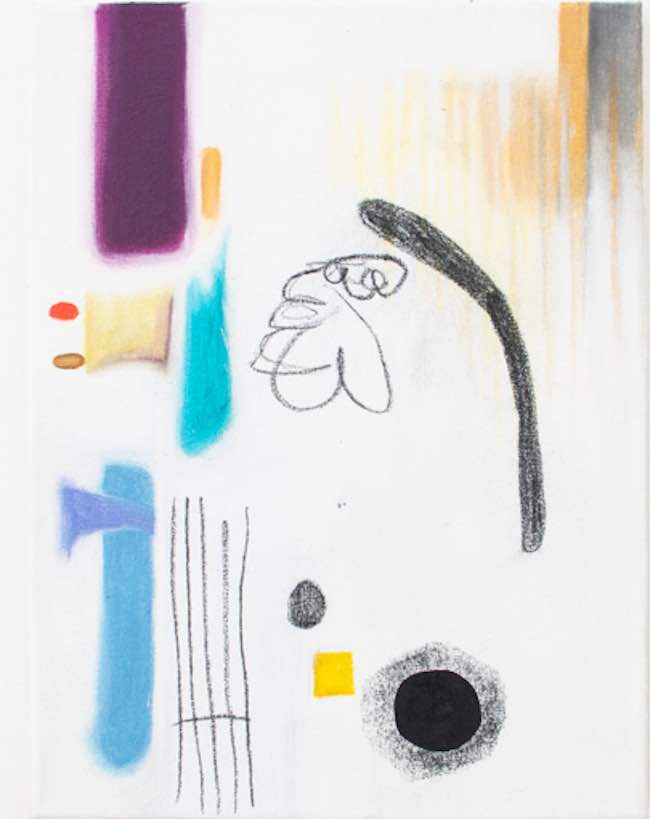
Christian Rosa che vive principalmente in California, ha al suo attivo mostre personali a Berlino, Heilbronn, Keiner, Los Angeles, Londra, Vienna e San Paolo, e collettive a Berlino, Atene, Londra, Venezia.
CHRISTIAN ROSA-CONTATTI
Email: info@kubikgallery.com
Sito web: www.kubikgallery.com/en/artistas/christian-rosa/
Facebook: www.facebook.com/christianrosaweinberger
Instagram: www.instagram.com/christianrosastudio/
Christian Rosa’s Minimalist Abstraction, between sign painting and the precarious balance of contemporary life
Reducing the figurative or chromatic elements on the canvas to their essentials is equivalent to transporting the viewer into a world of concepts, of subtraction through which it is possible to let oneself go in an almost ancestral way, for in a sense the earliest artistic expressions were precisely those marks engraved on stone that came to be called graffiti and that bore witness to a primitive civilization unknown to us except through that legacy left on the rock. Artists who choose to revisit that primordial mark to distinguish their own painting thus reveal a desire to return to a basic language that nonetheless manages to communicate powerfully, focusing attention on a few colors, on geometric and sometimes blurred shapes, but above all on those subtle lines that correspond to an instinctive and immediate gesture. Christian Rosa belongs to this group of artists and connects, becoming its heir, to the entire trajectory of abstraction that revolutionized the painting of the last century.
In the early twentieth century took hold various divergent avant-garde movements seeking to shatter all prior equilibrium and every established pictorial and artistic order to enter the new world, that of innovations, of the rapid pace of progress, and of the advent of technology, where traditional art seemed almost out of step with the times.Alongside Futurism and Cubism, therefore, emerged abstract movements that sought to forcefully assert the supremacy of the plastic gesture over any reference the eye could perceive in reality; the essentiality of the dancing figures by Wassily Kandinsky, considered the father of Abstract Artwhere the visual aspect was reduced to its essence yet strongly linked to the emotionality of the musical notes with which the artist accompanied his creative process, found a counterpart in Russian Suprematism by Kazimir Malevich who eliminated tones and forms while maintaining that unbalanced appearance of figures rendered solely through primary colors. In Malevich’s case the dominant elements were geometric forms, sometimes positioned haphazardly and assembled at random, at other times arranged more methodically, against which neutral backgrounds emerged.
Setting aside the rationalist rigor of Piet Mondrian’s De Stijl, it was, surprisingly a Surrealist, Joan Miró, who connected with the symbolic and essentialist approach of Kandinsky and Malevich, while introducing the curved lines that characterized his art and that boyish touch that struck a chord with the child hidden within every adult. The white or neutral backgrounds were the perfect setting to highlight that world of fish, birds, eyes, and imaginary figures that floated freely across his canvases. A few decades later, Abstract Expressionism, which emphasized the importance of emotion and subjectivity in a work of art as a departure from the detachment of the major abstract movements of the early 20th century, gave rise to an interesting strand of gestural painting. This differed from the approach of the artists mentioned so far in that it introduced profound sensations designed to reveal the inner world of the artist. Thus, the striking impact of Adolph Gottlieb’s repeated spheres, featuring intense, multi-toned colors and bold, emphatic marks, coexisted with the delicacy of Cy Twombly’s fine lines and gentle strokes on neutral backgrounds, which allowed to emerge the poetic intangibility of his natural expressiveness. Within this artistic context, one cannot ignore the highly evocative yet enigmatic nature of these artists’ works; for while it is true that, on the one hand, they stimulate interaction and an immediate dialogue with the viewer, it is also true that they draw upon an instinctive sensibility rooted in a primordial connection to spontaneity that completely departs from any logic in which the mind would predominate.
Brazilian artist Christian Rosa draws on the expressive legacy of the artists just mentioned to create a personal style that lies halfway between Joan Miró’s Abstract Surrealism and Cy Twombly’s visual delicacy, which he synthesizes in canvases that are even more essential and less nuanced and less dense than Twombly’s ones, thereby adhering to Minimalist Abstraction, which in his work takes on a dynamic meaning while remaining rich with references to the artists who played a significant role in his artistic development. But he does so in his own way, with the hermeticism that characterizes traditional Abstraction, rooted in the expressive foundations laid by Wassily Kandinsky in which lines served as connections between various figures, as if the aim were to highlight the link between the various elements composing the canvas; in Christian Rosa the sinuous lines or, in other cases, straight and rigorous ones, connect the colorful elements that can be traced back to the ideas, thoughts, and diverse opinions present in today’s society, or to the perspectives of the masters to whom he chooses to dedicate a canvas. Indeed, in many of his works, Christian Rosa pays homage to the great artists of the past, his contemporaries, or those who have served as fundamental influences on his artistic development, introducing, in a stylized manner characteristic of his expressive style, small details that distinguish their artistic work.
In the painting Oh shit, Ostrovsky references the great playwright considered the founder of modern Russian theater, who, through his works, depicted the world of merchants, artisans, and the petty bourgeoisie, people who despite their economic means remained uncouth or were exploited, as in the case of office workers; in this canvas, Christian Rosa evokes that late-nineteenth-century world, the very details that abounded in the playwright’s works, and brings to life their imaginative nuances, those that, in his view, Ostrovsky carefully scrutinized under a magnifying glass; though he did not pass judgment, he shrewdly captured the vices and virtues of his characters. Thus, the expression linked to the title reveals the fear of seeing him arrive to analyze the contemporary world as he would have done. In Daniel Richter Wouldn’t Say So, the author highlights the profound expressive differences between the master under whom he trained, whose style was decidedly Expressionist, and his own painterly approach which shifts entirely toward Minimalist Abstraction that retains a connection to emotionality and to that intangible lightness also linked to Christian Rosa’s subtle irony, thereby rendering his canvases not merely a journey of sensations, but also a path toward self-awareness.Here, the raw canvas, which is the distinctive foundation of his artworks, highlights particularly sinuous lines, almost spiral-like in some sections, rendered using both charcoal pencil and oil stick, while the interconnected figures seem to represent the extreme expression of his master’s teachings; as the title suggests, the teacher himself would not have expressed himself in the same way.
With the painting Google Maps, on the other hand, Christian Rosa positions himself within the contemporary context, within the now-established tendency to rely on technology to navigate a world of which on no longer remembers anything, where on is unable to find one’s way without resorting to cell phones or tablets; while this reveals the artist’s youth, it does not prevent him from taking a critical look at the inability of modern humans to get lost before finding a way to find themselves again. And so the yellow rectangle, which evokes a computer screen, represents that convenience on no longer wants to give up because it has become an indispensable part of man’s daily lives, while all the other elements seem to convey the doubt that, were the internet connection to fail, very few people would likely be able to pick up old physical maps and let them guide them.
Untitled 2024 is perhaps the work most visually reminiscent of Miró, as the background’s neutrality gives way to bold, intense hues, almost exclusively primary colors, save for a subtle pink rectangle on the left side of the canvas with rounded shapes and sinuous lines overlaid by another, much larger rectangle, representing the rational element essential to existence. In fact, if emotion were to prevail, it would result in an imbalance that would require correction, after all soaring on the wings of imagination and sensations is reassuring only when there is a safety net beneath, ready to cushion a potential fall. That is why the two rectangles are distinguished by yellow, the color of joy and security, and pink, a color associated with positivity; together, they signal the stability that allows the individual to avoid losing his bearings or himself. Christian Rosa, who lives primarily in California, has held solo exhibitions in Berlin, Heilbronn, Los Angeles, London, Vienna, and São Paulo, and has participated in group exhibitions in Berlin, Athens, London, and Venice.