
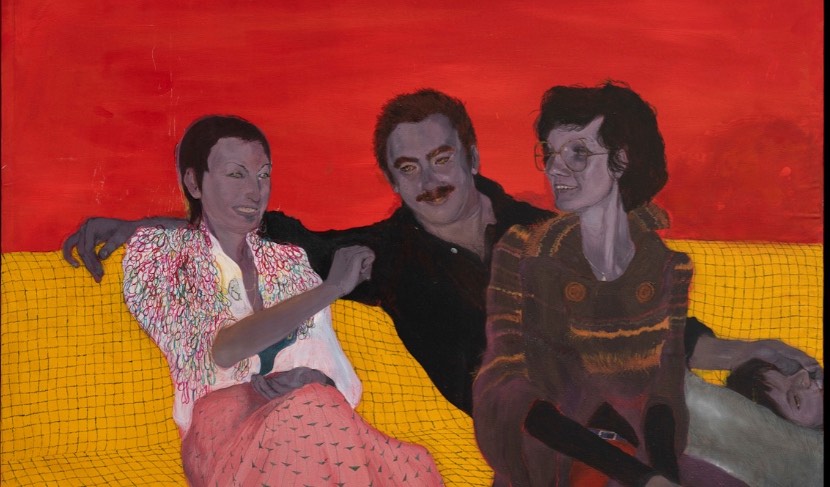
Spesso la pittura attuale mostra tutta la sua capacità evolutiva rispetto ai movimenti del passato a cui attinge, perché la rivisitazione posiziona le opere e gli stili più al passo con il cambiamento dei tempi; tuttavia esistono autori che invece mostrano il bisogno di rimanere fedeli alle linee guida più tradizionali delle correnti a cui si ispirano dando vita a un linguaggio espressivo individuale attraverso il quale mostrano il loro punto di vista su tutto ciò che circonda la loro quotidianità. Questa sfaccettatura più legata al passato contraddistingue le tele di Kai Althoff che svela una capacità analitica pungente e graffiante nei confronti delle figure che incontra nella sua esistenza e che tratteggia in maniera grottesca mettendone in evidenza i difetti, le storture, le smorfie interiori ed esteriori che emergono in virtù della sua personale interpretazione.
Il periodo storico in cui nacque l’Espressionismo, quell’epoca a cavallo tra la fine dell’Ottocento e l’inizio del Novecento, coincise con un’esigenza di riconsiderare l’essere umano non più come individuo calato all’interno di una società a cui doveva adeguarsi, piuttosto a dover essere messe in evidenza erano le sue pulsioni, i suoi malesseri, gli interrogativi e le sofferenze generate dalla realtà circostante. Questo nuovo approccio si manifestò come reazione a una rivoluzione industriale che aveva profondamente modificato la figura dell’uomo, ormai considerato dalle classi più abbienti come un ingranaggio della catena di montaggio; le ricerche sull’inconscio e sui sogni del fondatore della psicoanalisi Sigmund Freud furono il punto di partenza per un nuovo umanesimo che investì anche il mondo artistico. Tra tutte le avanguardie di quella fase, la più orientata a considerare ogni essere umano come un mondo a sé, spesso estraneo alla società in cui era costretto a vivere, altre in balìa di una dimensione esistenziale che non aveva scelto, fu l’Espressionismo che mostrò la spiccata capacità di rinunciare al senso estetico e di sovvertire tutte le regole accademiche pur di assecondare ambientazioni, colori e narrazione descrittiva, a quel mondo interiore fino a quel momento escluso dall’arte.
L’approccio figurativo e formale variava di artista in artista dunque i più esistenzialisti e sofferenti nei confronti di una società che correva velocemente verso i conflitti mondiali, sceglievano una rappresentazione più delicata nel tratto ma intensa nei concetti e nella descrizione, come nel caso dell’austriaco Egon Schiele, oppure fortemente cupa e tetra come nelle tele del norvegese Edvard Munch; quelli che volevano concentrarsi invece sulle proprie emozioni, sul piacere dell’osservazione delle piccole cose quotidiane in grado di diffondere felicità si orientarono verso una tavolozza cromatica intensa, irreale, quasi violenta nella sua pienezza e con i i contorni netti e grossi, come nei francesi Henri Matisse e André Derain. Ma tra i vari interpreti dell’Espressionismo vi furono anche quelli che, al contrario, volevano denunciare la superficialità e l’ipocrisia borghese delle classi più facoltose optando per una deformazione dei volti, quasi a voler mostrare ciò che nella facciata superficiale veniva nascosto, come l’austriaco Oskar Kokoshka e il tedesco George Grosz. Quello più crudo e mordace fu dunque l’approccio comune agli artisti di lingua germanica e che ebbe la massima diffusione grazie agli appartenenti al gruppo Die Brücke, di cui furono maggiori esponenti Ernst Ludwig Kirchner, Erich Eckel, Emil Nolde e Otto Mueller, che esprimevano nei loro dipinti la feroce critica e il rifiuto nei confronti del perbenismo e della rigida quanto formale società dell’epoca. Le tinte violente e spesso scure, completamente decontestualizzate dalla realtà, accompagnavano figure umane e paesaggi deformati da linee taglienti e aggressive e frequentemente venivano descritte scene di nudo immerse nella natura, quasi a suggerire la posizione di distacco da una società che non era più abituata a considerare l’essere umano nella sua semplicità. L’artista tedesco Kai Althoff attinge proprio alla tradizione espressionista del suo paese senza distaccarsene o rivoluzionandone lo stile, piuttosto lo riadatta alle tematiche più moderne introducendovi il collage, mantenendone la figurazione, la sagacia e la capacità di metterne in risalto vizi e virtù attraverso una raffigurazione in cui il grottesco si trasforma in mezzo per condurre l’osservatore verso il concetto e la riflessione sulle tematiche che stanno a cuore all’autore.
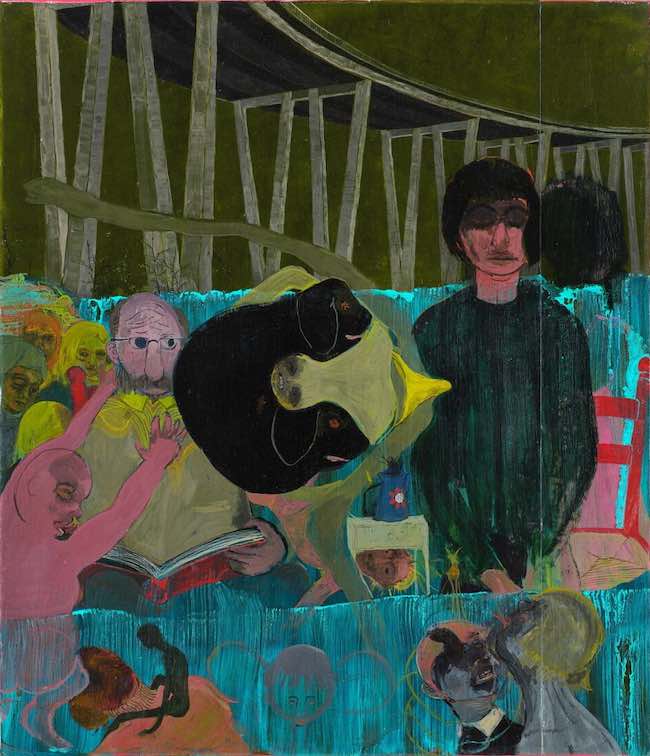
I fantasmi, le paure, le manie, l’indifferenza, sono tutti elementi che si manifestano di opera in opera con colori cupi, ombrosi, a volte terrosi, quasi Kai Althoff volesse mettere l’accento sui contrasti e sulle ambiguità di una società che ha perso le basi essenziali su cui si era fondata lasciando così le persone in balìa di una battaglia quotidiana per ottenere il rispetto, l’aiuto e l’empatia che invece apparteneva ai tempi passati.
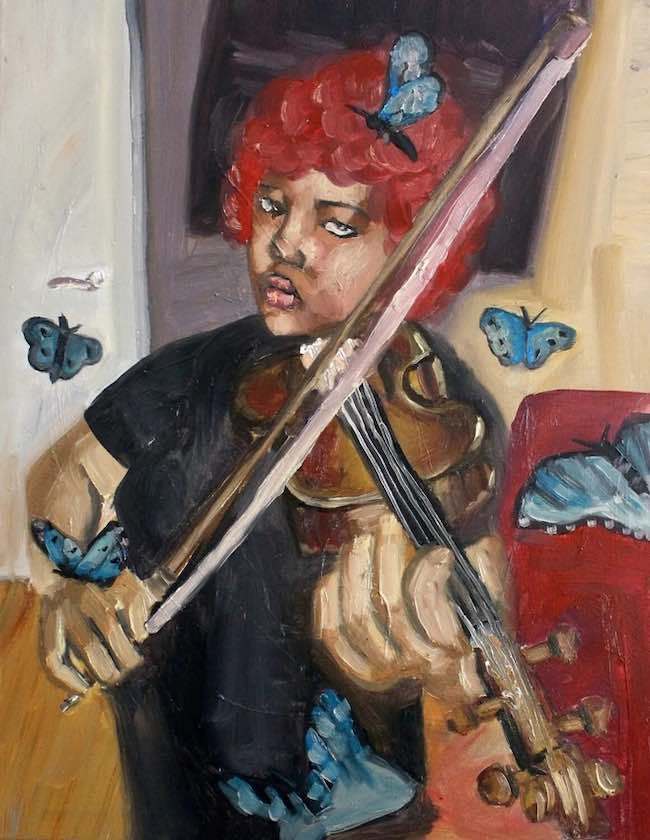
Le linee dei contorni, tipiche dell’Espressionismo sono sottili, similmente a quelle di Schiele, e raccontano figure i cui sguardi sembrano spenti, rassegnati a una contemporaneità in cui non si sentono a proprio agio pur sapendo di non poter fare a meno di vivere in essa; le scene sono immaginarie, a volte più calate nella realtà osservabile altre invece completamente scomposte nella disposizione sulla tela, ma in tutti i casi si nota la sottile inquietudine che si nasconde dietro a ogni scena.
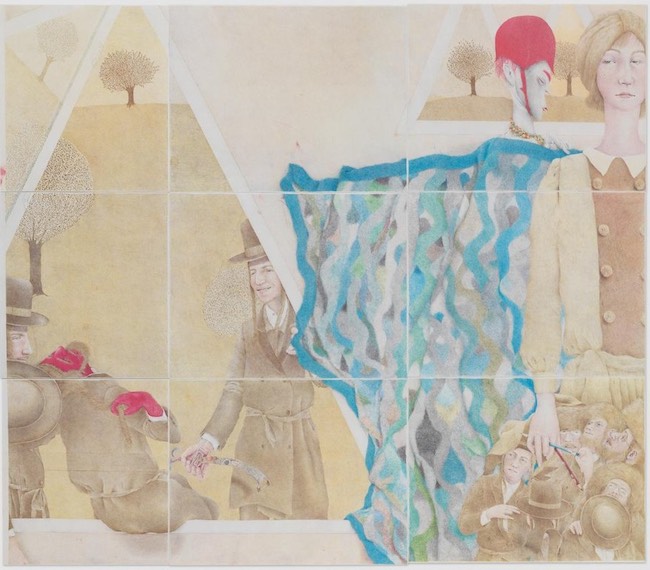
L’attitudine di Kai Althoff è infatti quella di lasciar emergere l’elemento disturbante, la stranezza che sembra stonare rispetto a tutto il contesto ma che in realtà appartiene a ciò che la maggior parte delle persone vive nella fretta delle sue giornate, come nel caso del dipinto Er will alles sehen, dove una ragazza in minigonna è costretta a subire gli sguardi viziosi di un personaggio seduto sul bordo della strada, nudo, che il suo amico-senzatetto sembra voler calmare.
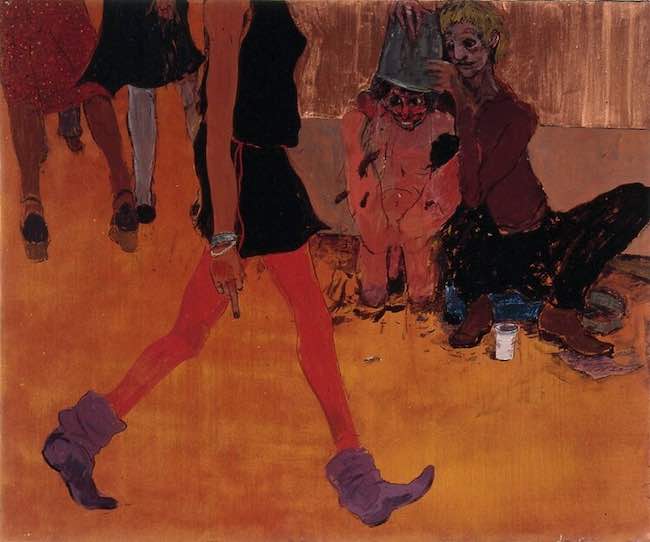
In questa opera emerge una tematica molto attuale, cioè quella del lasciare che chiunque possa fare e dire ciò che pensa, anche senza alcun tipo di filtro, perché la società non è più in grado di stabilire una linea netta di confine tra ciò che è giusto e ciò che è sbagliato, permettendo alle persone di manifestare con arroganza anche le pulsioni più irrispettose e fastidiose. La donna, di contro, a modo suo si ribella a quello sguardo indecente mostrando il dito medio che rappresenta il desiderio di sentirsi libera di vestirsi come meglio crede senza dover subire le perversioni di qualcuno. Ecco perché le tonalità sono terrose, terrene e quasi sporche per la crudezza della scena.
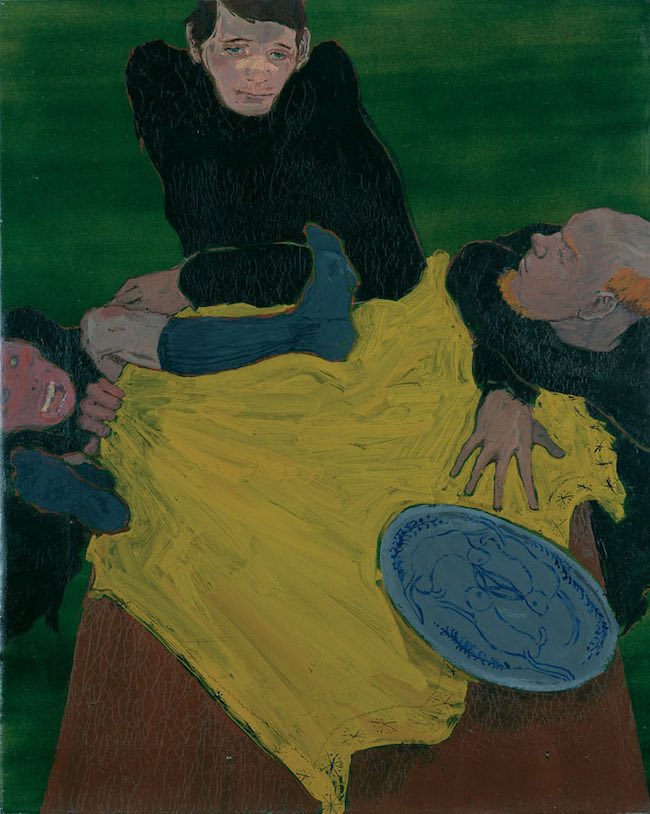
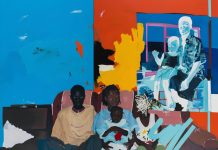
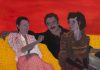
In Senza titolo, uno dei tanti dipinti a cui Kai Althoff sceglie di non dare una traccia per indurre l’osservatore a fare le sue considerazioni personali solo basandosi su ciò che vede emergere dalla narrazione visiva, un uomo cade rovinosamente aggrappandosi alla tovaglia del tavolo dove si trova insieme ad altri due individui che non sembrano affatto turbati né preoccupati per quella caduta, come se pur trovandosi a condividere quello spazio fossero in realtà perfetti estranei incuranti di ciò che accade al loro vicino. Questo lavoro evidenzia la tendenza tutta contemporanea a rimanere completamente indifferenti rispetto a ciò che accade a chi è in stretto contatto, come se l’individualismo attuale inducesse le persone a pensare solo a se stesse dimenticando le emozioni di compassione, di mutuo soccorso, di aiuto che invece nel passato neanche troppo lontano erano dominanti nella società. Anche in questo caso le tonalità sono scure, piene, quasi volessero enfatizzare il senso di distacco tra esseri umani che si accentua in un mondo in cui la condivisione è solo quella virtuale e non si compie invece nella quotidianità reale.
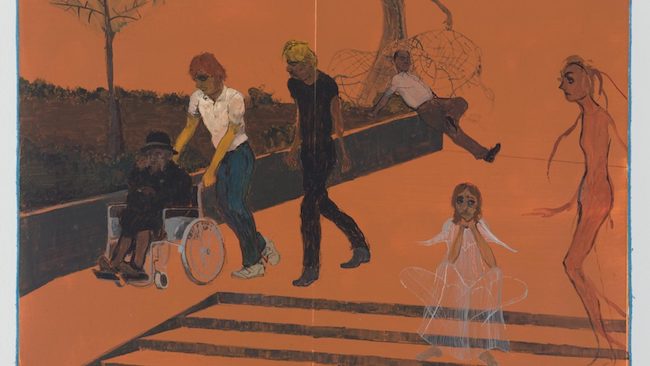
Kein Respekt è forse una delle tele più ermetiche di Kai Althoff, perché la scena non sembra sottolineare azioni o atteggiamenti che inducano a ragionare sulla situazione suggerita dal titolo che implicherebbe una mancanza di rispetto da parte di qualcuno verso qualcun altro; dunque la narrazione appare sospesa, quasi in attesa che accada qualcosa che giustifichi quella frase indiziaria, quasi i personaggi ritratti siano in procinto di muoversi per compiere un’azione diversa da quella visibile a un primo sguardo. La signora sulla sedia a rotelle appare serena, tranquilla poiché guidata da un uomo, forse il figlio o forse un parente, e non nota quella bambina in primo piano in trasparenza, dettaglio che la avvicina alla figura celestiale dell’angelo, e che forse suggerisce il destino prossimo che aspetta l’anziana. La donna sul lato destro del dipinto è un’allegoria dell’albero della vita privato della chioma rigogliosa della giovinezza e dunque a sua volta portatrice di un messaggio di tramonto, una visione del termine del percorso che sta per attuarsi; in ogni caso l’opera è sospesa, misteriosa, l’osservatore si sente disorientato dalla disconnessione tra l’atmosfera visibile e ciò che suggerisce il titolo, sentendosi costretto ad analizzare uno a uno i volti dei protagonisti cercando di indovinarne i pensieri.
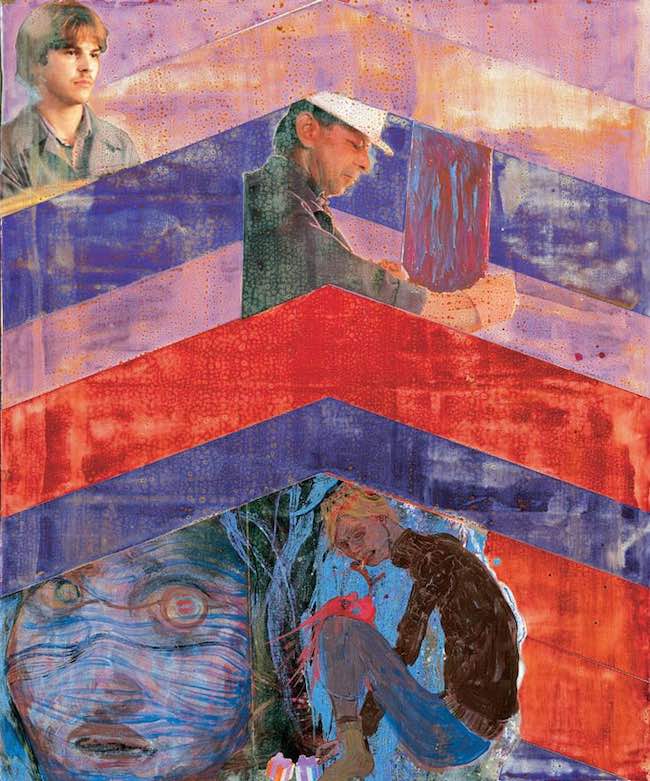
Kai Althoff ha al suo attivo la partecipazione a mostre collettive e personali in Europa, Stati Uniti, Regno Unito, America Latina, Russia, le sue opere fanno parte di importanti pubblicazioni internazionali dedicate all’arte contemporanea ed è rappresentato da Gladstone Gallery di New York, dalla Galerie NEU di Berlino e dalla Michael Werner Gallery di Londra.
KAI ALTHOFF-CONTATTI
Email: info@gladstonegallery.com
Sito web: https://gladstonegallery.com/artist/kai-althoff/
Instagram: www.instagram.com/k_althoff1969/
The grotesque side of contemporary life in Kai Althoff’s traditional Expressionism
Contemporary painting often demonstrates its full capacity for evolution compared to the past movements from which it draws inspiration, because this reinterpretation brings works and styles more in step with the changing times; however, there are artists who, on the other hand, feel the need to remain faithful to the more traditional guidelines of the movements that inspire them, creating an individual expressive language through which they convey their perspective on everything surrounding their daily lives. This facet, more closely tied to the past, distinguishes the canvases by Kai Althoff who reveals a biting, incisive analytical ability regarding the figures he encounters in life, portraying them in a grotesque manner that highlights their flaws, distortions, and the inner and outer grimaces that emerge through his personal interpretation.
The historical period in which emerged Expressionism, that era spanning the late nineteenth and early twentieth centuries, coincided with a need to reconsider the human being no longer as an individual embedded within a society to which he had to conform, but rather to highlight his impulses, discomforts, the questions, and the suffering generated by the surrounding reality. This new approach was a reaction to the Industrial Revolution which had profoundly altered the nature of humanity, now viewed by the wealthier classes as a cog in the assembly line; the research on the unconscious and dreams conducted by the founder of psychoanalysis, Sigmund Freud, served as the starting point for a new humanism that also swept through the art world. Among the avant-garde movements of that era, Expressionism was the one most inclined to view every human being as a world unto themselves, often alienated from the society in which they were compelled to live, or else at the mercy of an existential dimension they had not chosen, that showed a remarkable ability to abandon aesthetic conventions and subvert academic rules in order to align settings, colors, and descriptive narratives with that inner world which, until then, had been excluded from art.
The figurative and formal approach varied from artist to artist, thus, the more existentialists who felt anguish over a society racing headlong toward world wars chose a style that was more delicate in its brushwork but intense in its concepts and depiction, as in the case of the Austrian Egon Schiele, or one that was deeply somber and gloomy, as in the canvases of the Norwegian Edvard Munch; those who, on the other hand, wanted to focus on their own emotions on the pleasure of observing the small, everyday things capable of spreading happiness, turned to an intense, surreal color palette, almost violent in its richness, with sharp, bold outlines, as seen in the paintings of the French artists Henri Matisse and André Derain. But among the various practitioners of Expressionism, there were also those who, on the contrary, sought to denounce the superficiality and bourgeois hypocrisy of the wealthier classes by opting for a distortion of faces, as if to reveal what lay hidden beneath the superficial façade, such as the Austrian Oskar Kokoschka and the German George Grosz.
The harshest and most scathing approach was thus common among German-speaking artists and reached its widest audience through the members of the group Die Brücke, whose leading figures included Ernst Ludwig Kirchner, Erich Eckel, Emil Nolde, and Otto Mueller, who expressed in their paintings fierce criticism of and rejection toward the hypocrisy and the rigid, formal society of the time. The vivid and often dark colors, completely detached from reality, accompanied human figures and landscapes distorted by sharp, aggressive lines; scenes of nudes immersed in nature were frequently depicted, as if to suggest a sense of detachment from a society that was no longer accustomed to viewing human beings in their simplicity. The German artist Kai Althoff draws precisely on his country’s Expressionist tradition without distancing himself from it or revolutionizing its style, rather, he adapts it to more modern themes by introducing collage, while maintaining its figurative nature, its wit, and its ability to highlight vices and virtues through a depiction in which the grotesque becomes a means of guiding the viewer toward the concept and reflection on the themes close to the artist’s heart.
Ghosts, fears, obsessions, indifference, are all elements that manifest themselves from work to work through somber, shadowy, and at times earthy colors, as if Kai Althoff were seeking to emphasize the contrasts and ambiguities of a society that has lost the essential foundations upon which it was built, thus leaving people at the mercy of a daily struggle to obtain the respect, help, and empathy that once belonged to times past. The contour lines, typical of Expressionism, are thin, similar to those of Schiele, and depict figures whose gazes seem lifeless, resigned to a contemporary world in which they do not feel at ease, even though they know they have no choice but to live in it; the scenes are imaginary, sometimes more grounded in observable reality, while others are completely disjointed in their arrangement on the canvas yet, in every case, one notices the subtle unease lurking behind each scene. Kai Althoff’s approach is, in fact, allowing to emerge the unsettling element, the strangeness that seems out of place in the overall context but which, in reality, is part of what most people experience in the rush of their daily lives, as in the painting Er will alles sehen where a girl in a miniskirt is forced to endure the leering stares of a naked man sitting on the side of the road, whom his homeless friend seems to be trying to calm down.
This work highlights a very timely theme, that of allowing anyone to do and say whatever he wants, even without any kind of filter, because society is no longer able to draw a clear line between what is right and what is wrong, thereby enabling people to arrogantly express even their most disrespectful and annoying impulses. The woman, on the other hand, rebels in her own way against that indecent gaze by raising her middle finger, a gesture representing her desire to feel free to dress as she pleases without having to endure anyone’s perversions. This is why the tones are earthy, mundane, and almost dirty, reflecting the rawness of the scene. In Untitled, one of the many paintings to which Kai Althoff chooses not to give a title to encourage the viewer to draw his own conclusions based solely on what emerges from the visual narrative, a man falls spectacularly clinging to the tablecloth of the table where he sits alongside two other individuals who do not seem at all disturbed or concerned by his fall as if, despite sharing that space, they were in reality complete strangers, indifferent to what happens to their neighbor. This work puts in evidence the very contemporary tendency to remain completely indifferent to what happens to those in close contact with us, as if today’s individualism were leading people to think only of themselves, forgetting the emotions of compassion, mutual aid, and support that, in the not-too-distant past, were dominant in society. Here, too, the tones are dark and rich, as if to emphasize the sense of detachment between human beings that is accentuated in a world where sharing exists only virtually and is not realized in real daily life. Kein Respekt is perhaps one of Kai Althoff’s most enigmatic canvases, because the scene does not seem to underline actions or attitudes that would prompt reflection on the situation suggested by the title, which implies a lack of respect on the part of one person toward another, thus the narrative appears suspended, almost as if waiting for something to happen that would justify that suggested phrase, as if the figures portrayed were about to move to perform an action different from what is visible at first glance. The woman in the wheelchair appears serene and calm as she is being guided by a man, perhaps her son or a relative, and does not notice the little girl in the foreground, depicted in transparency, a detail that brings her closer to the celestial figure of an angel and perhaps hints at the imminent fate awaiting the elderly lady. The woman on the right side of the painting is an allegory of the tree of life stripped of the lush foliage of youth and thus, in turn, a bearer of a message of twilight, a vision of the end of the journey that is about to unfold; in any case, the work is suspended and mysterious, the viewer feels disoriented by the disconnect between the visible atmosphere and what the title suggests, feeling compelled to analyze the faces of the figures one by one in an attempt to guess their thoughts. Kai Althoff has participated in group and solo exhibitions in Europe, the United States, the United Kingdom, Latin America, and Russia, his works are featured in major international publications dedicated to contemporary art, and he is represented by Gladstone Gallery in New York, Galerie NEU in Berlin, and the Michael Werner Gallery in London.