
L’osservazione della realtà intorno all’essere umano viene accompagnata nella contemporaneità dal caos, dal rumore di un vivere che deve correre verso qualcosa, che ha bisogno di arrivare verso traguardi che troppo spesso inducono a dimenticare il piacere del viaggio e di tutto ciò che appare davanti agli occhi nel momento contingente. Un ritmo più lento, la capacità di riscoprire il senso dell’esistenza al di là dello scopo finale o di un risultato utilitaristico, racchiude in sé una capacità di ascolto del silenzio, di quella dimensione sospesa all’interno della quale riuscire a guardarsi dentro oppure semplicemente saper vedere la bellezza della sostanza, del fermo immagine che consente all’interiorità di connettersi con gli spazi circostanti fino ad apprendere a lasciar fuoriuscire la spontaneità e la naturalezza che abitualmente vengono messe da parte per calarsi nel pragmatismo della contingenza. Questo approccio costituisce la caratteristica principale del protagonista di oggi, un autore recentemente scomparso che ha lasciato in eredità le sue suggestioni affascinanti e fatte di poetici silenzi.
La pittura di paesaggio ha cominciato a essere considerata al pari del ritratto e dei soggetti religiosi con la nascita del Romanticismo, in particolare quello inglese che si focalizzò appunto su vedute rasserenanti di campagna, come nelle tele di John Constable, o in panorami di mari in tempesta e di cieli minacciosi che contraddistinsero il sublime delle tele di William Turner. Qualche anno dopo fu l’Italia ad avere due importanti scuole paesaggistiche che appresero ed approfondirono la ricerca sulla luce di Turner rendendola predominante sull’ombra dando così alle loro opere un aspetto realistico e solare, la Scuola di Posillipo a Napoli e, poco dopo, quella dei Macchiaioli toscani la cui tendenza alla suddivisione della pennellata in macchie anticipò di qualche anno le teorie dell’Impressionismo.
Dopo la scomposizione dell’immagine con riflessi intensi di luce compiuta dai grandi autori come Claude Monet, Alfred Sisley, Camille Pisarro e Joaquin Sorolla, la pittura ricercò un ordine diverso, seppur sempre utilizzando le nozioni acquisite nell’esperienza impressionista, trovando nel Divisionismo un equilibrio tra scomposizione e resa fedele della realtà. In tutti questi movimenti però l’osservazione era puramente oggettiva ed estetica, non emergeva l’approfondimento della contemplazione, non si percepiva la sensazione dell’autore che lasciava vagare il suo sguardo sui paesaggi connettendosi alla propria interiorità, rimanendo sulla superficie del visto e non del vissuto con l’anima. Fu necessario attendere gli inizi del Novecento per assistere a un cambio completo di paradigma poiché in quel periodo a essere esso al centro della ricerca artistica fu l’uomo con la sua presenza e il suo passato, le sue inquietudini e le paure; inizialmente la Metafisica ritrasse vedute di città silenti, di memorie del passato che entravano nel presente sottolineandone l’enigma e un senso non sempre compreso.
Poi alle atmosfere di Giovanni De Chirico, ma soprattutto ai paesaggi malinconici e pieni di emozioni di Carlo Carrà si allacciarono quelle del Surrealismo di René Magritte che aggiunse ironia e simboli per vedere oltre l’immagine scavando il significato più nascosto introducendo il concetto di Metafisica all’interno della destabilizzazione surrealista. Il senso di solitudine interiore e di suggestione delle vedute dei sobborghi statunitensi ebbe poi il suo massimo rappresentante in Edward Hopper che utilizzò sapientemente le luci e le ombre per rappresentare i disagi esistenziali dell’uomo di metà Novecento, il suo desiderio inconscio di rimanere legato alla natura nonostante l’avanzare di un progresso che stava cambiando l’aspetto delle grandi città in cui l’essere umano si sentiva sempre più destabilizzato.
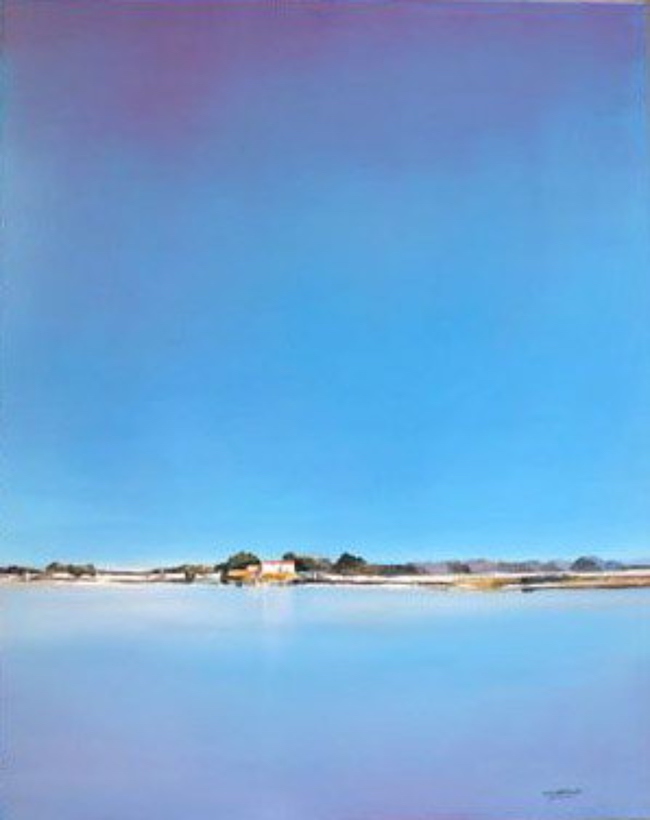
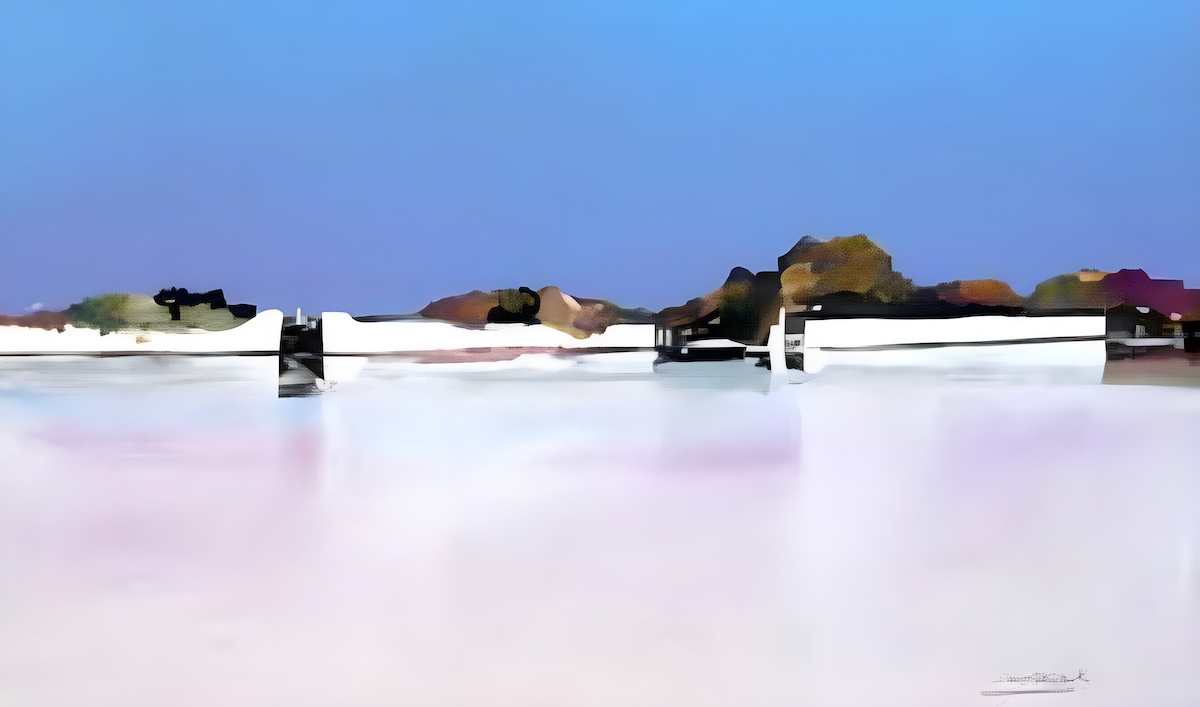
L’artista francese Jean-Luc Myskowski dà una versione del paesaggio assolutamente essenzializzata, nel senso che la descrizione è affidata a piccole linee in cui le case o gli oggetti sono indistinguibili poiché i loro dettagli sono irrilevanti rispetto alla sensazione generale di cui le tele sono permeate; la sua pittura sembra essere un’eco proveniente dall’interno di un sé che non ha bisogno di vedere, piuttosto ciò che è fondamentale è lasciare che le emozioni legate a un istante vissuto, a un’esperienza compiuta o semplicemente alla necessità di distaccarsi dalla contingenza, fluiscano in maniera libera ma rasserenante. Ciò che infatti colpisce è l’atmosfera distesa, la pacatezza e la suggestione generata da quei paesaggi legati all’anima, a un sentire che va oltre ogni razionalità, ogni processo logico che distoglierebbe dalla lirica della percezione.
I cieli occupano la maggior parte dello spazio della tela, quasi a sottolineare l’appartenenza alla dimensione del sogno lucido, quello in cui lo sguardo vede e la mente vaga innalzandosi verso l’immaginazione; la parte inferiore dei dipinti è invece contraddistinta da distese piatte di terra o di mare, come se l’autore volesse porre l’accento sul passaggio tra ciò su cui la vita si poggia, e dunque il punto in cui l’essere umano deve necessariamente rimanere legato alla realtà, e ciò che invece diviene stimolo per oltrepassare la quotidianità e tendere verso possibilità più spirituali, più ascensionali e poetiche.
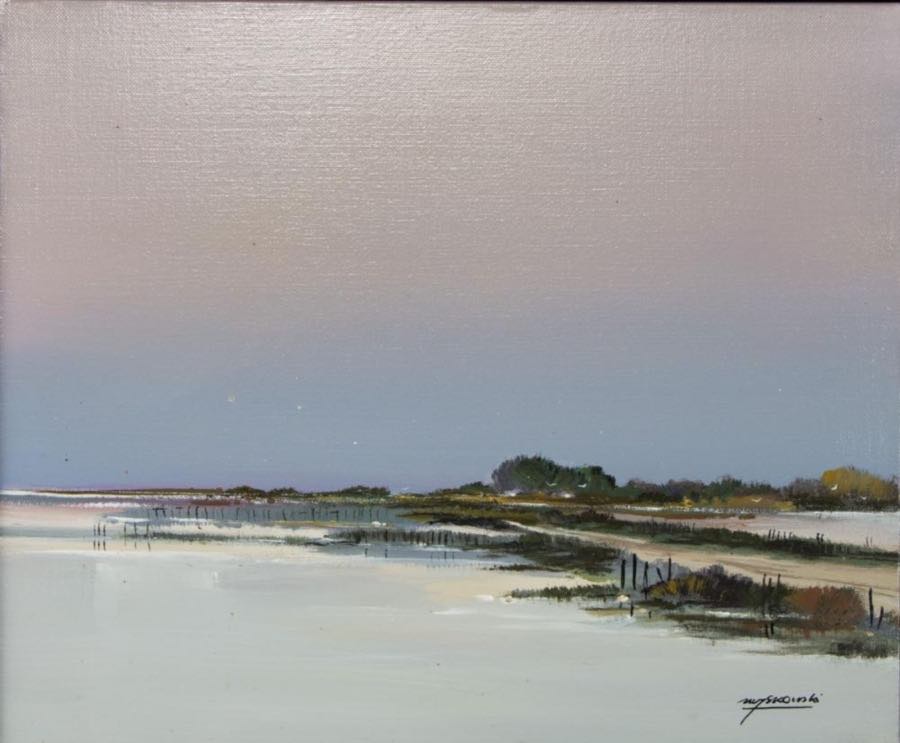
I suoi panorami appartengono a luoghi-non-luoghi, sono legati a uno scorcio interiore più che a qualcosa di individuabile o attribuibile a uno specifico posto nel mondo, ed è questo il motivo per cui i dettagli diventano irrilevanti e per cui gli edifici, le costruzioni, sono miniaturizzate quasi a evidenziare l’esiguità dell’essere umano davanti all’eternità e alla bellezza musicale della natura. In qualche modo questo concetto riprende la poetica espressiva di William Turner ma contrariamente al maestro inglese, Jean-Luc Myskowski lascia in disparte le turbolenze e la tempestosità per puntare il focus sulla calma, su una sensazione di tranquillità da cui l’interiorità si sente cullata proprio in virtù di quell’essere piccola in un mondo immenso e in una natura non minacciosa quanto invece avvolgente.
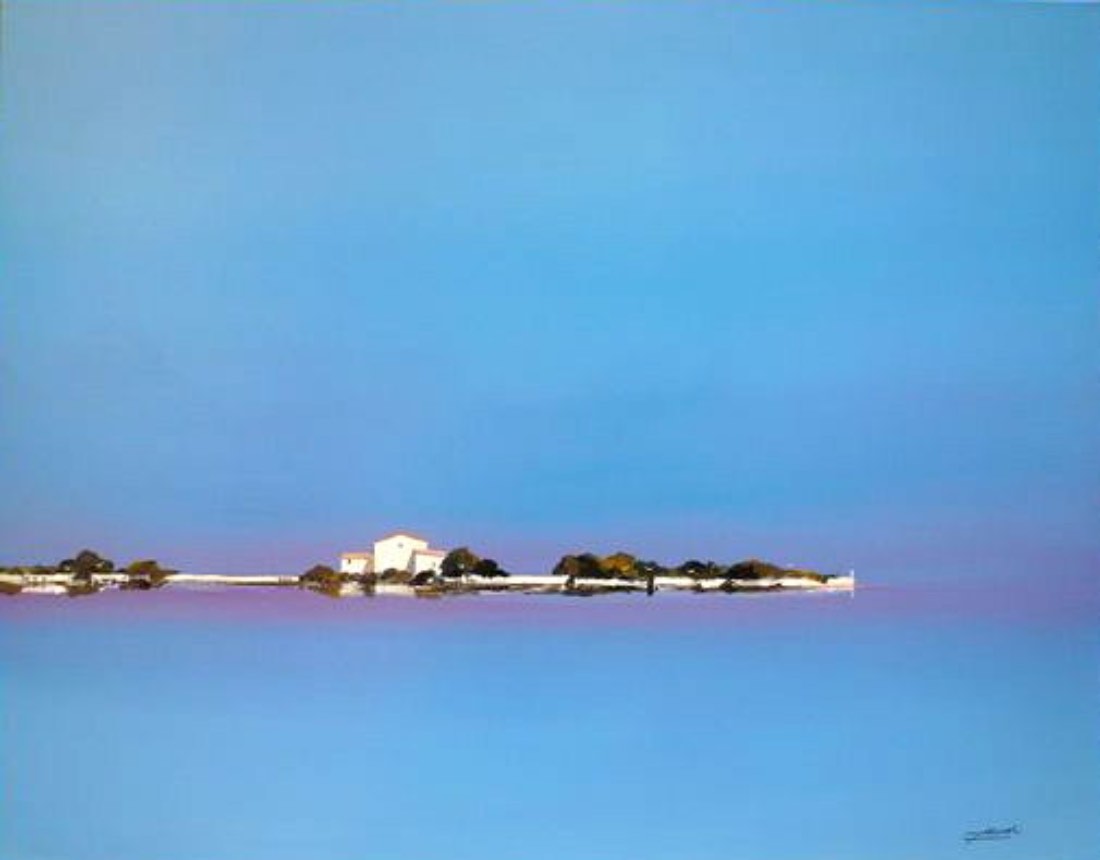
In Plein été il confine tra cielo e mare sembra essere inesistente inducendo la striscia di terra dove spiccano alcune abitazioni ad apparire sospesa come appartenesse a una dimensione parallela, una terra di mezzo in cui tutto è relativo, dove ogni realtà è diversa proprio perché al di fuori dei limiti imposti dalla razionalità. La gamma cromatica infatti è quella del celeste che sfuma verso il turchese, simbolicamente associato alla serenità, alla saggezza intesa come capacità di vedere oltre il tangibile spostandosi verso l’immateriale.
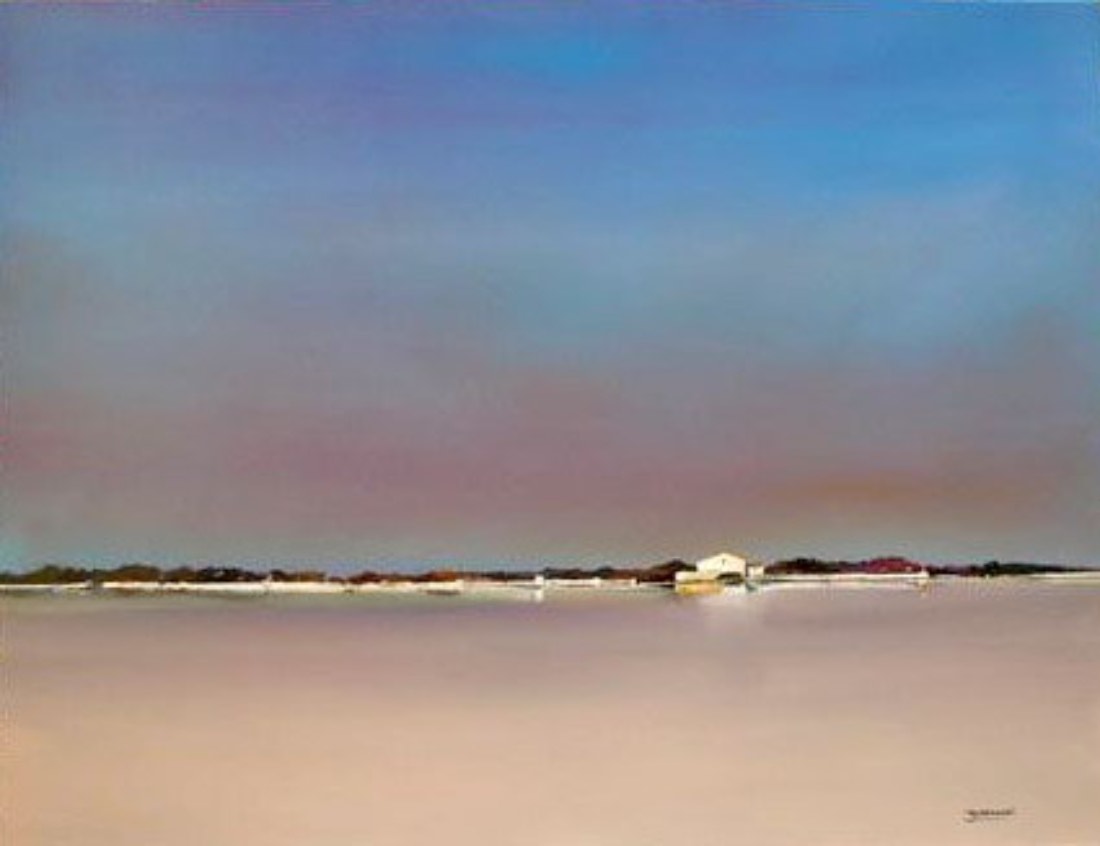
Quiétude esprime forse ancor più il senso di pace, di tranquillità che l’animo di Jean-Luc Myskowski sembra costantemente cercare perché è tutto ciò di cui necessita per poter liberare il lato creativo, perché ogni volta che il suo sguardo si perde e si sofferma su un paesaggio a evidenziarsi è il desiderio di trovare la serenità narrativa. In questo dipinto la luce che si diffonde sulla distesa paesaggistica è soffusa come quella del tramonto, suggerito dalla linea rossastra del cielo nella parte più vicina all’orizzonte, ed evoca simbolicamente il finire di un giorno e l’attesa di una notte che permetterà alla natura, e all’emozione, di prendersi una pausa prima di rinascere il giorno successivo. Questo è il motivo per cui la sensazione predominante è quella della pausa, di un fermo immagine che suggerisce l’esigenza di lasciar addormentare la coscienza e la mente per predisporsi a un risveglio che figurativamente si correla a quello dell’anima.
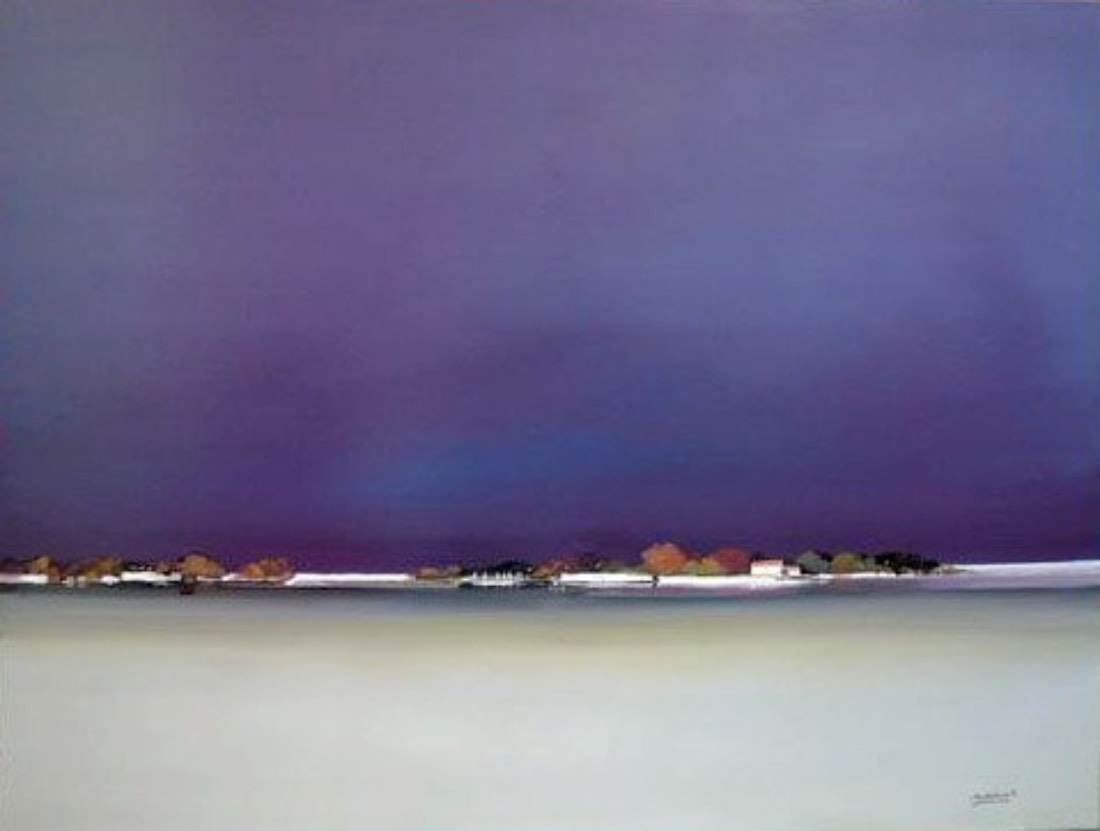
Anche nel dipinto Après la pluie, nonostante racconti di un cielo cupo che attende di rischiararsi dopo la pioggia, come suggerito dal titolo, è completamente distante il senso di irrequietezza tempestosa del sublime romantico, piuttosto a fuoriuscire è la quiete leopardiana senza però l’accezione di temporaneità della serenità anzi, in realtà per Jean-Luc Myskowsky il sollievo metaforico di essere usciti da un periodo complesso, identificato con il temporale, è invece la sensazione predominante, quella che infonde all’esistenza un’accezione positiva, evolutiva, tanto quanto l’interiorità è condotta a riflettere e a meditare proprio in virtù delle atmosfere dell’autore.
In questa tela la linea che divide la terra dal cielo è persino più miniaturizzata, quasi impercettibile proprio per evidenziare la forza di una natura che per quanto possa spaventare in alcuni frangenti, è sempre benevola nei confronti dell’essere umano e delle sue creature animate e inanimate. Gli alberi che svettano dalla lingua di terra, sembrano proteggere l’unica abitazione dello scenario, per nulla stravolti dal temporale e dunque solidi e coriacei come solo ciò che non si oppone al susseguirsi degli eventi riesce a essere.
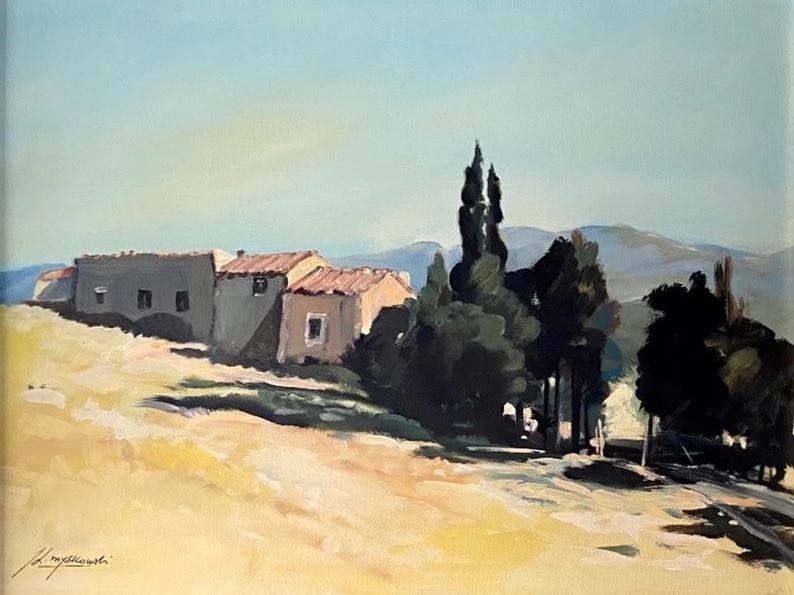
Jean-Luc Myskowski, nato nel nord della Francia, diplomato a Parigi ma poi trasferitosi per lungo tempo a Marsiglia, ha attratto il pubblico e la critica per i suoi paesaggi della Camargue e ha esposto le sue opere in Francia e in molte gallerie in Europa e negli Stati Uniti.
JEAN-LUC MYSKOWSKI
Email: contact@lapeinture.com
Sito web: www.lapeinture.com/jean-luc-myskowski
Facebook: www.facebook.com/jeanluc.myskowski.9
Instagram: www.linkedin.com/in/jean-luc-myskowski-45a6b6162/
Jean-Luc Myskowski’s essential views, between echoes of memory and metaphysical reflections
The observation of reality around human beings is accompanied in contemporary times by chaos, by the noise of a life that must rush towards something, that needs to reach goals that too often lead us to forget the pleasure of the journey and everything that appears before our eyes in the present moment. A slower pace, the ability to rediscover the meaning of existence beyond the final goal or a utilitarian result, encompasses the ability to listen to silence, to that suspended dimension in which one can look inside oneself or simply see the beauty of substance, of the still image that allows the inner self to connect with the surrounding spaces until learning to let out the spontaneity and naturalness that are usually set aside in order to immerse in the pragmatism of contingency. This approach is the main characteristic of today’s protagonist, a recently deceased author who left behind a legacy of fascinating suggestions made up of poetic silences.
Landscape painting began to be considered on a par with portraiture and religious subjects with the birth of Romanticism, particularly english one which focused on serene views of the countryside, as in the paintings of John Constable, or on stormy seas and threatening skies that characterized the sublime nature of William Turner‘s paintings. A few years later, Italy had two important landscape schools that learned and deepened Turner‘s research on light, making it predominant over shadow and thus giving their works a realistic and sunny appearance, the Posillipo School in Naples and, shortly after, the Tuscan Macchiaioli, whose tendency to divide the brushstroke into spots anticipated the theories of Impressionism by a few years. After the decomposition of the image with intense reflections of light accomplished by great artists such as Claude Monet, Alfred Sisley, Camille Pisarro, and Joaquin Sorolla, painting sought a different order, albeit still using the notions acquired in the Impressionist experience, finding in Divisionism a balance between decomposition and faithful rendering of reality. In all these movements, however, observation was purely objective and aesthetic, there was no depth of contemplation, no sense of the artist letting his gaze wander over the landscape, connecting with his inner self, remaining on the surface of what was seen and not experienced with the soul. It was necessary to wait until the early 20th century to witness a complete paradigm shift, because in that period, the focus of artistic research was man with his presence and his past, his anxieties and fears: initially Metaphysical Art portrayed views of silent cities, memories of the past that entered the present, emphasizing their enigma and a meaning that was not always understood.
Then the atmospheres of Giovanni De Chirico, but above all the melancholic and emotionally charged landscapes of Carlo Carrà, were linked to those of René Magritte‘s Surrealism, which added irony and symbols to see beyond the image, digging for the most hidden meaning and introducing the concept of Metaphysical Art into Surrealist destabilization. The sense of inner loneliness and the evocative power of the views of American suburbs found its greatest exponent in Edward Hopper, who skillfully used light and shadow to represent the existential unease of mid-20th-century man, his unconscious desire to remain connected to nature despite the advance of progress that was changing the appearance of large cities, where human beings felt increasingly destabilized. French artist Jean-Luc Myskowski offers a completely essentialized version of the landscape, in the sense that the description is entrusted to small lines in which houses or objects are indistinguishable because their details are irrelevant to the general feeling that permeates the canvases; his painting seems to be an echo coming from within a self that does not need to see, rather, what is fundamental is to let the emotions linked to a moment lived, an experience completed, or simply the need to detach from contingency flow freely but soothingly. What hides infact is the relaxed atmosphere, the calmness, and the suggestion generated by those landscapes linked to the soul, to a feeling that goes beyond all rationality, all logical processes that would distract from the lyricism of perception.
The skies occupy most of the space on the canvas, almost as if to underline their belonging to the dimension of lucid dreaming, the one in which the gaze sees and the mind wanders, rising towards the imagination; the lower part of the paintings is instead characterised by flat expanses of land or sea, as if the author wanted to put the accent on the transition between what life rests on, and therefore the point at which human beings must necessarily remain tied to reality, and what instead becomes a stimulus to go beyond everyday life and tend towards more spiritual, more ascending and poetic possibilities. His landscapes belong to places-non-places, they are linked to an inner glimpse rather than to something identifiable or attributable to a specific place in the world, and this is why details become irrelevant and why buildings and constructions are miniaturized, as if to highlight the insignificance of human beings in the face of eternity and the musical beauty of nature. In some ways, this concept echoes the expressive poetics of William Turner, but unlike the English master, Jean-Luc Myskowski leaves turbulence and storminess aside to focus on calm, on a feeling of tranquility in which the inner self feels cradled precisely because of its smallness in an immense world and in a nature that is not threatening but rather enveloping. In Plein été, the boundary between sky and sea seems to be non-existent, making the strip of land where a few houses stand out appear suspended as if it belonged to a parallel dimension, a middle ground where everything is relative, where each reality is different precisely because it is outside the limits imposed by rationality.
The color palette is that of sky blue fading into turquoise, symbolically associated with serenity and wisdom understood as the capacity to see beyond the tangible and move towards the immaterial. Quiétude perhaps expresses even more the sense of peace and tranquility that Jean-Luc Myskowski‘s soul seems to constantly seek because it is all he needs to be able to unleash his creative side, because every time his gaze wanders and lingers on a landscape, what stands out is the desire to find narrative serenity. In this painting, the light that spreads over the landscape is as soft as that of sunset, suggested by the reddish line of the sky closest to the horizon, symbolically evoking the end of a day and the anticipation of a night that will allow nature, and emotion, to take a break before being reborn the next day.
This is why the predominant feeling is that of a pause, a freeze frame that suggests the need to let the conscience and mind fall asleep in order to prepare for an awakening that is figuratively correlated with that of the soul. Even in the painting Après la pluie, despite depicting a gloomy sky waiting to clear after the rain as suggested by the title, the sense of stormy restlessness of the romantic sublime is completely absent, instead what emerges is Leopardi’s quietude but without the temporary nature of serenity; in reality, for Jean-Luc Myskowsky, the metaphorical relief of having emerged from a complex period, identified with the storm, is on the contrary the predominant sensation, one that infuses existence with a positive, evolutionary meaning, just as the interiority is led to reflect and meditate precisely by virtue of the author’s atmospheres. In this canvas, the line dividing the earth from the sky is even more miniaturized, almost imperceptible, precisely to highlight the power of nature, which, however frightening it may be in some circumstances, is always benevolent towards human beings and their animate and inanimate creatures.
The trees that tower over the strip of land seem to protect the only dwelling in the landscape, completely unaffected by the storm and therefore as solid and tough as only those things that do not oppose the succession of events can be. Jean-Luc Myskowski, born in northern France, graduated in Paris but then moved to Marseille for a long time, attracted the public and critics for his landscapes of the Camargue and exhibited his works in France and in many galleries in Europe and the United States.