

A volte l’espressione artistica diviene un modo per approfondire se stessi tanto quanto l’essenza ha bisogno di trovare un linguaggio incapace di rimanere intrappolato all’interno di parole troppo limitanti per esprimere i concetti in tutte le loro sfaccettature; nel momento in cui un artista prende atto di quel legame superiore tra ciò che si trova latente all’interno del proprio sé e ciò che spinge per fuoriuscire al di là della logica e dell’analisi razionale per entrare nella dimensione di quella spontaneità narrativa pur sempre preceduta da una riflessione e da un approfondimento, in quel momento dicevo può essere raggiunto un equilibrio che si trasforma in strada stilistica ben definita e identificante. Il protagonista di oggi, da sempre all’interno del mondo dell’arte, ha compiuto esattamente questo percorso di ricerca di un’identità espressiva che negli ultimi anni ha trovato la piena realizzazione nel linguaggio che lo contraddistingue.
Il Ventesimo secolo ha visto emergere nell’arte un interesse verso tutto ciò che apparteneva alla natura umana, alle sue emozioni, alla sua psiche, perché le rigide regole accademiche predominanti fino a poco prima escludevano quasi categoricamente la soggettività dell’artista nella riproduzione pittorica e scultorea concentrandosi invece sull’equilibrio estetico e la resa perfetta della realtà osservata. A parte qualche moto di ribellione costituito nei primi dell’Ottocento da alcuni esponenti del Romanticismo, in particolare dall’inglese William Turner che lasciò emergere dalle sue opere tempestose il senso di precarietà dell’essere umano davanti alla forza della natura, e da qualche esponente del Simbolismo che andò a indagare invece l’enigmatico scorrere delle energie intorno all’uomo in un rapporto di scambio e di condizionamento inspiegabili, concetto poi approfondito e ampliato dal Surrealismo sebbene ricondotto all’approfondimento sulla psiche, sulle angosce e sulle ansie dell’uomo dell’epoca. L’individuo dunque assunse una rilevanza centrale nella ricerca artistica e questo tipo di ascolto, di correlazione tra il sentire dell’esecutore di un’opera e l’osservatore che ne riceveva emozionalità e significati nascosti, si propagò anche a tutta quella parte di avanguardia del Novecento che rinunciò alla forma per spingersi nel mondo della più totale irrazionalità, della rinuncia completa a ogni riferimento visivo pur di lasciar predominare la pura emozione, dove il gesto plastico era emanazione dell’istinto, irrazionale e primordiale, del linguaggio dell’interiorità; gli interpreti dell’Espressionismo Astratto, per amplificare questo concetto espressivo, introdussero l’azione all’interno dell’opera stessa, associando i colori all’emozione che intendevano trasmettere sulla tela.
La concitazione irruenta del Dripping e della pittura segnica veniva bilanciata da altri autori, come Mark Rothko, che prediligevano invece un approccio più riflessivo, misurato, contemplativo, perché la loro indole equilibrata ma necessitante di comunicare all’esterno le sensazioni inspiegabili e inafferrabili che sussurravano al loro interno, aveva bisogno del silenzio della suggestione per riuscire a liberarsi. Tanto forte fu l’esigenza di esplorare la calma apparente generata da ampie aree con il medesimo colore che alcuni tra gli esponenti del Color Field virarono verso il Minimalismo, come Barnett Newman e Ad Reinhardt, le cui tele divennero monocrome e si collegarono alla ricerca europea di autori come Yves Klein.
Il segno fu tracciato e l’arte successiva non poté che consolidare, ampliare e adeguare all’evolversi dei tempi quelle teorie intense quanto liberatorie sul colore per divenire voce di un’interiorità altrimenti incapace di manifestarsi. L’artista torinese Luca Tridente, figlio d’arte e dunque introdotto alla pratica pittorica fin da bambino, non solo raccoglie l’eredità dei maestri appena citati, ma ne dà una sua versione rivisitata, personalizzata, adattata a un suo personale approccio concettuale lasciando che le sue tele trasmettano non solo la suggestione dell’impatto cromatico bensì divengono stimolo di approfondimento attraverso una sottile figurazione che lo colloca all’interno di una tendenza esistenzialista piena di significati tutti da scoprire.

Laureato in psicologia, dunque seguendo il suo lato analitico e razionale, ma abituato a liberare il suo lato interiore e spontaneo attraverso, Luca Tridente giunge alla sua produzione più recente seguendo l’esigenza di mettere in correlazione entrambe le sue anime, assecondando un nuovo equilibrio di accettazione dei naturali opposti all’interno di se stesso in virtù dei quali andare a esplorare quei significanti spesso perduti nel rumore della quotidianità.

La quiete assoluta che fuoriesce dai suoi dipinti viene interrotta solo dalla presenza umana, ridimensionata, resa esile proprio per sottolineare la fugacità e l’inconsistenza di un individuo che si illude di poter dominare il tempo e la natura, che invece vengono evocati nella loro maestosità, nel loro essere tanto imponenti da suggerire all’osservatore una nuova consapevolezza, un punto di vista diverso rispetto all’individualismo sfrenato della società contemporanea. Le sottili figure sullo sfondo ricordano quelle dello scultore svizzero Alberto Giacometti e, allo stesso modo dell’autore del Novecento, raccontano da un lato la necessità di tenersi in piedi nel corso di una vita effimera e spesso intrisa di difficoltà e ostacoli, dall’altro il bisogno, troppo spesso ignorato, di far parte di una comunità, anche piccola, perché resistere alle avversità e affrontare le incognite e le prove da soli è molto più faticoso e disorientante che non farlo all’interno di un gruppo di affetti, di sostegno, di solidarietà.

Ma è davvero così? Sembra domandarsi Luca Tridente. La risposta è affidata all’osservatore, quello dell’artista è uno spunto di riflessione, un presentare uno scenario in cui l’emozione predominante è il senso di irrilevanza dell’uomo nel contesto di un mondo troppo grande per essere conosciuto e approfondito e così l’unica via d’uscita per non soccombere a quella sensazione è di fingere di poter dominare ogni cosa, raccontandosi di essere importante, per sé o per quella ristretta cerchia di persone con cui camminare.

L’opera Al di qua… pone le figure sulla linea dell’orizzonte, come se stessero per oltrepassare un confine che può essere inteso in senso letterale, dunque una delimitazione fisica tra una parte e un’altra, tra un luogo e qualcosa che si trova oltre, oppure in senso metafisico un passaggio tra ciò che c’era prima e ciò che invece guarda avanti per generare un’apertura verso un futuro diverso. Il cielo lattiginoso narrato nella parte alta del Color Field, suggerisce un’incognita, una titubanza su cosa vi sarà al di là di quella linea da superare, quasi in contrasto con il rassicurante verde che è la base della parte inferiore della tela, un cammino certo perché già conosciuto, eppure forse proprio per questo limitante, ancorante a certezze che impediscono l’evoluzione.

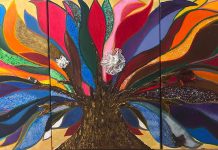
In Arbor vitae Luca Tridente introduce un elemento della natura, staccandosi dunque dalla pura introspezione per aggiungere quella parte di realtà essenziale per la vita di ogni individuo e che, in questo dipinto in particolare, predomina in maniera incisiva sull’esilità delle figure che camminano sulla sua stessa linea, quasi l’autore volesse enfatizzare il passare del tempo che corre veloce per l’uomo ma che scorre in maniera incredibilmente lenta per l’albero che resiste al vento, alle tempeste, al susseguirsi di epoche, assistendo alla vita che si svolge sotto le sue fronde. Il colore rosso della metà inferiore della tela ha un significato ambivalente poiché può rappresentare il fuoco della rigenerazione della natura, quell’energia necessaria alla costante rinascita, oppure la mortalità dell’essere umano, quel suo sfidare il destino prevaricando altri individui nell’illusione di poter diventare eterno; l’osservatore viene così stimolato a riflettere sulla sua mortalità, sul suo essere semplicemente un ospite in un contesto universale in cui è solo un frammento fugace.

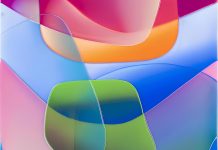
In Passaggio I la riflessione di Luca Tridente sull’evidenza del destino umano, su quel perdersi dentro un mondo grande, sterminato, pur dovendo adattarsi all’alternanza tra la nascita e la fine dell’esistenza, concentrando in tutto ciò che c’è nel mezzo gli sforzi per costruire qualcosa di indelebile non tanto per l’umanità in generale, quanto per l’anima che porterà per sempre le emozioni all’interno di sé. Ecco forse perché l’autore divide idealmente la tela in tre sezioni orizzontali, il suo è quasi un sottolineare quelle fasi che inevitabilmente si alternano, l’infanzia, la maturità e la vecchiaia, in cui nella prima e nell’ultima l’uomo vive nell’inconsapevolezza, legandosi dunque al concetto espresso da Francis Scott Fitzgerald nel racconto Il curioso caso di Benjamin Button, mentre nella parte centrale pone l’essenza e la sintesi delle altre, quel costruire e assaporare quanto prima o poi è destinato a fuggire. L’osservazione non è pessimista, piuttosto sembra essere un invito a considerare quanto sia importante non sprecare mai alcun istante e quanto sia fondamentale riempire la quotidianità di quell’intensità che potrebbe non tornare più di lì a poco.

Riflessioni, concetti esistenziali e stimolo introspettivo sono dunque elementi essenziali del Color Field Esistenzialista di Luca Tridente, un artista che ha al suo attivo la partecipazione a mostre e fiere internazionali d’arte in Italia e all’estero – Miami, New York, Providence, Rio De Janeiro, Salisburgo, Tokyo, Edimburgo, Losanna, Monaco, Dubrovnik e Lussemburgo -, e le cui opere sono state pubblicate nei più importanti annuari, cataloghi e riviste d’arte italiane ed estere.
LUCA TRIDENTE-CONTATTI
Email: info@lucatridente.com
Sito web: www.lucatridente.com/
Facebook: www.facebook.com/luca.tridente.58
Instagram: www.instagram.com/luca_tridente_artist/
Between Existentialism and Color Field the silent suggestions of Luca Tridente
Sometimes artistic expression becomes a way to deepen oneself as much as essence needs to find a language unable to remain trapped within words too limiting to express concepts in all their facets; the moment an artist takes note of that superior link between what lies latent within one’s self and what pushes to break out beyond logic and rational analysis to enter the dimension of that narrative spontaneity albeit always preceded by reflection and deepening, at that moment I was saying can be achieved a balance that turns into a well-defined and identifying stylistic road. Today’s protagonist, who has always been within the art world, has accomplished exactly this path of searching for an expressive identity that in recent years has found full realization in the language that distinguishes him.
The twentieth century saw the emergence in art of an interest in everything that belonged to human nature, its emotions, and its psyche, because the rigid academic rules prevailing until recently almost categorically excluded the artist’s subjectivity in pictorial and sculptural reproduction, focusing instead on aesthetic balance and the perfect rendering of observed reality. Apart from a few movements of rebellion constituted in the early nineteenth century by some exponents of Romanticism, particularly the Englishman William Turner who let emerge from his stormy works the sense of precariousness of human beings before the force of nature, and by some exponents of Symbolism who went on to investigate instead the enigmatic flow of energies around man in a relationship of inexplicable exchange and conditioning, a concept later deepened and broadened by Surrealism although traced back to the in-depth study of the psyche, anxieties and anguishes of man at the time.
The individual therefore assumed a central relevance in artistic research, and this kind of listening, of correlation between the feeling of the author of an artwork and the observer who received its emotionality and hidden meanings, was also propagated to all that part of the twentieth-century avant-garde that renounced form in order to push into the world of the most total irrationality, of the complete renunciation of all visual reference in order to let predominate pure emotion where the plastic gesture was an emanation of the instinctual, irrational and primordial language of interiority; the interpreters of Abstract Expressionism, to amplify this expressive concept, they introduced action within the work itself, associating colors with the emotion they intended to convey on the canvas. The impetuous excitement of Dripping and sign painting was balanced by other artists, such as Mark Rothko, who favored instead a more reflective, measured, contemplative approach, because their balanced but needful nature to communicate to the outside world the inexplicable and elusive sensations that whispered within them, needed the silence of suggestion to be able to break free.
So strong was the need to explore the apparent calm generated by large areas with the same color that some of the exponents of the Color Field veered toward Minimalism, such as Barnett Newman and Ad Reinhardt, whose canvases became monochrome and linked up with the European quest of authors such as Yves Klein. The mark was drawn and subsequent art could only consolidate, expand and adapt to the evolving times those intense as much as liberating theories on color to become the voice of an interiority otherwise unable to manifest itself. The Turin artist Luca Tridente, son of art and therefore introduced to the practice of painting since childhood, not only collects the inheritance of the masters just mentioned, but gives his own revisited, personalized version, adapted to his personal conceptual approach by letting his canvases convey not only the suggestion of chromatic impact but rather become a stimulus for deepening through a subtle figuration that places him within an existentialist tendency full of meanings all to be discovered.
With a degree in psychology, thus following his analytical and rational side, but accustomed to freeing his inner and spontaneous side through art, Luca Tridente arrives at his most recent production by following the need to correlate both his souls, pandering to a new balance of acceptance of the natural opposites within himself by virtue of which he goes to explore those signifiers often lost in the noise of everyday life. The absolute stillness that emanates from his paintings is interrupted only by the human presence, downsized, made slender precisely to underline the fleetingness and insubstantiality of an individual who deludes himself that he can dominate time and nature, which instead are evoked in their majesty, in their being so imposing as to suggest to the viewer a new awareness, a different point of view from the unbridled individualism of contemporary society.
The subtle figures in the background are reminiscent of those of Swiss sculptor Alberto Giacometti and, in the same way as the twentieth-century author, they tell on the one hand of the need to hold oneself up in the course of an ephemeral life often steeped in difficulties and obstacles, and on the other hand of the need, too often ignored, to be part of a community, even a small one, because enduring adversity and facing unknowns and trials alone is much more exhausting and disorienting than doing so within a group of affection, support, and solidarity. But is this really the case? Luca Tridente seems to ask himself. The answer is left to the observer, the artist’s is a food for thought, a presentation of a scenario in which the predominant emotion is the sense of man’s irrelevance in the context of a world too big to be known and deepened, and so the only way out not to succumb to that feeling is to pretend to be able to dominate everything, telling oneself to be important, for oneself or for that small circle of people with whom one walks. The work Al di qua… (Over here…) places the figures on the line of the horizon, as if they were about to cross a boundary that can be understood in a literal sense, thus a physical delimitation between one part and another, between a place and something beyond, or in a metaphysical sense a transition between what was there before and what instead looks ahead to generate an opening to a different future.
The milky sky narrated in the upper part of Color Field, suggests an unknown, a hesitancy about what will be beyond that line to be crossed, almost in contrast to the reassuring green that is the base of the lower part of the canvas, a path certain because it is already known, yet perhaps precisely because of this limiting, anchoring to certainties that prevent evolution. In Arbor vitae (Tree of life) Luca Tridente introduces an element of nature, thus detaching himself from pure introspection to add that part of reality that is essential to the life of every individual and that, in this painting in particular, incisively predominates over the slenderness of the figures walking on its own line, as if the author wanted to emphasize the passage of time that runs fast for man but flows incredibly slowly for the tree that withstands the wind, the storms, the succession of epochs, witnessing life unfolding beneath its branches.
The red color of the lower half of the canvas has an ambivalent meaning since it can either represent the fire of nature’s regeneration, that energy necessary for constant rebirth, or the mortality of the human being, that his defiance of destiny by prevailing over other individuals in the illusion that he can become eternal; the viewer is thus stimulated to reflect on his mortality, on his being simply a guest in a universal context in which he is only a fleeting fragment. In Passaggio (I Passage I), Luca Tridente‘s reflection on the evidence of human destiny, on that losing oneself within a large, boundless world, while having to adapt to the alternation between birth and the end of existence, concentrating in everything in between the efforts to build something indelible not so much for humanity in general, but for the soul that will forever carry the emotions within itself.
This is perhaps why the author ideally divides the canvas into three horizontal sections, his is almost a pointing out those phases that inevitably alternate, childhood, maturity and old age, in which in the first and last man lives in unawareness, thus tying in with the concept expressed by Francis Scott Fitzgerald in the short story The Curious Case of Benjamin Button, while the central part contains the essence and synthesis of the others, that building and savouring what is destined to slip away sooner or later. This observation is not pessimistic, but rather seems to be an invitation to consider how important it is never to waste a single moment and how essential it is to fill everyday life with an intensity that may not return again soon. Reflections, existential concepts, and introspective stimulation are therefore essential elements of Existentialist Color Field by Luca Tridente, an artist who has participated in international art exhibitions and fairs in Italy and abroad—Miami, New York, Providence, Rio De Janeiro, Salzburg, Tokyo, Edinburgh, Lausanne, Munich, Dubrovnik, and Luxembourg—and whose artworks have been published in the most important Italian and foreign art yearbooks, catalogs, and magazines.