

Esistono approcci pittorici talmente contemplativi da necessitare che il gesto esecutivo sia in perfetta armonia con quei moti interiori attraverso i quali l’autore non solo sente, percependo tutto ciò che è intorno a sé, bensì ha anche bisogno di comunicare in maniera libera e intensa lasciando fuoriuscire l’emozione sulla tela da cui poi si diffonde fino a raggiungere l’osservatore. Arricchire di riflessioni e sensazioni l’atto plastico riesce a generare una profonda connessione tra ciò che viene comunicato e ciò che viene ascoltato, ricevuto in maniera passiva e poi trasformato in abbraccio inclusivo e coinvolgente. L’artista di cui vi racconterò oggi vive la pittura come un momento di introspezione e di approfondimento, attraverso se stessa, di tutte quelle sfaccettature complesse e cangianti dell’animo umano, che si spostano caleidoscopicamente sulla base dell’interpretazione del ricevente avvolto dal punto di vista emozionale dell’emanante.
Quando nell’ultimo ventennio dell’Ottocento vide la luce l’Impressionismo, uno dei movimenti pittorici più rivoluzionari, destinati a cambiare radicalmente il mondo dell’arte e a gettare le basi per tutte le avanguardie che seguirono di lì a poco, l’intento del gruppo di fondatori era quello di riprodurre la realtà, e in particolar modo la natura, nel modo più affine a ciò che lo sguardo coglieva, eliminando la minuziosità del disegno, del lavoro in studio e di un utilizzo tradizionale del colore, dando spazio all’immediatezza espressiva. Claude Monet, Auguste Renoir, Alfred Sisley, Edgar Degas non erano interessati a inserire sulla tela le loro sensazioni, una soggettività che non era oggetto dei loro approfondimenti sulla luce, sull’impalpabilità dell’osservato e sulla perfezione oggettiva; eppure fu proprio dalle loro opere che cominciò a fuoriuscire quel senso avvolgente ed emozionante che induceva il fruitore a lasciarsi trasportare dall’evanescenza, dalla leggerezza visiva che sfumava i dettagli per dare la priorità all’atmosfera che circondava i loro soggetti. Attingendo all’esperienza pittorica di William Turner, massimo esponente del Romanticismo Inglese, gli impressionisti introdussero l’innovazione della pittura en plein air eseguita in modo rapido senza l’utilizzo della tavolozza bensì attingendo al colore con il pennello direttamente dai tubetti, concepiti proprio da loro, e poi mescolato a piccole macchie direttamente sulla superficie della tela. L’impatto visivo era dunque sorprendente e al contempo travolgente e introdusse il concetto di frammentazione e suddivisione dell’immagine che venne successivamente amplificata ed estremizzata da tutti quei movimenti in cui si voleva rinnegare la tradizione accademica e le rigide regole che consideravano la riproduzione dell’osservato come unica forma espressiva. Fu esattamente da quelle iniziali intuizioni impressioniste che nacque, tra le altre, l’Arte Astratta dove inizialmente si creò un rifiuto di tutta l’interiorità del soggetto esecutore, ma qualche anno dopo, con la nascita dell’Espressionismo Astratto, i fondatori come Jackson Pollock, Willem de Kooning, Mark Rothko e Arshile Gorky decisero che il sentire e tutte le profondità interiori dell’artista non potevano essere escluse da un gesto plastico di cui di fatto erano la base imprescindibile. A quel punto i colori cominciarono ad avere una voce, ciascuno venne legato a un’emozione specifica e la loro mescolanza giungeva amplificata all’osservatore che pur non avendo riferimenti visivi riconducibili alla realtà si sentiva attratto dalle opere in maniera istintiva, quasi inconsapevole, trovando un coinvolgimento escluso invece dall’Arte Astratta precedente. La mancanza di forma era divenuto il presupposto per lasciar parlare le sensazioni più immediate, prima che venissero filtrate dalla ragione e dalla conoscenza preesistente, dando così ai dipinti una nuova veste narrativa e liberatoria. L’artista triestina Nicoletta Vio, attualmente residente a Monaco di Baviera, mette in dialogo uno stile fortemente legato all’Impressionismo, che emerge dalla rarefazione dei panorami raccontati e da una luminosità che contraddistingue ogni suo dipinto, con il coinvolgimento emotivo dell’Espressionismo Astratto che non dissolve mai completamente le atmosfere raccontate, anzi lascia costantemente emergere una figurazione che sembra appartenere alla dimensione della memoria, allo scrigno emozionale che lega il panorama alle sensazioni suscitate nella fase dell’osservazione.
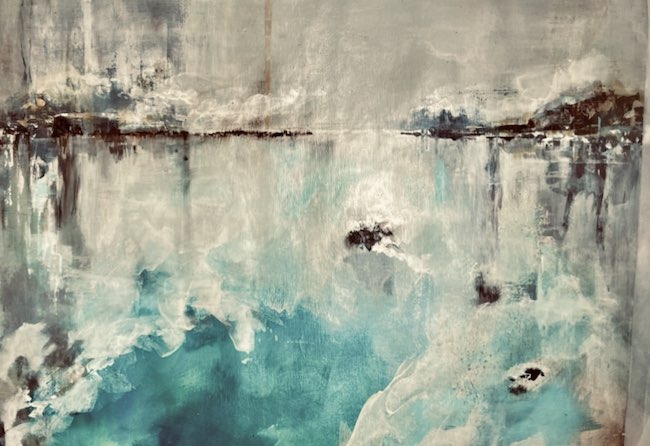
Per lei dipingere equivale a compiere un’immersione nella percezione, nell’interiorità che tutto ascolta e poi tutto trasforma, considerando il visibile non più come qualcosa di oggettivo bensì come un’emanazione soggettiva, un’interpretazione filtrata dall’equilibrio tra sensazione e memoria dell’esperienza visiva. Il paesaggio è il suo soggetto preferito, quello in cui il suo tratto pittorico riesce a esprimere tutta la forza e al contempo la delicatezza narrativa con cui tratteggia quelle atmosfere senza spazio e senza tempo, non riconoscibili a causa dell’indefinitezza che le contraddistingue e proprio per questo capaci di far vibrare le corde interiori dell’osservatore il quale può ricondurle al suo vissuto, alle sue esperienze mnemoniche ed emozionali.
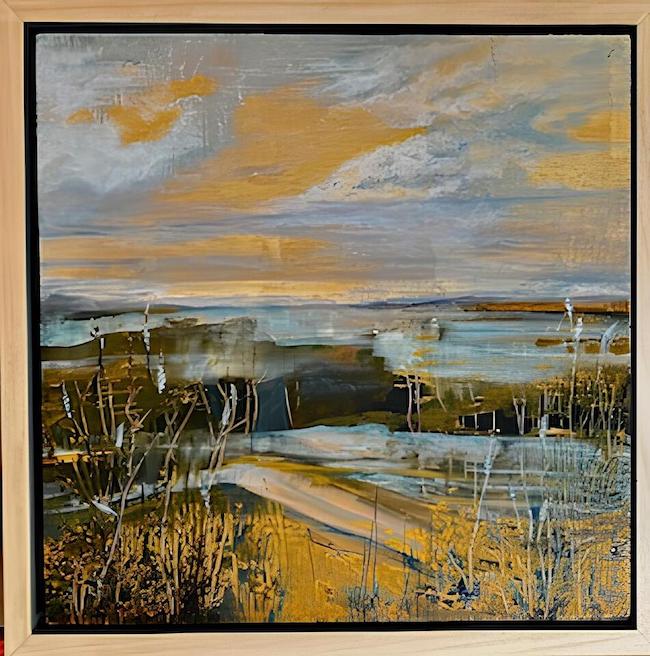
La gamma cromatica scelta dall’autrice è sempre tenue, sfumata, anche nelle tonalità più scure la pennellata è frammentata perché la rarefazione è la base necessaria per l’intuizione, per l’ascolto di tutto ciò che abitualmente non viene liberato pur essendo quanto rimane una volta superata l’esperienza contingente.
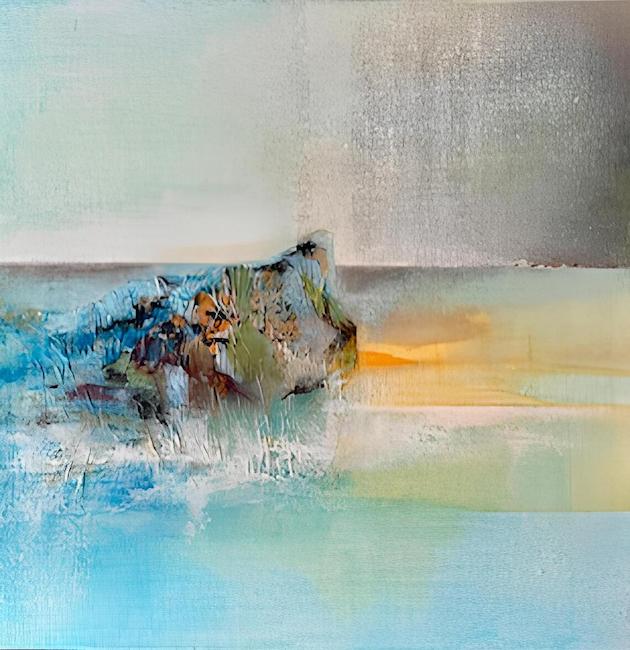
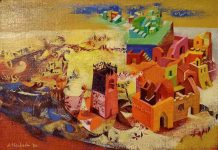
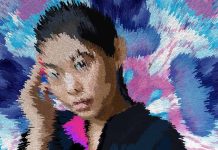
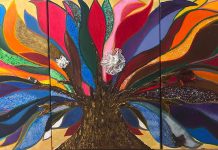
Luci all’orizzonte mostra in modo evidente la connessione imprescindibile tra anima e ambiente circostante, come se ciò che lo sguardo coglie avesse bisogno di scendere verso le profondità e poi risalire per manifestarsi sotto un’altra forma, quella più leggera e aerea delle sensazioni che rimangono, galleggiano e poi si concretizzano chiedendo di essere liberate. Qui le tonalità ricordano il confine tra cielo e mare, evocano un panorama marino, di quelli in cui non si può fare a meno di perdersi quando ci si trova sulla battigia e si immagina di farsi cullare dal movimento lento delle acque. Lo scoglio che Nicoletta Vio lascia intuire non ferma il flusso del mare, quasi l’autrice volesse simboleggiare il costante movimento della vita, dell’evoluzione umana, della realtà delle cose che scorre costantemente e indipendentemente dal fatto che l’individuo sia o meno in grado di accettarne la dinamica.
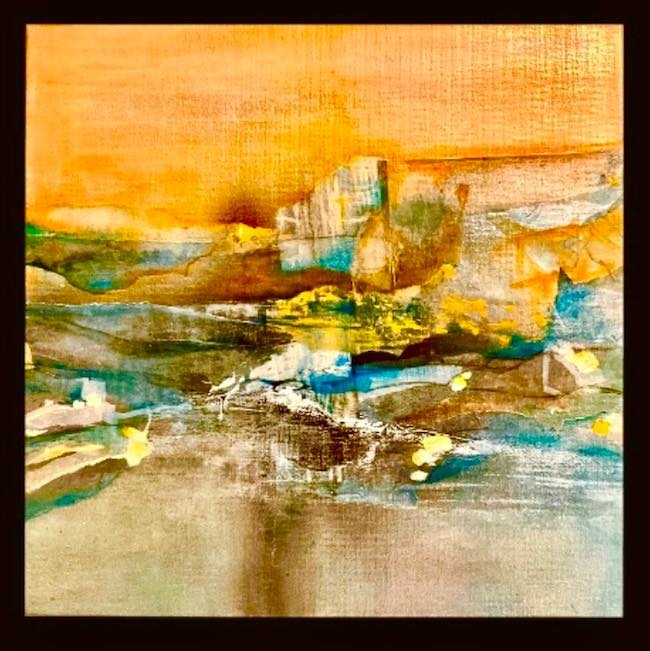
Behind the horizon racconta invece un luogo più brullo, desertico forse considerando i colori tendenti al giallo e all’ocra che dominano sull’intero dipinto, quasi a raccontare di un tramonto tra le dune rocciose, con il caldo che comincia a diminuire per far posto alla suggestione della notte stellata e incredibilmente silenziosa. Anche in questo caso, come d’altronde in ogni opera di Nicoletta Vio, non è importante quale sia il riferimento, il luogo specifico a cui lei si è ispirata per dipingere, fondamentali sono invece le vibrazioni che quell’associazione cromatica va a sollecitare sul fruitore, quasi lei fosse solo un amplificatore di qualunque riflessione, di qualsiasi sentimento provato e che grazie alle sue opere è in grado di riemergere per trovare la sua dimensione al di fuori delle profondità in cui era celato. Il cammino di consapevolezza e di riconoscimento delle emozioni spinge verso l’evoluzione dell’individuo perché è solo ripercorrendo quelle briciole di passato che si può affrontare con maturità ed equilibrio il presente, è solo accogliendo anche la parte più morbida del sé che quella più razionale trova il suo naturale bilanciamento.
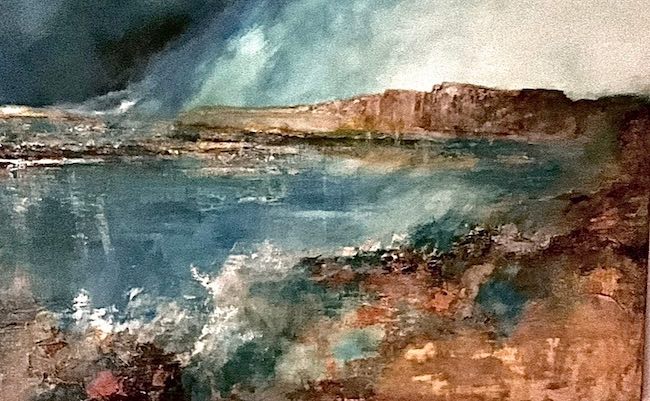
L’opera Stormy Bay è forse quella più riconducibile a un panorama preciso, anche se non individuabile nel luogo in cui è collocato, quello cioè di un golfo marino dove le scogliere sembrano voler proteggere quell’insenatura preziosa e tranquilla; o forse potrebbe anche essere l’evocazione di un lago di origine vulcanica, con le sue acque calme protette dalle colline circostanti quasi inabitate. Qui emerge l’attitudine di Nicoletta Vio a entrare in contatto diretto con la natura, elemento fondamentale per l’essere umano che spesso viene dimenticata tra il rumore e il caos generato da ogni luogo in cui l’intervento dell’uomo ha interrotto un’armonia ancestrale e necessaria per la vita.
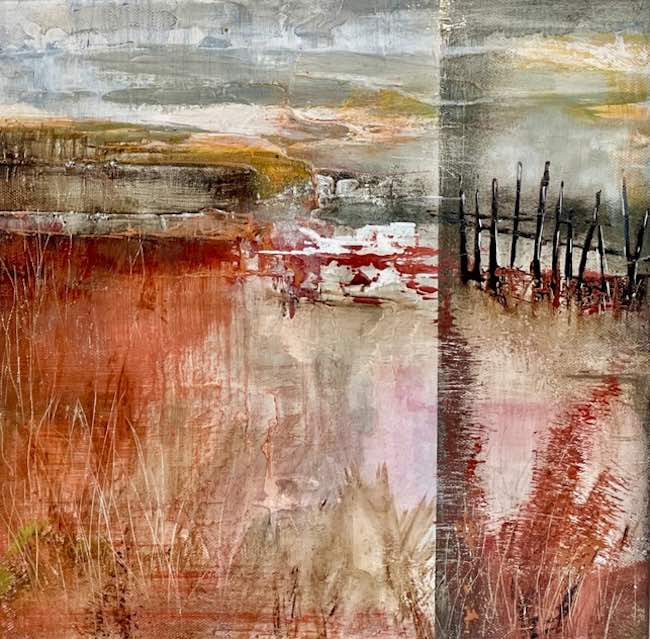
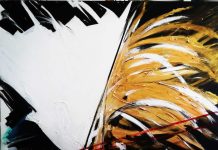
Anche nel momento in cui affronta l’Astratto l’autrice non rinuncia alla figurazione, più rarefatta, certo, meno intuibile nell’immediato eppure presente, posizionata per ingannare lo sguardo e al contempo per indurre l’osservatore ad abbandonare ogni tipo di legame con la razionalità, almeno nel momento dell’approccio con l’opera, e di attingere allo scrigno emotivo che ciascuno ha dentro di sé per lasciarsi guidare in un universo fatto di possibilismo, di sovrapposizioni tra reale e immaginato, di rinuncia al determinismo per entrare in uno spazio quantico dove tutto è possibile, tutto può far parte di un’esperienza che non si compie con la coscienza bensì con la percezione inconscia.
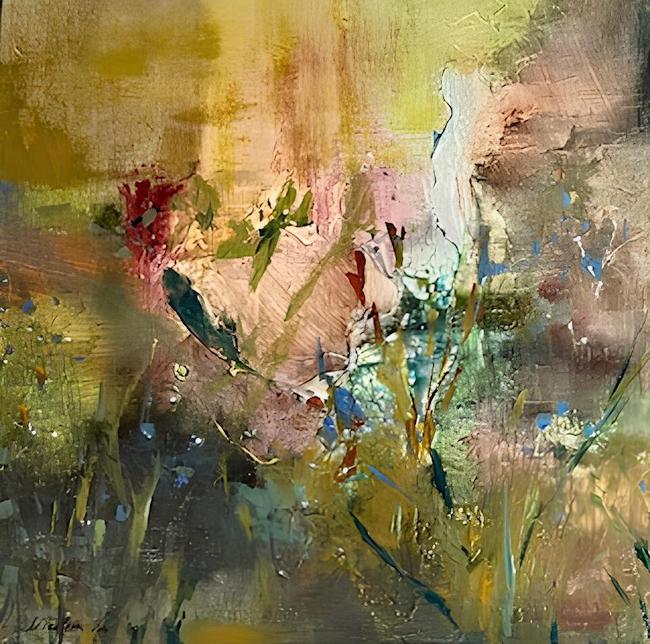
Nicoletta Vio ha al suo attivo la partecipazione a mostre collettive e personali a Trieste e a Monaco di Baviera, le due città che appartengono alla sua vita, dove riscuote un ottimo successo di pubblico e dove suscita l’attenzione degli addetti ai lavori in virtù delle atmosfere impalpabili e rarefatte delle sue tele.
Marta Lock
NICOLETTA VIO-CONTATTI
Email: nicoletta.vio@yahoo.com
Facebook: www.facebook.com/nicoletta.kleemann
Instagram: www.instagram.com/nikshowroom
Nicoletta Vio’s emotional landscapes when Neo-Impressionism blends with the rarefaction of Abstract Art
There are pictorial approaches so contemplative that they require the executive gesture to be in perfect harmony with those inner movements through which the author not only feels, perceiving everything around him, but also needs to communicate freely and intensely, letting the emotion flow onto the canvas, from where it then spreads until it reaches the observer. Enriching the plastic act with reflections and sensations manages to generate a deep connection between what is communicated and what is heard, received passively and then transformed into an inclusive and engaging embrace. The artist I am going to tell you about today experiences painting as a moment of introspection and deepening, through herself, of all those complex and changing facets of the human soul, which shift kaleidoscopically based on the interpretation of the recipient enveloped by the emotional point of view of the emanator.
When in the last two decades of the nineteenth century emerged Impressionism, one of the most revolutionary painting movements destined to radically change the world of art and to lay the foundations for all the avant-garde movements that followed shortly thereafter, the intention of the group of founders was to reproduce reality, and in particular nature, in the manner most akin to what the eye saw, eliminating the meticulousness of drawing, studio work and traditional use of colour, giving space to expressive immediacy. Claude Monet, Auguste Renoir, Alfred Sisley and Edgar Degas were not interested in putting their feelings on canvas, a subjectivity that was not the focus of their studies on light, the intangibility of what was observed and objective perfection; yet it was precisely from their works that began to emerge an enveloping and exciting sense, inducing the viewer to let himselff be carried away by the evanescence, by the visual lightness that blurred the details to give priority to the atmosphere surrounding their subjects. Drawing on the pictorial experience of William Turner, the leading exponent of English Romanticism, the Impressionists introduced the innovation of en plein air painting, executed quickly without using a palette, but rather by drawing colour directly from the tubes with the brush, designed by the artists themselves, and then mixing it in small spots directly on the surface of the canvas. The visual impact was therefore surprising and overwhelming at the same time, introducing the concept of fragmentation and subdivision of the image, which was subsequently amplified and taken to extremes by all those movements that sought to reject academic tradition and the rigid rules that considered the reproduction of what was observed to be the only form of expression. It was precisely from those initial impressionist insights that was born, among others, Abstract Art, initially rejecting all the inner feelings of the artist, but a few years later, with the birth of Abstract Expressionism, founders such as Jackson Pollock, Willem de Kooning, Mark Rothko and Arshile Gorky decided that the artist’s feelings and inner depths could not be excluded from a plastic gesture of which they were in fact the essential basis. At that point, colours began to have a voice, each one was linked to a specific emotion, and their mixture was amplified to the observer who, despite having no visual references to reality, felt instinctively, almost unconsciously attracted to the works, finding an involvement that was excluded from previous abstract art. The lack of form had become the prerequisite for allowing the most immediate sensations to speak, before they were filtered by reason and pre-existing knowledge, thus giving the paintings a new narrative and liberating guise. The Trieste-born artist Nicoletta Vio, currently residing in Munich, creates a dialogue between a style strongly linked to Impressionism, which emerges from the rarefaction of the landscapes depicted and the luminosity that characterises all her paintings, and the emotional involvement of Abstract Expressionism, which never completely dissolves the atmospheres depicted, but rather constantly allows to emerge a figuration that seems to belong to the dimension of memory, to the emotional treasure chest that links the landscape to the sensations aroused during the observation phase. For her, painting is equivalent to immersing herself in perception, in the inner self that listens to everything and then transforms everything, considering the visible no longer as something objective but as a subjective emanation, an interpretation filtered by the balance between sensation and memory of the visual experience. Landscape is her favourite subject, one in which her pictorial style manages to express all the strength and at the same time the narrative delicacy with which she sketches those atmospheres without space and time, unrecognisable because of their indefiniteness and precisely for this reason capable of striking a chord in the observer, who can relate them to their own experiences, her mnemonic and emotional experiences. The colour range chosen by the artist is always soft and nuanced, even in the darkest shades the brushstrokes are fragmented because rarefaction is the necessary basis for intuition, for listening to everything that is not usually released, even though it is what remains once the contingent experience has passed. Luci all’orizzonte (Lights at the horizon) clearly shows the essential connection between the soul and the surrounding environment, as if what the eye sees needs to descend into the depths and then rise again to manifest itself in another form, the lighter and more ethereal form of sensations that remain, float and then take shape, asking to be released. Here, the shades recall the boundary between sky and sea, evoking a seascape, one of those where you cannot help but lose yourself when you find yourself on the shore and imagine yourself being lulled by the slow movement of the water. The rock that Nicoletta Vio hints at does not stop the flux of the sea, as if the artist wanted to symbolise the constant movement of life, of human evolution, of the reality of things that flows constantly and independently of whether or not the individual is able to accept its dynamics. Behind the horizon, on the other hand, depicts a more barren, desert-like place, perhaps considering the yellow and ochre colours that dominate the entire painting, almost as if to describe a sunset among the rocky dunes, with the heat beginning to subside to make way for the suggestion of a starry and incredibly silent night. In this case too, as in all of Nicoletta Vio‘s work, the reference is not important, the specific place that inspired her to paint, but rather the vibrations that the colour combination elicits in the viewer, as if she were merely an amplifier of whatever reflection or feeling is experienced and which, thanks to her works, is able to resurface and find its place outside the depths where it was hidden. The path of awareness and recognition of emotions drives the evolution of the individual because it is only by retracing those crumbs of the past that one can face the present with maturity and balance. It is only by embracing even the softest part of the self that the more rational part finds its natural balance. The painting Stormy Bay is perhaps the one most closely associated with a specific landscape, even if it cannot be identified in the place where it is located, that is, a sea gulf where the cliffs seem to want to protect that precious and peaceful inlet; or perhaps it could also be the evocation of a volcanic lake, with its calm waters protected by the surrounding, almost uninhabited hills. Here emerges Nicoletta Vio‘s aptitude for coming into direct contact with nature, a fundamental element for human beings that is often forgotten amid the noise and chaos generated by every place where human intervention has disrupted an ancestral harmony that is necessary for life. Even when dealing with the abstract, the artist does not renounce figuration, which is certainly more rarefied and less immediately perceptible, yet still present, positioned to deceive the eye and at the same time induce the observer to abandon any kind of connection with rationality, at least when approaching the work, and to draw on the emotional treasure chest that each of us has within ourselves to be guided into a universe made up of possibilities, of overlaps between the real and the imagined, of renouncing determinism to enter a quantum space where everything is possible, everything can be part of an experience that is not accomplished with consciousness but with perception. Nicoletta Vio has participated in group and solo exhibitions in Trieste and Munich, the two cities that belong to her life, where she has enjoyed great public success and attracted the attention of experts thanks to the intangible and rarefied atmospheres of her canvases.