

Per alcuni autori l’arte figurativa è solo il mezzo più diretto per attrarre lo sguardo dell’osservatore e poi condurlo all’interno di un mondo parallelo, diverso e quasi magico sia per la delicatezza con cui è narrato, e sia per la capacità dell’esecutore di immaginare, traslare la realtà e farla diventare una voce da cui si propagano altre sensazioni, emozioni, energie appartenenti al quotidiano ma che richiedono un distacco da esso per potersi manifestare. Scegliere un solo stile in questo tipo di approccio espressivo può diventare talvolta limitante e così alcuni interpreti mescolano, fondono e rielaborano linee guida del passato in modo da farle diventare perfettamente adattabili alla loro natura pittorica. Questo è il percorso compiuto dalla protagonista di oggi che fa letteralmente fluttuare le sue opere tra dimensioni irreali, ambientazioni incantate e racconti fiabeschi.
Tra la fine dell’Ottocento e i primi decenni del Novecento, vide la luce in Europa un movimento che si proponeva di celebrare l’armonia e la piacevolezza del vivere fondendo non solo la bellezza femminile con le forme sinuose della natura, ma anche di trovare un’evoluzione formale al Simbolismo, che aveva esaltato il forte legame dell’essere umano proprio con l’elemento naturale e con tutte le energie che al suo interno si celano. L’Art Nouveau, questo il nome della nuova corrente pittorica, si soffermava prevalentemente sull’estetica, sulla bellezza delle curve degli steli dei fiori e delle piante per segnare un netto distacco dall’alienazione dell’uomo seguita alla Rivoluzione industriale per cui l’individuo era diventato parte della catena di montaggio, e per elaborare una narrazione formale irriproducibile dai macchinari.
Tra i maggiori interpreti dell’Art Nouveau vi l’artista ceco Alfons Mucha, che seppe unire la sapienza pittorica alle richieste dell’epoca di realizzare anche manifesti e stampe artistiche di grande pregio. Il tema naturalistico fu ripreso dall’attitudine pittorica di uno dei maggiori autori del Simbolismo, Odilon Redon, che lo utilizzò però per ingannare lo sguardo, o meglio per guidarlo all’interno di un significante invisibile dalla superficie; nel caso di questo movimento dunque a essere fondamentale era l’interazione con l’individuo, con le sue paure, con i suoi fantasmi interiori in relazione al suo essere parte di un inconoscibile che aleggia intorno all’ordinarietà. In qualche modo dunque l’Art Nouveau e il Simbolismo, pur partendo da un punto comune, si distaccavano per interpretazione e intento esecutivo, uno più estetico e l’altro più interiore e psicologico, ma al contempo si completavano poiché entrambi erano parte dell’esigenza del tempo di vivere nell’armonia formale e nella piacevolezza. L’enigma simbolista, l’attenzione verso il sentire dell’essere umano quando collocato in una realtà familiare, sia essa naturale o prettamente domestica, fu ripresa dal Realismo Magico che nell’accezione più internazionale introdusse il tema della natura per enfatizzare l’incanto e la capacità di lasciarsi andare alle emozioni più spontanee di un individuo che solo elevandosi dalla contingenza riusciva a manifestare.
Il Realismo Magico ebbe nella francese naturalizzata statunitense Fanny Brennan una delle pioniere dello stile nell’introduzione della natura come soggetto principale delle proprie opere, così come nell’attualità Michael Cheval inserisce invece l’elemento fiaba nei suoi dipinti che di fatto hanno segnato la nascita del Surrealismo Magico di cui è altro magistrale rappresentante il russo Vladimir Kush in cui natura e favola raccontano un mondo ideale dove l’inquietudine è completamente allontanata dalla poeticità delle atmosfere fatate e dalla serenità che infondono. L’artista ceca Hana Kristová si forma in maniera autodidatta elaborando un linguaggio artistico personale che non conosce i limiti accademici e non è dunque condizionato, fondendo tratti dell’Art Nouveau, del Surrealismo e del Realismo Magico. Il risultato è una cifra stilistica dove la sua attitudine sognante si manifesta a ogni pennellata, e dove la consapevolezza di aver rinunciato a lungo all’indole artistica, per motivi contingenti e per scelte professionali, diviene capacità di raccontare un mondo dove ogni cosa, ogni sogno, ogni magia può essere possibile.
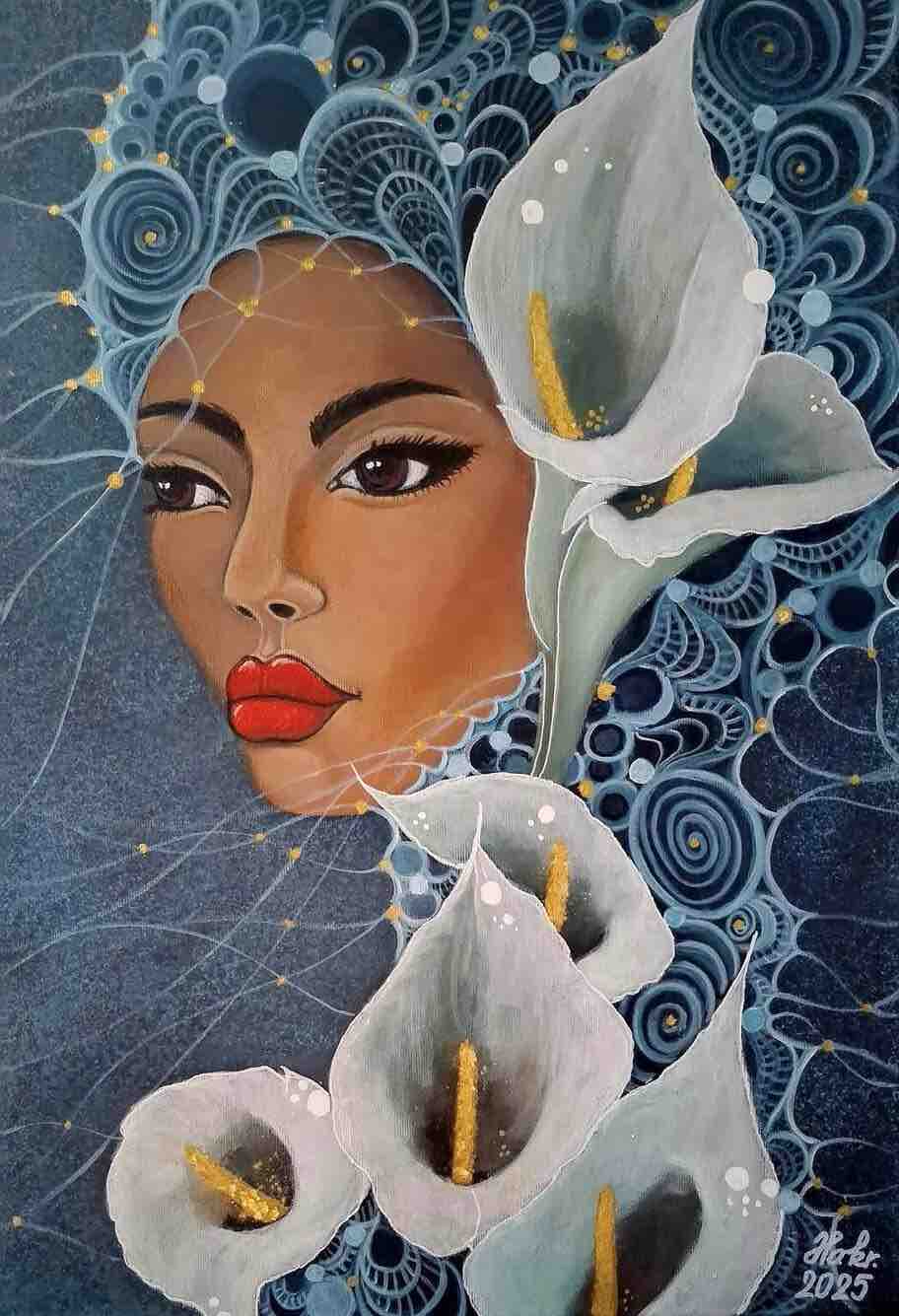
La sua attitudine principale è quella di svelare l’animo femminile, quella mescolanza di coraggio, fragilità, eleganza, attenzione all’estetica ma anche capacità empatica attraverso cui riesce a entrare in contatto con il mondo esterno, che traduce nelle sue tele con volti iconici di cui solo l’intorno riesce a svelare le più segrete caratteristiche. Hana Kristová infatti riprende la morbidezza e la sinuosità dell’Art Nouveau del suo predecessore conterraneo, Alfons Mucha, modificandone tuttavia la gamma cromatica che viene in lei modernizzata e ampliata a una palette più contemporanea, per tratteggiare le sensazioni, il sentire e anche l’approccio a un preciso frangente vissuto dalle sue protagoniste, quelle declinazioni femminili che lei conosce bene in quanto appartenenti al suo mondo e al modo di osservare e interpretare la realtà.
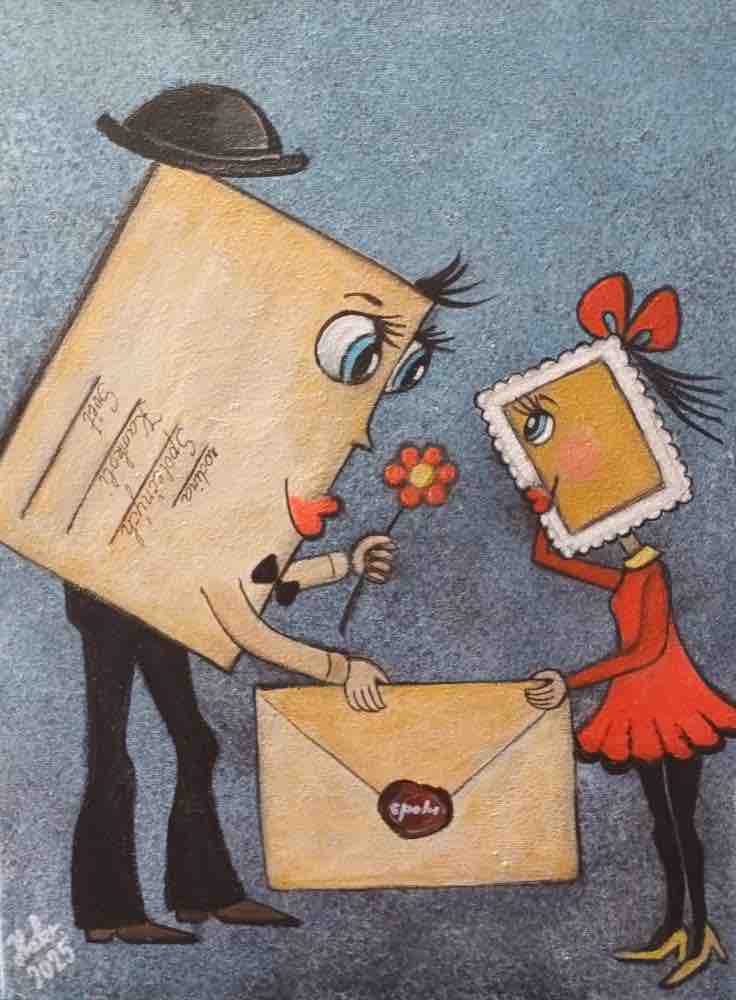
D’altro canto non è trascurabile la sua attitudine a trasformare, a filtrare ogni cosa con una capacità interpretativa che si lega fortemente alla favola, all’evidenziazione dell’incanto che appartiene alla vita ma che può essere notato solo da chi mantiene una forte connessione con il fanciullo all’interno di sé; ecco, l’autrice ha la capacità di trasportare il fruitore verso quel fanciullo dimenticato e nascosto nell’adulto, suscitando meraviglia con il suo tocco poetico che letteralmente avvolge e culla nell’incantesimo delle scene raccontate. L’utilizzo del colore è a volte più sfumato, altre più uniforme, sulla base della narrazione, quasi le sue opere fossero illustrazioni di tutto ciò che dall’immaginazione e dalla mente può scaturire; ma a colpire lo sguardo è sempre la sinuosità degli elementi che circondano le protagoniste, oppure quella rilettura della natura che a volte Hana Kristová osserva in primo piano privata della presenza umana proprio per sottolineare quanto l’armonia abbia bisogno di eleganza, di leggerezza, di sensibilità che purtroppo la contingenza, e a volte lo stesso individuo, tendono a turbare.
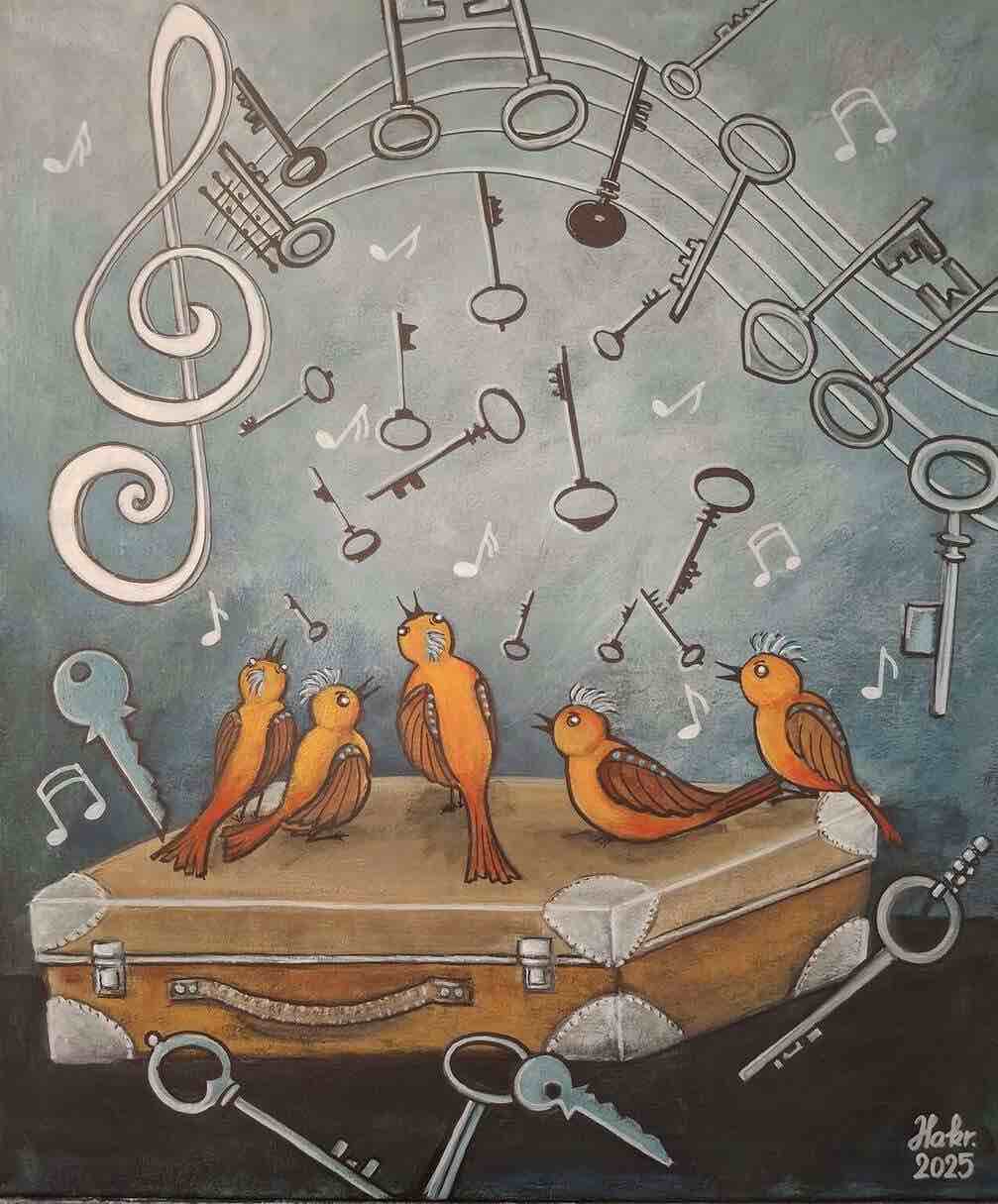
Alcune tele sono dedicate all’illustrazione di fiabe di autori del suo paese ed è proprio qui che l’autrice mostra tutta la sua maestria nel tratteggiare mondi fatati dentro cui l’osservatore si perde per ritrovare quella spontaneità e la capacità di meravigliarsi che apparteneva al sé bambino; l’opera Chiavi appartiene alla serie di dipinti con cui ha scelto di illustrare le fiabe di Miloše Macourka, nel caso specifico la favola Giraffa o Tulipano e a colpire è la leggerezza evocata, quelle note che sembrano fuoriuscire dalla valigia chiusa come se volessero proteggerne il contenuto oppure, al contrario, stimolarla ad aprirsi per liberare tutto ciò che viene nascosto. Sembra quasi una metafora dell’essere umano questo dipinto, un invito da parte di Hana Kristová a non avere paura di essere se stessi e di lasciar fuoriuscire anche i lati che hanno più bisogno di essere protetti; l’ambiente musicale, le note fluttuanti, con cui avvolge la valigia e la presenza di piccoli uccellini danno all’osservatore la sensazione di non dover temere nulla.
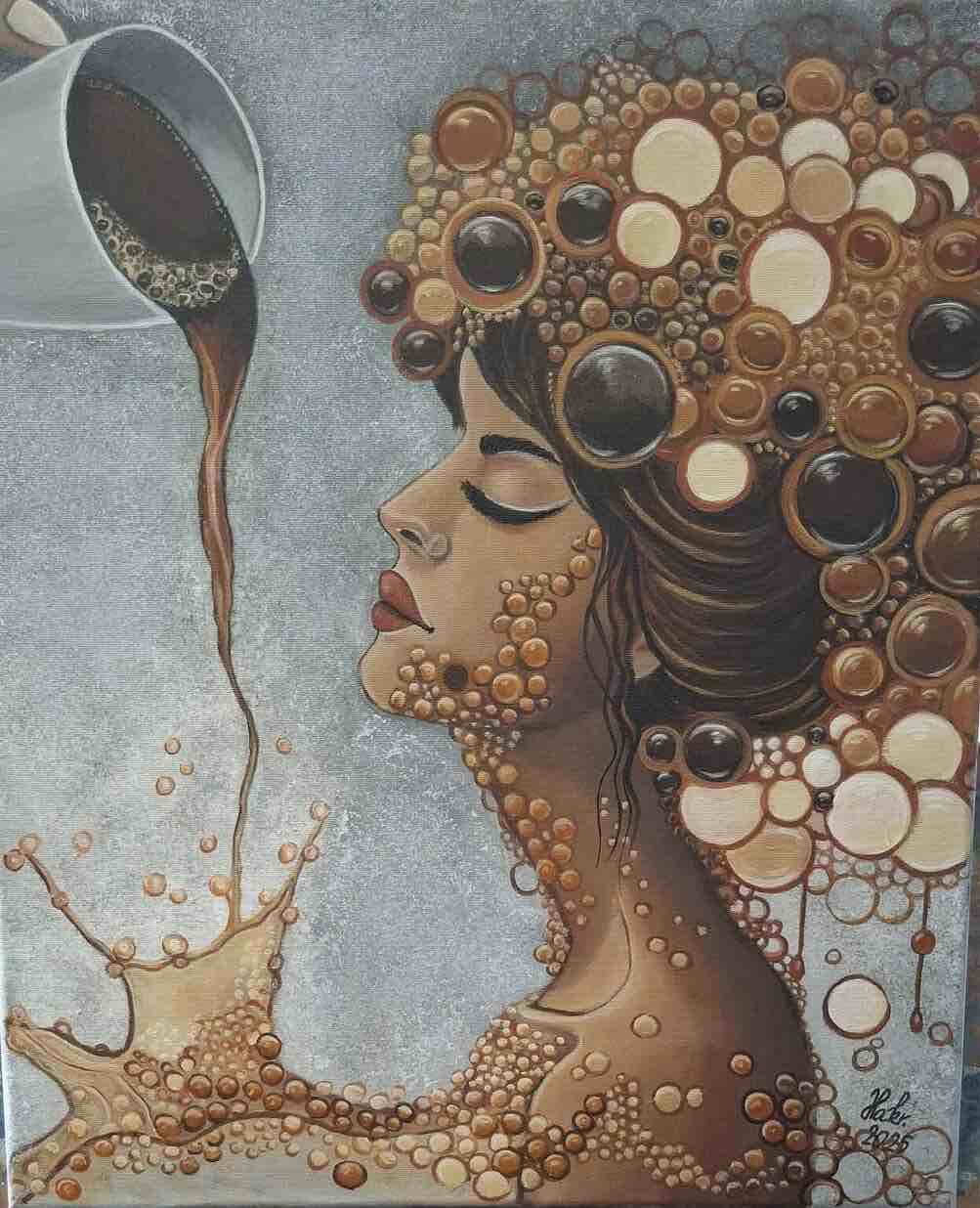
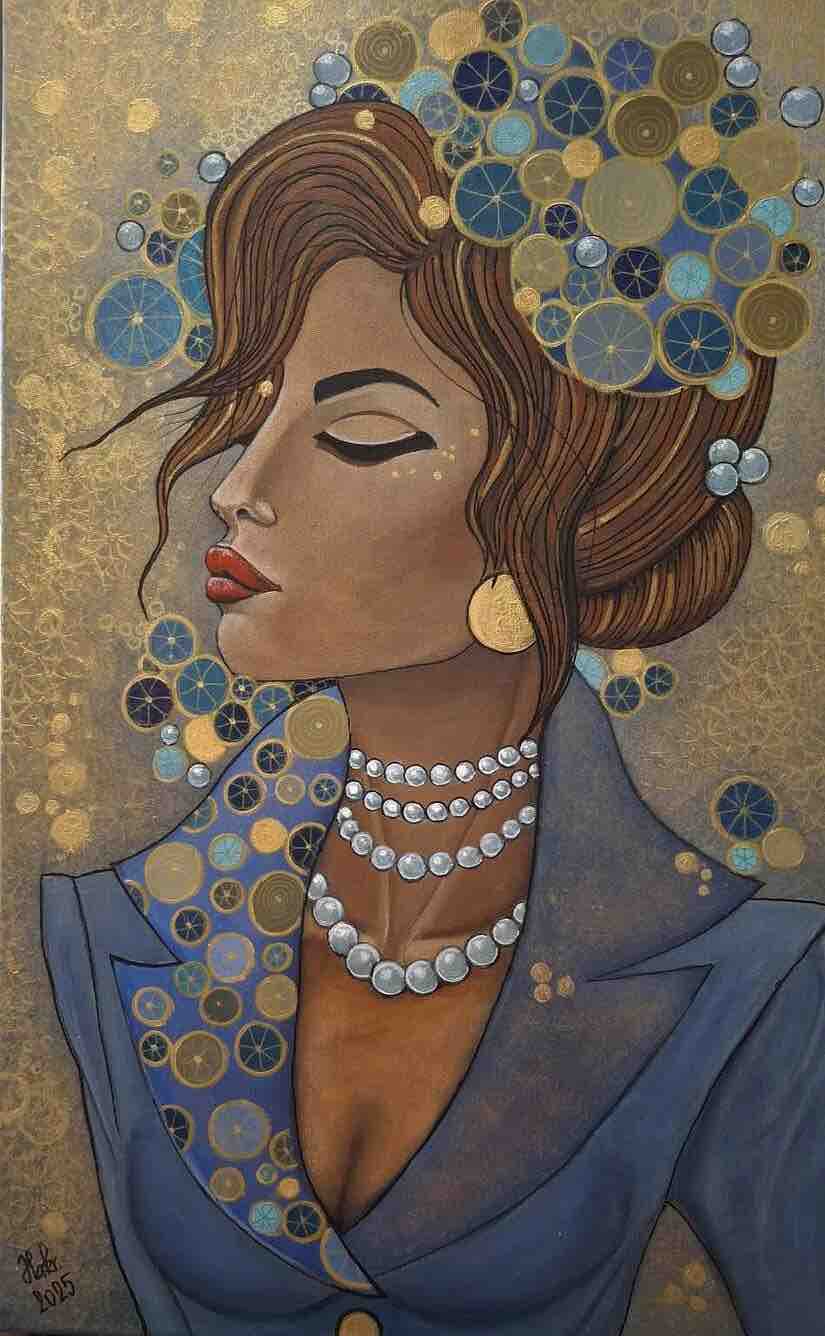
Il profumo del caffè appartiene alla serie di opere in cui a essere protagonista è la figura femminile, con tutta la sua morbidezza e sinuosità enfatizzata dalla presenza della forma sferica che contraddistingue la sua pettinatura, e la fusione con un ambiente che la avvolge in virtù dell’aroma della celebre bevanda scura. La donna sembra voler assorbire l’energia e la lucidità donata dal caffè e conservarla per i momenti in cui ne avrà bisogno, nell’arco della giornata come della vita; questo è il motivo per cui gli occhi sono chiusi, quel momento diviene simbolo non solo di un gesto quotidiano bensì anche del sapersi guardare dentro e capire di cosa si ha davvero bisogno, qual è l’elemento mancante per realizzare i propri desideri.
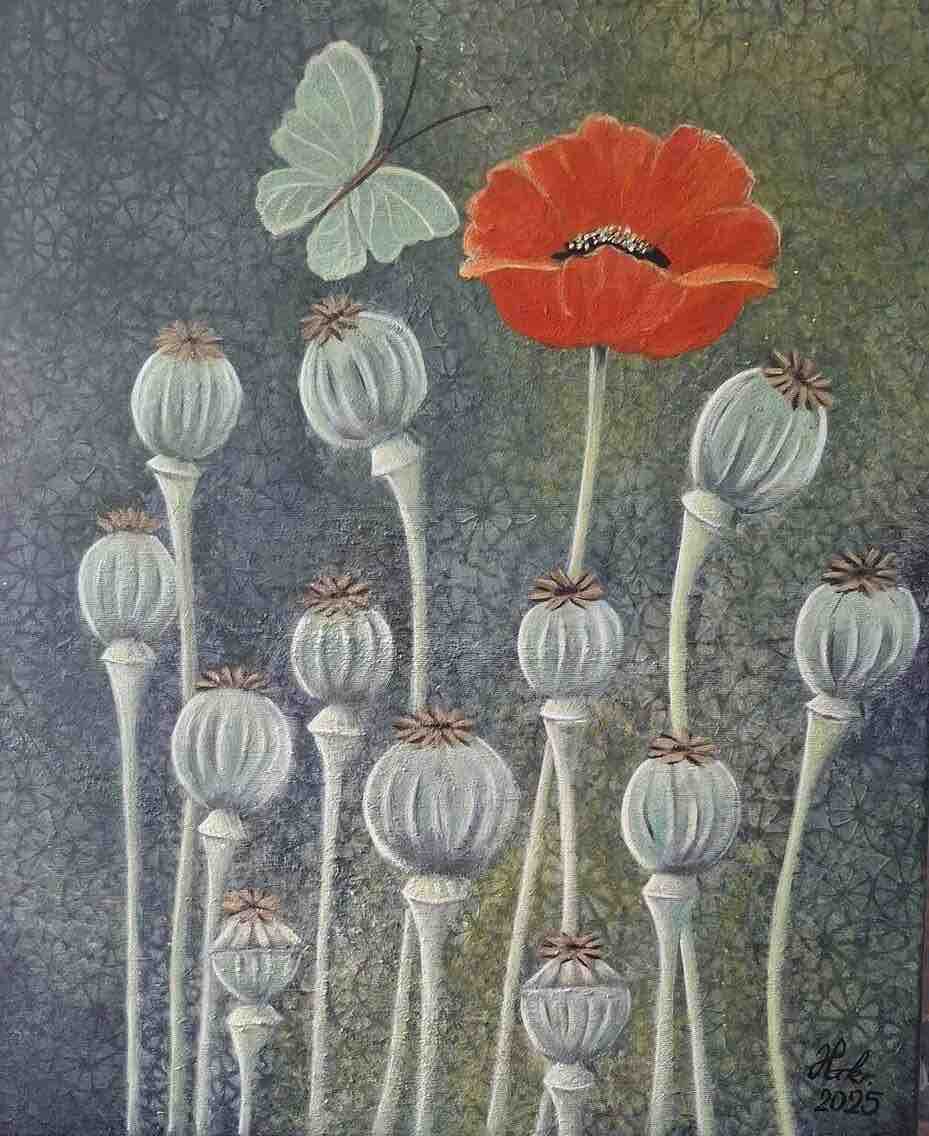
Nella tela Nell’ebbrezza del papavero Hana Kristová mostra tutta la sua indole Art Nouveau, perché la natura è prima attrice indiscussa con la sua delicatezza, con l’impalpabilità, con la poeticità che può emergere solo attraverso l’osservazione di quel mondo incantato che circonda la vita di un essere umano spesso troppo distratto e frettoloso per poterne gioire nella pienezza. Il Simbolismo di questo dipinto induce a considerare la forza con cui quei magnifici fiori si spingono verso l’alto, come se volessero raggiungere il cielo che è metafora dei sogni, di quell’irraggiungibile che solo con la forza di volontà, la determinazione e la fiducia può essere realizzato; ecco il motivo della presenza della farfalla, sollecita la considerazione di quanto fragili possano essere quei desideri e tuttavia quanto possano diventare reali se solo vengono protetti esattamente come la farfalla fa con le proprie ali.
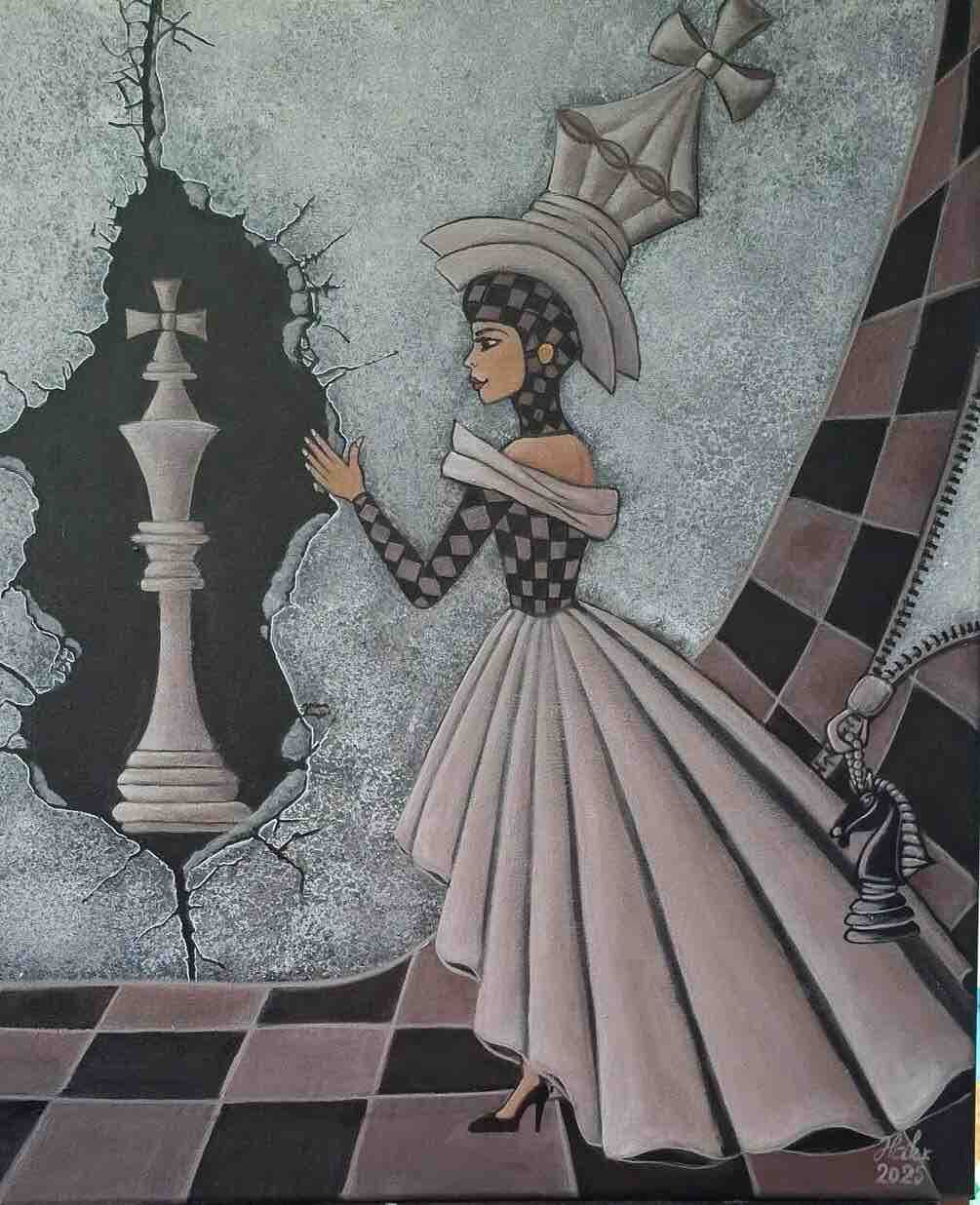
La dama e il cavaliere rientra invece nell’ambito del Surrealismo Magico infatti l’ambientazione è completamente immaginaria e trasforma una donna in abito d’epoca in una regina di scacchi, autorevole, fiera e intrepida, pronta a dominare sulla figura del cavaliere che fuoriesce da uno squarcio nel muro mentre alle spalle della dama si apre la cerniera del destino, quella che giunge a scomporre e scompigliare programmi e previsioni sull’esito dell’incontro.
Hana Kristová ha al suo attivo la partecipazione a mostre collettive e personali a Praga, Budapest, Venezia, Milano e Bratislava, dove ha catturato l’attenzione di pubblico ed esperti per il suo particolare stile.
HANA KRISTOVÁ-CONTATTI
Email: haneku@seznam.cz
Facebook: www.facebook.com/hkuzelova
Instagram: www.instagram.com/haneku64/
Suspended between Art Nouveau, Surrealism, and Magical Realism, the poetic atmospheres of Hana Kristová
For some authors, figurative art is simply the most direct means of attracting the observer’s gaze and then leading it into a parallel world, different and almost magical both for the delicacy with which it is narrated and for the executor’s ability to imagine, translate reality, and turn it into a voice from which propagate other sensations, emotions, and energies that belong to everyday life but require a detachment from it in order to manifest. Choosing a single style in this type of expressive approach can sometimes be limiting, so some interpreters mix, blend, and rework guidelines from the past in order to make them perfectly adaptable to their pictorial nature. This is the path taken by today’s protagonist, who literally makes her artworks float between unreal dimensions, enchanted settings, and fairy-tale stories.
Between the late 19th and early 20th centuries emerged in Europe a movement that sought to celebrate the harmony and pleasure of life by blending not only feminine beauty with the sinuous forms of nature, but also to find a formal evolution to Symbolism, which had exalted the strong bond between human beings and the natural world, with all the energies hidden within it. Art Nouveau, as this new pictorial movement was called, focused mainly on aesthetics, on the beauty of the curves of flower stems and plants, marking a clear break from the alienation of man following the Industrial Revolution, in which the individual had become part of the assembly line, and developing a formal narrative that could not be reproduced by machines. Among the leading exponents of Art Nouveau was the Czech artist Alfons Mucha, who was able to combine his pictorial skill with the demands of the time to create posters and artistic prints of great value.
The naturalistic theme was taken up by the pictorial style of one of the main artists of Symbolism, Odilon Redon, who used it, however, to deceive the eye, or rather to guide it within a meaning invisible from the surface; in the case of this movement, therefore, what was fundamental was the interaction with the individual, with his fears, with his inner ghosts in relation to his being part of an unknowable that hovers around the ordinary. In some ways, therefore, Art Nouveau and Symbolism, despite starting from a common point, differed in their interpretation and executive intent, one more aesthetic and the other more interior and psychological, but at the same time they complemented each other because both were part of the need of the time to live in formal harmony and pleasantness. The symbolist enigma, the attention to human feelings when placed in a familiar reality, whether natural or purely domestic, was taken up by Magical Realism, which, in its most international path, introduced the theme of nature to emphasize the enchantment and ability to let go of the most spontaneous emotions of an individual who could only manifest them by rising above contingency.
Magical Realism found one of its pioneers in the French-born American Fanny Brennan, who introduced nature as the main subject of her artworks, while Michael Cheval incorporated into his paintings fairy tales dimension which marked the birth of Magical Surrealism, currently represented by Russian artist Vladimir Kush, in which nature and fables depict an ideal world where anxiety is completely dispelled by the poetic nature of the enchanted atmospheres and the serenity they instill. Czech artist Hana Kristová is self-taught, developing a personal artistic language that knows no academic limits and is therefore unconditioned, blending elements of Art Nouveau, Surrealism, and Magical Realism. The result is a stylistic signature where her dreamy attitude manifests itself in every brushstroke, and where the awareness of having long renounced her artistic nature, for contingent reasons and professional choices, becomes the ability to describe a world where everything, every dream, every magic can be possible. Her main attitude is to reveal the female soul, that mixture of courage, fragility, elegance, attention to aesthetics, but also empathic ability through which she manages to connect with the outside world, that she translates into her canvases with iconic faces whose most secret characteristics can only be revealed by the surroundings. Hana Kristová takes up the softness and sinuosity of Art Nouveau from her fellow countryman and predecessor, Alfons Mucha, modifying the color range, which she modernizes and expands to a more contemporary palette, to outline the sensations, feelings, and even the approach to a specific moment experienced by her protagonists, those feminine nuances that she knows well as they belong to her world and to her way of observing and interpreting reality.
On the other hand is not to be ovelooked her ability to transform and filter everything with an interpretative skill that is strongly linked to fairy tales, highlighting the enchantment that belongs to life but can only be noticed by those who maintain a strong connection with the child within themselves; the author has the ability to transport the viewer to that forgotten child hidden within the adult, arousing wonder with her poetic touch that literally envelops and cradles him in the enchantment of the scenes she depicts. The use of color is sometimes more nuanced, sometimes more uniform, depending on the narrative, as if her works were illustrations of everything that can spring from the imagination and the mind; but what always catches the eye is the sinuosity of the elements surrounding the protagonists, or that reinterpretation of nature that Hana Kristová sometimes observes in the foreground, deprived of human presence precisely to emphasize how much harmony needs elegance, lightness, and sensitivity which unfortunately contingency, and sometimes the individual themselves, tend to disturb. Some paintings are dedicated to illustrating fables by authors from her country, and it is here that the artist shows all her skill in sketching fairy-tale worlds in which the observer loses themselves, rediscovering the spontaneity and capacity for wonder that belonged to their inner child. The painting Chiavi (Keys) belongs to a series of works with which she chose to illustrate the fairy tales of Miloše Macourka, specifically the tale Giraffa o Tulipano (Giraffe or Tulip), and what is striking is the lightness evoked, those notes that seem to escape from the closed suitcase as if they wanted to protect its contents or, on the contrary, stimulate it to open up and release everything that is hidden.
This painting seems almost like a metaphor for human beings, an invitation from Hana Kristová not to be afraid to be oneself and to let out even the sides that most need to be protected; the musical environment, the floating notes that envelop the suitcase, and the presence of small birds give the observer the feeling that there is nothing to fear. Il profumo del caffè (The scent of coffee) belongs to a series of works in which is protagonist the female figure with all her softness and sinuosity emphasized by the presence of the spherical shape that distinguishes her hairstyle, and the fusion with an environment that envelops her by virtue of the aroma of the famous dark beverage. The woman seems to want to absorb the energy and clarity provided by coffee and save it for moments when she will need it, throughout the day and throughout her life; this is why her eyes are closed, that moment becomes a symbol not only of a daily gesture but also of knowing how to look inside and understand what one really needs, what is missing in order to fulfill one’s desires.
In the painting Nell’ebbrezza del papavero (In the thrill of the poppy), Hana Kristová shows all her Art Nouveau character, because nature is the undisputed leading actress with its delicacy, its intangibility, its poetic nature that can only emerge through observation of that enchanted world that surrounds the life of a human being who is often too distracted and hurried to be able to enjoy it in its fullness. The Symbolism of this painting leads to consider the force with which those magnificent flowers push upwards, as if they wanted to reach the sky that is a metaphor for dreams, for that unattainable goal that can only be achieved with willpower, determination, and confidence; this is the reason for the presence of the butterfly, prompting to consider how fragile those desires can be and yet how real they can become if only they are protected, just as the butterfly does with its wings. La dama e il cavaliere (The Lady and the Knight), on the other hand, falls within the realm of Magical Surrealism infact the setting is completely imaginary and transforms a woman in vintage dress into a chess queen, authoritative, proud, and fearless, ready to dominate the figure of the knight who emerges from a gash in the wall, while behind the lady opens the zipper of destiny which disrupts and upsets plans and predictions about the outcome of the encounter. Hana Kristová has participated in group and solo exhibitions in Prague, Budapest, Venice, Milan, and Bratislava, where she has captured the attention of the public and experts for her unique style.