
Esistono attitudini creative nelle quali è fondamentale mantenere un forte legame con la realtà osservata, quasi a volerne cogliere ogni minimo particolare per raccontarlo e descriverlo nella sua completezza, utilizzando una perfezione esecutiva necessaria a catturare lo sguardo che resta affascinato dalla bellezza di ciò che vede riprodotto; ve ne sono altre che, al contrario necessitano un distacco completo dal visibile perché esso costituisce un limite al flusso emozionale, a quel sentire che deve fuoriuscire e liberarsi sulla tela senza alcun condizionamento da parte della razionalità, nemmeno nella fase esecutiva.
E infine vi sono quegli autori che desiderano rimanere nel mezzo di questi due estremi, perché per loro la manifestazione artistica non può né essere completamente definita, né assolutamente non formale, come se l’ispirazione che ricevono da ciò che vedono attorno a loro potesse divenire concreta e vera solo nel momento in cui entra in gioco anche la percezione, la sensazione che essi ricevono. Helga Melem, protagonista di oggi, si inserisce in questo terzo approccio narrativo poiché le sue tele corrono sul filo del sussurrato, dell’accennato, del lasciato intuire, per la sua caratteristica di privilegiare l’atmosfera generale piuttosto che il particolare.
Tra la fine dell’Ottocento e gli inizi del Novecento emersero nell’area germanica, due movimenti apparentemente in contrasto tra loro dal punto di vista formale, ma che riuscirono a trovare proprio in Austria una sintesi in virtù della capacità degli artisti che vi aderirono di incontrarsi e non chiudere mai il canale comunicativo. Da un lato il Secessionismo Viennese si associò a tutto quel filone decorativo ed elegiaco che ebbe inizio in Francia con l’Art Nouveau a cui aderirono, personalizzandone la denominazione, autori dell’intera Europa; dall’altro invece l’evoluzione delle linee guida Fauviste che sfociarono nell’Espressionismo, in cui a essere prioritaria era l’emozione, il sentire dell’esecutore dell’opera che in tal modo poteva dare una versione personale e soggettiva del mondo intorno a sé. Anche in tal caso l’Austria ebbe due grandi interpreti, Oskar Kokoschka, più pungente, critico e legato alle tonalità forti ed eccessive dei Fauves, ed Egon Schiele che invece alleggerì la gamma cromatica così come il tratto grafico entrando di fatto in una dimensione più esistenzialista. Apparentemente distanti come intento rappresentativo, il Secessionismo Viennese di Gustav Klimt e l’Espressionismo di Egon Schiele trovarono il modo di dialogare, di unirsi per l’obiettivo comune di distaccarsi in maniera totale dall’arte accademica dando vita a uno stile moderno, innovativo sia come approccio pittorico che nell’utilizzo dei materiali; eppure l’attitudine intimista e introspettiva dell’animo di Egon Schiele, spaventato dai venti di guerra intorno a sé al punto di trovare nella sessualità quasi ossessiva l’unica via di fuga che lo indusse a dipingersi in maniera deforme nei suoi autoritratti, non poteva in alcun modo essere accomunata a quella ricerca poetica, elegante, ricercata del periodo aureo di Gustav Klimt che faceva letteralmente uscire la bellezza femminile da atmosfere floreali, delicate, impalpabili e preziose in virtù dell’utilizzo della foglia oro. In entrambi gli autori emergeva l’esigenza di astrarsi dalla realtà, il primo mettendo in risalto solo il sentire e rinunciando per esso a qualunque armonia estetica, il secondo rimanendo invece più vicino alla dimensione del sogno, del desiderio, del sentimento provato verso donne irraggiungibili e idealizzate con la sua opera immortale.
L’indefinitezza e la decontestualizzazione degli sfondi di entrambi li collocò, come d’altronde avevano desiderato, in una tendenza che non poteva essere completamente ricondotta né all’Art Nouveau e né all’Espressionismo, lasciando intendere e mostrando quanto fosse possibile trovare una strada inedita dove gli estremi e le linee guida potevano essere attenuati e adattati al singolo autore. L’artista Helga Melem, anche lei austriaca e residente nell’Alta Austria, trova a sua volta una sintesi tra i due maestri a cui si ispira, mescolando nelle sue tele sia l’attitudine estetica di Gustav Klimt, da cui riprende l’uso della foglia oro anche se maniera molto più dosata e mirata a evidenziare alcuni dettagli, e sia l’impalpabilità narrativa di Egon Schiele scegliendo una gamma cromatica tenue utilizzata a volte sui nudi femminili in cui a emergere è il contrasto tra la fragilità e la forza interiore, altre sull’astrazione dal visibile, e altre ancora sulle nature morte di cui mette in risalto la bellezza cristallina e l’equilibrio immobile, ma anche rassicurante, che viene percepita nella dimensione domestica.
Il risultato è una produzione artistica in cui i colori soffici e fortemente sfumati tratteggiano atmosfere in cui a essere visibile è la sensazione generale perché il dettaglio non è fondamentale nel percorso di scoperta e di approfondimento introspettivo dell’autrice; a interagire con questa ambientazione soffusa e morbida interviene la foglia oro che si insinua per mettere in evidenza alcuni mirati particolari necessari a Helga Melem per indurre lo sguardo a soffermarsi su di essi perché funzionali a coinvolgere nella totalità dell’opera.
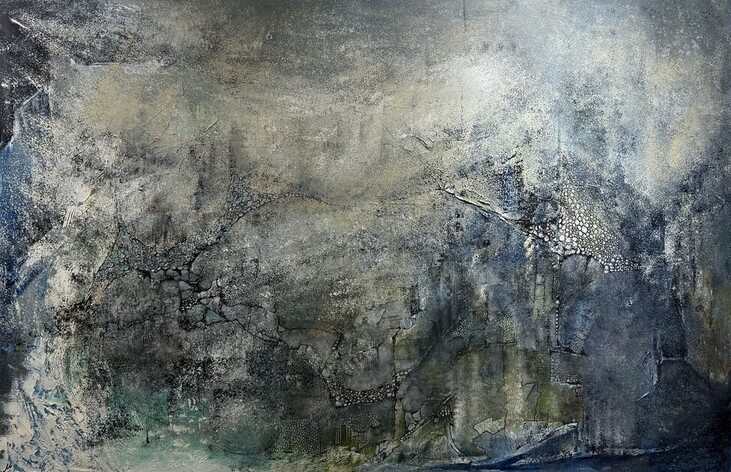
Muovendosi su serie pittoriche che vanno dalla pura astrazione, alle nature morte, ai nudi femminili, ai paesaggi urbani, a fare da linea di connessione è dunque l’utilizzo del colore, sempre polveroso e sfumato al punto di apparire velato che contraddistingue gli sfondi da cui emergono le figure protagoniste o che nelle opere astratte si propagano nell’intera superficie della tela, e il delicato tratto grafico con cui racconta la bellezza e la plasticità dei corpi come degli oggetti che sceglie di mettere al centro della scena; e infine la preziosità sontuosa dell’oro che a volte predomina, altre invece interagisce solo in alcuni frammenti.
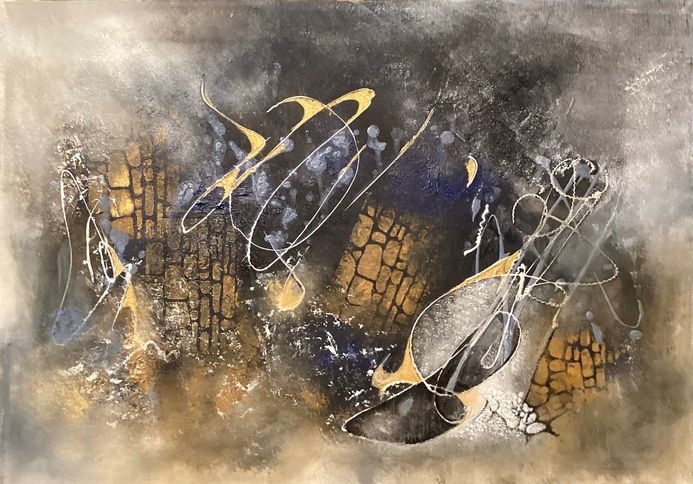
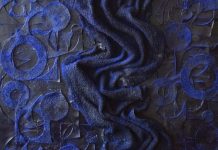
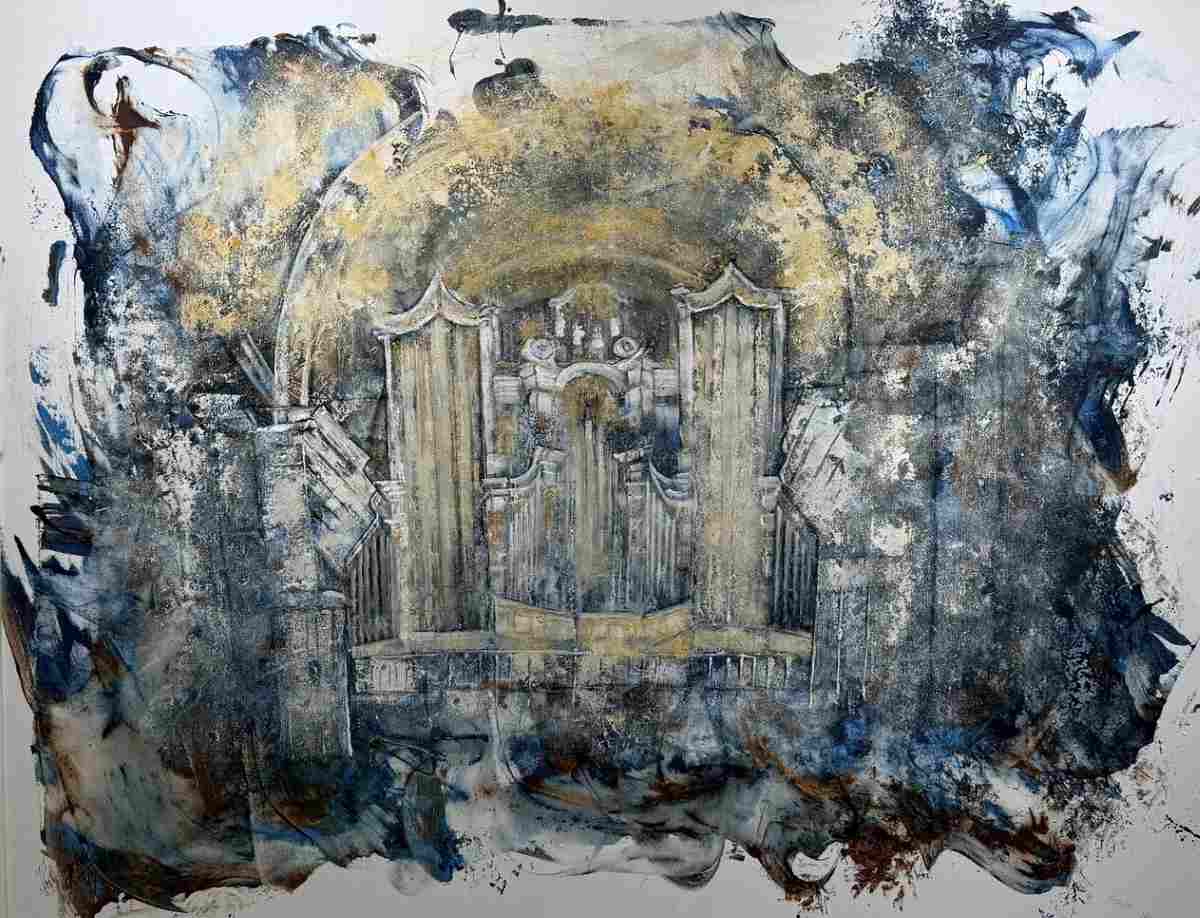
Questo è il caso dell’opera Oro Blu che presenta caratteristiche riconducibili all’Astrattismo Lirico di Wassily Kandinsky che fu l’inizio di un movimento, quello dell’Arte Astratta, concretizzatasi sotto varie forme ma in generale rivoluzionaria dal punto di vista formale e di rottura con l’arte precedente; in questo lavoro i dettagli sembrano danzare sulla superficie della tela, le sinuosità ricordano le note musicali emanate da uno strumento magico in grado di generare un’atmosfera armonica dove la preziosità dell’oro indugia per poi trovare eco nella parte più concreta dello sfondo. Più distante dalla figura centrale, l’atmosfera diventa impalpabile, completamente informale, pervasa da una luminosità che contribuisce a infondere quella suggestione in virtù della quale la magia più intensa si sofferma sul centro, sull’evocazione di note che avvolgono lo sguardo come se possedessero una sorta di magnetismo incantato, e poi si diffonde tutto intorno coinvolgendo lo spazio circostante.
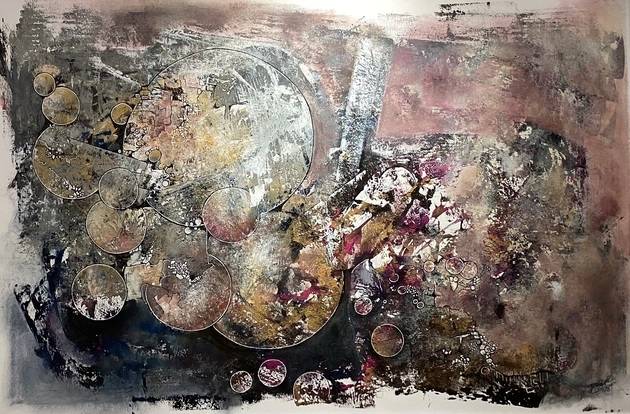
Ma la sensibilità espressiva di Helga Melem trova la sua piena realizzazione nel momento in cui scopre e racconta la piacevolezza delle piccole cose, quegli oggetti che circondano la vita quotidiana quasi rimanendo nell’ombra pur regalando all’individuo un senso di sicurezza, di calma e di serenità. Ed è proprio per questo che l’autrice dedica un’intera serie pittorica alla Natura Morta, riprendendo così il concetto espressivo di Giorgio Morandi per l’attitudine a metterne in evidenza la tranquillità e la rassicurazione di ciò che circonda la vita dell’individuo, ma adattandolo alla propria visione secessionista in cui l’estetica si lega all’eleganza, alla raffinatezza dell’oro, in questo caso utilizzato in maniera discreta, e alla leggerezza di un tratto grafico sottile che rende le composizioni delicate e sussurrate.
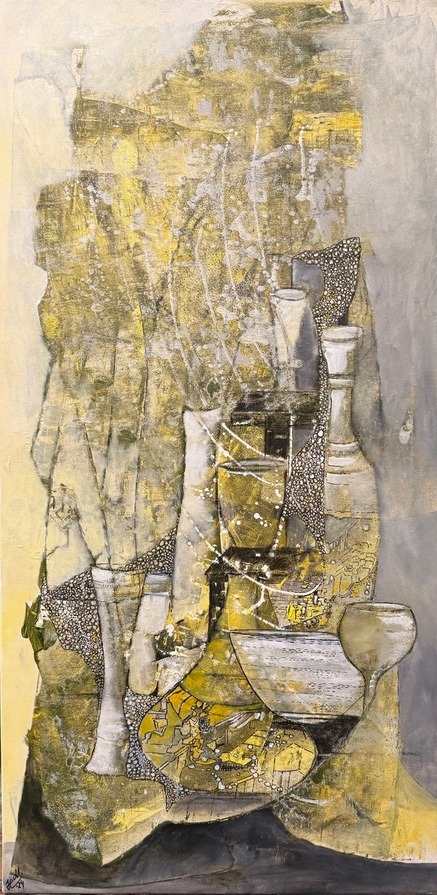
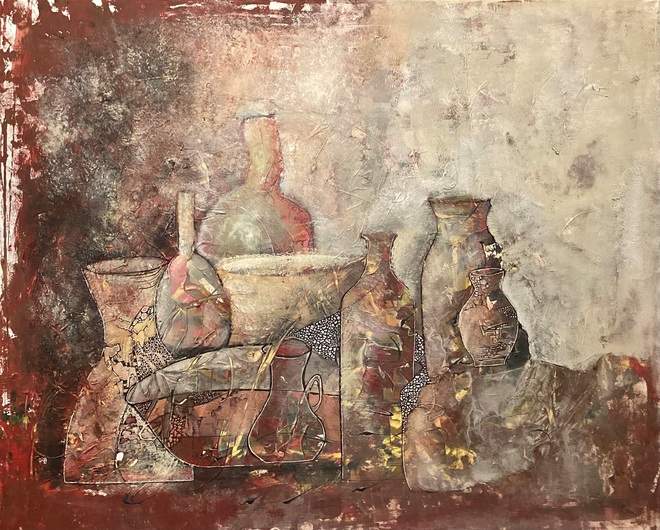
A questa serie appartiene il dipinto Stilleben in Gelb in cui la prospettiva è completamente sovvertita perché ciò che conta per Helga Melem è mettere in evidenza tutti quegli oggetti familiari a cui desidera dare un nuovo aspetto, una nuova luce ma soprattutto una rilevanza che nello sguardo distratto dalla fretta del vivere contemporaneo, non riescono ad avere.
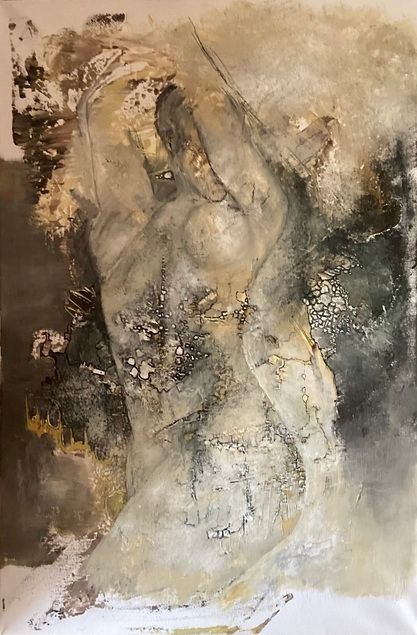
Nei nudi femminili l’autrice mostra in maniera persino più marcata l’influenza che i due maestri austriaci del Novecento, Gustav Klimt ed Egon Schiele, hanno esercitato sul suo fare arte perché lei stessa non può prescindere dall’evanescenza descrittiva ben lontana dalla perfezione realista che apparteneva al secondo, e che è visibile nei corpi in primo piano di cui non descrive mai il volto, né dalla preziosità della foglia oro che avvolge le protagoniste collegandole all’ambiente circostante. Questa caratteristica esecutiva consente a Helga Melem di mettere in luce la fragilità dell’animo femminile, rappresentato dal corpo nudo e dunque metaforicamente esposto agli eventi e alle circostanze che si susseguono, ma anche dalla forza tratteggiata attraverso la presenza dell’oro perché è proprio dalle esperienze, soprattutto dalle meno piacevoli, che si può generare la consapevolezza della capacità di potersi rialzare, di sollevarsi per costruire un domani diverso sostenuto dalla forza di rinascere e di essersi sapute reinventare.
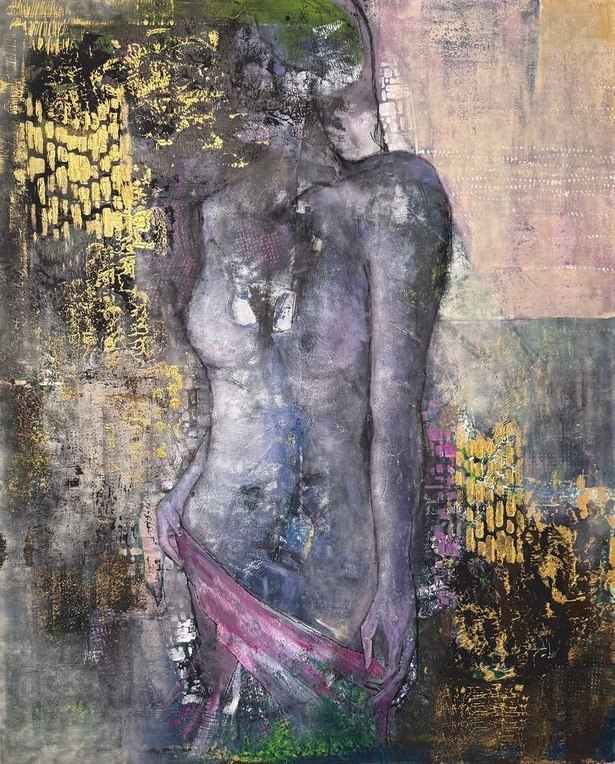
Questo concetto è pienamente rappresentato nella tela Ombra, dove il volto della protagonista è avvolto dall’informalità delle tonalità scure ma guarda verso la luce dorata a un passo da sé. Helga Melem ha al suo attivo un lungo percorso espositivo iniziato nel 1990 che l’ha vista presentare le sue opere in molte gallerie su tutto il territorio austriaco, ha partecipato all’Estate Culturale di Baden, è stata inserita nel catalogo d’arte Profili 2024, è membro dell’associazione artistica TraunArt e dell’associazione artistica Palette Kunstforum OÖ.
HELGA MELEM-CONTATTI
Email: helga@melem.at
Sito web: www.helga-melem.at/
Facebook: www.facebook.com/helga.melem.3
Instagram: www.instagram.com/helgamelem/
Between Secessionism and Expressionism the soft atmospheres by Helga Melem, where detail is whispered
There are creative attitudes in which it is essential to maintain a strong link with the reality observed, as if to grasp every little detail to tell and describe it in its completeness, using an executive perfection necessary to capture the gaze which remains fascinated by the beauty of what it sees reproduced; there are others which, on the contrary, require a complete detachment from the visible because it constitutes a limit to the emotional flow, to that feeling that must come out and be released onto the canvas without any conditioning by rationality, not even in the executive phase. And finally there are those authors who wish to remain in the middle of these two extremes, because for them the artistic manifestation can neither be completely defined nor absolutely non-formal, as if the inspiration they receive from what they see around them could only become concrete and true when perception, the sensation that they receive, also comes into play. Helga Melem, today’s protagonist, fits into this third narrative approach since her paintings run on the thread of the whispered, the hinted, the implied, due to her characteristic of favoring the general atmosphere rather than the particular.
Between the end of the 19th century and the beginning of the 20th, two movements emerged in the Germanic area, apparently in conflict with each other from a formal point of view but which managed to find a synthesis in Austria by virtue of the ability of the artists who joined them to meet and never close the communication channel. On the one hand, Viennese Secessionism was associated with all that decorative and elegiac trend that began in France with Art Nouveau to which adhered authors from all over Europe personalizing its name; on the other hand, the evolution of the Fauvist guidelines which led to Expressionism, in which the priority was the emotion, the feeling of the executor of the work who could thus give a personal and subjective version of the world around him.
Even in this case Austria had two great interpreters, Oskar Kokoschka, more pungent, critical and linked to the strong and excessive tones of the Fauves, and Egon Schiele who instead lightened the chromatic range as well as the graphic style, effectively entering a more existentialist dimension. Apparently distant in terms of representative intent, Gustav Klimt‘s Viennese Secessionism and Egon Schiele‘s Expressionism found a way to dialogue, to unite for the common goal of detaching themselves completely from academic art, giving life to a modern style, innovative both in terms of pictorial approach and in the use of materials; yet the intimate and introspective attitude of Egon Schiele‘s soul, frightened by the winds of war to the point of finding in almost obsessive sexuality the only escape route which led him to paint himself in a deformed way in his self-portraits, could in no way be linked to that poetic, elegant, refined research of Gustav Klimt‘s golden period which literally brought female beauty out of floral, delicate, impalpable atmospheres and precious by virtue of the use of gold leaf. In both authors emerged the need to abstract themselves from reality, the first highlighting only the feeling and renouncing any aesthetic harmony for it, the second instead remaining closer to the dimension of the dream, of desire, of the feeling felt towards unattainable and idealized women with his immortal work.
The indefiniteness and decontextualization of the backgrounds of both placed them, as they had desired, in a trend that could not be completely traced back to either Art Nouveau or Expressionism, suggesting and showing how possible it was to find an unprecedented path where the extremes and guidelines could be attenuated and adapted to the individual author. The artist Helga Melem, also Austrian and resident in Upper Austria, in turn finds a synthesis between the two masters who inspire her, mixing in her canvases both the aesthetic attitude of Gustav Klimt, from whom she takes up the use of gold leaf although in a much more measured and targeted manner to highlight some details, and the narrative impalpability of Egon Schiele by choosing a pale chromatic range sometimes used on female nudes in which emerges the contrast between fragility and inner strength, others on abstraction from the visible, and some others on still lifes of which she highlights the crystalline beauty and the immobile, but also reassuring, balance that is perceived in the domestic dimension. The result is an artistic production in which the soft and strongly nuanced colors outline atmospheres in which it is the general sensation that is visible because the detail is not fundamental in the author’s path of discovery and introspective study; gold leaf intervenes to interact with this suffused and soft setting, insinuating itself to highlight some targeted details necessary for Helga Melem to induce the gaze to linger on them because they are functional in involving in the totality of the work. Moving on pictorial series that range from pure abstraction, to still lifes, to female nudes, to urban landscapes, what acts as a connection line is therefore the use of colour, always dusty and nuanced to the point of appearing veiled, that distinguishes the backgrounds from which the protagonist figures emerge or that in abstract works spread across the entire surface of the canvas, and the delicate graphic stroke with which she narrates the beauty and plasticity of the bodies as well as the objects that she chooses to place at the center of the scene; and finally the sumptuous preciousness of gold which sometimes predominates, other times it only interacts in some fragments.
This is the case of the artwork Oro Blu (Blue Gold) which presents characteristics attributable to the Lyrical Abstractionism of Wassily Kandinsky which was the beginning of a movement, that of Abstract Art, that materialized in various forms but from a formal point of view was generally revolutionary and a break with previous art; in this work the details seem to dance on the surface of the canvas, the sinuosities recall the musical notes emanating from a magical instrument capable of generating a harmonious atmosphere where the preciousness of the gold lingers and then finds an echo in the more concrete part of the background. The further away from the central figure, the atmosphere becomes impalpable, completely informal, pervaded by a luminosity that contributes to instilling that suggestion by virtue of which the most intense magic focuses on the centre, on the evocation of notes that envelop the gaze as if they possessed a sort of enchanted magnetism, and then spreads all around, involving the surrounding space. But Helga Melem‘s expressive sensitivity finds its full realization when she discovers and talks about the pleasantness of small things, those objects that surround everyday life almost remaining in the shadows while giving the individual a sense of security, calm and serenity. And it is precisely for this reason that the author dedicates an entire pictorial series to Still Life, thus taking up Giorgio Morandi‘s expressive concept for the ability to highlight the tranquility and reassurance of what surrounds the individual’s life, but adapting it to her own secessionist vision in which aesthetics is linked to elegance, the refinement of gold, in this case used in a discreet manner, and the lightness of a thin graphic line that makes the compositions delicate and whispered.
The painting Stilleben in Gelb (Still Life in Yellow) belongs to this series in which the perspective is completely subverted because what matters for Helga Melem is to highlight all those familiar objects to which she wishes to give a new aspect, a new light but above all a relevance that in the gaze distracted by the rush of contemporary life, they are unable to have. In the female nudes the author shows even more markedly the influence that the two Austrian masters of the twentieth century, Gustav Klimt and Egon Schiele, exerted on her art making because she herself cannot ignore the descriptive evanescence that is far from the realist perfection that belonged to the latter, and which is visible in the bodies in the foreground whose faces she never describes, nor in the preciousness of the gold leaf that envelops the protagonists, connecting them to the surrounding environment.
This executive characteristic allows Helga Melem to highlight the fragility of the female soul, represented by the naked body and therefore metaphorically exposed to the events and circumstances that follow one another, but also by the strength outlined through the presence of gold because it is precisely from experiences, especially the less pleasant ones, that can be generated the awareness of the ability to be able to get up again, to rise up to build a different tomorrow supported by the strength of being reborn and of having been able to reinvent themselves. This concept is fully represented in the canvas Ombra (Shadow), where the protagonist’s face is enveloped in the informality of dark tones but looks towards the golden light one step away from her. Helga Melem has a long exhibition journey under her belt which began in 1990 and has seen her present her artworks in many galleries throughout Austria, she participated in the Baden Cultural Summer, she was included in the Profili 2024 art catalogue, she is a member of the artistic association TraunArt and of the artistic association Palette Kunstforum OÖ.