
Molto spesso l’innovazione e la consapevolezza di appartenere all’epoca attuale, inducono gli artisti a dimenticare, o forse sarebbe meglio dire superare il passato per generare opere che siano al passo con i tempi, con le complessità di un vivere che sembra aver dimenticato la poesia, la spontaneità e il ritmo lento che invece erano appartenuti a epoche precedenti a quella contemporanea. All’interno di un approccio creativo proteso verso il presente o verso il futuro, vi sono tuttavia autori che hanno bisogno di restare agganciati alla tradizione, a quel gusto antico attraverso il quale riescono a mettere in risalto le piccole cose, la bellezza che si svela in virtù di uno sguardo ammirato verso la riproduzione di tutto ciò da cui l’essere umano è sempre stato, e sempre sarà, affascinato perché la magia dell’atmosfera è qualcosa che va a colpire l’anima ed è dunque senza tempo. Il protagonista di oggi attinge alle origini della sua cultura di appartenenza, quella giapponese, per tratteggiare atmosfere liriche e intrise di un simbolismo che sfocia nella pura contemplazione.
L’Arte Giapponese affonda le sue radici in un’era antichissima dai cui reperti si evince tuttavia la finezza esecutiva già evidente fin da quelle epoche lontane e che si manifestava principalmente nella produzione di oggetti come vasi e figurine fittili; ma fu con il periodo Asuka che anche la pittura cominciò a prendere piede in una forma fortemente influenzata dal buddismo così come dalla tradizione culturale e iconografica della vicina Cina e della Corea spogliandola però dai princìpi filosofici per trasformare il gesto pittorico in pura decoratività. Nel periodo Heyan si cominciarono a diffondere gli yamato-e che erano rappresentazioni della natura dai colori freschi e vivaci, leggeri che si adattavano al gusto estetico del popolo giapponese; nei successivi periodi si alternarono governi militari, dove l’arte doveva essere popolare e comprensibile a tutti ma anche celebrare i condottieri a capo del paese, a governi aristocratici e religiosi per cui l’estetica e la raffinatezza, oltre alle iconografie buddiste, dovevano prevalere.
Gli autori giapponesi furono i primi a creare la storia illustrata dei fondatori della scuola Kegon commissionata dal monaco Myōe del tempio Kōzan-ji, dove le illustrazioni erano accompagnate da brevi descrizioni e dialoghi accanto ai personaggi, anticipando così i fumetti moderni. Ma nei dipinti fuoriuscivano anche scene di corte, la ricchezza e la bellezza di un’aristocrazia che era sempre stata la maggiore committente delle opere; non solo, il Giappone fu anche il paese in cui le tecniche esecutive si allontanarono dal classicismo occidentale che considerava l’olio su tela come forma più elevata di rappresentazione pittorica, bensì creò lo ukiyo-e che era un genere di stampa artistica impressa su carta con matrici di legno, nata e sviluppatasi durante il periodo Edo.
Inizialmente monocromatiche tali stampe, eseguite tramite xilografia, furono in seguito realizzate a colori e costituirono l’approccio pittorico adottato da uno dei maggiori e più conosciuti interpreti dell’Arte giapponese, quel Katsushika Hokusai autore della celebre Grande Onda di Kanagawa ma anche di molte vedute del Monte Fuji, che divennero note in Europa nella fase di scoperta del mondo orientale e la conseguente moda di avere oggetti e decorazioni a tema che venne chiamata Giapponismo. Ciò che accomunava gli artisti di ogni epoca, sia che si dedicassero all’ukiyo-e sia che invece si cimentassero con la pittura più tradizionale, era la delicatezza del tratto grafico, le tonalità tenui utilizzate nelle raffigurazioni, la narrazione della natura giapponese, dei suoi paesaggi, ma anche dei rituali tradizionali come la cerimonia del tè, e la semplicità estetica che trasformava ogni lavoro in una meravigliosa unione tra semplicità e armonia visiva; e infine a essere spesso fortemente presente era l’utilizzo della foglia oro che in quella cultura aveva e ha un significato simbolico e non solo decorativo. L’artista Kyosuke Tchinaï rappresenta quella parte di arte contemporanea giapponese che non si è mai voluta distaccare dalla tradizione, da uno stile iconografico orientato alla bellezza, all’armonia, alla contemplazione, introducendovi tuttavia una spiritualità, un simbolismo che pervade le sue atmosfere liriche orientate a mettere in risalto la semplicità del vivere.
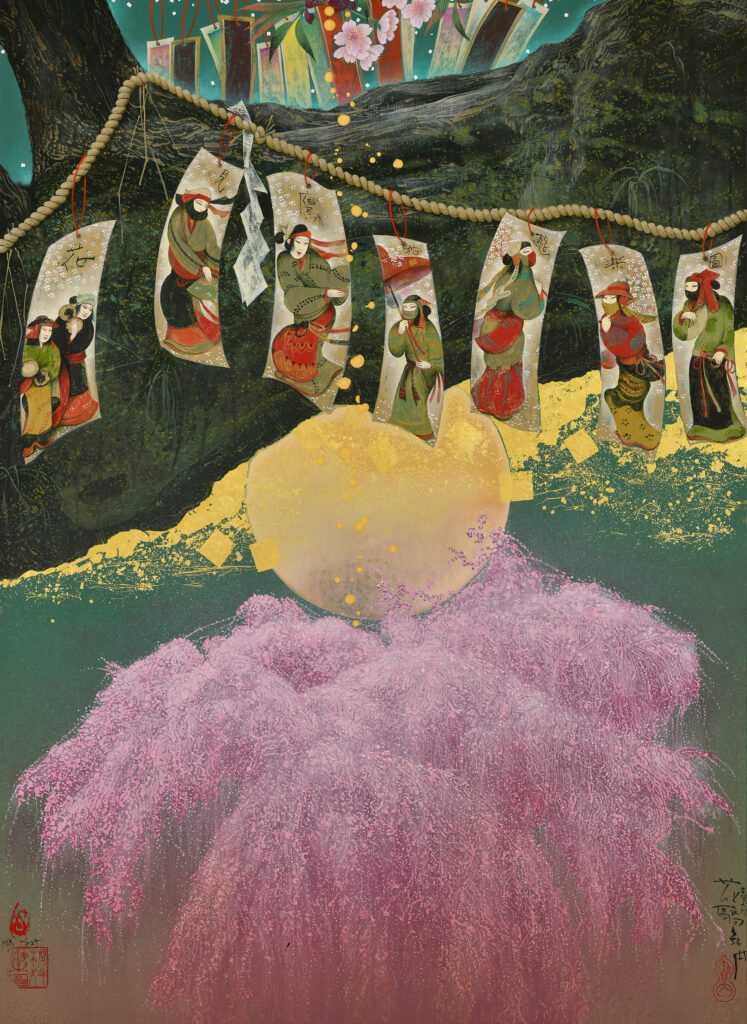
Egli non solo caratterizza i suoi lavori con un ampio utilizzo della foglia oro, seguendo la traccia lasciata dai suoi predecessori di molti secoli prima, ma sceglie come superficie la carta Washi, un tipo di carta fatta a mano, introdotta in Giappone nel 610 da un prete buddista coreano; di buona consistenza, resistente e traslucida diviene la base ideale per le atmosfere avvolgenti e morbide di Kyosuke Tchinaï che non vogliono incontrare la ruvidità della tela durante l’esecuzione.
La superficie scorrevole ma delicata della carta su cui agisce con l’insolito utilizzo del colore acrilico, insolito rispetto alla tecnica originaria a cui egli attinge, viene in un secondo tempo applicata su un pannello di legno che le dà solidità e maggiore resistenza; attraverso ombreggiature, volumi e profondità sovrappone strati di linee parallele con diverse inclinazioni per creare la base ai suoi paesaggi evanescenti, fortemente lirici e impregnati di una simbologia impercettibile proprio in virtù del predominante fascino estetico che dai suoi lavori si libera. Alcune chiome alberate dei ciliegi in piena fioritura sembrano sospese tra cielo e terra, come a evocare la magia che si libera nel momento in cui ci si trova immersi davanti a uno dei miracoli della natura e che stimola l’individuo a recuperare un contatto introspettivo con una naturalezza che ha perduto, troppo distratto dalla tecnologia e da un progresso che non sono completamente positivi, in fondo.
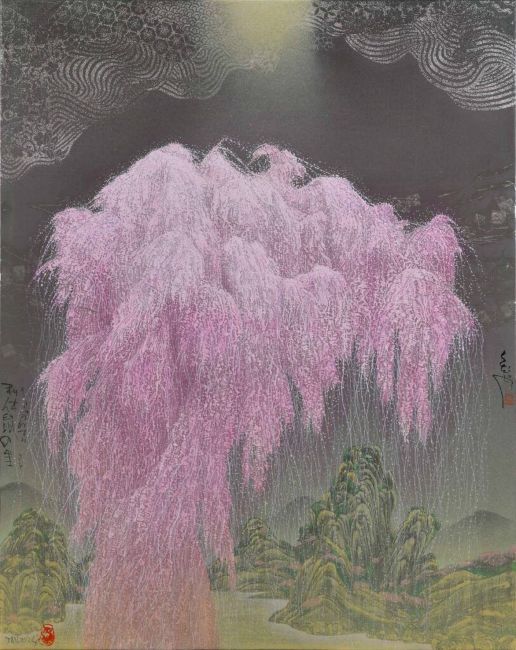
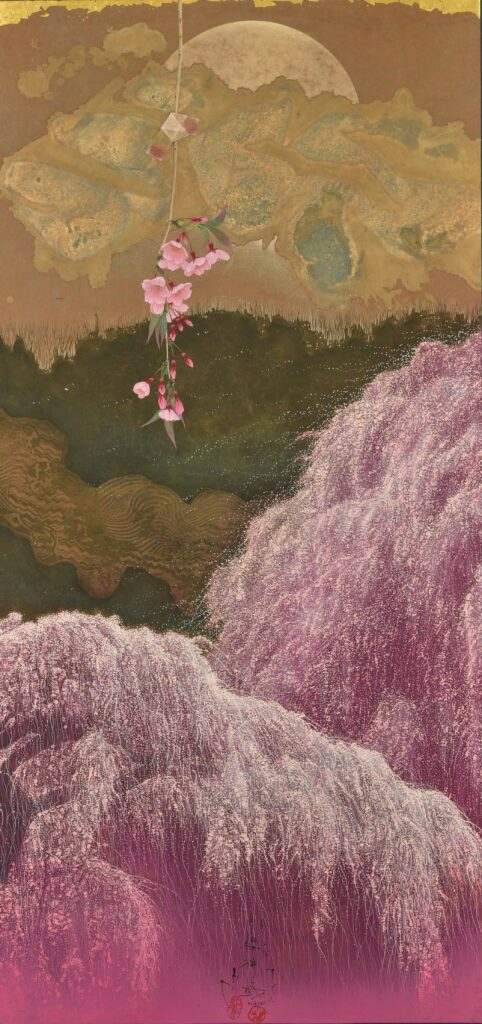
Questa è la sensazione che si riceve davanti all’opera Rikyunezu, dove appunto la nuvola di glicine rosa si innalza verso il cielo notturno quasi appartenesse a una dimensione superiore, spirituale; dal punto di vista esecutivo colpisce la finezza del tratto grafico che contraddistingue Kyosuke Tchinaï, la leggerezza con cui descrive le colline e gli alberi sullo sfondo, ma anche il cielo solcato da linee sinuose a riprodurre le scie magiche delle stelle.
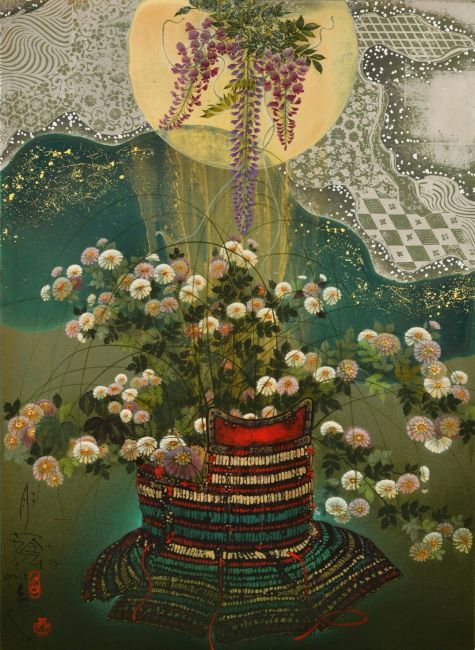
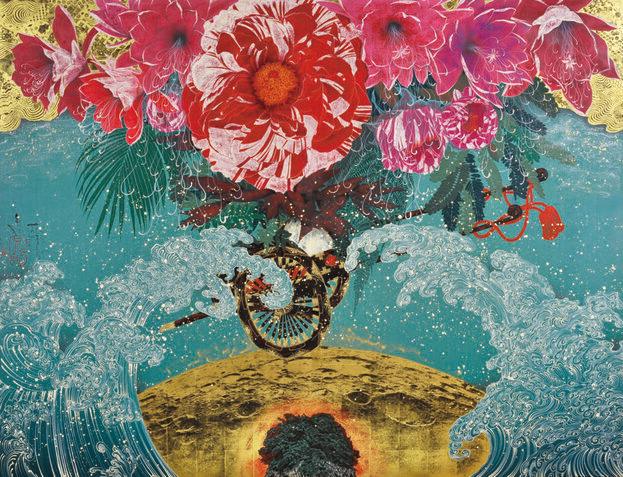
In Ombre de la lune emerge l’incanto che l’autore riceve quando si pone in contemplazione dell’astro più vicino alla terra eppure il più irraggiungibile, misterioso e inafferrabile al punto di assumere il significato metaforico legato a tutto ciò che è lontano e desiderabile. Nell’opera infatti dal disco giallo emerge la delicatezza di un fiore di glicine, a dominare sulle margherite sottostanti che fuoriescono da un contenitore in paglia colorata, inducendo l’osservatore a sognare di potersi trovare almeno una volta nella vita in un’atmosfera morbida e leggera come quella evocata dalle immagini di Kyosuke Tchinaï. Nel suo mondo tutto è piacevole, rassicurante, rasserenante e forse è questo che lo rende tanto affascinante anche all’uomo contemporaneo, malgrado il suo forte richiamo a uno stile classico e apparentemente al di fuori del tempo.
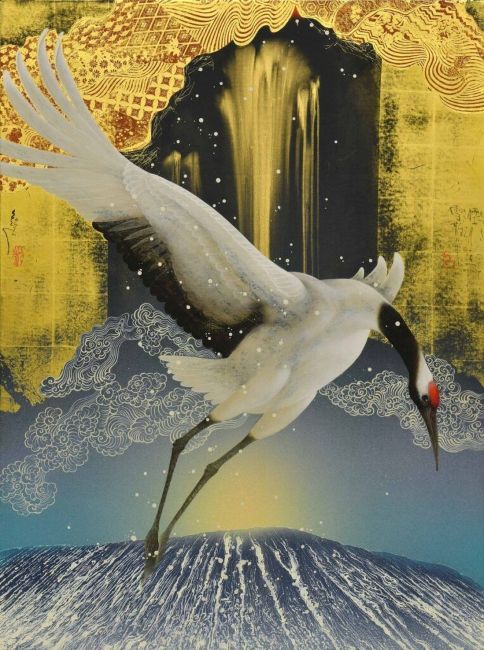
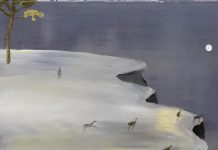
L’opera In the month of Janary snow scatters like blossom è forse la più simbolista di quelle presentate in questo testo, perché qui la narrazione si sofferma sulla figura centrale della gru in volo, un uccello che rappresenta longevità, saggezza, lealtà ma che è anche un’icona di pace, prosperità ed elevazione spirituale, e dunque la fioritura a cui l’autore fa riferimento nel titolo potrebbe essere quella interiore, l’evoluzione della coscienza che si riapre, inverno dopo inverno acquisendo consapevolezze ottenute proprio grazie alla rigidità del clima, allegoria delle circostanze e degli eventi.
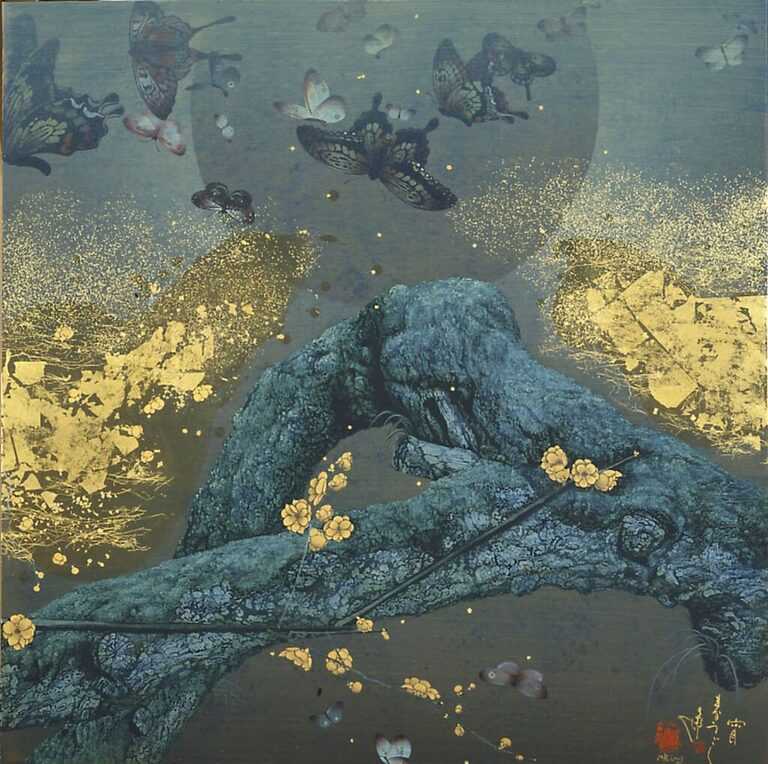
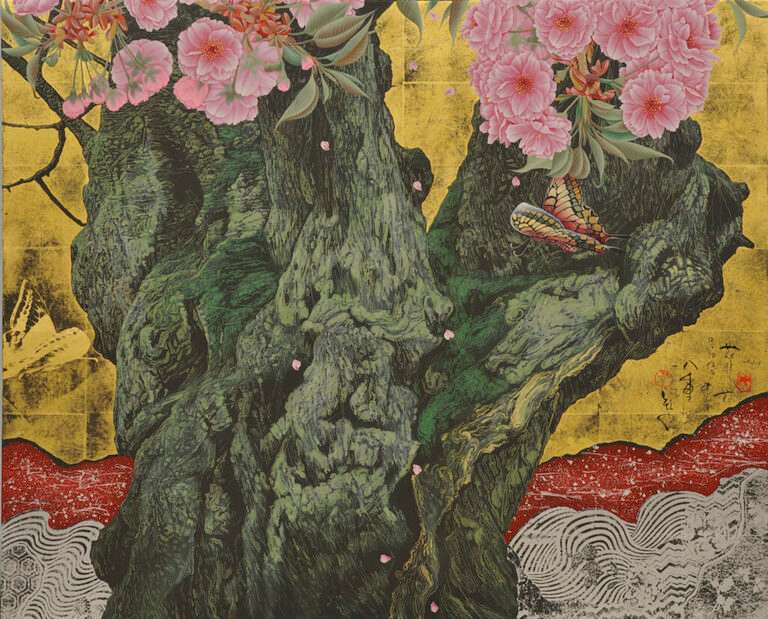
La foglia oro sta a rappresentare la preziosità del percorso compiuto e la fioritura a cui Kyosuke Tchinaï fa riferimento nel titolo è quella della personalità umana che ha costantemente bisogno di semi da cui far nascere i prossimi rami della sua esistenza. In Spring evening, nonostante l’ambientazione quasi notturna, spicca la presenza delle farfalle, leggere e delicate creature che giungono alla maggiore manifestazione di bellezza proprio nel periodo primaverile, quando hanno oltrepassato la bruttezza del bruco, l’immobilità del bozzolo e finalmente possono librarsi in cielo godendo a pieno la vita che la natura concede loro, e il privilegio di poter volare. Il miracolo delle farfalle è narrato sotto forma di fiaba incantevole da Kyosuke Tchinaï, il tronco nella parte bassa dell’opera è ornato da preziosi fiori di ciliegio, simbolo del Giappone, che nella fantasia dell’autore hanno il colore dell’oro proprio per sottolineare la pregevolezza di quella pianta e del suo valore alimentare per le delicate creature che volteggiano sopra di loro; ecco il motivo per cui anche ai lati del ramo si trova uno sfondo color oro, per sottolineare quanto importante sia l’ecosistema che deve essere dunque rispettato e preservato, mai destabilizzato.
Kyosuke Tchinaï ha esposto le sue opere in tutto il mondo e ha ricevuto numerosi premi, come il Premio Yasui nel 1991. Le sue opere hanno attirato molti collezionisti internazionali e sono rappresentate in ambienti prestigiosi.
KYOSUKE TCHINAÏ-CONTATTI
Sito web: www.tamenaga.com/fr/artist/290/
Facebook: www.facebook.com/profile.php?id=100093216841705
The enchantment of Japanese Art inspired by the traditional Edo period in the paintings of Kyosuke Tchinaï
Very often innovation and the awareness of belonging to the present era lead artists to forget, or perhaps it would be better to say to move beyond the past in order to create works that are in step with the times, with the complexities of a life that seems to have forgotten the poetry, spontaneity, and slow rhythm that belonged to eras preceding our own. Within a creative approach oriented toward the present or the future, there are however artists who need to remain anchored to tradition, to that ancient sensibility through which they manage to highlight the small things, the beauty that reveals itself through an admiring gaze toward the depiction of all that has always fascinated, and will always fascinate, human beings because the magic of the atmosphere is something that touches the soul and is therefore timeless. Today’s protagonist draws on the origins of his culture, the Japanese one, to outline lyrical atmospheres imbued with a symbolism that flows into pure contemplation.
Japanese Art has its roots in a very ancient era from whose finds, however, is possibile to deduce the executive finesse already evident since those distant times and which manifested mainly in the production of objects such as vases and clay figurines; but it was with the Asuka period that painting also began to take hold in a form strongly influenced by Buddhism as well as by the cultural and iconographic tradition of nearby China and Korea, however stripping it of philosophical principles to transform the pictorial gesture into pure decorativeness. In the Heyan period began to spread yamato-e began, which were representations of nature with fresh and lively colours, light which adapted to the aesthetic taste of the Japanese people; in subsequent periods alternated military governments where art had to be popular and understandable to all but also celebrate the leaders at the head of the country, with aristocratic and religious governments for which aesthetics and refinement, in addition to Buddhist iconography, had to prevail. Japanese authors were the first to create the illustrated history of the founders of the Kegon school commissioned by the monk Myōe of the Kōzan-ji temple, where the illustrations were accompanied by short descriptions and dialogues alongside the characters, thus anticipating modern comics.
But the paintings also depicted court scenes, the wealth and beauty of an aristocracy that had always been the primary patron of the artworks; not only that, Japan was also the country in which the execution techniques moved away from Western classicism which considered oil on canvas as the highest form of pictorial representation, but instead created ukiyo-e that was a genre of artistic print impressed on paper with wooden matrices, born and developed during the Edo period. Initially monochromatic, these prints executed via woodcut, were later made in color and constituted the pictorial approach adopted by one of the greatest and best-known interpreters of Japanese Art, that Katsushika Hokusai author of the famous Great Wave of Kanagawa but also of many views of Mount Fuji, which became known in Europe during the discovery phase of the oriental world and the consequent fashion of having themed objects and decorations which was called Japonism. What artists of every era had in common, whether they dedicated themselves to ukiyo-e or whether they tried their hand at more traditional painting, was the delicacy of the graphic line, the soft tones used in the depictions, the narration of Japanese nature, its landscapes, but also of traditional rituals such as the tea ceremony, and the aesthetic simplicity that transformed each work into a wonderful union between simplicity and visual harmony; and finally, what was often strongly present was the use of gold leaf which in that culture had and has a symbolic and not just decorative meaning.
The artist Kyosuke Tchinaï represents that part of contemporary japanese art that has never wanted to detach itself from tradition, from an iconographic style oriented towards beauty, harmony, contemplation, however introducing a spirituality, a symbolism that pervades its lyrical atmospheres aimed at highlighting the simplicity of living. He not only characterizes his artworks with an extensive use of gold leaf, following the trace left by his predecessors of many centuries before, but chooses as the surface Washi paper, a type of handmade paper introduced into Japan in 610 by a Korean Buddhist priest; of good consistency, resistant and translucent, it becomes the ideal basis for the enveloping and soft atmospheres of Kyosuke Tchinaï which do not want to encounter the roughness of the canvas during execution. The smooth but delicate surface of the paper on which he acts with the unusual use of acrylic colour, unusual compared to the original technique he draws on, is subsequently applied to a wooden panel which gives it solidity and greater resistance; through shading, volumes and depth he superimposes layers of parallel lines with different inclinations to create the basis for his evanescent landscapes, highly lyrical and imbued with an imperceptible symbolism precisely by virtue of the predominant aesthetic charm that is released from his artworks.
Some tree-lined foliage of the cherry trees in full bloom seem suspended between heaven and earth, as if to evoke the magic that is released when one finds immersed in front of one of nature’s miracles and which stimulates the individual to recover an introspective contact with a naturalness that he has lost, too distracted by technology and progress that are not completely positive, after all. This is the sensation received when looking at the work Rikyunezu, where the cloud of pink wisteria rises towards the night sky as if it belonged to a higher, spiritual dimension; from an executive point of view what strikes is the fineness of the graphic trait that distinguishes Kyosuke Tchinaï, the lightness with which he describes the hills and trees in the background, but also the sky crossed by sinuous lines to reproduce the magical trails of the stars. In Ombre de la lune emerges the enchantment that the author receives when he contemplates the star closest to the earth and yet the most unattainable, mysterious and elusive to the point of taking on the metaphorical meaning linked to everything that is distant and desirable.
In the artwork, in fact, the delicacy of a wisteria flower emerges from the yellow disc, dominating the underlying daisies that spread from a colored straw container, inducing the observer to dream of being able to find himself at least once in his life in a soft and light atmosphere like the one evoked by the images of Kyosuke Tchinaï. In his world everything is pleasant, reassuring, calming and perhaps this is what makes it so fascinating even to contemporary man, despite its strong reference to a classic and apparently timeless style. The work In the month of Janary snow scatters like blossom is perhaps the most symbolist of those presented in this text, because here the narrative focuses on the central figure of the crane in flight, a bird that represents longevity, wisdom, loyalty but which is also an icon of peace, prosperity and spiritual elevation, and therefore the flowering to which the author refers in the title could be the internal one, the evolution of consciousness that reopens, winter after winter acquiring awareness obtained thanks to the rigidity of the climate, allegory of circumstances and events.
The gold leaf represents the preciousness of the path taken and the flowering that Kyosuke Tchinaï refers to in the title is that of the human personality which constantly needs seeds from which to give birth to the next branches of its existence. In Spring evening, despite the almost nocturnal setting stands out the presence of butterflies, light and delicate creatures that reach the greatest manifestation of beauty precisely in the spring period, when they have overcome the ugliness of the caterpillar, the immobility of the cocoon and can finally soar in the sky fully enjoying the life that nature grants them, and the privilege of being able to fly.
The miracle of the butterflies is narrated in the form of an enchanting fairy tale by Kyosuke Tchinaï, the trunk in the lower part of the work is adorned with precious cherry blossoms, the symbol of Japan, which in the author’s imagination have the color of gold precisely to underline the preciousness of that plant and its nutritional value for the delicate creatures fluttering above them; this is the reason why there is also a gold-colored background on the sides of the branch, to underline how important the ecosystem is which must therefore be respected and preserved, never destabilized. Kyosuke Tchinaï has exhibited his works throughout the world and has received numerous awards, such as the Yasui Prize in 1991. His works have attracted many international collectors and are represented in prestigious circles.