

Esistono pensieri e sensazioni che hanno bisogno di essere raccontati attraverso una voce artistica perché per alcuni le parole non sono sufficienti a liberare la complessità sfaccettata di ciò che percepiscono e ricevono dal loro vissuto; dunque chi ha una personalità creativa trova la soluzione espressiva nell’arte, intesa pertanto come manifestazione di un’interiorità che riesce a trovare un proprio linguaggio solo e unicamente attraverso l’espressione visiva, sia essa bidimensionale come nel caso della pittura oppure più generativa e tridimensionale come nel caso della scultura. È proprio su questo secondo approccio che si focalizza la personalità creativa del protagonista di oggi, il quale sceglie per le sue sculture un’attitudine in cui la leggerezza dei metalli si armonizza con uno sguardo delicato attraverso cui osserva tutto ciò che poi diviene protagonista delle sue opere.
Nel corso della storia dell’arte più recente la scultura subì sorti alterne poiché nell’Ottocento, quel secolo in cui cominciarono a delinearsi le prime avvisaglie di ribellione alle regole accademiche precedenti e soprattutto alla pura riproduzione dell’osservato, la pittura predominò la scena a causa di tutte quelle innovazioni stilistiche destinate a gettare le basi per gli stravolgimenti che sarebbero avvenuti nel Ventesimo secolo; a parte due autori come Auguste Rodin, considerato il padre della scultura moderna, e Medardo Rosso, che volle introdurre le idee impressioniste nelle sue opere, fu necessario attendere il Novecento per vedere le trasformazioni che subirono le realizzazioni scultoree sia dal punto di vista formale che da quello dell’utilizzo dei materiali. In questo fu essenziale l’apporto dell’Art Nouveau poiché proprio da quell’esaltazione della natura e delle sue forme sinuose fu possibile utilizzare la materia, peraltro normalmente impiegata nell’artigianato per produrre ornamenti e suppellettili, in maniera diversa rispetto al passato, non più nella sua forma compatta come nel caso dei bronzi classici, bensì disegnando letteralmente nello spazio figure in cui il vuoto diveniva un complemento al pieno, in cui la decoratività e l’armonia estetica si associavano a un nuovo concetto di leggerezza. Con l’inizio del nuovo secolo, il Ventesimo, la scultura si ritagliò così un ruolo da comprimario alla pittura poiché gli artisti moderni vollero spesso misurarsi sia con la tela che con la materia, dunque dalle sculture futuriste di Umberto Boccioni, ai totem antropomorfi e inquietanti di Max Ernst per finire ai volti primitivisti di Pablo Picasso, tutto si legava alle linee guida dei movimenti di cui questi grandi autori erano rappresentanti. Vi furono tuttavia alcuni autori che intrapresero un percorso diverso, prettamente scultoreo, in cui l’esecuzione era funzionale al sentire, a un esistenzialismo in cui l’essere umano con le sue fragilità e debolezze doveva essere in primo piano e per esprimere le quali era necessario riprendere la leggerezza ed esilità esecutiva introdotta dall’Art Nouveau.
Alberto Giacometti da un lato, con i suoi personaggi alti e magrissimi, in bilico tra le le circostanze della vita e l’incapacità di tenersi in piedi, e il rumeno Constantin Brâncuși dall’altro che mise in atto una stilizzazione in virtù della quale i volti simili a maschere indigene sembravano essere simbolo di un distacco dai progressi della civiltà occidentale e moderna, cominciarono a modellare il bronzo infondendo nelle loro figure instabili un senso di precarietà. I successivi decenni del Novecento diedero l’opportunità agli artisti di sperimentare nuovi materiali, in precedenza non presi in considerazione per la realizzazione di opere d’arte, ma che in realtà rivelarono un’anima plasmabile e adattabile ai nuovi concetti creativi di quei tempi, come per l’Arte Informale e per l’Arte Povera che si avvalevano di materiali industriali, scarti di lavorazione, oggetti di recupero poi rimodellati sulla base dell’intenzione artistica degli autori. Il maestro scultore Adriano Clama dà vita a un nuovo modo di lavorare i metalli, prevalentemente il ferro ma anche il rame, l’acciaio e l’ottone, in virtù del quale riesce ad avvolgere ogni suo lavoro di una poeticità che induce a dimenticare la rigidità del materiale per immergersi nella morbidezza della sua narrazione.
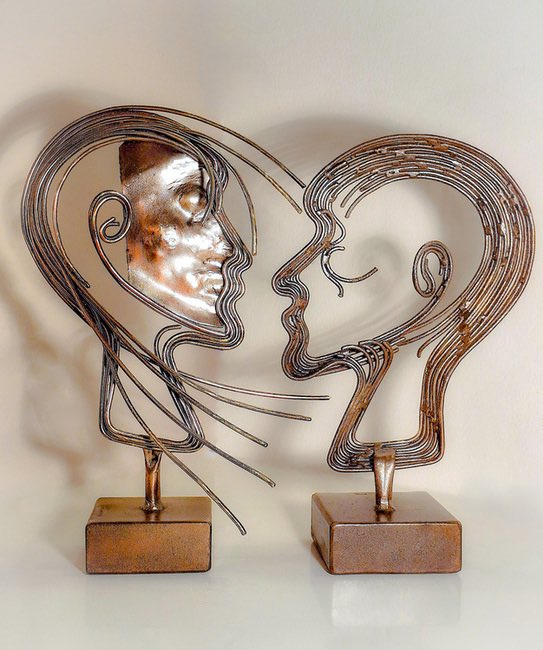
Nato a Treviso, artista da sempre e allievo per lungo tempo del Maestro del ferro Toni Benetton, Adriano Clama supera l’approccio esistenzialista, oltrepassa la stilizzazione per assecondarla al proprio impulso espressivo, esce ed entra dalla rappresentazione dell’osservato sulla base del soggetto protagonista dell’opera o anche di una sensazione esplicativa più o meno prevalente; il risultato appare davanti agli occhi sotto forma di strutture che danzano nello spazio circostante, che disegnano l’emozione percettiva provata dall’autore nel momento in cui la sua immaginazione avverte il bisogno di dar vita a quel preciso frammento che poi trova struttura attraverso i metalli.
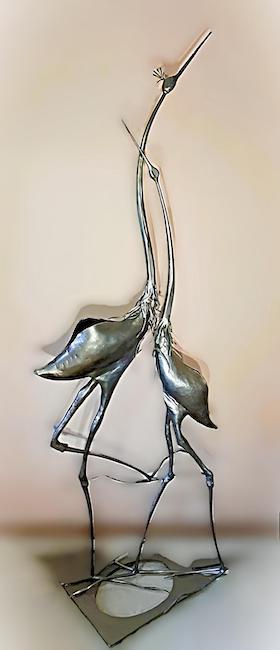
Ciò che colpisce delle sue opere, è la maestria con cui plasma il ferro, o forse sarebbe meglio dire che lo forgia affidando all’osservatore il compito di dare una propria interpretazione alle sue linee, a quelle figure che non possono fare a meno di colpire per la loro eleganza e per il lirismo di cui sono intrise e che viene esplicato attraverso il titolo.
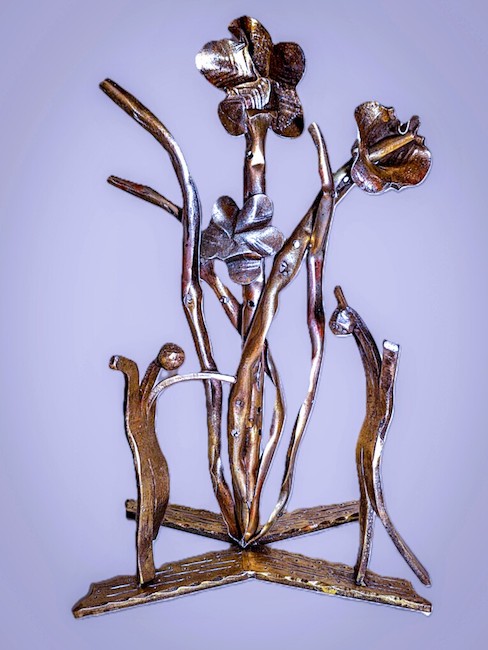
L’Incontro mostra il romanticismo del punto di vista di Adriano Clama, quella capacità di avvertire la magia di un avvicinamento quasi destinico di due anime che inconsapevolmente si stavano cercando da sempre; i grandi fiori sotto i quali l’autore colloca i protagonisti sembrano enfatizzare il carattere straordinario di quell’istante ordinario, impercettibile per chiunque non abbia la sensibilità di percepirne l’incanto. La stilizzazione in questa scultura è particolarmente evidenziata perché non è importante chi siano i personaggi, ciò che conta è l’emozione che da essi fuoriesce, quell’entusiasmo quasi inconsapevole che avvertono intuendo quanto da quel momento in avanti la loro vita sarà diversa; ecco perché i loro corpi sono protesi l’uno verso l’altro, le braccia sollevate, le gambe pronte allo spostamento, per mettere in risalto quel moto interiore che li spinge a riconoscersi, a sentire che la ricerca è terminata.
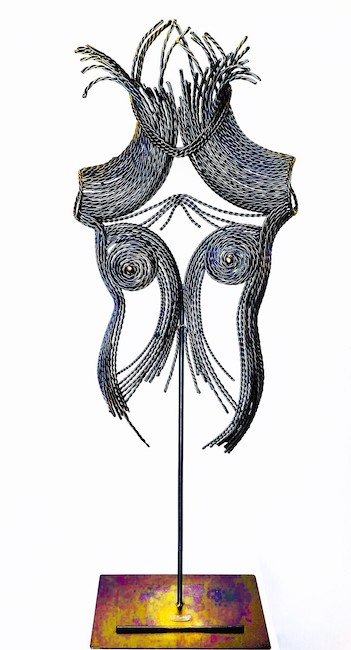
L’Essenza a sua volta è una scultura fortemente stilizzata ma qui l’interazione con lo spazio circostante è fondamentale proprio per focalizzare l’attenzione sulla sostanza, su tutto ciò che appartiene all’interiorità e che viene racchiuso e troppo spesso nascosto dall’involucro esterno, da un contenitore dentro il quale l’essere umano trova rifugio a protezione di una fragilità dell’anima che non può essere mostrata. Ma l’opera può avere anche una lettura opposta, e cioè che spesso l’accattivante armatura lucente, simbolo della ricerca della perfezione esteriore, può nascondere un vuoto disarmante, un’assenza totale di tutta quella profondità di cui invece l’uomo ha bisogno per ricordare di essere umano; qual è la direzione dell’individuo contemporaneo? sembra domandarsi Adriano Clama, quella di nascondere ciò che è troppo delicato per essere svelato oppure quella di camuffare una sostanza che non esiste? Ovviamente la risposta è lasciata all’osservatore che va a interpretare sulla base del proprio punto di vista, della propria esperienza di vita e del percorso esistenziale che sta compiendo, facendo rientrare così l’autore nei temi cari all’Esistenzialismo.
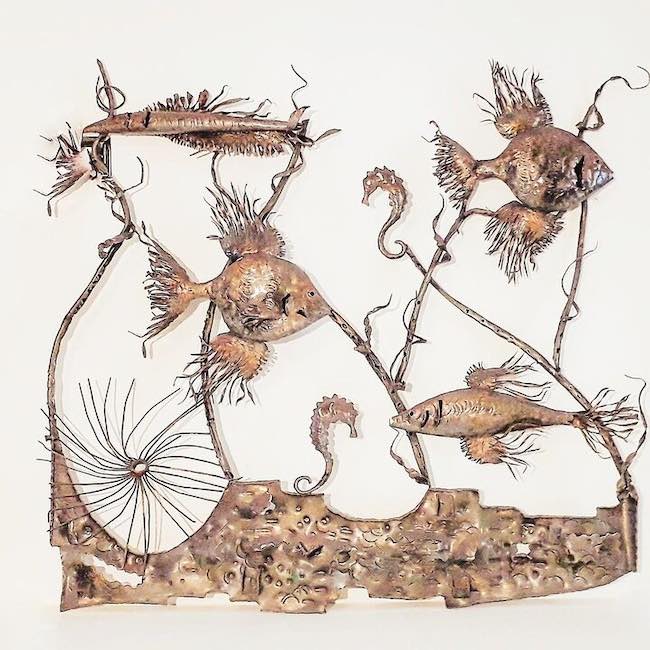
Aquarium mostra il lato più realista di Adriano Clama, perché i pesci sono descritti minuziosamente, tanto quanto il fondale in cui vengono accolti gli animali all’interno delle vasche degli appartamenti; la leggerezza dell’ambiente marino viene enfatizzata dall’utilizzo della tecnica a doppio sbalzo su lastra di metallo che consente all’autore di comunicare il senso di leggerezza acquatica emergente dall’opera. Non solo, la sensazione che segue immediatamente dopo alla scoperta della precisione e della minuziosità esecutiva, è quella di trovarsi davanti a un mondo fluttuante, quasi la rigidità del metallo fosse ridimensionata in virtù della capacità di Clama di plasmare i materiali sulla base della sua intenzione espressiva.
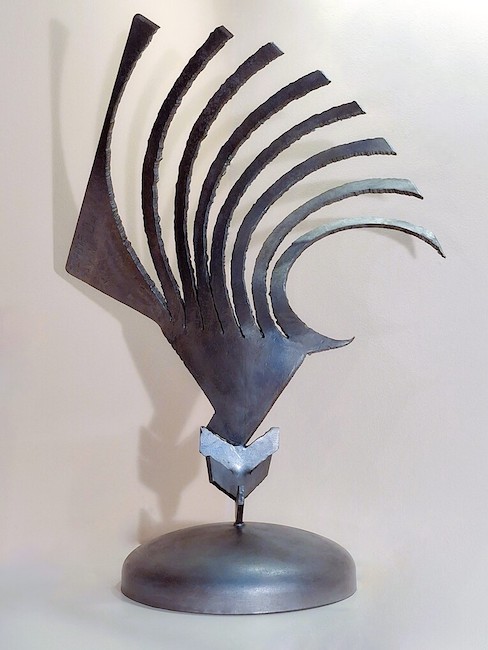
Il medesimo proposito narrativo appartiene alla scultura Melody in cui l’artista non si limita all’alternanza tra vuoti e pieni, bensì li utilizza per accogliere un ulteriore elemento creativo, quello dell’introduzione della musica; la struttura infatti, se delicatamente percossa, produce un suono che non può fare a meno di affascinare chiunque si trovi davanti a questo lavoro. L’aspetto della scultura è riconducibile all’Arte Informale, e in fondo anche la caratteristica di inserire un’azione all’interno del processo creativo e di fruibilità, si collega con quell’Action Painting attraverso la quale gli espressionisti astratti statunitensi avevano per primi rotto la barriera della tridimensionalità considerando l’atto pittorico, il gesto plastico, come parte imprescindibile della realizzazione di un’opera d’arte. Anche in questa scultura si conferma l’attitudine di Adriano Clama a esplicitare con il titolo quell’approccio poetico che lo contraddistingue e che permea di lirismo tutta la sua produzione artistica.
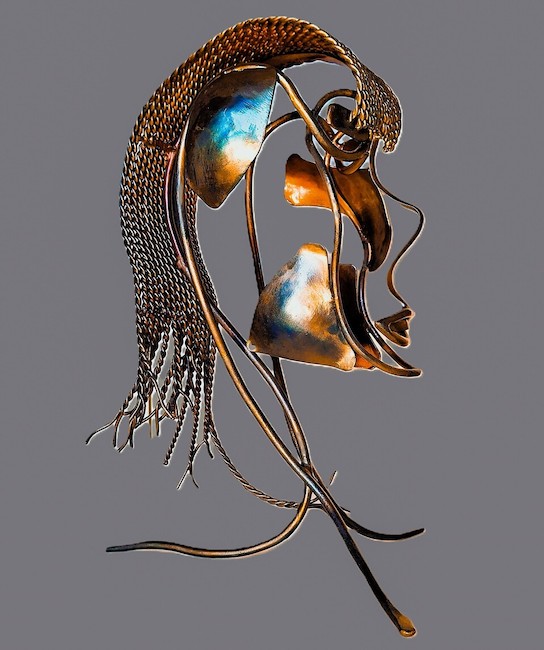
Adriano Clama ha alle spalle una lunghissima carriera artistica, a cui è stato avviato, e anche ispirato, da un nonno fabbro che gli ha insegnato i segreti nel forgiare i metalli; le sue opere fanno parte di collezioni pubbliche e private e nel corso degli anni si è anche dedicato all’attività didattica in laboratori creativi per gli studenti delle scuole.
ADRIANO CLAMA-CONTATTI
Email: studioclama@gmail.com
Sito web: www.adrianoclama.it
Facebook: www.facebook.com/clama.adriano
Instagram: www.instagram.com/clama.adriano/
The airiness of metals and the poetic substance of emotion in Adriano Clama’s sculptures
There are thoughts and feelings that need to be expressed through an artistic voice because, for some people, words are not enough to convey the multifaceted complexity of what they perceive and receive from their experiences. Therefore, those with a creative personality find their means of expression in art, understood as a manifestation of an inner world that can only find its own language through visual expression, whether two-dimensional, as in the case of painting, or more generative and three-dimensional, as in the case of sculpture. It is precisely this second approach that is the focus of the creative personality of today’s protagonist, who chooses for his sculptures an attitude in which the lightness of metals harmonizes with a delicate gaze through which he observes everything that then becomes protagonist of his artworks.
In the course of recent art history, sculpture has had mixed fortunes because in the 19th century, the century in which began to emerge the first signs of rebellion against previous academic rules and, above all, against the pure reproduction of what was observed, painting dominated the scene due to all those stylistic innovations that were destined to lay the foundations for the upheavals that would take place in the 20th century; apart from two artists such as Auguste Rodin, considered the father of modern sculpture, and Medardo Rosso, who wanted to introduce Impressionist ideas into his works, it was necessary to wait until the 20th century to see the transformations that sculptural creations underwent, both from a formal point of view and in terms of the use of materials.
The contribution of Art Nouveau was essential in this regard, as it was precisely through this exaltation of nature and its sinuous forms that it became possible to use materials, normally employed in craftsmanship to produce ornaments and furnishings, in a different way than in the past. no longer in its compact form as in the case of classical bronzes, but literally drawing figures in space in which emptiness became a complement to fullness, in which decorativeness and aesthetic harmony were associated with a new concept of lightness. With the dawn of the new century, the 20th century, sculpture carved out a supporting role to painting, as modern artists often wanted to measure themselves against both canvas and matter. Thus, from Umberto Boccioni‘s futurist sculptures to Max Ernst‘s anthropomorphic and disturbing totems, ending with Pablo Picasso‘s primitivist faces, everything was linked to the guidelines of the movements represented by these great artists. However, there were some artists who took a different, purely sculptural path, in which execution was functional to feeling, to an existentialism in which human beings, with their fragility and weaknesses, had to be in the foreground.
To express this, it was necessary to return to the lightness and slenderness of execution introduced by Art Nouveau. Alberto Giacometti, on the one hand, with his tall, emaciated figures, poised between the circumstances of life and the inability to stand upright, and the Romanian Constantin Brâncuși, on the other, who implemented a stylization whereby faces resembling indigenous masks seemed to symbolize a detachment from the progress of Western and modern civilization, began to model bronze, infusing their unstable figures with a sense of precariousness. The following decades of the twentieth century gave artists the opportunity to experiment with new materials that had not previously been considered for use in artworks, but which in fact proved to be malleable and adaptable to the new creative concepts of the time, such as Informal Art and Arte Povera, which made use of industrial materials, manufacturing waste, and recycled objects that were then reshaped according to the artistic intention of the authors. Master sculptor Adriano Clama has created a new way of working with metals, mainly iron but also copper, steel, and brass, which allows him to envelop each of his artworks in a poeticism that makes one forget the rigidity of the material and immerse in the softness of his narrative.
Born in Treviso, an artist since childhood and a long-time pupil of master ironworker Toni Benetton, Adriano Clama goes beyond the existentialist approach, transcending stylization to indulge his own expressive impulse, moving in and out of the representation of the observed based on the subject of the work or even on a more or less prevailing explanatory sensation; the result appears before our eyes in the form of structures that dance in the surrounding space, depicting the perceptual emotion felt by the artist at the moment when his imagination feels the need to give life to that precise fragment, which then finds structure through metals. What is striking about his works is the mastery with which he shapes iron, or perhaps it would be better to say that he forges it, entrusting the observer with the task of giving their own interpretation to his lines, to those figures that cannot fail to impress with their elegance and the lyricism with which they are imbued and which is explained through the title.
L’Incontro shows the romanticism of Adriano Clama‘s point of view, that ability to feel the magic of an almost fateful encounter between two souls who have been unconsciously searching for each other forever. The large flowers under which the author places the protagonists seem to emphasize the extraordinary nature of that ordinary moment, imperceptible to anyone who does not have the sensitivity to perceive its enchantment. The stylization in this sculpture is particularly evident because it is not important who the characters are, what matters is the emotion that emanates from them, that almost unconscious enthusiasm they feel as they sense how different their lives will be from that moment on; this is why their bodies are leaning towards each other, their arms raised, their legs ready to move, to highlight that inner motion that drives them to recognize each other, to feel that the search is over. The Essence, in turn, is a highly stylized sculpture, but here the interaction with the surrounding space is fundamental precisely to focus attention on substance, on everything that belongs to the inner self and is enclosed and too often hidden by the outer shell, by a container within which human beings find refuge to protect the fragility of the soul that cannot be shown.
But the work can also be interpreted in the opposite way, namely that often the captivating shiny armor, symbol of the search for external perfection, can hide a disarming emptiness, a total absence of all that depth that man needs to remember he is human. What is the direction of the contemporary individual? Adriano Clama seems to ask himself, that of hiding what is too delicate to be revealed or that of disguising a substance that does not exist? Obviously, the answer is left to the observer, who interprets it based on their own point of view, life experience, and existential journey, thus bringing the author back to themes dear to Existentialism. Aquarium shows Adriano Clama‘s most realistic side, because the fish are described in minute detail, as is the seabed in which the animals are housed in the tanks of the apartments; the lightness of the marine environment is emphasized by the use of the double embossing technique on metal plates, which allows the artist to convey the sense of aquatic lightness that emerges from the artwork. Not only that, but the feeling that immediately follows the discovery of the precision and meticulousness of the execution is that of being in front of a floating world, as if the rigidity of the metal were reduced by Clama‘s ability to shape the materials according to his expressive intention.
The same narrative purpose belongs to the sculpture Melody, in which the artist does not limit himself to alternating between empty and full spaces, but uses them to accommodate an additional creative element, that of the introduction of music; in fact, the structure, if delicately struck, produces a sound that cannot help but fascinate anyone who finds themselves in front of this work. The appearance of the sculpture can be traced back to Informal Art, and ultimately the characteristic of inserting an action into the creative and usability process is also linked to Action Painting, through which American abstract expressionists were the first to break the barrier of three-dimensionality, considering the act of painting, the plastic gesture, as an essential part of the creation of a work of art. This sculpture also confirms Adriano Clama‘s tendency to express, through the title, the poetic approach that distinguishes him and permeates all his artistic production with lyricism. Adriano Clama has had a very long artistic career, which was started and inspired by his blacksmith grandfather, who taught him the secrets of metal forging; his works are part of public and private collections, and over the years he has also devoted himself to teaching in creative workshops for school students.