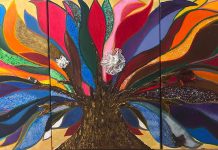


Spesso nella contemporaneità è necessario attingere e lasciarsi ispirare dalle esperienze espressive del passato per riuscire a trovare una propria dimensione stilistica che sia in grado di essere completamente affine alla personalità creativa e al contempo narrativa, di ciascun autore. Ripercorrere e mescolare le esperienze precedenti diviene un cammino affascinante per l’artista quanto per l’osservatore che da un lato attinge alla memoria storica riconoscendo figurazioni a cui è già abituato, ma dall’altro non può fare a meno di notare quanto la reinterpretazione sia perfettamente sospesa tra il passato a cui si rifà e il messaggio inedito lasciato dal singolo esecutore di un’opera. Il protagonista di oggi si lascia ispirare da alcuni movimenti pittorici che hanno segnato la prima metà del secolo scorso per dare una sua personale visione della realtà davanti a sé, e addirittura in alcune tele esegue un collage con opere precedenti che non sente più conformi al cammino attuale, di fatto cancellandole ma al contempo rigenerandole.
Gli inizi del Ventesimo secolo sono stati segnati, dal punto di vista artistico, da una vera e propria rivoluzione peraltro già iniziata a fine Ottocento con i nuovi approcci degli autori aderenti all’Impressionismo e, anche se in maniera completamente diversa, all’Espressionismo, o meglio agli albori di quello che quest’ultimo movimento divenne poi negli anni successivi. Fu in quei vivaci e turbolenti decenni che le regole furono sovvertite e si insinuarono nell’arte e nel resistente mondo culturale dell’epoca, tutte quelle avanguardie destinate a lasciare una traccia indelebile nel panorama mondiale. Il Cubismo si occupò di sottolineare l’approccio scientifico e analitico alla tela, geometrizzando la realtà osservata e scomponendo letteralmente la prospettiva per infondere il senso di contemporaneità della visione; il Futurismo a sua volta, con un tipo di scomposizione diversa, puntava a rappresentare la velocità di quei tempi e la fiducia nel progresso e nel futuro; infine la Metafisica richiamò invece l’attenzione su un Neoclassicismo dimenticato e sul dialogo tra la modernità e un passato per ascoltare il quale era necessario il silenzio e i grandi spazi prevalentemente vuoti e desolati, popolati solo da statue e da riferimenti a quel passato.
Con lo scoppio della prima guerra mondiale tuttavia, l’arte ebbe uno scossone, alcuni autori addirittura si arruolarono e non tornarono vivi pertanto la pittura e la scultura post-conflitto decisero di ricostruire, di raccontare in maniera diversa, più intimista ed emozionale, allacciandosi alle tematiche espressioniste dove il sentire dell’autore era al centro della ricerca pittorica, ma superandole per non cancellare completamente le linee guida esplorate in precedenza. Il Gruppo Novecento manifestò un forte attaccamento alla Metafisica, pur introducendo elementi schematici di chiaro riferimento cubista e soprattutto la melanconia, il sentire dell’autore che non riusciva a rimanere distaccato rispetto alle immagini raccontate. Gli edifici industriali e le città deserte di Mario Sironi mostravano la desolazione della fase successiva al conflitto, il dolore sussurrato delle atrocità a cui il popolo aveva assistito ma anche la forza di ricostruire; così come Carlo Carrà seppe raccontare la serenità di paesaggi e di frammenti di vita con uno sguardo di osservatore coinvolto, come se dai suoi soggetti e panorami fuoriuscissero le sensazioni provate dall’autore.
Sebbene considerato ribelle alle tematiche del Gruppo Novecento, di fatto anche la figurazione di Renato Guttuso può essere riconducibile alla sperimentazione cubista e post-cubista, virando verso l’Espressionismo politico poiché le sue tele erano intrise di contestazione e di opposizione al regime fascista che si andava affermando nel panorama italiano e che successivamente condusse alla seconda guerra mondiale. L’artista valdostano Claudio Diotallevi, in arte Diotal, che molto a lungo ha abbandonato la pratica della pittura trovando un nuovo slancio negli anni più recenti, attinge e fonde le esperienze artistiche appena citate per sperimentare uno stile affine alla sua indole, emozionale e al contempo analitica, poiché nelle sue tele si ritrovano entrambi i lati di un sé che vive in equilibrio tra sensazioni e necessità di razionalizzarle.
E questo avviene sia per quanto riguarda la composizione pittorica in cui la geometricità del Cubismo subentra a creare un contenitore per l’impulso emotivo che appartiene al resto delle tele dove la narrazione è lasciata all’Espressionismo, e sia per quanto riguarda la caratteristica di Diotal di riprendere i suoi vecchi dipinti degli anni Novanta, ormai troppo distanti dal suo linguaggio artistico attuale, li ritaglia e li inserisce con la tecnica del collage nelle opere attuali, mettendo così in scena il presente che riaccoglie un passato ormai superato e un passato che entra nel presente per arricchirlo.
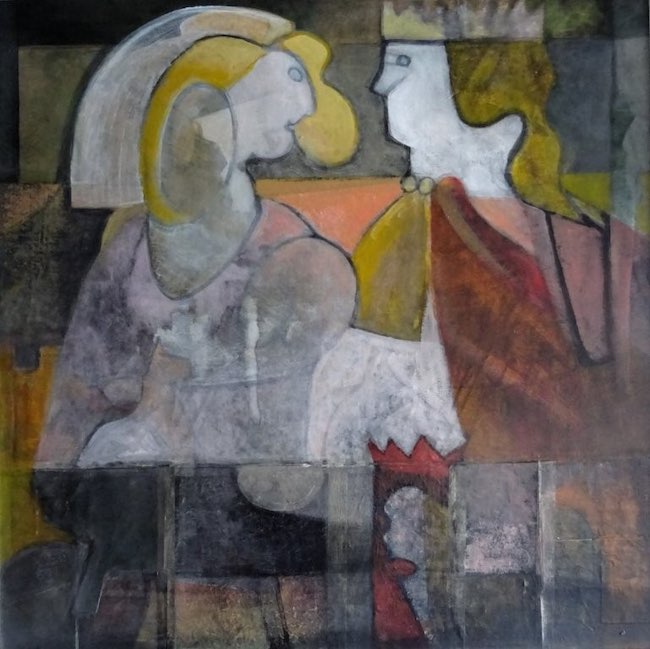
Dunque la tecnica si avvicina anche all’affichisme del Nouveau Réalisme dove tuttavia non sono più i manifesti pubblicitari strappati a entrare nell’opera bensì sono i frammenti di lavori precedenti che vanno a creare un originale effetto visivo tela su tela, o su carta o su cartone, secondo quale sia il supporto su cui l’autore decide di iniziare il processo creativo. La gamma cromatica tendenzialmente tenue e sfumata, piena di sovrapposizioni e di trasparenze, si amplia sulla base del soggetto protagonista, ma si arricchisce di luminosità quando a essere immortalati sono i paesaggi, gli scorci in cui la rigorosità cubista viene ammorbidita dal gioco di luci e ombre in virtù delle quali tutto viene addolcito dalla morbidezza del ricordo.
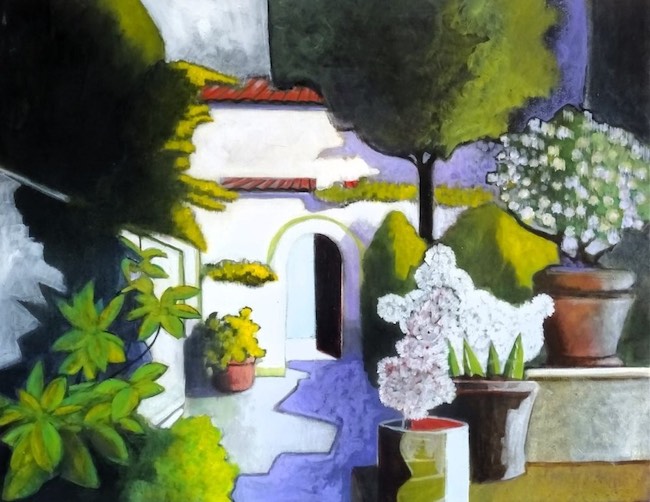
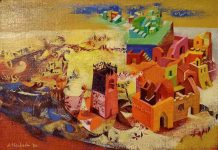
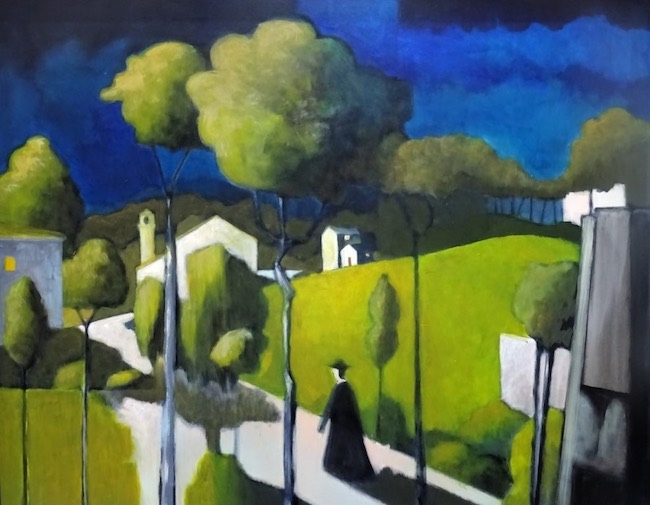
A questo tipo di approccio espressivo appartiene il dipinto Il giardino, in cui emerge una forte connotazione Metafisica perché il luogo è completamente privo della presenza umana, perché il silenzio è suggestivo quasi a voler sottolineare la pace del luogo che tuttavia può essere rotta da qualcosa di improvviso che può verificarsi e perché alcuni dettagli sottintendono un mistero da scoprire; la porta aperta della casa induce lo sguardo a focalizzarsi proprio sul motivo per l’uscio è socchiuso, forse è un invito a entrare e dunque in quel caso l’interpretazione è positiva, introduce l’accoglienza e la convivialità, oppure richiama il timore che sia accaduto qualcosa da cui i proprietari non sono riusciti a proteggersi. La duplicità della lettura dell’opera stimola l’osservatore a dare una sua versione sulla base della propria attitudine, della sua indole e del suo atteggiamento nei confronti della vita.
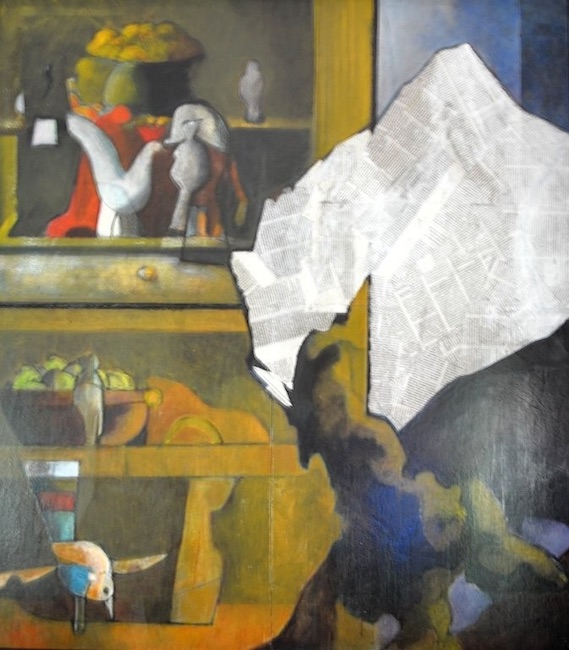
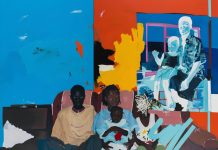
L’opera K2 mostra una divisione al suo interno, sul lato sinistro infatti Claudio Diotallevi raffigura un piccolo tavolo e una credenza, dunque la scena appartiene all’interno di una casa, dove è possibile notare nature morte, oggetti familiari di gioco e soprammobili, suscita un senso di calore quella composizione; sul lato destro però all’improvviso appare l’incognita, l’inatteso, un elemento di rottura indefinito che rompe l’equilibrio armonico del focolare domestico e introduce la consapevolezza che spesso è necessario affrontare ciò che spaventa o che non è previsto per riuscire a rafforzare la stabilità interiore. Lo spunto per l’opera è stata la vicenda della spedizione italiana sul K2 che all’epoca suscitò molte polemiche ma in senso più esteso forse il suggerimento dell’autore è di uscire dalla propria zona sicura e mettersi in gioco, compiere quel salto nel buio senza il quale non si potrebbero creare le condizioni per l’evoluzione che l’essere umano inconsciamente cerca.
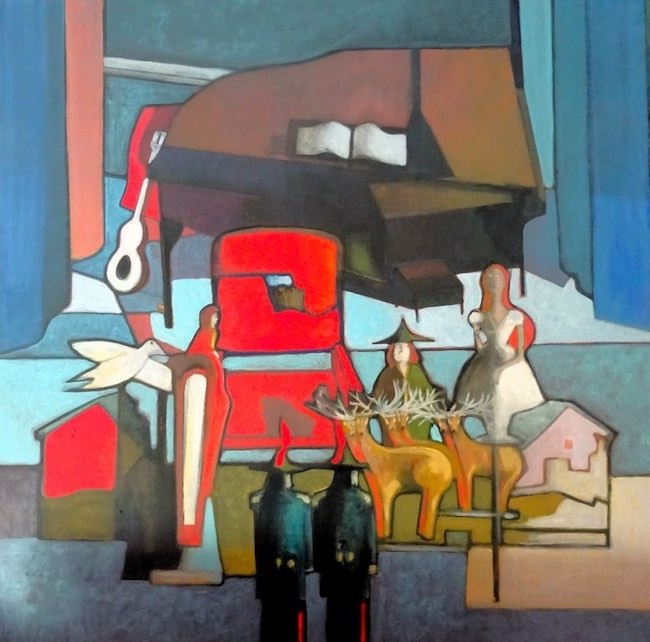
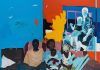
Geordie mostra la particolare attitudine di Claudio Diotallevi di tradurre in immagini i testi delle canzoni a lui più care, come nel caso specifico fa con la ballata di Fabrizio De André, inserendo all’interno del dipinto tutti gli elementi simbolo del testo; lo stile qui è fortemente espressionista ma anche vicino alla narrazione semplice e definita nei contorni di Carlo Carrà. Gli oggetti e i personaggi citati nella canzone appaiono come protagonisti di uno spettacolo teatrale, costituiscono il fulcro della narrazione e sembrano essere in attesa di un epilogo che però l’autore esclude, sceglie volutamente di non raccontare la parte più triste dell’impiccagione forse perché in qualche modo vorrebbe dare un finale diverso e positivo, o forse semplicemente perché preferisce restare all’interno della parte più poetica del testo. Ciò che invece viene messo al centro della scena è il pianoforte e la chitarra, a sottolineare l’importanza che l’ascolto della musica riveste nel processo ispirativo di Claudio Diotallevi.
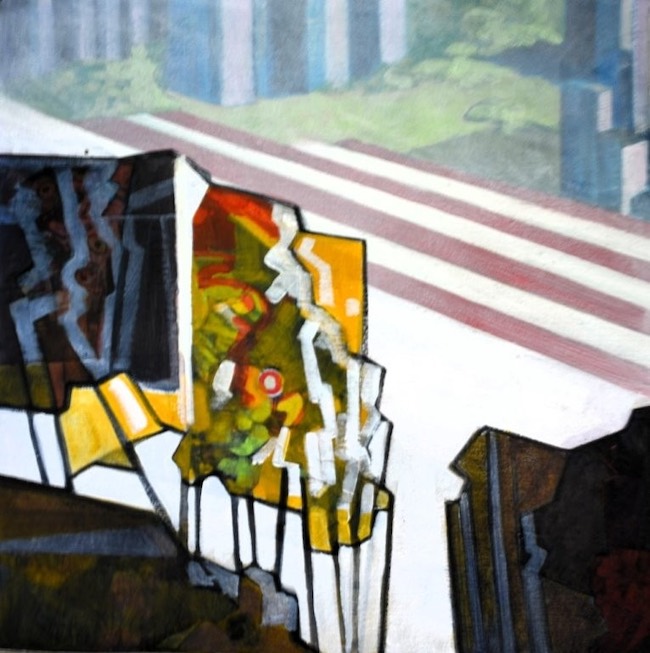
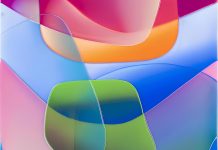
Piani regolari e precisione quasi geometrica sono la base del dipinto Il muro, dove la Metafisica dello sfondo, sfumato e fuori fuoco, incontra l’Astrattismo della parte in primo piano che simboleggia una spaccatura, una rottura interpretabile sia come delimitazione di un confine, quello tra Messico e Stati Uniti di cui vengono evocati in trasparenza i colori della bandiera, sia l’evento storico dell’abbattimento del muro di Berlino. Ciò che colpisce è l’esiguità della barriera architettonica, sembra essere sorretta da sottili gambe di ferro, come se l’autore volesse suggerire che nessuna divisione dovrebbe mai esistere per frenare il senso di comunità, il senso di libertà dell’essere umano.
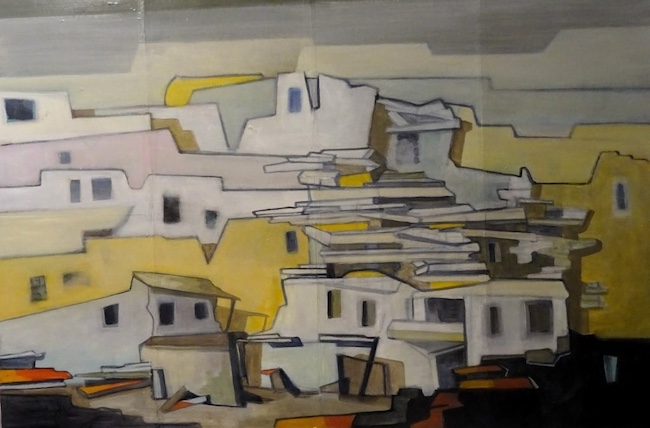
Claudio Diotallevi ha ricominciato solo recentemente il suo percorso espositivo e attualmente al suo attivo mostre collettive e personali ad Aosta, a Genova e a Noli.
CLAUDIO DIOTALLEVI (DIOTAL)-CONTATTI
Email: c.diotallevi56@gmail.com
Sito web: www.associazioneartistivaldostani.it/artisti/claudio-diotallevi/
References to the Novecento group and Cubist influences in Claudio Diotallevi’s Expressionism
In contemporary art, it is often necessary to draw on and be inspired by the expressive experiences of the past in order to find one’s own stylistic dimension that is completely in tune with the creative and narrative personality of each artist. Retracing and mixing previous experiences becomes a fascinating journey for both the artist and the observer, who on the one hand draws on historical memory by recognizing familiar figures, but on the other hand cannot help but notice how the reinterpretation is perfectly suspended between the past to which it refers and the new message left by the individual author of an artwork. Today’s protagonist draws inspiration from some of the pictorial movements that marked the first half of the last century to give his personal vision of the reality before him, and in some canvases he even creates a collage with previous works that he no longer feels in line with his current path, effectively erasing them but at the same time regenerating them.
From an artistic point of view, the early 20th century was marked by a veritable revolution that had already begun in the late 19th century with the new approaches of artists adhering to Impressionism and albeit in a completely different way, to Expressionism, or rather to the dawn of what this latter movement would become in the years to come. It was during those lively and turbulent decades that the rules were subverted and all those avant-garde movements destined to leave an indelible mark on the world scene crept into the art and resistant cultural world of the time. Cubism emphasized a scientific and analytical approach to the canvas, geometrizing observed reality and literally breaking down perspective to instill a sense of contemporaneity in the vision; Futurism, in turn, with a different type of decomposition, aimed to represent the speed of those times and confidence in progress and the future; finally, Metaphysical Art drew attention to a forgotten Neoclassicism and to the dialogue between modernity and a past that could only be heard in silence and large, predominantly empty and desolate spaces, populated only by statues and references to that past. With the outbreak of World War I, however, art was shaken up, with some artists even enlisting in the army and not returning alive, therefore, post-war painting and sculpture decided to rebuild, to tell stories in a different, more intimate and emotional way, linking up with expressionist themes where the artist’s feelings were at the center of pictorial research, but going beyond them so as not to completely erase the guidelines explored previously.
The Novecento Group showed a strong attachment to Metaphysical Art, while introducing schematic elements with clear cubist references and, above all, melancholy, the feelings of the artist who was unable to remain detached from the images depicted. Mario Sironi‘s industrial buildings and deserted cities showed the desolation of the post-war period, the whispered pain of the atrocities witnessed by the people, but also the strength to rebuild; so as Carlo Carrà was able to convey the serenity of landscapes and fragments of life with the gaze of an involved observer, as if the feelings experienced by the author were spilling out of his subjects and panoramas. Although considered rebellious against the themes of the Novecento Group, Renato Guttuso‘s figurative art can also be traced back to Cubist and post-Cubist experimentation, veering towards political Expressionism, because his paintings were steeped in protest and opposition to the fascist regime that was establishing itself in Italy and which subsequently led to World War II. The artist Claudio Diotallevi, aka Diotal, from the Aosta Valley, who abandoned painting for a long time but found new inspiration in recent years, draws on and blends the artistic experiences mentioned above to experiment with a style akin to his nature, emotional and analytical at the same time, since his canvases reveal both sides of a self that lives in balance between sensations and the need to rationalize them.
This is true both in terms of the pictorial composition, in which the geometric nature of Cubism takes over to create a container for the emotional impulse that belongs to the rest of the canvases, where the narrative is left to Expressionism, and also in Diotal‘s characteristic of revisiting his old paintings from the 1990s, now too distant from his current artistic language, cutting them out and inserting them into his present artworks using the collage technique, thus staging the present that welcomes back a past that is now outdated and a past that enters the present to enrich it. The technique is therefore similar to the affichisme of Nouveau Réalisme, where, however, it is no longer torn advertising posters that enter the work, but fragments of previous paintings that create an original visual effect on canvas, paper, or cardboard, depending on the medium on which the author decides to begin the creative process. The color range tends to be soft and nuanced, full of overlaps and transparencies, expanding based on the main subject, but enriched with brightness when landscapes are immortalized, glimpses in which the rigor of Cubism is softened by the play of light and shadow, thanks to which everything is softened by the gentleness of memory. The painting Il giardino (The Garden) belongs to this type of expressive approach, in which emerges a strong metaphysical connotation because the place is completely devoid of human presence, because the silence is evocative as if to emphasize the peace of the place which however can be broken by something sudden that may occur, and because some details imply a mystery to be discovered; the open gate of the house draws the eye to focus precisely on the reason why the door is ajar. Perhaps it is an invitation to enter, in which case the interpretation is positive suggesting hospitality and conviviality, or perhaps it evokes the fear that has happened something that the owners have been unable to protect themselves from. The duality of the interpretation of the work encourages the observer to give their own version based on their attitude, disposition, and approach to life.
The work K2 shows a division within it, on the left side, Claudio Diotallevi depicts a small table and a sideboard, so the scene belongs to a house interior where it is possible to notice still lifes, familiar toys, and knick-knacks, the composition evokes a sense of warmth; on the right side, however, appears suddenly the unknown, the unexpected, an undefined element of disruption that breaks the harmonious balance of the home and introduces the awareness that it is often necessary to face what frightens or what is unexpected in order to strengthen the inner stability. The inspiration for the work was the story of the Italian expedition to K2, which at the time aroused much controversy, but in a broader sense, perhaps the author’s suggestion is to step out of one’s comfort zone and put oneself out there, to take that leap into the dark without which it would not be possible to create the conditions for the evolution that human beings unconsciously seek. Geordie shows Claudio Diotallevi‘s particular aptitude for translating the lyrics of his favorite songs into images, as in this specific case with Fabrizio De André‘s ballad, incorporating all the symbolic elements of the lyrics into the painting; the style here is strongly expressionist but also close to Carlo Carrà‘s simple and well-defined narrative style.
The objects and characters mentioned in the song appear as protagonists in a theatrical performance, forming the core of the narrative and seeming to await an epilogue that the author excludes, deliberately choosing not to recount the saddest part of the hanging, perhaps because he would like to give it a different, positive ending, or perhaps simply because he prefers to remain within the more poetic part of the text. Instead, the piano and guitar take center stage, emphasizing the importance of listening to music in Claudio Diotallevi‘s creative process. Regular planes and almost geometric precision are the basis of the painting Il muro (The Wall), where the Metaphysics in the background, blurred and out of focus, meets the Abstract art of the foreground, symbolizing a split, a rupture that can be interpreted both as the demarcation of a border, that between Mexico and the United States, whose flag colors are evoked in transparency, and the historical event of the fall of the Berlin Wall. What is striking is the slenderness of the architectural barrier, which seems to be supported by thin iron legs, as if the artist wanted to suggest that no division should ever exist to curb the sense of community, the sense of freedom of human beings. Claudio Diotallevi has only recently resumed his exhibition career and currently has collective and solo exhibitions to his credit in Aosta, Genoa, and Noli.