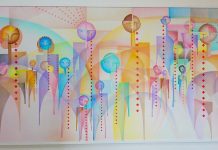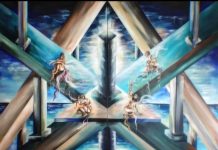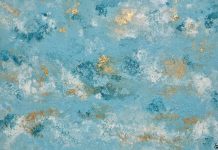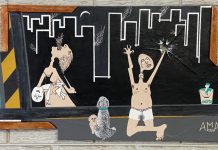

Normalmente quando si pensa alla materia nell’arte, non si può fare a meno di collegarla alla concretezza, alla consistenza di concetti o sensazioni, spesso separati ma talvolta uniti, che diventano preponderanti proprio in virtù dello sconfinamento nella terza dimensione, nello spazio intorno alla tela che attrae l’attenzione per la solidità dei materiali inseriti. Eppure, tra gli interpreti che scelgono questo approccio creativo, ve ne sono alcuni che riescono a infondere ai loro lavori una morbida fluidità, quasi a voler sottolineare l’evanescenza ma anche la costante trasformazione a cui le circostanze e l’esistenza sono sottoposti, svelando anche la filosofia che contraddistingue la loro visione sulla contemporaneità. Mayada Shibir stupisce con le sue tele perché appartenenti più ai concetti universali, a una sostanza più alta dell’emozione del singolo, trasformando le riflessioni di partenza in echi di memoria delle culture e dei popoli di appartenenza che ciascuno porta dentro di sé e che possono costituire un arricchimento, piuttosto che un pretesto di divisione e separazione come purtroppo spesso accade.
Dopo la seconda guerra mondiale cominciò a prendere forma in tutto il continente europeo un tipo di arte che da un lato aveva bisogno di connettersi alla libertà formale assoluta dell’Espressionismo Astratto statunitense, ma dall’altro voleva sperimentare nuove strade così come scolpire e rendere solidi stati d’animo ed emozioni trattenute nel corso del periodo bellico. La tela divenne dunque una superficie non più bidimensionale bensì uno spazio in cui introdurre materiali poveri o di scarto di lavorazioni industriali, come la plastica, la juta, la carta, il legno, la sabbia, i sassi, le stoffe, che in alcuni casi venivano bruciati, liquefatti, come nel caso del famosissimo autore italiano Alberto Burri, in altri costituivano invece un suggestivo equilibrio tra solidità e meditazione, come per il catalano Antoni Tàpies. Oppure infine la tela monocromatica diveniva superficie sulla quale l’autore agiva plasmandola per modificarne la struttura come nello Spazialismo di Enrico Castellani, fino addirittura al punto di tagliarla, permettendo così di inserire anche l’azione, il gesto, nell’atto creavito come nelle celeberrime opere di Lucio Fontana. Pertanto da un lato c’era l’approccio più scientifico e analitico degli spazialisti o più riflessivo con Tàpies, dall’altro invece quello impulsivo e istintivo di Burri che utilizzava l’arte per manifestare e gridare la sofferenza di un’anima segnata dalla guerra e dalla perdita delle certezze che ne era conseguita. Oltrepassato il periodo post-bellico gli artisti hanno gardualmente perduto l’urgenza di comunicare dolore e sensazioni legate al vissuto bellico o quella di astrarsi da quella realtà compiendo un distacco da essa attraverso il gesto esecutivo, l’Informale Materico divenne un modo per affrontare la contemporaneità, sviscerandone tematiche e riflessioni assolutamente personali sulla base della personalità e del punto di vista del singolo autore. Anselm Kiefer attraverso l’utilizzo di materiali pesanti e poveri come il piombo, ha reso la materia un mezzo per mettere in risalto il valore spirituale e la consapevolezza, indagando le ferite della storia, il mito e la Cabala che trasformano la distruzione in una ciclica rigenerazione; l’utilizzo dei toni scuri e ombrosi enfatizza l’alternarsi del buio e della luce tipico dell’esistenza. Miquel Barcelò si avvale della materia organica, come il fango, la ceramica, i sedimenti marini, gli insetti, la sabbia e la candeggina come metafora della condizione umana, della sua decomposizione attraverso il passaggio del tempo e la rigenerazione naturale. L’artista Mayada Shibir, di origini afro-europee, dà un’interpretazione più affine non solo alla sua natura femminile bensì anche a un approccio più attuale e soprattutto universale all’esistenza e alle sfaccettature che ne fanno parte, mostrando l’innata attitudine ad allargare la sua visione, a pensare per grandi sistemi che includono non solo il senso di appartenenza alla cultura di nascita, ma anche all’identità che si genera proprio in virtù della facilità di interconnessione attraverso la quale le radici entrano in dialogo con quelle dall’altro ampliando conoscenze, punti di vista, contaminazioni che non possono che generare l’apertura necessaria a comprendere il fluire della vita.
Ed è proprio su questa necessaria apertura che si struttura la sua espressività artistica, permettendole di meditare su concetti importanti per l’essere umano, indipendentemente dal colore della pelle, dalla religione, dal luogo di provenienza, divenendo proprio per questo elementi di coscienza superiore volti a stimolare l’evoluzione. Ecco perché la sensazione che si ha osservando le opere di Mayada Shibir non è mai di staticità, piuttosto a emergere è la fluidità, il possibilismo e l’interazione tra energie differenti che parlano, raccontano, suggeriscono e sussurrano le opzioni che ogni spunto e ogni idea portano con sé quando si confrontano in altre esperienze e altre radici.
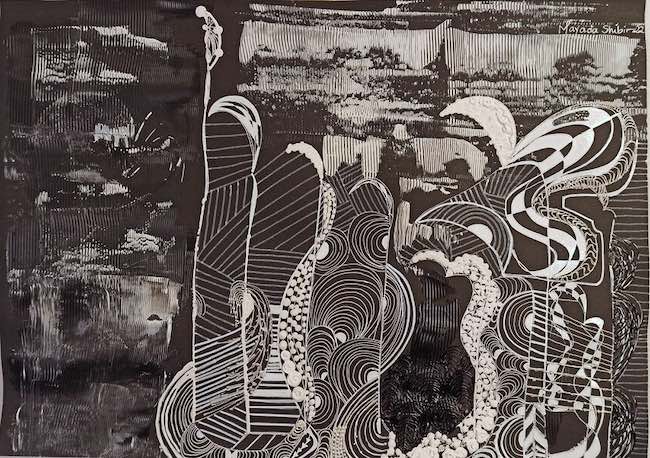
Le trame si intrecciano creando griglie di interconnessione, oppure la materia sembra voler arginare la volatilità di ciò che si trova in mezzo, come a delimitare i confini tra ciò che è giusto e ciò che è possibile, o ancora i fitti reticolati sembrano riprodurre quei tessuti manufatturieri che portano con sé secoli di tradizioni e che divengono pertanto simbolo di quelle indispensabili e irrinunciabili radici che per Mayada Shibir sono la base di tutta la sua ricerca artistica.
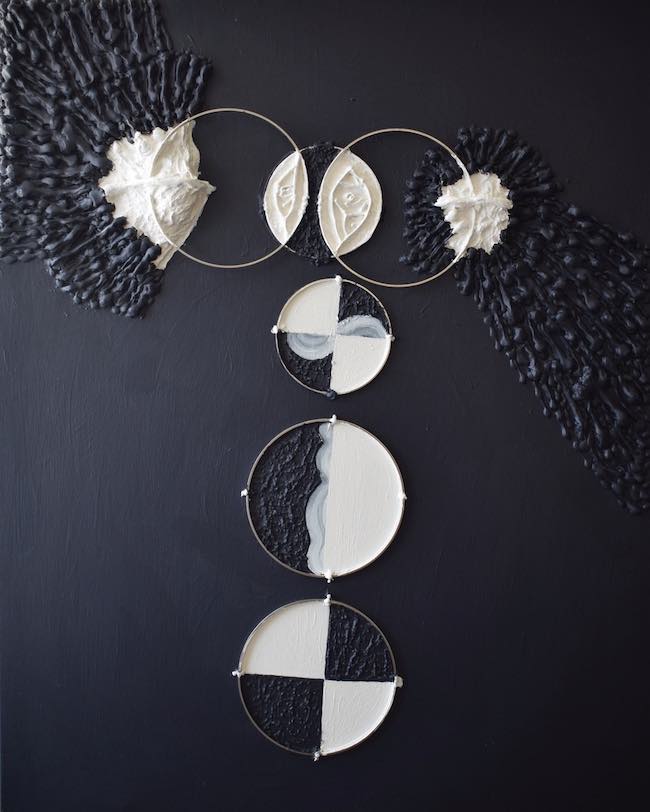
L’autrice parte dal sé, dall’introspezione, per comunicare verso l’esterno una sollecitazione affinché quella tematica si espanda, uscendo dalla tela stessa, e vada a stimolare il medesimo percorso di autocoscienza in chi guarda i suoi lavori perché i temi trattati ed esplicitati attraverso i titoli toccano la sensibilità e la moralità dell’essere umano in quanto tale. La gamma cromatica di ciascun lavoro si armonizza alla sensazione del momento dell’atto pittorico, così come la materia utilizzata diventa funzionale a fissare quella riflessione, quel frammento di percezione intuitiva che ha bisogno di essere liberata non in maniera completamente impulsiva, piuttosto necessitante di essere compresa fino in fondo e solo dopo liberata; ecco perché le opere di Mayada Shibir non appaiono mai irruente o veementi, al contrario sembrano volersi mantenere in equilibrata armonia con tutto il circostante in cui si trovano e con cui comunicano.
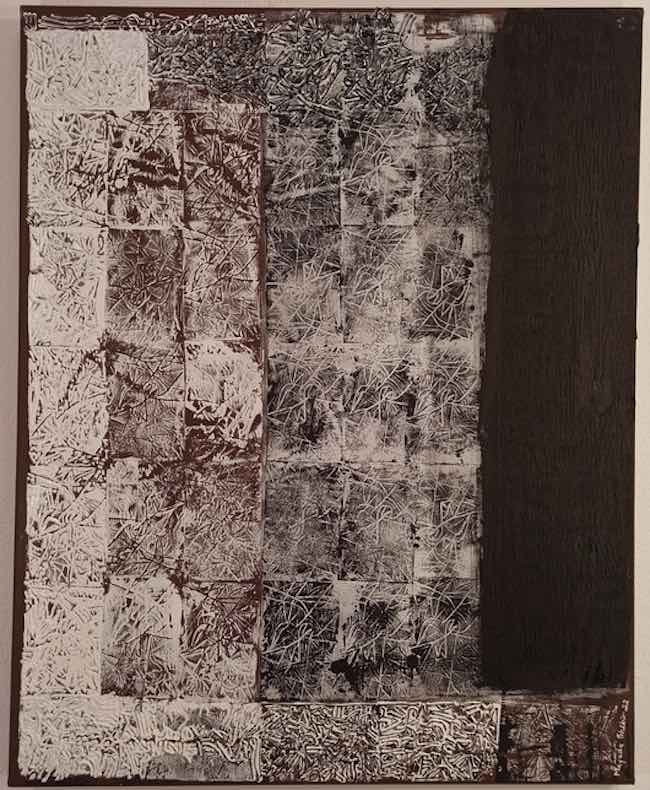
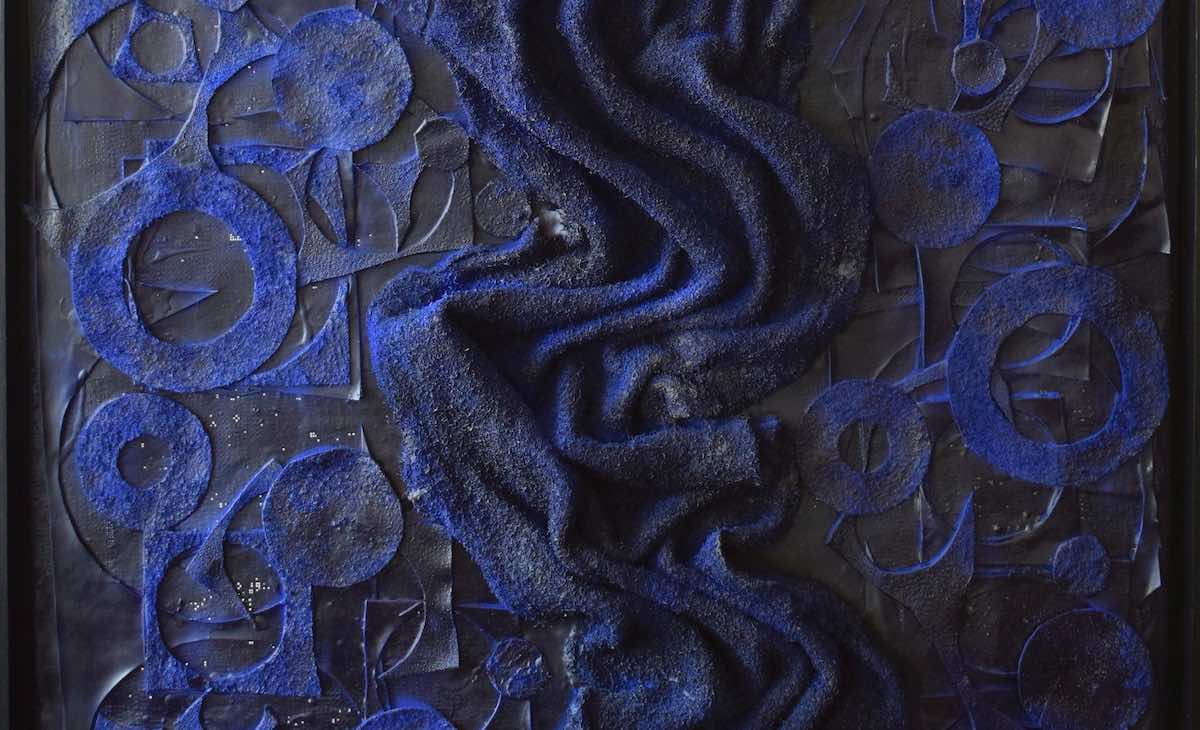
In My Endeavors emerge in modo chiaro l’attitudine appena analizzata poiché l’autrice qui parla di sé ma in realtà è come se parlasse di tutta la razza umana, i suoi sforzi sono quelli di mantenersi ben salda a tutti i pincìpi che hanno fatto parte della sua formazione personale e spirtuale, quell’intenso legame con entrambe le radici, quella africana e quella europea, che l’hanno accompagnata in tutto il suo viaggio creativo e che devono necessariamente essere tenute insieme, coesistere per divenire esempio di quanto le divergenze possano unirsi per creare una dimensione più elevata, più conscia della ricchezza che si genera dalla mescolanza e dall’accoglienza del diverso da sé. I segni bianco su nero o in scala di grigi sono simboli interiori, quelle graffiature che l’esperienza lascia tatuate sull’anima e che corrugano la superficie liscia dell’armatura esteriore dando vita alla vera essenza, alla consistenza che in virtù delle esperienze si genera.
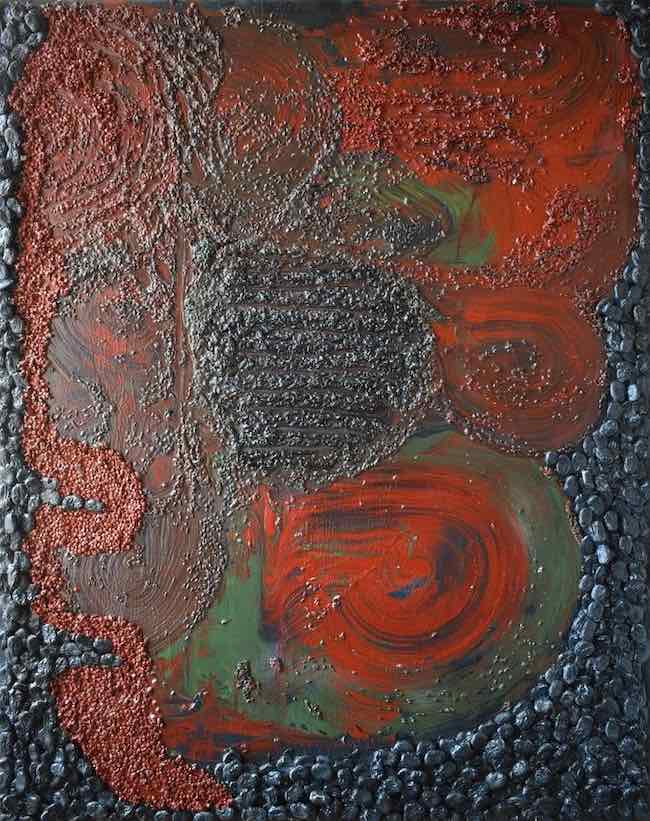
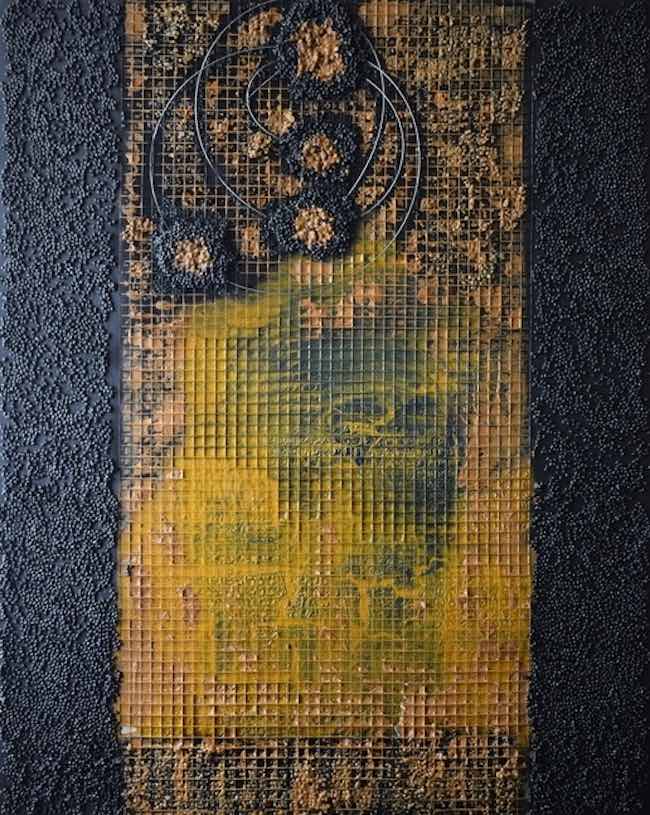
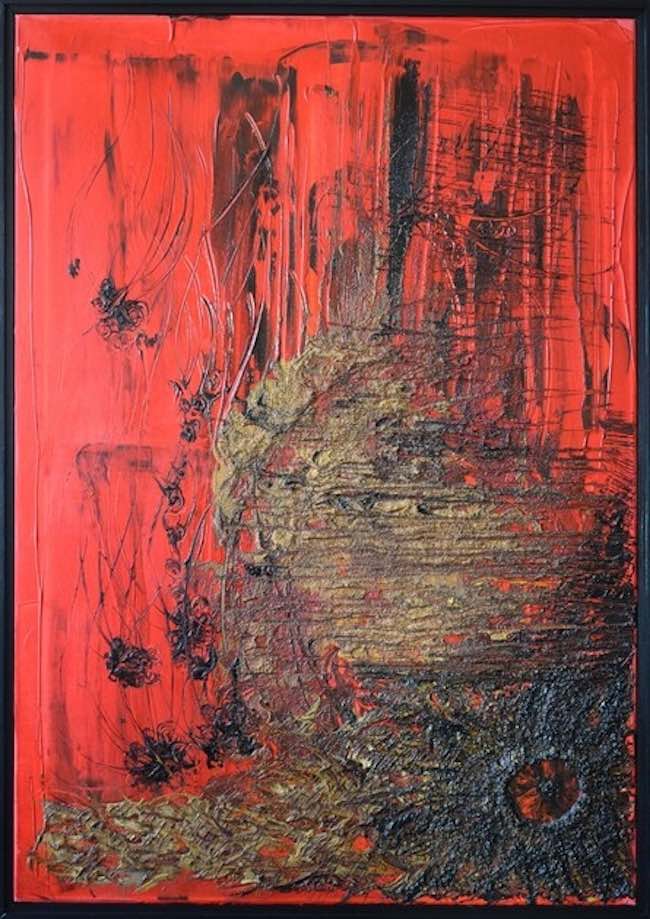
Influences invece appartiene alle opere in cui la materia delimita e protegge la preziosità di quelle influenze, che nel significato più esteso di Mayada Shibir sarebbe più corretto definire confluenze, quelle eredità culturali e ataviche da cui nessuno, e men che meno lei, potrebbe mai prescindere. Qui i colori ben distinti gli uni dagli altri, si armonizzano in maniera incredile creando un magico equilibrio tra la passione, intesa nel senso più ampio del termine e contraddistinta dal rosso, entra in contatto con il verde della nautra che si declina anche nel significato di naturalezza, e infine il grigio-nero con cui l’autrice ricopre la materia più consistente, come se l’ombra scura fosse la forza necessaria a conservare gelosamente dentro di sé quelle ricchezze.
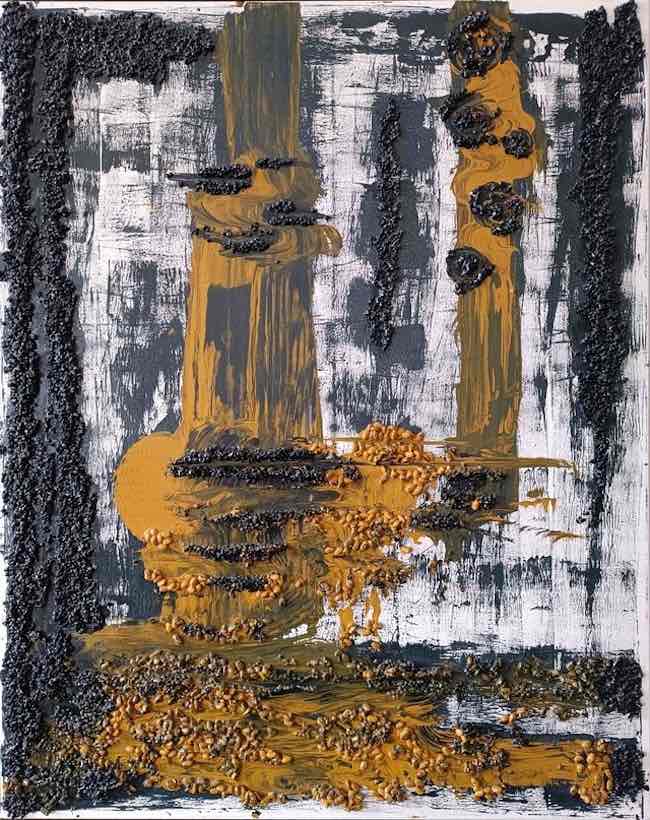
Di contro in Altruism Mayada Shibir apre quel confine, la materia scura non delimita più ciò che deve necessariamente andare verso l’altro e peranto anche la struttura cromatica non tende solo verso l’alto come appare a un primo sguardo, bensì nella parte sottostante si dispone orizzontalmente per cercare quella via d’uscita necessaria a fare un passo al di fuori di sé per essere di supporto, di aiuto, a chi ne ha bisogno, e non importa se il gesto sia motivato da un senso del dovere o semplicemente dal piacere di darsi, ciò che conta è sentire che è giusto farlo. Ed è proprio in virtù di quell’apertura che può nascere lo scambio culturale e conoscitivo che per l’autrice è fondamentale perché alla base del suo lavoro di artista, di curatrice e di direttrice di galleria che sa mettere le sue esperienze, la sua eredità artistica familiare e la sua attitudine spirituale al centro della sua vita e della sua arte.
Mayada Shibir, ideatrice di un progetto di scambio volto a incoraggiare il dialogo creativo e la collaborazione tra Inghilterra e Germania, direttrice della Shibir Nilotic Gallery for Modern African Art, fondata da suo padre, ha al suo attivo mostre personali e collettive, e fiere d’arte internazionali, presso gallerie e istituzioni culturali a Londra, New York, Bruxelles, Milano, Parigi, Madrid, Monaco, Buenos Aires, Barcellona, Miami, Nizza, Brasilia e Berlino. Ha ricevuto premi d’arte in Spagna, Italia, Francia ed è stata inserita nell’Atlante dell’Arte Contemporanea 2026 MoMa Edition.
MAYADA SHIBIR-CONTATTI
Email: shibir.mayada@googlemail.com
Sito web: www.mayadashibirart.com/
Instagram: www.instagram.com/mayadashibir/
Mayada Shibir’s Material Art, crossing the boundary between roots, cultural identity, and anthropological philosophy
Normally, when one thinks of matter in art, one cannot help but associate it with concreteness, with the substance of concepts or sensations, often separate but sometimes united, that become predominant precisely because they spill over into the third dimension, into the space around the canvas that draws attention due to the solidity of the materials incorporated. Yet, among the artists who choose this creative approach, there are some who manage to infuse their works with a soft fluidity, as if to emphasize the evanescence but also the constant transformation to which circumstances and existence are subjected, thereby revealing the philosophy that distinguishes their vision of the contemporary world. Mayada Shibir’s canvases are striking because they belong more to universal concepts, to a substance higher than individual emotion, transforming initial reflections into echoes of memory from the cultures and peoples to which each person belongs, which each carries within themselves and which can serve as a source of enrichment rather than a pretext for division and separation, as unfortunately often happens.
After World War II began to take shape across the European continent a new form of art that, on the one hand, sought to connect with the absolute formal freedom of American Abstract Expressionism, but on the other, aimed to explore new paths as well as to give tangible form to the moods and emotions that had been suppressed during the war. The canvas thus became not merely a two-dimensional surface but a space into which to incorporate humble materials or industrial waste products such as plastic, jute, paper, wood, sand, stones, and fabrics, which in some cases were burned or melted, as in the work of the renowned Italian artist Alberto Burri, while in others they created a striking balance between solidity and meditation, as seen in the work of the Catalan artist Antoni Tàpies. Finally, the monochromatic canvas became a surface upon which the artist acted, shaping it to alter its structure, as in Enrico Castellani’s Spatialism, even to the point of cutting it, thereby allowing action and gesture to be incorporated into the creative act, as in the famous works of Lucio Fontana.
Thus, on the one hand, there was the more scientific and analytical approach of the Spatialists or the more reflective one of Tàpies, on the other hand, there was the impulsive and instinctive approach of Burri, who used art to express and cry out the suffering of a soul scarred by war and the resulting loss of certainties. Once the postwar period had passed, artists gradually lost the urgency to communicate the pain and sensations linked to the war experience or to distance themselves from that reality by detaching from it through the act of creation, Informal Materialism became a way to engage with the contemporary world, exploring its themes and offering deeply personal reflections based on the individual artist’s personality and perspective. Anselm Kiefer, through the use of heavy and humble materials such as lead, has made matter a medium for highlighting spiritual value and awareness, exploring the wounds of history, myth, and Kabbalah that transform destruction into cyclical regeneration; the use of dark and shadowy tones emphasizes the alternation of darkness and light characteristic of existence. Miquel Barcelò uses organic materials such as mud, ceramics, marine sediments, insects, sand, and bleach as metaphors for the human condition, its decomposition over time, and natural regeneration.
The artist Mayada Shibir, of Afro-European descent, offers an interpretation that is more in tune not only with her feminine nature but also with a more contemporary and, above all, universal approach to existence and its many facets, demonstrating an innate ability to broaden her vision, to think in terms of larger systems that include not only a sense of belonging to one’s culture of birth but also to the identity that arises precisely because of the ease of interconnection through which one’s roots enter into dialogue with those of others, broadening knowledge, perspectives, and cross-pollinations that can only generate the openness necessary to understand the flow of life. And it is precisely on this necessary openness that her artistic expression is structured, allowing her to reflect on concepts that are important to human beings, regardless of skin color, religion, or place of origin, concepts that, for this very reason, become elements of higher consciousness aimed at stimulating evolution. That is why the sensation one experiences when observing Mayada Shibir’s works is never one of stillness, rather what emerges is fluidity, a sense of possibility, and the interaction between different energies that speak, narrate, suggest, and whisper the options that every inspiration and every idea carries with it when they encounter other experiences and other roots. The textures intertwine, creating grids of interconnection, or the material seems to want to contain the volatility of what lies within, as if to delineate the boundaries between what is right and what is possible, or the dense networks seem to replicate those handcrafted textiles that carry centuries of tradition and thus become a symbol of those indispensable and irreplaceable roots that, for Mayada Shibir, form the foundation of her entire artistic resarch. The artist starts from the self, from introspection, to convey outwardly an impetus for that theme to expand, moving beyond the canvas itself, and to stimulate the same journey of self-awareness in those who view her works, for the themes addressed and articulated through the titles touch upon the sensibility and morality of the human being as such.
The color palette of each work harmonizes with the feeling of the moment of the act of painting, just as the medium used serves to capture that reflection, that fragment of intuitive perception that needs to be released not in a completely impulsive manner, but rather one that must first be fully understood and only then set free; this is why Mayada Shibir’s works never appear impetuous or vehement, on the contrary they seem to seek to maintain a balanced harmony with their entire surroundings, the environment in which they are and with which they communicate. In My Endeavors emerges clearly the attitude just analyzed because here the artist speaks of herself, yet in reality it is as if she were speaking of the entire human race, her efforts are aimed at remaining firmly rooted in all the principles that have shaped her personal and spiritual development, that intense connection to her two roots, African and European, which have accompanied her throughout her creative journey and which must necessarily be held together, coexisting to become an example of how differences can unite to create a higher dimension, aware of the richness generated by the blending and acceptance of what is different from oneself. The white-on-black or grayscale marks are inner symbols, those scratches that experience leaves tattooed on the soul and that furrow the smooth surface of the outer armor giving rise to the true essence, to the substance that is generated through experience. Influences, on the other hand, refers to works in which the material itself defines and protects the preciousness of those influences which, in Mayada Shibir’s broadest sense, would be more accurately defined as confluences, those cultural and atavistic legacies that no one, least of all she, could ever ignore.
Here, the colors, each distinct from the others, harmonize in an incredible way, creating a magical balance, passion understood in the broadest sense of the term and symbolized by red comes into contact with the green of nature which also conveys the meaning of naturalness, and finally the gray-black with which the artist covers the densest material, as if the dark shadow were the force necessary to jealously preserve those riches within itself. In contrast, in Altruism, Mayada Shibir opens that boundary, the dark material no longer delimits what must necessarily go toward the other and therefore, the chromatic structure does not merely tend upward, as it appears at first glance, but in the lower section it extends horizontally in search of that necessary way out to take a step beyond oneself in order to offer support and help to those in need and it does not matter whether the gesture is motivated by a sense of duty or simply by the pleasure of giving of oneself, what matters is feeling that it is right to do so. And it is precisely through that openness that can arise cultural and intellectual exchange that the artist considers fundamental, as it lies at the heart of her work as an artist, curator, and gallery director who knows how to place her experiences, her family’s artistic legacy, and her spiritual disposition at the center of her life and her art. Mayada Shibir, the creator of an exchange project aimed at encouraging creative dialogue and collaboration between England and Germany, and director of the Shibir Nilotic Gallery for Modern African Art, founded by her father, has participated in solo and group exhibitions, as well as international art fairs, at galleries and cultural institutions in London, New York, Brussels, Milan, Paris, Madrid, Munich, Buenos Aires, Barcelona, Miami, Nice, Brasília, and Berlin; she has received art awards in Spain, Italy, and France and has been included in the 2026 MoMA Edition Atlas of Contemporary Art.