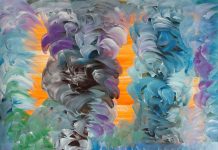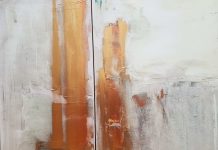

Porsi in posizione di ascolto nei confronti di quel battito vitale che circonda un essere umano ormai troppo distratto e arrivista per perdersi nel ritmo lento suggerito dalla natura, diviene per alcuni artisti la base essenziale e imprescindibile della propria espressività, come se per loro non fosse possibile liberare la propria creatività senza tenere conto di quel legame emozionale con tutto ciò su cui lo sguardo può vagare e trovare la dimensione ideale dove connettersi con un’interiorità troppo delicata per fermarsi al caos della quotidianità cittadina. La scelta di uno stile pittorico figurativo consente a questo tipo di autori di tratteggiare una realtà percepita in cui tutto ciò che viene visto si trasforma in ascolto intenso di quelle energie sottili in virtù delle quali tutto cambia e modifica il suo aspetto perché a prevalere deve essere il non detto, l’intangibile e l’impercettibile dalla ragione. Innocenza Bruziches appartiene a questa categoria di artisti ed elabora un proprio stile spiccatamente singolare e riconoscibile in cui a essere protagonista assoluta è proprio quella natura che, grazie a lei, ritrova il suo ruolo centrale divenendo colei che accoglie la vita umana e non quella che deve combattere per sussistere come invece troppo frequentemente accade nella società contemporanea.
Tra la fine dell’Ottocento e gli inizi del Novecento vi furono due movimenti pittorici opposti e persino contrastanti per le linee guida eppure, forse inconsapevolmente, entrambi presentavano un denominatore comune, quello di voler mettere in primo piano la natura in tutte le sue accezioni e soprattutto raccontata sulla base delle regole espressive che li contraddistingueva. Da un lato dunque la finezza e le immagini eteree dell’Art Nouveau, dove le donne erano attorniate da rami sinuosi e steli di fiori che sembravano avvolgerle, e in cui a predominare doveva essere l’armonia estetica e la bellezza decorativa delle opere che non si limitavano alla bidimensionalità della pittura ma anche a molte altre forme di artigianalità in quello stile perfettamente integrata nell’arte, dall’altro la decontestualizzazione cromatica e figurativa dell’Espressionismo per cui anche un paesaggio o qualsiasi elemento naturale doveva essere affine alla soggettività e alle sensazioni percepite dall’esecutore di un’opera. Nella sua accezione più raffinata l’Art Nouveau diede un’interpretazione stupefacente dell’armonia perfetta tra femminilità e contesto floreale nelle tele dell’austriaco Gustav Klimt che rese protagonisti di alcune opere fiori, alberi e scorci delle foreste; Alfonse Mucha rimase invece più fortemente legato alla centralità della donna di cui l’elemento naturale era un principio puramente decorativo. L’Espressionismo invece ebbe molti interpreti che misero in risalto paesaggi, alberi e animali declinati secondo il sentire profondo del singolo autore, ma furono in particolar modo gli appartenenti al gruppo del Der Blaue Reiter, collettivo tedesco attivo tra il 1911 e il 1914, a mettere al centro della loro ricerca cromatica e formale proprio quel mondo idilliaco e armonico appartenente all’emozionalità della natura. Franz Marc concentrò la sua produzione sulle immagini di cavalli che sembravano uscire da un sogno, da una favola idilliaca in cui l’ambiente circostante si armonizzava alla loro purezza e spiritualità; Gabriele Münter, moglie di Wassily Kandinsky, si soffermò sui panorami idilliaci e intensi con colori irreali e una narrazione immediata e fanciullesca; August Macke amava invece introdurre in contesti paesaggistici sereni la presenza umana che non predominava mai, piuttosto veniva presentata come ospite di un’armonia narrativa delicata ma anche fortemente emozionale. Tra questi autori ne spicca però uno che ha saputo unire la deformazione cromatica e formale espressionista all’evoluzione di un Simbolismo che con lui era divenuto manifestazione del proprio sentire e della propria spiritualità, parlo dello svizzero Ferdinand Hodler. È esattamente in questo contesto che si colloca lo stile originale dell’artista Innocenza Bruziches che elabora una sua visione in cui mescola l’irrealtà cromatica e descrittiva dell’Espressionismo all’attitudine a considerare tutto ciò che la circonda come qualcosa di vivo di cui mostrare il respiro, il senso di movimento sottile e impercettibile in grado di fuoriuscire solo a seguito di un ascolto empatico e coinvolto.
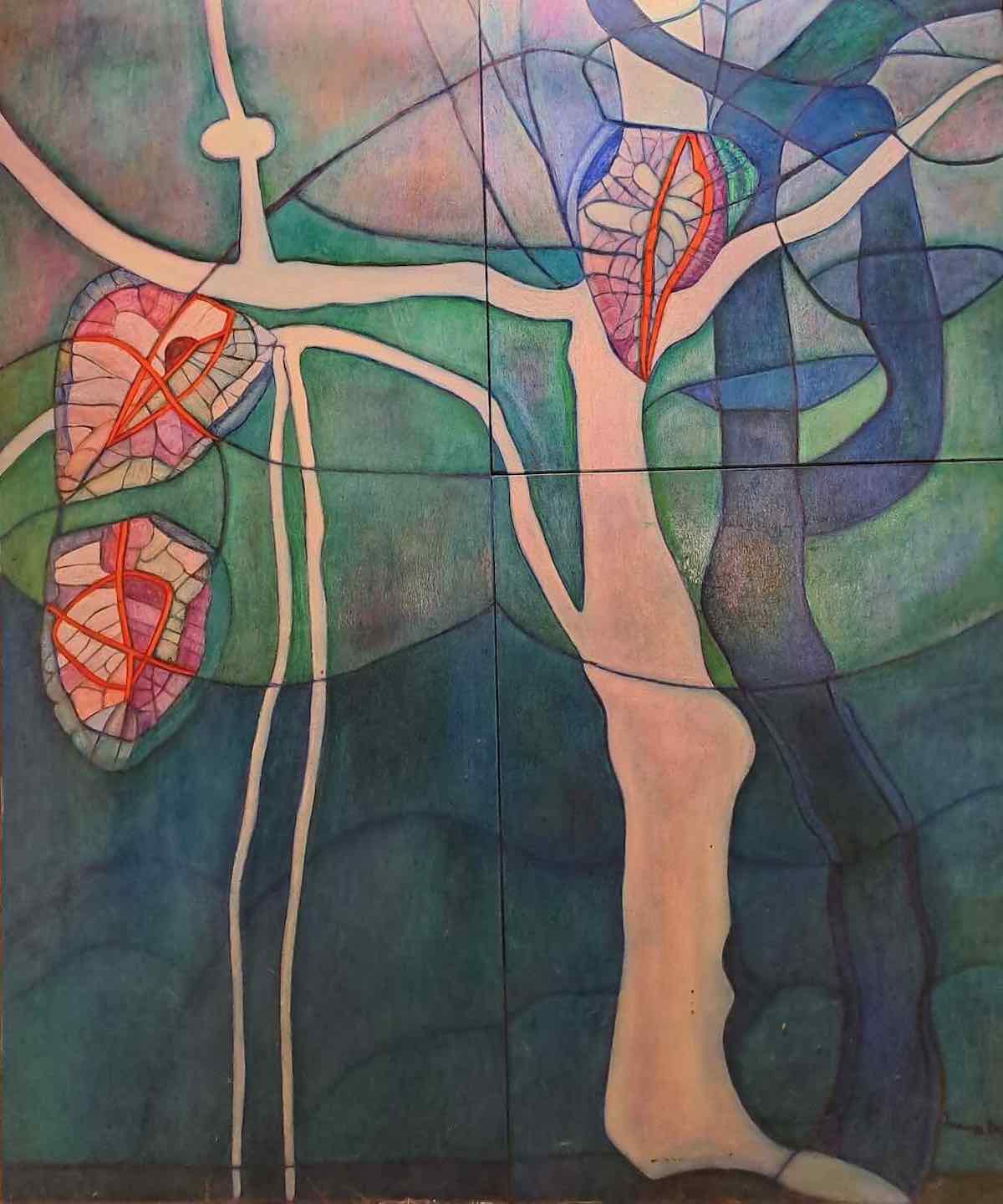
La gamma cromatica è attenuata, più sfumata rispetto a quella degli autori finora citati, l’impalpabilità leggera dei colori è vicina a quella di August Macke mentre i contorni netti e ben marcati si avvicinano alla narrazione di Gabriele Münter; ma a rendere uniche le opere di Innocenza Bruziches è quella spiritualità suggestiva di cui è permeata ogni sua opera, ogni sua descrizione, ogni scorcio che decide di rendere protagonista.
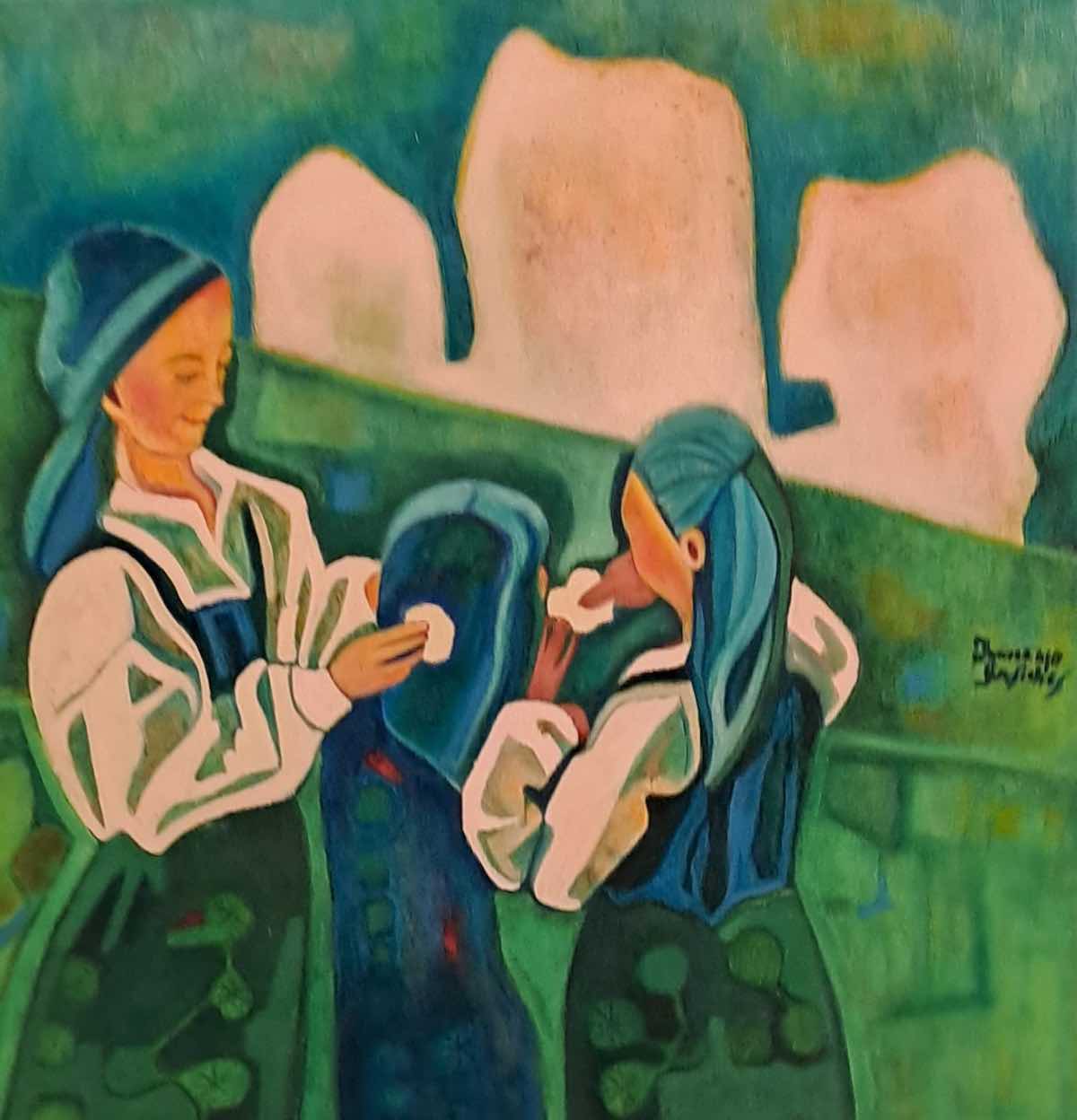
E quando posiziona l’essere umano all’interno dei suoi scorci idilliaci ne sottolinea la perfetta interazione e l’inclinazione ad abbandonarsi alla natura, lasciandosene proteggere, quasi come ne fosse un ospite che entra delicatamente in punta di piedi nel contesto circostante senza invadere né imporre; è proprio in questi casi che si crea quell’atmosfera magica che conduce l’osservatore in un mondo ideale, nella narrazione per immagini di quella connessione invisibile eppure fortemente presente che l’autrice sa vedere chiaramente e che mette dunque in evidenza.
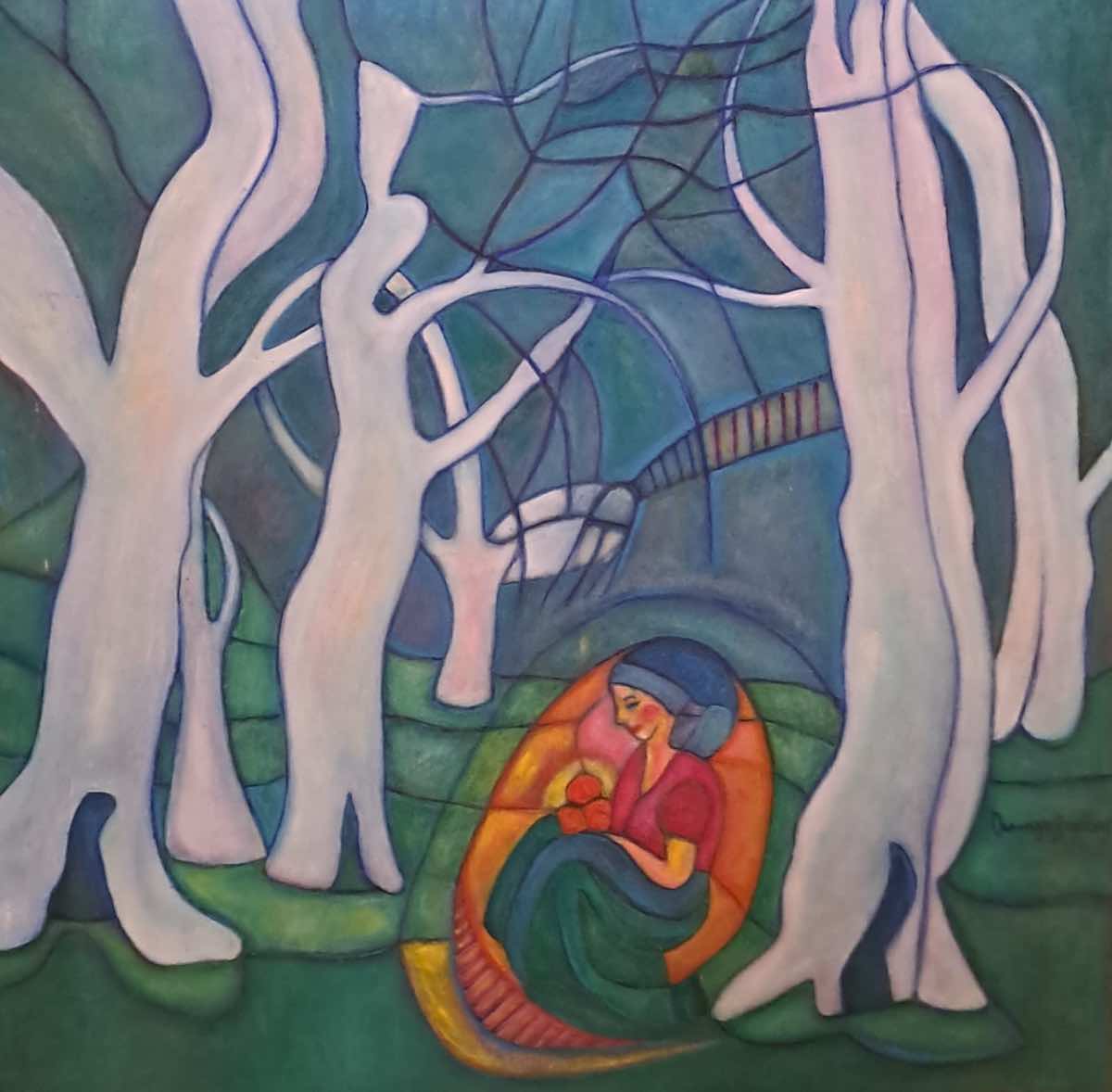
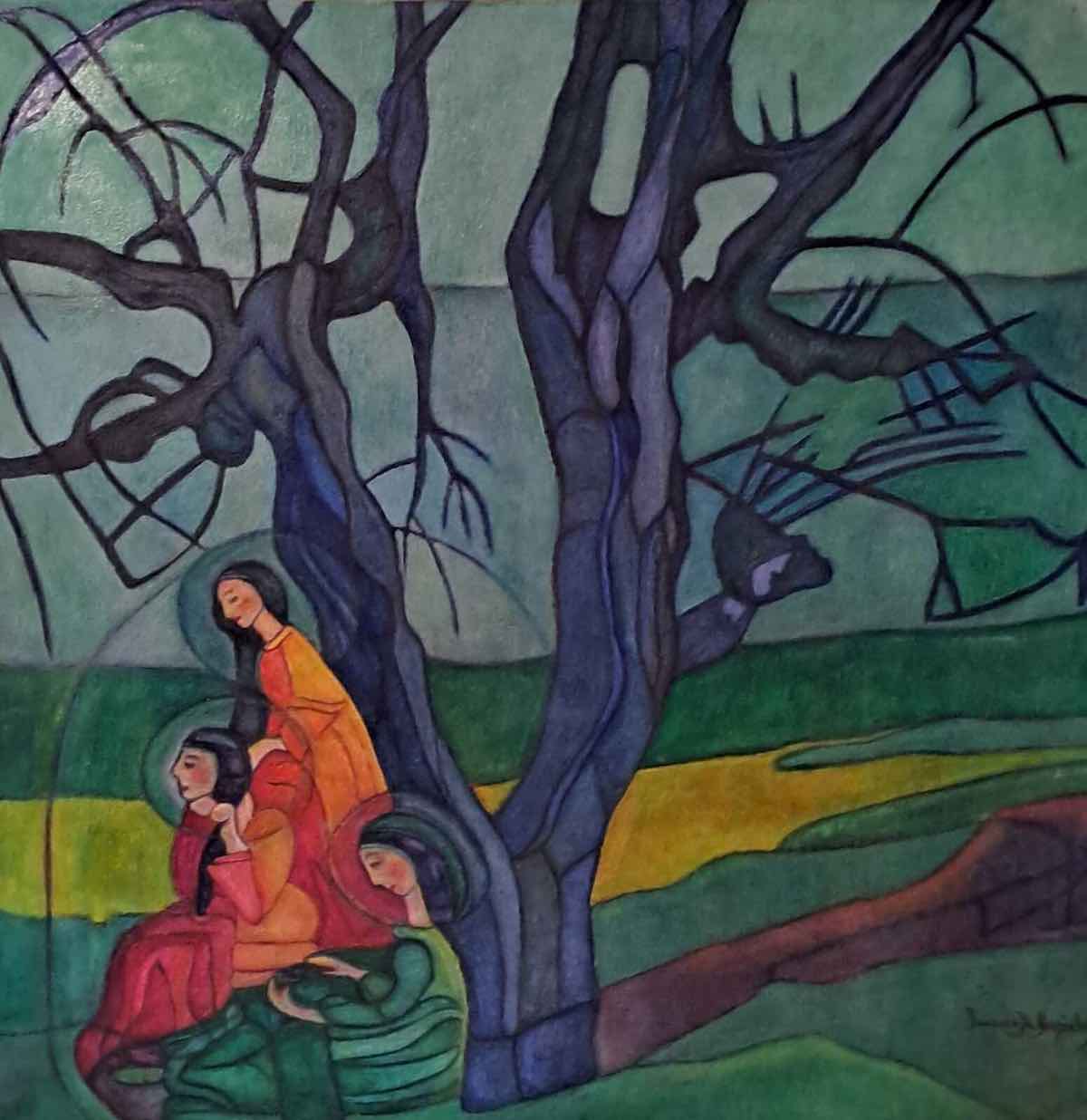
L’opera Racconto – Persefone si focalizza proprio su questa caratteristica di Innocenza Bruziches, sulla sua capacità di mettere in relazione il mito con la realtà osservata, quasi volesse suggerire al fruitore quanto l’immersione nella natura sia in grado di generare un’ambientazione fiabesca dentro la quale tutto può succedere, dove i dettagli si sfumano e coinvolgono in una maniera diversa, più simbolica e intensamente percettiva. La narrazione dell’autrice si sofferma sulla parte più magica del mito greco, quella secondo cui la regina degli inferi porta con sé la capacità di portare la vita, facendo rifiorire la natura in virtù della sua presenza. I tronchi brulli e secchi hanno infatti tonalità fredde che corrispondono a quelle invernali, stagione durante la quale la natura muore, mentre la protagonista è circondata da tonalità calde che stanno a indicare l’apertura alla nuova vita che coincide con la primavera.
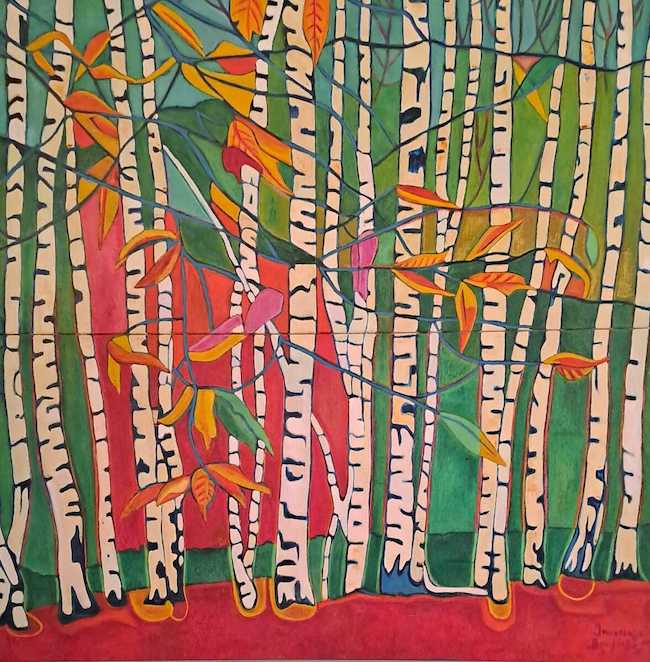
Nella tela Bianca neve invece, Innocenza Bruziches gioca con le parole e anche con il senso stesso dell’opera poiché i tronchi degli alberi e il contesto che si intravede dietro di loro non appartiene a un paesaggio invernale come suggerirebbe il titolo, piuttosto ricorda cromaticamente un’atmosfera autunnale, quando le foglie ingialliscono e cominciano a cadere portate via dal vento. In questo lavoro emerge tutta la musicalità empatica con cui l’autrice tratteggia l’atmosfera, quasi fosse possibile udire il fruscio delle foglie e il sottile sibilo dell’aria che passa attraverso gli alberi, come essi fossero maestose canne d’organo suonate da una mano superiore regolatrice di tutto ciò che nella natura accade. Le tonalità sono intense e irreali eppure fortemente suggestive, quasi come se in virtù dello sguardo incantato di Innocenza Bruziches l’osservatore desiderasse astrarsi dalla contingenza per entrare in quel mondo fiabesco e magico.
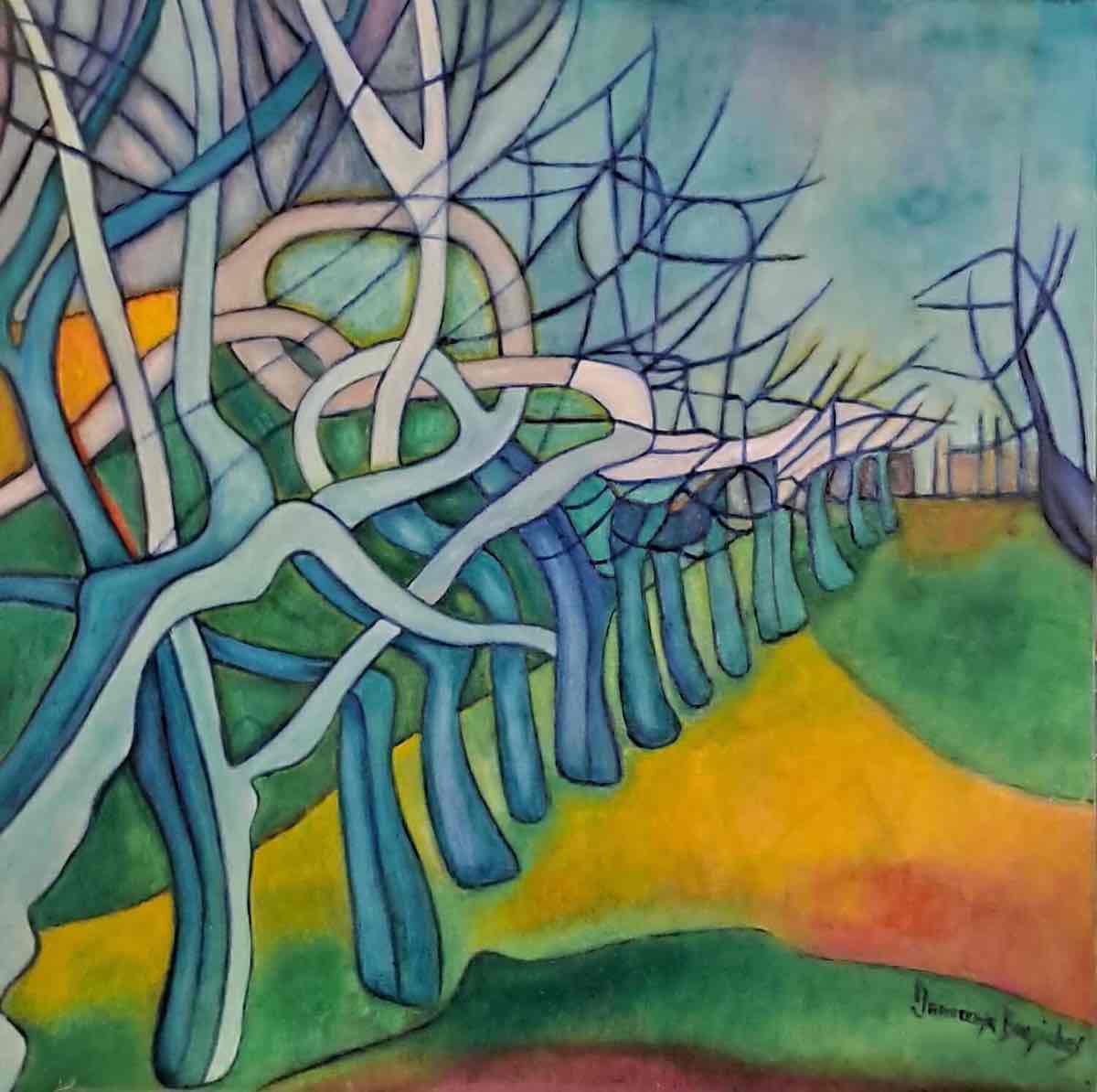
Relazione è forse l’opera più simbolista tra quelle presentate in questo testo, poiché i tronchi degli alberi sono tutti intrecciati tra loro, suggerendo l’indissolubilità e la completa connessione che si genera tra due persone che scelgono di unire i propri due cammini esistenziali dando vita a un rapporto in cui si creano condivisioni e processi di crescita sempre più convergenti, oppure se intesa in senso più globale e universale la tela diventa allegoria delle molte persone che si incontrano nel corso della vita e che si legano indissolubilmente le une alle altre non fosse altro che per il significato profondo che il passaggio, più o meno breve, di ciascuna genera in quella di un’altra. Il contesto circostante gli alberi è molto sfumato, leggero, forse per sottolineare quanto ciò che conta davvero, all’interno del cammino di vita, siano le emozioni che si provano e che rendono indimenticabile qualsiasi luogo, ma soprattutto che i dettagli cambiano e si modificano sulla base delle sensazioni che in quel posto sono state vissute. Il paesaggio che resta di più è quello della memoria e quello condiviso, giorno dopo giorno, con chi conta davvero ed è in grado di cambiare la percezione della quotidianità grazie alla sua presenza.
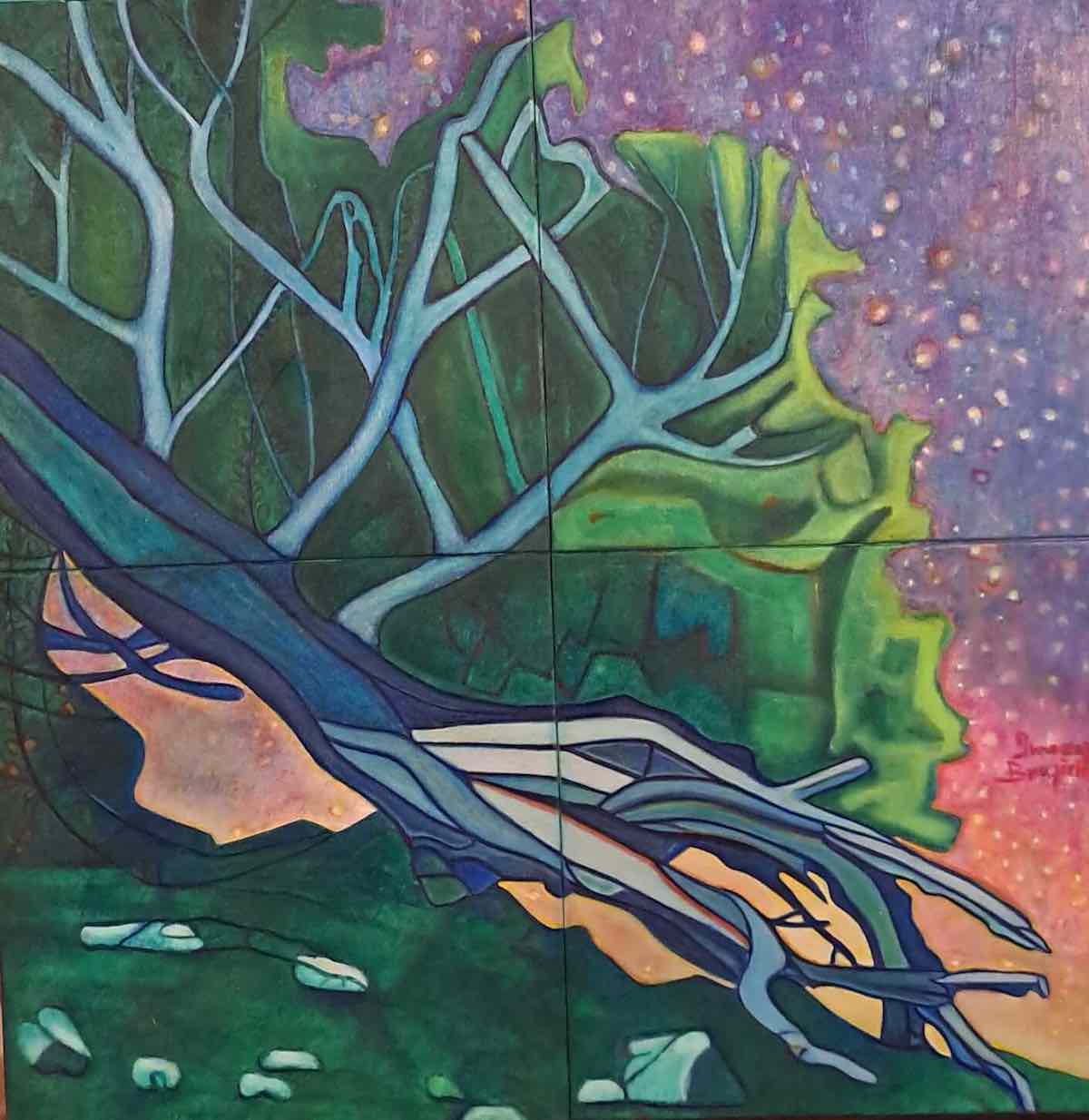
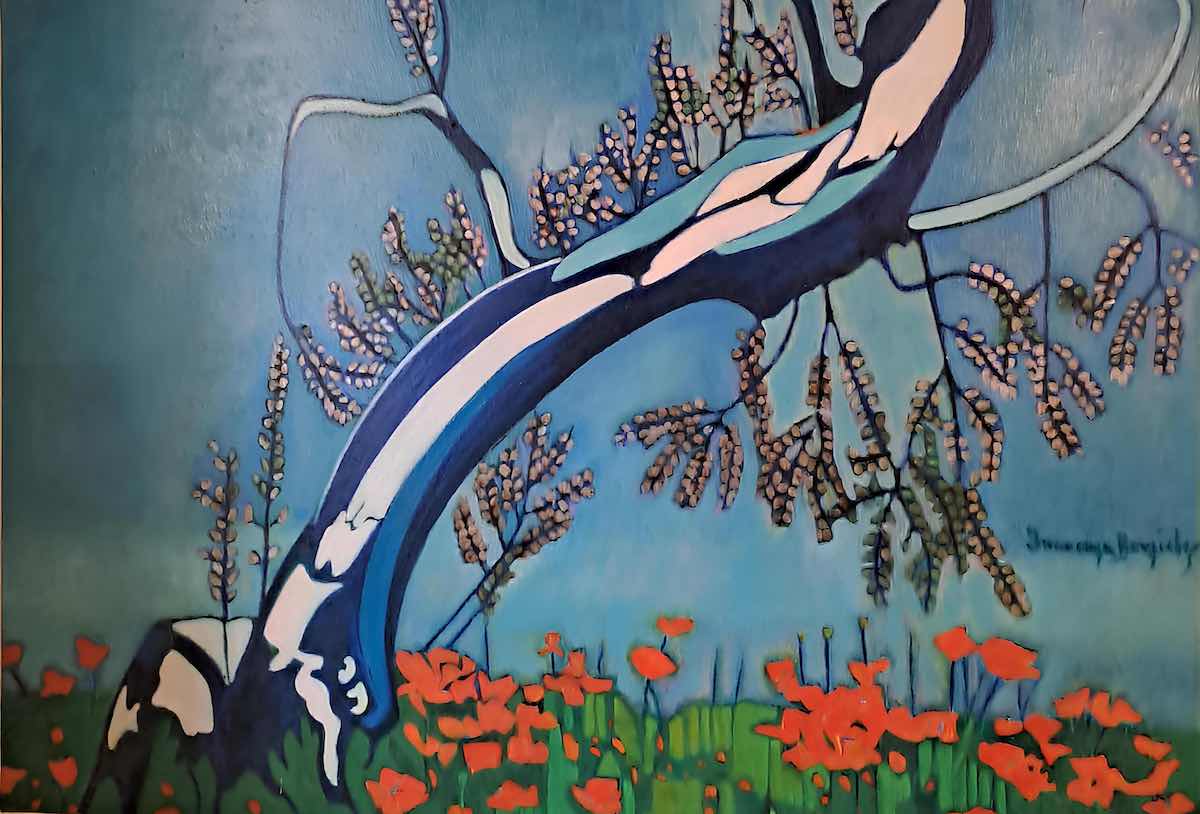
L’opera Agosto è infine quella più affine all’approccio osservativo di Innocenza Bruziches poiché qui a essere raccontata è la realtà oggettiva dell’inizio del processo di rigenerazione della natura che comincia con la fine del ciclo vitale annuale, il seccarsi a causa del caldo intenso del tronco in primo piano, e che poi prosegue con il sopraggiungere dell’autunno, quando anche le altre chiome perderanno il loro colore ancora verde volgendo al giallo.
Innocenza Bruziches, attratta dai colori e dal disegno fin da bambina, si è formata artisticamente frequentando i corsi dei maestri Franco Fedeli ed Enzo Olivastri ma la formazione pittorica è stata completa solo dopo le sue lauree umanistiche in Lettere Moderne e in Filosofia che le hanno permesso di creare la connessione tra interiorità e oggettività, tra osservazione e ascolto della spiritualità che contraddistinguono la sua pittura e che trova piena realizzazione nel suo studio in Valdichiana. È rappresentata dalla Galerie de Paris di Roma, via Margutta 53 bis.
INNOCENZA BRUZICHES-CONTATTI
Email: info@innocenzabruziches.it
Sito web: www.innocenzabruziches.it/it/index.html
The pulse of nature in Expressionism by Innocenza Bruziches, straddling contemplation and spiritual narrative
For some artists, attuning themselves to that vital pulse that surrounds a human being now too distracted and self-seeking to lose in the slow rhythm suggested by nature, becomes the essential and indispensable foundation of their expressiveness, as if for them it were impossible to unleash their creativity without taking into account that emotional bond with everything the gaze can wander over and find the ideal dimension in which to connect with an inner self too delicate to dwell on the chaos of everyday city life. The choice of a figurative painting style allows this type of artist to sketch a perceived reality in which everything seen is transformed into an intense listening to those subtle energies by virtue of which everything changes and alters its appearance, because what must prevail is the unspoken, the intangible, and the imperceptible to reason. Innocenza Bruziches belongs to this category of artists and develops her own distinctly unique and recognizable style in which the absolute protagonist is nature which, thanks to her, rediscovers its central role by becoming the one that welcomes human life and not the one that must fight to survive, as too often happens in contemporary society.
Between the late Nineteenth and early Twentieth centuries, there were two opposing and even conflicting artistic movements in terms of their guiding principles; yet, perhaps unconsciously, both shared a common thread, the desire to bring nature to the forefront in all its forms, and above all to depict it according to the distinctive expressive rules that defined each movement. On the one hand, therefore, the delicacy and ethereal imagery of Art Nouveau, where women were surrounded by sinuous branches and flower stems that seemed to envelop them, and in which were meant to predominate the aesthetic harmony and decorative beauty of the works that were not limited to the two-dimensionality of painting but also extended to many other forms of craftsmanship, in that style perfectly integrated into art, on the other, the chromatic and figurative decontextualization of Expressionism, whereby even a landscape or any natural element had to be attuned to the subjectivity and sensations perceived by the artist.
In its most refined sense, Art Nouveau offered a stunning interpretation of the perfect harmony between femininity and floral motifs in the canvases of the Austrian Gustav Klimt, who made flowers, trees, and glimpses of forests the protagonists of some of his works; Alfonse Mucha, on the other hand, remained more strongly tied to the centrality of women, for whom the natural element served as a purely decorative principle. Expressionism, on the other hand, had many interpreters who highlighted landscapes, trees, and animals declined through the individual artist’s deepest sensibilities, but it was particularly the members of the Der Blaue Reiter group, a German collective active between 1911 and 1914, who placed at the center of their chromatic and formal exploration precisely that idyllic and harmonious world rooted in the emotional essence of nature. Franz Marc focused his work on images of horses that seemed to emerge from a dream, from an idyllic fairy tale in which the surrounding environment harmonized with their purity and spirituality; Gabriele Münter, wife of Wassily Kandinsky, focused on idyllic and intense landscapes with unreal colors and an immediate, childlike narrative; August Macke, on the other hand, loved to introduce into serene landscapes the human presence that never dominated but was rather presented as a guest within a narrative harmony delicate yet deeply emotional.
Among these artists, however, one stands out who was able to combine Expressionist chromatic and formal distortion with the evolution of Symbolism which, through him, became a manifestation of his own feelings and spirituality, I am referring to the Swiss artist Ferdinand Hodler. It is precisely within this context that finds its place the original style of the artist Innocenza Bruziches who develops a vision in which she blends the chromatic and descriptive unreality of Expressionism with an approach that views everything around her as something alive, whose she seeks to reveal the very breath, the subtle, imperceptible sense of movement that can emerge only through empathetic and engaged observation. The color palette is subdued, more nuanced than that of the artists mentioned so far, the light, ethereal quality of the colors is akin to that of August Macke, while the sharp, well-defined contours approach the narrative style of Gabriele Münter; but what makes Innocenza Bruziches’ artworks unique is the evocative spirituality that permeates every one of her canvases, every description, every scene she chooses to highlight. And when she places the human being within her idyllic scenes, she highlights his perfect interaction with and inclination to surrender to nature, allowing himself to be protected by it, almost as if he were a guest who gently tiptoes into the surrounding context without intruding or imposing; it is precisely in these instances that a magical atmosphere is created, transporting the viewer into an ideal world, a visual narrative of that invisible yet powerfully present connection that the artist perceives clearly and thus brings to light. The work Racconto – Persefone (Tale – Persephone) focuses precisely on this characteristic of Innocenza Bruziches, on her ability to connect myth with observed reality as if she wanted to suggest to the viewer how immersion in nature can create a fairy-tale setting where anything can happen, where details blur and engage in a different, more symbolic, and intensely perceptive way. The author’s narrative focuses on the most magical aspect of the Greek myth, namely that the queen of the underworld possesses the power to bring life, causing nature to blossom anew by virtue of her presence. The bare, dry tree trunks, in fact, have cool tones that correspond to those of winter, the season during which nature dies, while the protagonist is surrounded by warm tones that signify the opening to new life that coincides with spring.
In the painting Bianca Neve (Snow White), however, Innocenza Bruziches plays with words and with the very meaning of the work itself, since the tree trunks and the setting glimpsed behind them do not belong to a winter landscape as the title would suggest, instead, it evokes the colors of an autumnal atmosphere, when the leaves turn yellow and begin to fall, carried away by the wind. In this work the empathetic musicality with which the artist sketches the atmosphere comes to the fore, as if one could hear the rustling of the leaves and the subtle hiss of the air passing through the trees, as if they were majestic organ pipes played by a higher hand that governs all that happens in nature. The tones are intense and unreal yet powerfully evocative, almost as if, through Innocenza Bruziches’ enchanted gaze, the viewer were drawn to step away from the mundane and enter that fairy-tale, magical world. Relazione (Relationship) is perhaps the most symbolist work among those presented in this text, as the tree trunks are all intertwined, suggesting the indissolubility and complete connection that arises between two people who choose to unite their two existential paths, giving rise to a relationship in which shared experiences and processes of growth become increasingly convergent; or, if understood in a more global and universal sense, the canvas becomes an allegory of the many people we meet throughout life who become inextricably bound to one another, if only for the profound meaning that each person’s passage, however brief, generates in another’s. The setting surrounding the trees is very subtle and light, perhaps to emphasize that what truly matters on life’s journey are the emotions felt that make any place unforgettable but above all, that details change and shift based on the feelings experienced in that place.
The landscape that remains most vivid is that of memory and the one shared, day after day, with those who truly matter and are capable of changing the perception of everyday life through their presence. The work Agosto (August) is ultimately the one most closely aligned with Innocenza Bruziches’ observational approach, as it depicts the objective reality of the beginning of nature’s regeneration process, which starts with the end of the annual life cycle, the trunk in the foreground drying out due to the intense heat, and which then continues with the arrival of autumn, when the other foliage will also lose its still-green color, turning yellow. Innocenza Bruziches, fashinated by colors and drawing since childhood, studied painting by attending courses taught by masters Franco Fedeli and Enzo Olivastri, but her pictorial training was only complete after earning her humanities degrees in Modern Literature and Philosophy which have enabled her to forge a connection between inner life and objectivity, between observation and attunement to the spirituality that characterizes her painting and finds its fullest expression in her studio in Valdichiana. She is represented by Galerie de Paris in Rome, at Via Margutta 53 bis.