

Nel momento in cui lo sguardo vaga nelle pieghe della realtà, in quegli accadimenti o dettagli che si presentano davanti agli occhi distratti dell’individuo contemporaneo troppo concentrato su se stesso e sul proprio individualismo per rendersi conto delle implicazioni e delle grida silenziose di quel mondo che egli abita, l’osservazione dell’artista si sofferma esattamente sull’impercettibile, su un invisibile che però può essere scoperto attraverso una mente sottile e aperta all’ascolto. Rappresentare quelle sensazioni inspiegabili, dar loro consistenza e struttura visiva può apparire tanto più facile quanto più ci si allontana dalla forma e dalla raffigurazione della realtà, permettendo all’interiorità di liberare tutte le sensazioni ricevute senza dover restare all’interno di uno schema figurativo che apparirebbe limitante. Questo è esattamente il percorso compiuto dal protagonista di oggi che associa alla non forma la sperimentazione con materiali ruvidi e consistenti con cui sembra voler dare maggior incisività alla sua narrazione.
Dopo un lunghissimo periodo in cui l’arte doveva essere la riproduzione esatta ed esteticamente perfetta della realtà, dopo che l’Ottocento cominciò a delineare una sottile esigenza di interpretare invece che semplicemente raccontare introducendo la soggettività dell’esecutore di un’opera e delle sue riflessioni, come per il Romanticismo Inglese di William Turner e per il Simbolismo francese, si giunse alla conclusione che l’interiorità dell’artista non poteva più rimanere in silenzio, sia che fosse manifestata sotto forma di emozioni, travolgenti e prorompenti, come nell’Espressionismo, oppure sotto forma di indagine sull’inconscio, ricerca questa che contraddistinse il Surrealismo degli albori del nuovo secolo, il Novecento. La fase iniziale segnò anche la scoperta di una sovversione totale del concetto stesso di arte che comprese anche la nascita di movimenti in cui il distacco dalla raffigurazione dell’osservato divenne funzionale ad affermare una superiorità del gesto plastico su qualsiasi narrazione tangente e riconducibile alla quotidianità; l’Astrattismo venne fondato da Vassily Kandinsky proprio per mettere in risalto la sussistenza delle emozioni a prescindere dalla connessione con qualcosa di tangibile, mettendo pertanto in relazione l’ascolto della musica con l’atto pittorico al punto di associare i colori alle note musicali di Richard Wagner che usava ascoltare mentre dipingeva. A dispetto dei decenni subito seguenti, in cui alcune correnti astrattiste rifiutarono la contaminazione della soggettività degli autori spostandosi sul rigore, parlo ovviamente del De Stijl, del Suprematismo e dell’Astrattismo Geometrico, vi fu ben presto un ritorno alle intuizioni di Kandinsky pur con un’enfatizzazione e un assoluto rifiuto di legarsi a qualsiasi forma riconoscibile dallo sguardo. Questo concetto fu la base dell’Espressionismo Astratto che fece dell’informale il punto di partenza della forza interpretativa di un impeto interiore necessitante di lasciar fuoriuscire angosce, ansie, inquietudini o semplicemente di far fluire pensieri e sensazioni che non potevano trovare un altro canale espressivo.
Alcuni esponenti dell’Espressionismo Astratto, in particolar modo gli artisti che erano ancora fortemente legati all’Europa, diedero un’interpretazione diversa all’Arte Informale perché vollero introdurre la materia attraverso cui potevano rendere più incisivo il sentire, approfondendo il rapporto tra emozionalità e forza comunicativa in virtù della quale potevano mettere l’accento su quelle ferite del vivere che venivano rappresentate con la deformazione dei materiali utilizzati. All’Informale Materico appartenevano l’italiano Alberto Burri, che fu il primo a introdurre materiali plastici e oggetti di uso quotidiano bruciati, liquefatti, contorti e strappati, e il catalano Antoni Tàpies con cui la materia era esplorata dal punto di vista concettuale. L’artista valdostano Marco Distort raccoglie l’eredità dei due grandi esponenti dell’Informale Materico dando vita a un suo proprio linguaggio espressivo dove l’attitudine all’introspezione si fonde a un approccio sperimentale, poiché l’esigenza di scolpire, strutturare e rendere concreti i pensieri e le intuizioni che riceve dall’ambiente circostante grazie alla sua particolare attitudine all’ascolto, lo inducono a trasformare letteralmente ogni tela in un approfondimento intenso e intimo.
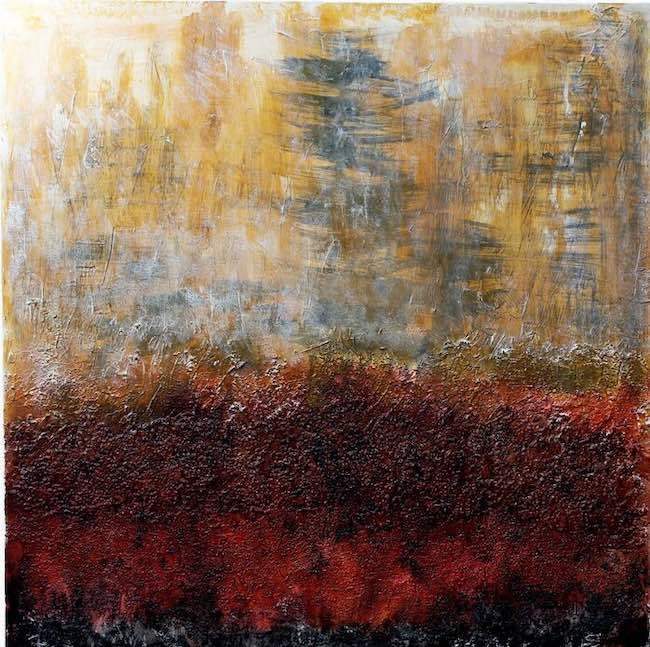
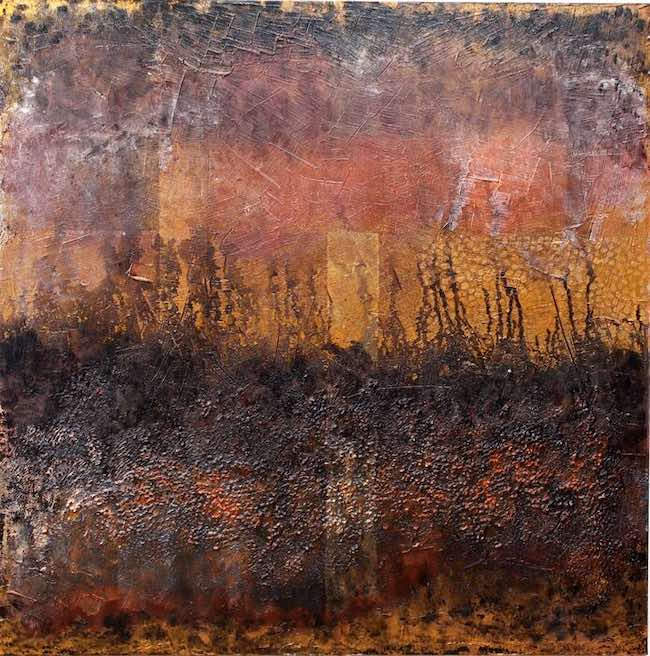
La gamma cromatica preferita da Marco Distort è quella che vira verso i colori terrosi, polverosi, ombrosi ma caldi e vivi, quasi le sue emozioni fossero costantemente legate a un sottostrato riflessivo ma in qualche modo razionale, nel senso che hanno bisogno di essere comprese e analizzate prima di potersi manifestare; ed è proprio qui che entra in gioco la materia, come gli stucchi, la sabbia, il granulato di pietra che trattengono il colore, formano dei rilievi che scavano, oppure al contrario debordano dalla bidimensionalità per andare a interagire con lo spazio circostante. Quasi la viscosità della superficie costituisse un modo per scolpire quella specifica sensazione, quell’interpretazione ricevuta dall’ambiente circostante esplicitato dal titolo; l’aspetto finale delle opere è dunque decontestualizzato non solo per l’assenza di forma bensì anche nei colori riconducibili al paesaggio interiore che si costruisce all’interno della sensibilità di Marco Distort che poi viene esternata attraverso la fase della riflessione e dell’approfondimento, di fatto trasformandone la percezione.
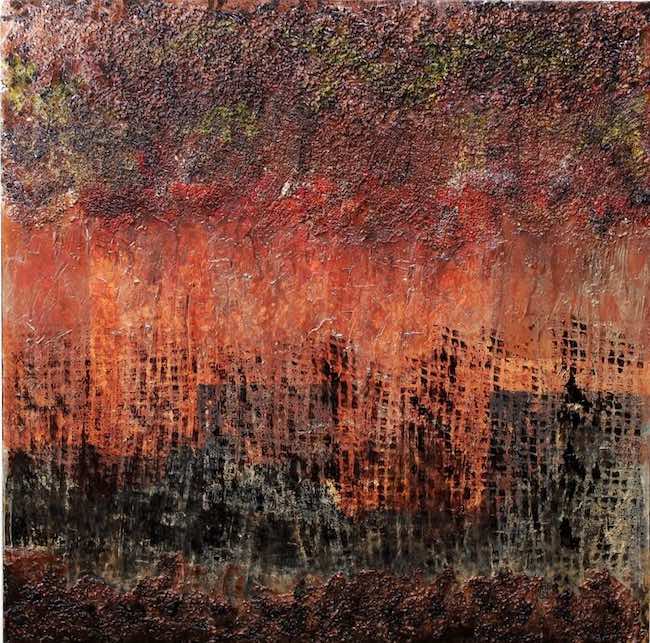
La tela Città dolente in estate è l’esempio più evidente del tipo di percorso narrativo dell’autore poiché l’aspetto solare, spensierato e divertente della stagione più attesa dell’anno menzionata nel titolo lascia il posto al grido silenzioso che si può percepire nelle città, con l’asfalto rovente, il cemento dei palazzi e l’assenza di alberi che aumentano ancor più la sensazione di desolazione e di dolore da parte di una natura ormai lasciata ai margini della vita umana. Ma forse il dolore a cui accenna Marco Distort è anche quello della della solitudine dentro cui molte persone si trovano per l’impossibilità di appartenere alla categoria dei vacanzieri e dunque devono fare i conti con le serrande abbassate, i negozi chiusi e la mancanza di quel dialogo anche minimo che nel resto dell’anno possono ottenere solo uscendo di casa.
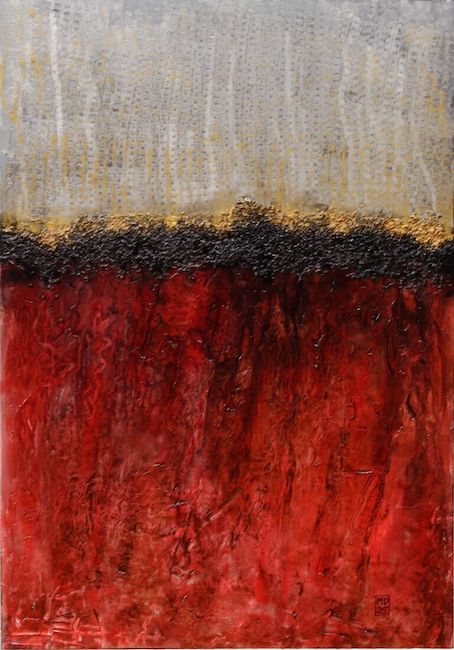
Cascata rossa a sua volta è simbolo di un fluire esistenziale che, malgrado la volontà della maggior parte delle persone, viene arrestato a causa dell’incredibile e insopportabile dolore che continua a generarsi nel mondo, quasi i conflitti, le guerre e le devastazioni fossero un mezzo per impedire quell’evoluzione ed elevazione verso il miglioramento di sé a cui tutti, più o meno consapevolmente, anelano. Il rosso dell’acqua evoca il sangue, inteso come momento di estrema sofferenza, eppure la parte alta dell’opera, che ricorda un cielo lattiginoso, suggerisce in ogni caso una speranza, una possibilità di uscire da quel vortice di causa ed effetto apparentemente imprigionante, se solo l’essere umano fosse capace di connettersi con la sua natura più autentica. Accettando questo secondo punto di vista la cascata appare dunque come un’ascensione, una salita verso una possibilità migliore di cui quel dolore è un passaggio necessario per comprendere il valore di cosa si potrà incontrare dopo.
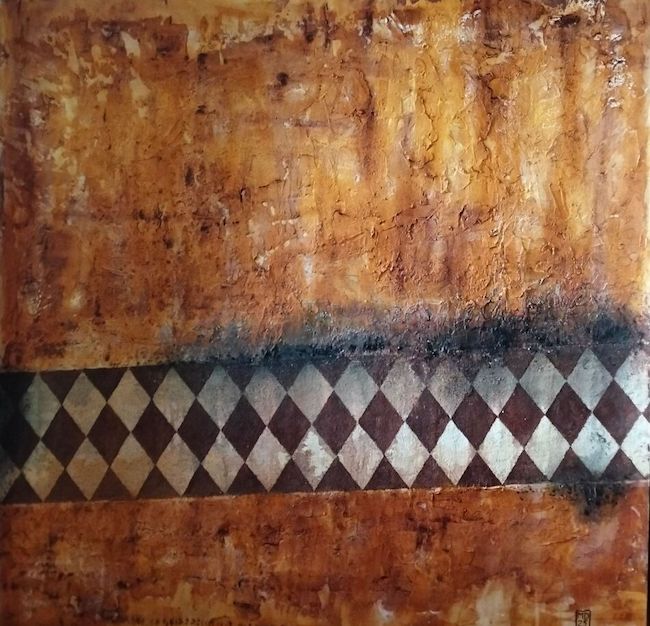
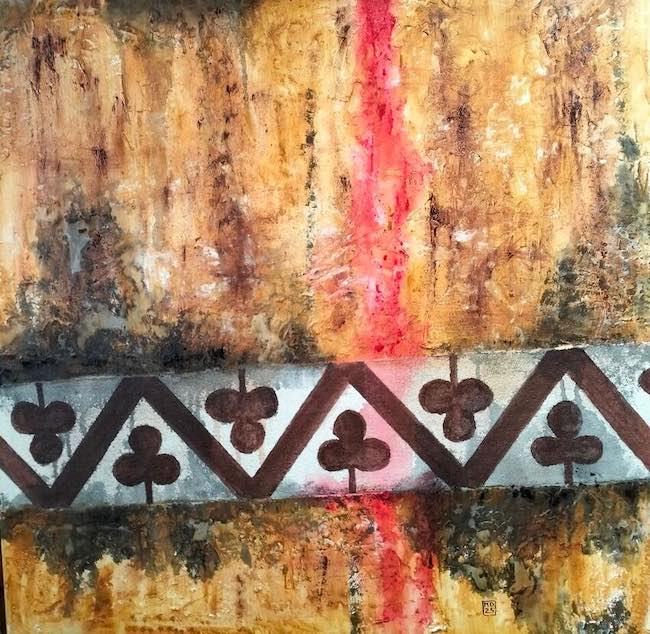
Le opere Moyen Age 2 e Moyen Age 5 sembrano invece giocare con il senso della vita, poiché qui Marco Distort divide in due le tele, caratteristica comune nella maggior parte dei suoi dipinti, introducendo i simboli delle carte francesi quasi volesse mettere in luce la natura casuale dell’esistenza, o meglio la convinzione che lo sia tipica dell’essere umano, riflettendo sull’antitesi tra destino e libero arbitrio, tra l’accettare un percorso già segnato e a cui è impossibile sottrarsi e il credere invece che tutto possa dipendere dalla capacità dell’individuo di creare letteralmente la realtà in cui vive attraverso scelte e azioni che letteralmente scrivono il futuro inteso come momento successivo. La considerazione dell’autore è sottile e lascia la porta aperta a un enigma che appartiene da sempre alla natura dell’uomo, permettendo all’osservatore di veder emergere lentamente quel significato nascosto che si trasforma in domanda inconscia e poi diviene via via più evidente.
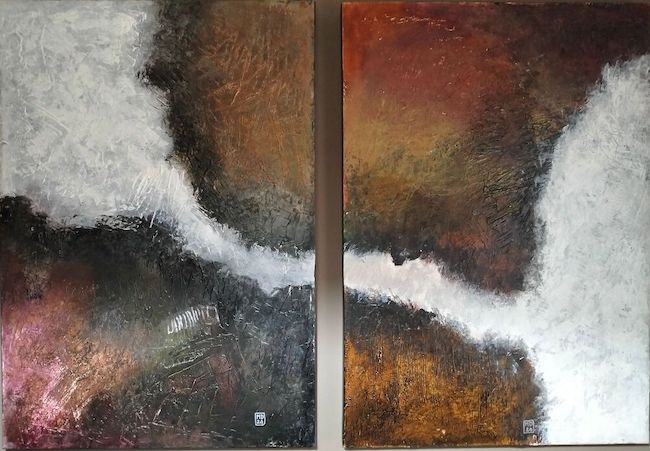
Il dittico Senza titolo mostra due parti che, a seconda del punto di vista interpretativo di ciascuno, possono allontanarsi, quasi tra loro si fosse generata una frattura insanabile, oppure possono avvicinarsi, come se il magnetismo che le spinge l’una verso l’altra fosse irresistibile, confermando ancora una volta quanto le opere di Marco Distort si fondano simbolicamente con l’osservazione sociologica, con la riflessione sui grandi concetti che da sempre appartengono all’umanità e a cui non esistono risposte assolute, piuttosto esiste la possibilità del singolo di trarre le proprie risposte sulla base della propria esperienza personale, del proprio vissuto e degli insegnamenti che ne ha ricevuto.
Marco Distort, docente di Filosofia, saggista e autore di romanzi noir, nel corso del suo percorso professionale ha sempre tenuto in disparte il lato creativo, che invece è riaffiorato negli ultimi anni inducendolo a cercare una cifra stilistica che lo contraddistingue, sebbene per lui l’arte sia un costante divenire. Ha al suo attivo la partecipazione a mostre collettive in Val D’Aosta e presto inizierà un cammino espositivo internazionale.
MARCO DISTORT-CONTATTI
Email: marco.distort@gmail.com
Facebook: www.facebook.com/profile.php?id=100012391715380
The synthesis between observation and introspection in Marco Distort’s Material Informal
When the gaze wanders through the folds of reality, in those events or details that appear before the distracted eyes of the contemporary individual, too focused on himself and his own individualism to realize the implications and silent cries of the world he inhabits, the artist’s observation focuses precisely on the imperceptible, on an invisible that can, however, be discovered through a subtle mind open to listening. Representing those inexplicable sensations, giving them consistency and visual structure, may seem easier the further one moves away from the form and representation of reality, allowing the inner self to release all the sensations received without having to remain within a figurative scheme that would appear limiting. This is exactly the path taken by today’s protagonist, who associates non-form with experimentation with rough and consistent materials, with which he seems to want to give greater incisiveness to his narrative.
After a very long period in which art had to be an exact and aesthetically perfect reproduction of reality, after the nineteenth century began to outline a subtle need to interpret rather than simply narrate, introducing the subjectivity of the artist and his reflections, as in the English Romanticism of William Turner and French Symbolism, it was concluded that the artist’s inner world could no longer remain silent, whether it was manifested in the form of overwhelming and bursting emotions, as in Expressionism, or in the form of an investigation of the unconscious, a quest that characterized Surrealism at the dawn of the new century, the twentieth century. The initial phase also marked the discovery of a total subversion of the very concept of art, which also included the birth of movements where the detachment from the representation of the observed became functional to affirming the superiority of the plastic gesture over any narrative tangential and attributable to everyday life.
Abstract art was founded by Vassily Kandinsky precisely to highlight the existence of emotions regardless of their connection to anything tangible, thus relating the listening to music to the act of painting to the point of associating colors with the musical notes of Richard Wagner, who he used to listen to while painting. Despite the decades that followed, in which some abstract movements rejected the contamination of the artists’ subjectivity in favor of rigor, I am referring of course to De Stijl, Suprematism, and Geometric Abstractionism—there was soon a return to Kandinsky‘s insights, albeit with an emphasis on and absolute refusal to tie oneself to any form recognizable to the eye. This concept was the basis of Abstract Expressionism, which made the informal the starting point for the interpretative force of an inner impetus needing to let out anxieties, worries, or simply to allow thoughts and feelings that could not find another channel of expression to flow. Some exponents of Abstract Expressionism, especially artists who were still strongly linked to Europe, gave a different interpretation to Informal Art because they wanted to introduce the material through which they could make their feelings more incisive, deepening the relationship between emotionality and communicative force, by virtue of which they could emphasize the wounds of life that were represented by the deformation of the materials used.
To the Material Informal belonged Italian artist Alberto Burri, who was the first to introduce plastic materials and everyday objects that had been burned, liquefied, twisted, and torn, and Catalan artist Antoni Tàpies, who explored matter from a conceptual point of view. The artist Marco Distort from Valle d’Aosta takes up the legacy of the two great exponents of Material Informal, creating his own expressive language where introspection blends with an experimental approach, as the need to sculpt, structure and give concrete form to the thoughts and intuitions he receives from his surroundings thanks to his particular aptitude for listening, leads him to literally transform each canvas into an intense and intimate exploration. Marco Distort‘s preferred color range is one that veers towards earthy, dusty, shady but warm and vivid colors, as if his emotions were constantly linked to a reflective but somehow rational undercurrent, in the sense that they need to be understood and analyzed before they can manifest themselves; and this is where the material comes into play, such as stucco, sand, and stone granules that retain color, forming reliefs that dig in, or, on the contrary, overflow from two-dimensionality to interact with the surrounding space; and it is precisely here that materials such as stucco, sand, and stone granules come into play, retaining color and forming reliefs that dig in or, conversely, overflow from two-dimensionality to interact with the surrounding space. It is almost as if the viscosity of the surface were a way of sculpting that specific sensation, that interpretation received from the surrounding environment made explicit by the title. the final appearance of the artworks is therefore decontextualized not only by the absence of form but also by the colors attributable to the inner landscape that is constructed within Marco Distort‘s sensibility, which is then externalized through a phase of reflection and deepening, effectively transforming its perception.
The canvas Città dolente in estate (Sorrowful city in summer) is the most obvious example of the author’s narrative approach, as the sunny, carefree, and fun aspect of the most anticipated season of the year mentioned in the title gives way to the silent cry that can be perceived in cities, with the hot asphalt, the concrete of the buildings, and the absence of trees, which further increase the feeling of desolation and pain caused by nature now left on the margins of human life. But perhaps the pain Marco Distort refers to is also that of the loneliness many people feel because they cannot afford to go on vacation and therefore have to deal with shuttered stores, closed shops, and the lack of even minimal interaction that they can only get by leaving their homes during the rest of the year. Cascata rossa (Red waterfall), in turn, is a symbol of an existential flow that, despite the will of most people, is halted by the incredible and unbearable pain that continues to be generated in the world, as if conflicts, wars, and devastation were a means of preventing that evolution and elevation towards self-improvement that everyone, more or less consciously, yearns for. The red of the water evokes blood, understood as a moment of extreme suffering, yet the upper part of the work, reminiscent of a milky sky, suggests hope, a possibility of escaping from that seemingly imprisoning vortex of cause and effect, if only human beings were able to connect with their most authentic nature. Accepting this second point of view, the waterfall appears as an ascent, a climb towards a better possibility, for which pain is a necessary step in order to understand the value of what may lie ahead.
The works Moyen Age 2 and Moyen Age 5 seem to play with the meaning of life, as Marco Distort divides the canvases in two, a common feature in most of his paintings, introducing the symbols of French playing cards as if to highlight the random nature of existence, or rather the belief that this is typical of human beings, reflecting on the antithesis between destiny and free will, between accepting a path that is already marked out and impossible to escape, and believing instead that everything may depend on the individual’s ability to literally create the reality in which they live through choices and actions that literally write the future as the next moment. The author’s consideration is subtle and leaves the door open to an enigma that has always belonged to human nature, allowing the observer to slowly see emergint that hidden meaning which turns into an unconscious question and then gradually becomes more evident.
The diptych Senza titolo (Untitled) shows two parts which, depending on each person’s interpretative point of view, can move apart, as if an irreparable rift had been created between them, or they can come closer together, as if the magnetism that draws them towards each other were irresistible, confirming once again how Marco Distort‘s works are symbolically based on sociological observation, on reflection on the great concepts that have always belonged to humanity and to which there are no absolute answers. Rather, there is the possibility for individuals to draw their own answers based on their personal experience, their own lives, and the lessons they have learned. Marco Distort, professor of philosophy, essayist, and author of noir novels, has always kept his creative side on the sidelines throughout his professional career, but it has resurfaced in recent years, leading him to seek a distinctive stylistic signature, even though for him art is a constant work in progress. He has participated in group exhibitions in Val D’Aosta and will soon begin an international exhibition path.