
Ascoltare tutto ciò che non può essere visto con lo sguardo bensì intuito attraverso un inconscio che spesso rivela una capacità percettiva in grado di mettersi in contatto con una realtà intangibile ma altrettanto presente rispetto a quella della superficie, è prerogativa di quegli artisti con una spiccata sensibilità in virtù della quale mostrano l’esigenza di trasformare il gesto plastico in mezzo per sussurrare all’osservatore quelle interpretazioni emozionali in grado di dare un punto di vista completamente diverso rispetto a quello puramente oggettivo. Nel momento in cui emerge questo tipo di esigenza espressiva, l’approccio stilistico diviene una pura formalità che si adatta alla predilezione figurativa del singolo autore poiché ciò che conta davvero è la capacità di andare a fondo, di rappresentare quell’inspiegabile ma presente che avvolge la vita quotidiana dell’essere umano. Angelė Šimoliūnienė, che appartiene a questo ristretto gruppo di artisti particolarmente sensibili all’intorno che spesso si conforma, altre determina, lo svolgersi dell’esistenza e delle sue vicende, sceglie un approccio pittorico informale da cui lascia affiorare possibilità visive coinvolgenti e intrise di spiritualità.
Il tema dell’interconnessione tra natura ed essere umano, tra la forza degli eventi atmosferici e l’inconsistenza dell’individuo davanti a essi, cominciò a essere esplorata durante il Romanticismo, in particolar modo grazie a un innovatore convinto che un’opera dovesse essere molto di più rispetto alla pura riproduzione di una scena; il maestro in questione era l’inglese William Turner e i suoi paesaggi tempestosi indugiavano e mettevano in luce quella sensazione di sottomissione dell’uomo a forze, energie, che non potevano essere controllate e che erano in grado di avvolgere quanto di distruggere. Qualche decennio dopo, verso la fine dell’Ottocento, le intuizioni di Turner furono approfondite dal punto di vista puramente formale, in particolar modo riguardo l’utilizzo della luce e della frammentarietà delle pennellate, dagli autori aderenti all’Impressionismo, mentre dal punto di vista del senso più profondo, dell’indagine su quelle energie da lui semplicemente osservate ma poi accentuate ed esplorate in tutte le loro sfaccettature, fu il Simbolismo a raccogliere la sua eredità. Gli aderenti al movimento, sebbene in modi assolutamente diversi, si proponevano di esplorare il misterioso legame e l’influenza che quelle forze sottili e intangibili esercitavano sull’esistenza e svelate grazie alla percezione di autori come Odilon Redon, che nascondeva nella natura figure antropomorfe metà uomini e metà insetti quasi fossero mostri della coscienza, Gustave Moreau e Gaston Bussière, che introdussero tematiche bibliche e mitologiche avvolte da un’atmosfera enigmatica e ammonitiva, e Arnold Böcklin che invece si focalizzò sul mondo dell’aldilà e degli spiriti che permangono legati ai luoghi terreni avvolgendoli con la loro presenza. In tutti questi interpreti a rimanere fondamentale era la figurazione, l’immagine che emergeva da un contesto inspiegabile quanto vicino visivamente alla realtà osservabile. Il primo autore che si aprì alla possibilità di un’introduzione informale all’interno della visione simbolista fu Max Ernst, appartenente sì al Surrealismo ma capace di creare una propria strada interpretativa, di inventare due tecniche, il grattage e il frottage, attraverso le quali le sue atmosfere irreali, i suoi paesaggi cosmici, pietrificati, rappresentavano la metamorfosi di una natura primordiale e soffocante intuibile attraverso l’inconscio e l’abbandono del controllo della mente. Ed è in qualche modo a Max Ernst che può essere ricondotto il processo espressivo dell’artista lituana Angelė Šimoliūnienė, studiosa di molte discipline diverse tra loro e forse proprio per questo in grado di aprire la sua anima e la sua mente verso approcci spiritualisti che le permettono di meditare su tutto ciò che può essere solo percepito perché intangibile, inafferrabile con la logica e con il pragmatismo eppure fortemente presente, se solo l’essere umano riuscisse a spingersi oltre lo strato superficiale in cui vive.
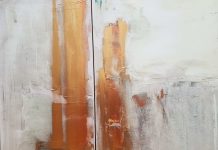
Le sue opere hanno un’apparenza informale dunque sono riconducibili all’Espressionismo Astratto dove però spesso persiste un sottostrato vagamente figurativo, come se il concetto legato al titolo facesse capolino in maniera lieve per raggiungere la coscienza dell’osservatore chiamato a soffermarsi sul non visto, su un intuìto necessitante di maggiore attenzione rispetto al rapido sguardo sulla realtà che caratterizza la fretta contemporanea.
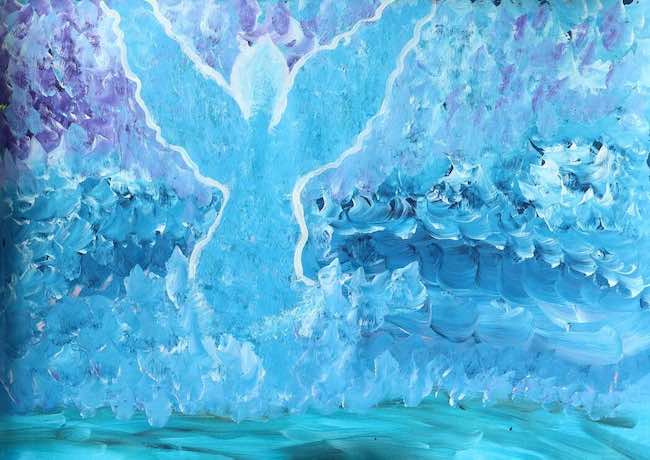
Ecco dunque che a emergere è un Simbolismo delicato, non più orientato a mettere in risalto il mistero e l’inquietudine, piuttosto in Angelė Šimoliūnienė a manifestarsi è la positività interpretativa che guida lo sguardo sul mondo determinando lo svilupparsi favorevole degli eventi; l’autrice infatti è una studiosa della psicologia del terzo millennio basata sulle filosofie occidentali e orientali e dunque per lei considerare la realtà come qualcosa di cui ascoltare il silenzio e guardare ciò che si nasconde, equivale a mettere in atto quel processo istintivo con cui permette al subconscio di divenire guida del gesto creativo e di manifestare la sua energia interiore.
La gamma cromatica di ogni opera si lega fortemente al senso che desidera infondere, alla purezza spontanea che appartiene al suo animo e attraverso cui sa di riuscire ad attrarre a sé le forze positive, in costante ascolto tanto quanto quelle negative, che divengono pertanto specchio emanativo del suo mondo interiore non esplicitato attraverso la chiarezza della ragione piuttosto attraverso l’ermetismo dell’istinto.
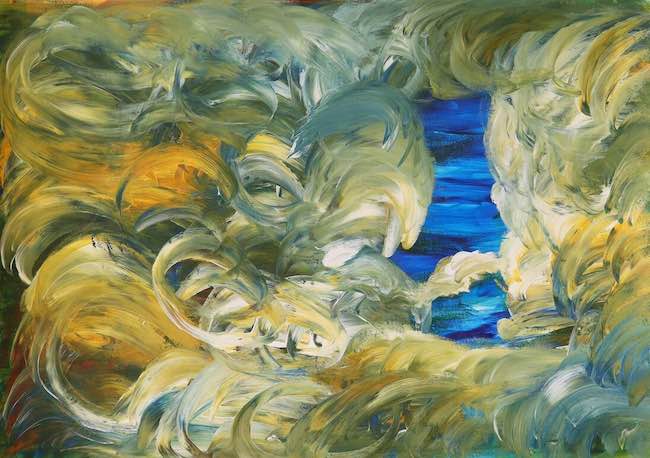
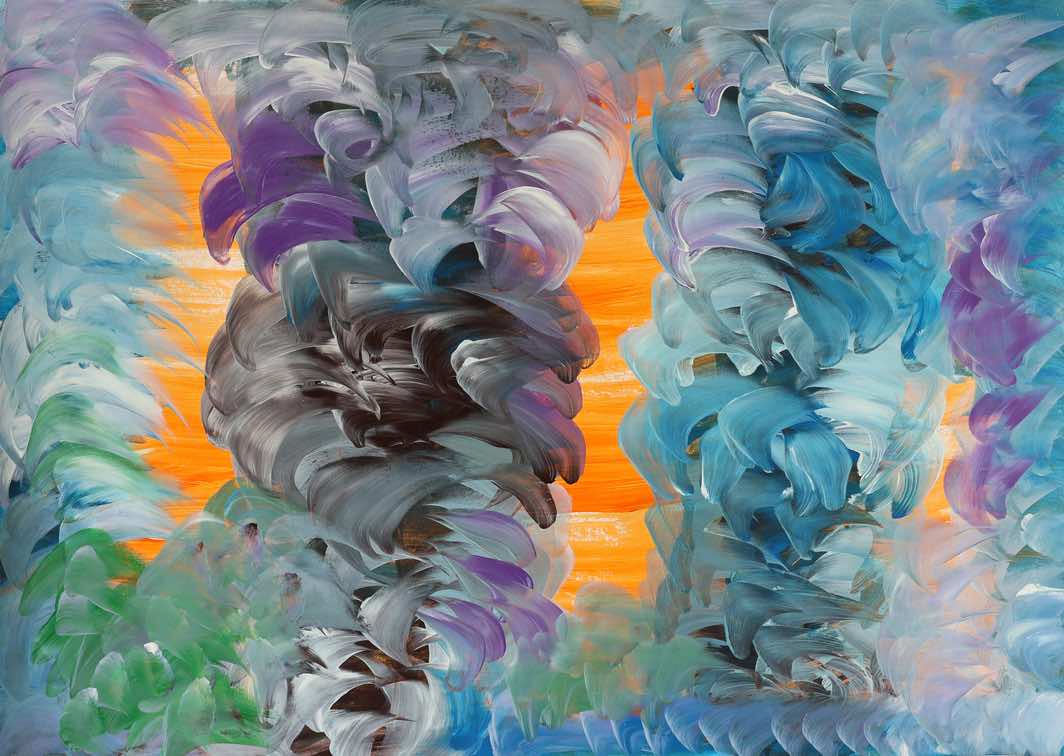
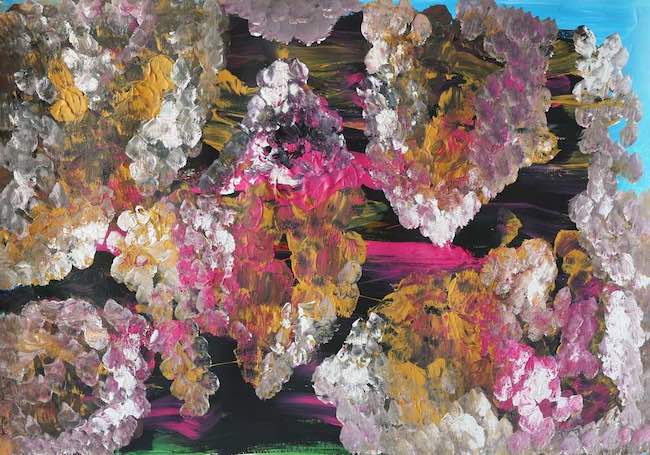
Animal kingdom, nonostante il titolo faccia un chiaro riferimento al mondo animale, mostra solo e unicamente la sensazione spontanea che Angelė Šimoliūnienė prova nel momento in cui centra la sua intuizione sulla morbidezza di un regno incomprensibile all’uomo nelle sue dinamiche, a volte persino crudele eppure genuino, spontaneo perché regolato da un ciclo della vita che rende i suoi protagonisti semplicemente parte di un equilibrio inevitabile. Le pennellate sono morbide, voluttuose, sembrano evocare la consistenza della terra e la leggerezza dell’aria perché non vi può essere biasimo nelle regole della natura, solo ammirazione e meraviglia; la frase sottile lasciata in sospeso dall’autrice è quella che potrebbe seguire a questa riflessione, e cioè che l’uomo al contrario è crudele per scelta, si comporta come un predatore verso gli altri suoi simili solo per il desiderio di primeggiare, di vincere, di arricchirsi, risultando così molto più feroce persino rispetto al più famelico animale.
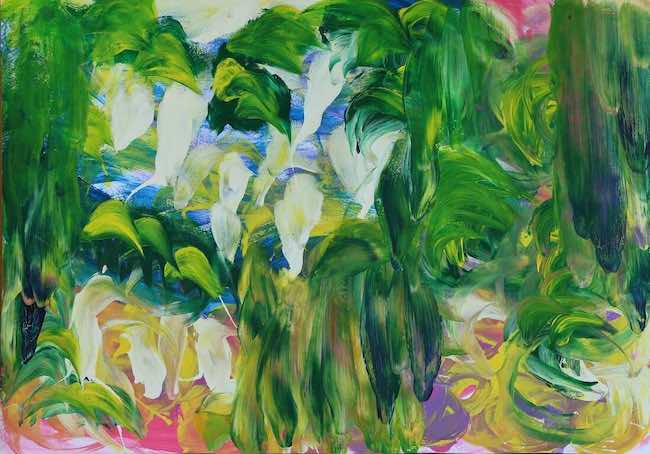
In Women are like flowers a prevalere è ancora una volta la natura, in questo caso quella floreale, completa protagonista al punto di prendere il sopravvento sull’immagine della donna evocata dal titolo; la figurazione in questo lavoro emerge in maniera più incisiva, le calle bianche esplodono dal verde intenso delle foglie e divengono metafora di una delicatezza forte e resiliente, esattamente tanto quanto lo è la natura femminile in grado di affrontare sfide complesse, di resistere alle difficoltà e di rifiorire anche dopo che le circostanze hanno tentato di piegarle. In particolare il fiore della calla simboleggia la purezza, l’eleganza e al contempo l’innocenza e la devozione, andandosi così a connettere con le caratteristiche della donna, madre, moglie, figlia, con la sua predisposizione a generare la vita e dunque preziosa e indispensabile per l’intero genere umano.
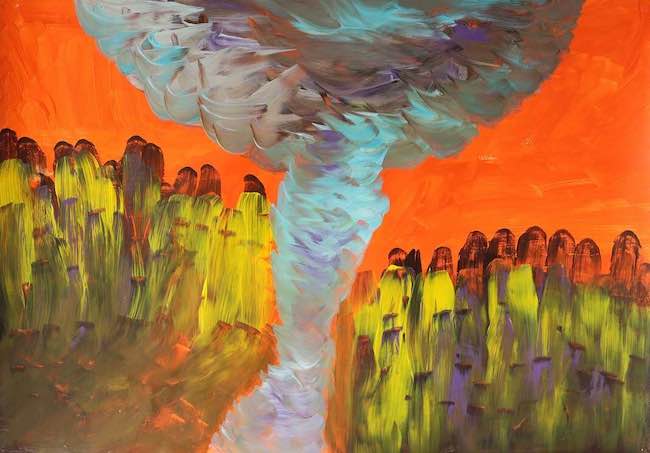
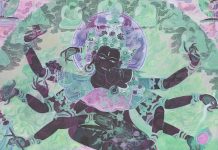
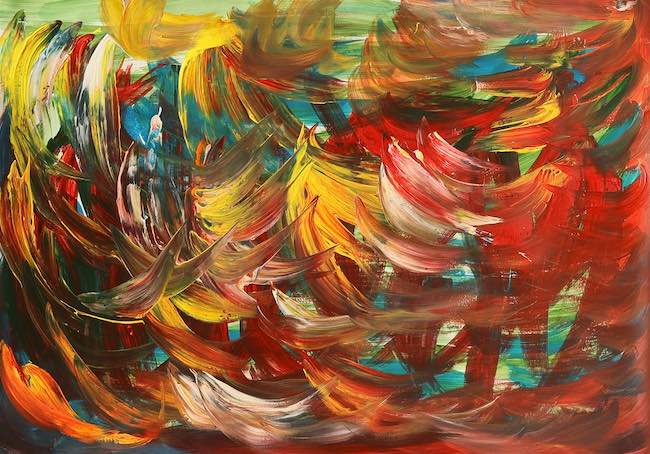
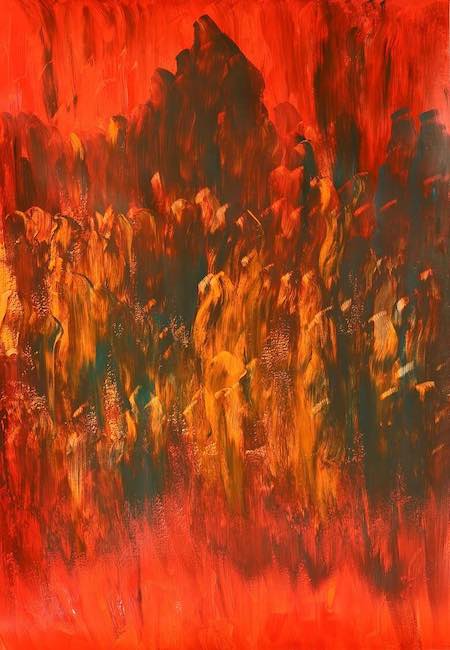
L’opera Angel protection è uno dei lavori più simbolisti di Angelė Šimoliūnienė perché qui il riferimento del titolo viene esplicitato dalla presenza di figure indistinguibili eppure paradossalmente inequivocabili, come se l’autrice volesse evocare la consapevolezza che quella moltitudine di entità fosse stata mandata verso la terra per proteggere e salvare un’umanità ormai allo sbando, e per questo evidenziata dal colore rosso, come se la loro presenza fosse indispensabile per un ascolto necessario a comprendere la natura più autentica di ciascun essere umano. Al di sopra degli angeli si trova la volta celeste, quel paradiso da cui essi sono discesi e verso cui torneranno dopo che il loro compito di guida della persona che sono state chiamate a seguire sarà terminato; il concetto si lega al forte spiritualismo dell’autrice e anche alla consapevolezza che ogni essere vivente sia ascoltato costantemente e osservato sulla base delle proprie energie, dell’emanazione di un approccio alla vita che determina il verificarsi degli eventi e di ciò che può ricevere da essa. Il positivo attrae accadimenti piacevoli mentre il negativo attrae più negatività ed è proprio su questa riflessione e consapevolezza che tutti gli individui dovrebbero basare la propria esistenza, piuttosto che sull’inseguimento effimero dei beni materiali, spesso causa di avidità.
Angelė Šimoliūnienė ha al suo attivo 65 mostre personali in Lituania, 111 mostre collettive in gallerie, fiere ed esposizioni all’estero e in musei – Regno Unito (6 volte), Scozia, Stati Uniti (17 volte), Canada, Principato di Monaco (2 volte), Paesi Bassi, Spagna (9 volte), Francia (10 volte), Germania (3 volte), Italia (44 volte), Ungheria (6 volte), Austria (5 volte), Svizzera, Polonia, Emirati Arabi Uniti, Kazakistan, Argentina (2 volte). I suoi dipinti sono stati inseriti in 58 cataloghi d’arte, libri e riviste ed è stata premiata 36 volte in concorsi globali e internazionali.
ANGELĖ ŠIMOLIŪNIENĖ-CONTATTI
Email: a.simoliuniene@gmail.com
Facebook: www.facebook.com/angele.simoliuniene
Instagram: www.instagram.com/angelesimoliuniene/
The energies surrounding existence in Angelė Šimoliūnienė’s Abstract Expressionism, when the informal reveals a subtle figuration
To listen to all that cannot be seen with the eye but must be intuited through an unconscious that often reveals a perceptive ability capable of connecting with a reality that is intangible yet just as present as that of the surface, is the prerogative of those artists with a keen sensitivity, by virtue of which they demonstrate the need to transform the plastic gesture into a means of whispering to the observer those emotional interpretations capable of offering a perspective entirely different from the purely objective one. When this kind of expressive need emerges, the stylistic approach becomes a mere formality that adapts to the individual artist’s figurative preference, for what truly matters is the capacity to delve deeply, to represent that inexplicable yet present reality that envelops human daily life. Angelė Šimoliūnienė, who belongs to this select group of artists particularly attuned to the environment which often shapes, and at other times determines, the unfolding of existence and its events, chooses an informal painterly approach through which she allows to emerge engaging visual possibilities, imbued with spirituality.
The theme of the interconnection between nature and humankind, between the power of atmospheric events and the insignificance of the individual in the face of them, began to be explored during the Romanticism, particularly thanks to an innovator who was convinced that a work of art should be much more than a mere reproduction of a scene; the master in question was the English William Turner, and his stormy landscapes lingered on and highlighted that sense of humanity’s submission to forces and energies that could not be controlled and were capable of both enveloping and destroying. A few decades later, toward the end of the nineteenth century, Turner’s insights were explored in greater depth from a purely formal perspective, particularly regarding the use of light and the fragmentary nature of brushstrokes, by artists associated with Impressionism, while from the perspective of deeper meaning, the investigation of those energies that he had merely observed but which were then accentuated and explored in all their facets, it was Symbolism that carried on his legacy. The members of the movement, though in entirely different ways, set out to explore the mysterious connection and influence that those subtle, intangible forces exerted on existence revealed through the vision of artists such as Odilon Redon, who concealed anthropomorphic figures in nature half-human half-insect as if they were monsters of the consciousness, Gustave Moreau and Gaston Bussière, who introduced biblical and mythological themes shrouded in an enigmatic and cautionary atmosphere, and Arnold Böcklin, who instead focused on the afterlife and the spirits that remain bound to earthly places, enveloping them with their presence.
For all these artists, figuration remained fundamental, the image that emerged from a context as inexplicable as it was visually close to observable reality. The first artist to embrace the possibility of an informal introduction to the Symbolist vision was Max Ernst, who, while belonging to Surrealism, was able to forge his own interpretive path and invent two techniques, grattage and frottage, through which his unreal atmospheres and cosmic, petrified, represented the metamorphosis of a primordial and suffocating nature, perceptible through the unconscious and the relinquishment of mental control. And it is in a way to Max Ernst that can be traced the artistic process of the Lithuanian artist Angelė Šimoliūnienė, a scholar of many diverse disciplines and perhaps precisely for this reason able to open her soul and mind to spiritual approaches that allow her to meditate on everything that can only be perceived because intangible, beyond the grasp of logic and pragmatism yet strongly present if only human beings could push beyond the superficial layer in which they live.
Her artworks have an informal appearance and can therefore be traced back to Abstract Expressionism, though often persists a vaguely figurative undercurrent as if the concept linked to the title were peeking through subtly to reach the consciousness of the viewer who is invited to linger on the unseen, on an intuition that requires greater attention than the fleeting glance at reality that characterizes our hurried contemporary world. Thus emeges a delicate Symbolism no longer focused on highlighting mystery and unease, instead what manifests in the work of Angelė Šimoliūnienė is an interpretive positivity that guides one’s view of the world, shaping a favorable course of events; in fact, the artist is a scholar of third-millennium psychology grounded in both Western and Eastern philosophies and so for her viewing reality as something whose silence one must listen to and whose hidden aspects one must observe is equivalent to setting in motion that instinctive process through which she allows the subconscious to become the guide of the creative act and to manifest her inner energy.
The color palette of each work is strongly linked to the meaning she wishes to convey, to the spontaneous purity inherent in her soul through which she knows she can draw positive forces to herself, while remaining just as attuned to negative ones, which thus become a radiant mirror of her inner world, expressed not through the clarity of reason but rather through the hermeticism of instinct. Animal Kingdom, despite its title clearly referring to the animal world, depicts solely and exclusively the spontaneous sensation that Angelė Šimoliūnienė experiences when her intuition focuses on the softness of a realm whose dynamics are incomprehensible to humans, at times even cruel yet genuine and spontaneous because it is governed by a cycle of life that makes its protagonists simply part of an inevitable balance. The brushstrokes are soft and voluptuous, they seem to evoke the texture of the earth and the lightness of the air, for there can be no blame in the rules of nature, only admiration and wonder; the subtle phrase left hanging by the author is the one that might follow this reflection, namely, that humans, on the contrary, are cruel by choice, they behave like predators toward their fellow humans solely out of a desire to excel, to win, to enrich themselves, thus proving far more ferocious even than the most ravenous animal.
In Women Are Like Flowers nature, in this case, the floral realm, once again takes center stage to the point of overshadowing the image of women evoked by the title; the figurative element in this work emerges more strikingly, the white calla lilies burst forth from the intense green of the leaves and become a metaphor for a strength and resilience that is as delicate as it is powerful exactly like the feminine nature, capable of facing complex challenges, withstanding hardships, and blooming anew even after circumstances have tried to break her. In particular, the calla lily symbolizes purity, elegance, and at the same time innocence and devotion, thus connecting with the characteristics of the woman, mother, wife, daughter, with her capacity to bring life into the world and therefore precious and indispensable for all of humanity. The artwork Angel Protection is one of the most simblist pieces of Angelė Šimoliūnienė because here the reference in the title is made explicit by the presence of figures that are indistinguishable yet, paradoxically, unmistakable as if the artist wished to evoke the awareness that this multitude of entities had been sent to Earth to protect and save a humanity now in disarray, and for this reason highlighted in red, as if their presence were indispensable for the kind of listening necessary to understand the most authentic nature of every human being. Above the angels lies the celestial vault, that paradise from which they descended and to which they will return once their task of guiding the person they have been called to follow is complete; this concept is linked to the author’s strong spiritualism and also to the awareness that every living being is constantly listened to and observed based on his own energies, the emanation of an approach to life that determines the occurrence of events and what he can receive from it.
Positivity attracts pleasant events, while negativity attracts more negativity, it is precisely on this reflection and awareness that all individuals should base their existence, rather than on the fleeting pursuit of material goods, which is often a source of greed. Angelė Šimoliūnienė has held 65 solo exhibitions in Lithuania and participated in 111 group exhibitions in galleries, art fairs, and exhibitions abroad, as well as in museums in the United Kingdom (6 times), Scotland, the United States (17 times), Canada, the Principality of Monaco (2 times), the Netherlands, Spain (9 times), France (10 times), Germany (3 times), Italy (44 times), Hungary (6 times), Austria (5 times), Switzerland, Poland, the United Arab Emirates, Kazakhstan, and Argentina (2 times). Her paintings have been featured in 58 art catalogs, books, and magazines, and she has received 36 awards in global and international competitions.