

L’attenzione a tutto ciò che appare inspiegabile e indefinito delle proprie sensazioni, permette ad alcuni artisti di ricercare uno stile che rappresenti quella loro innata necessità di lasciare che l’incomprensibile affiori liberamente alla coscienza e funga da tratto d’unione tra un’emotività che non sa restare in silenzio e una razionalità che ha bisogno di entrare in contatto con il lato più istintivo del sé. Il linguaggio più funzionale a questa esigenza espressiva è quello privo di forma, proprio perché attraverso la mancanza di limiti, gabbie espressive e regole formali, tutto ciò che si trova all’interno dell’anima può zampillare fuori spontaneamente e senza alcun tipo di condizionamento logico. La protagonista di oggi mostra questo tipo di approccio pittorico e a sua volta sceglie la mancanza di forma per manifestare la sua personalità fortemente comunicativa che attraverso la pittura riesce a considerare tutte le sfaccettature dell’esistenza.
I primi decenni del Novecento introdussero una delle principali innovazioni nell’arte di ogni tempo, quel percorso avanguardistico e sperimentale che rinunciava alla riproduzione della realtà osservata come unica strada percorribile indicando nuove possibilità realizzabili attraverso un diverso punto di partenza, quello cioè del distacco dalla narrazione figurativa per entrare nella dimensione dell’astrazione. L’Arte Astratta si pose così come alternativa all’approccio espressionista, dove tutto doveva essere pura emozione al punto anche in questo caso di rinunciare alla fedeltà all’osservato; qui invece i movimenti che segnarono i primi anni del nuovo stile, andarono verso la purezza assoluta del gesto plastico privandolo di ogni soggettività ed emozione che provenissero dall’autore. La scelta di utilizzare forme geometriche specifiche, come nel De Stijl di Piet Mondrian, o sfondi bianchi con figure instabili sempre rubate alla geometria, come nel Suprematismo di Kazimir Malevich, e in entrambi i casi sottolineando il rigore dei colori primari, condusse da un lato ad affermare la superiorità del gesto artistico sulle immagini a quel tempo già riproducibili dalla nuova tecnica fotografica, ma dall’altro ad autolimitare la creatività e soprattutto l’emozione che nel delicato periodo a cavallo tra le due guerre aveva invece bisogno di esprimersi. Dunque la naturale evoluzione dell’Astrattismo non poteva che tendere verso un’unione delle due attitudini, quella di continuare a lasciare che la realtà osservata non predominasse sulla tela come era accaduto per tutta l’arte precedente al Ventesimo secolo, e quella di introdurre quelle sensazioni che potevano permeare anche l’Arte Astratta, come peraltro ipotizzato e sperimentato da Vassily Kandinsky considerato il padre dello stile pittorico.
L’Espressionismo Astratto divenne il tratto d’unione tra i due approcci, andando a generare una vera e propria liberazione anche dall’apparato geometrico per entrare nella dimensione della mancanza di forma in virtù della quale i colori divenivano il mezzo attraverso cui gli interpreti del movimento potevano esprimere i veri se stessi. Dagli Stati Uniti, dove i fondatori della corrente realizzarono le tele con modalità diverse, dal Dripping al Color Field, dalla pittura segnica alla monocromia passando per l’introduzione della materia, il nuovo stile raggiunse presto anche l’Europa dove assunse il nome di Arte Informale proprio per la rinuncia a qualunque tipo di forma riconoscibile. L’impatto emozionale era molto forte e fuoriusciva dall’esecutore dell’opera per raggiungere le corde interiori dell’osservatore che riconosceva le proprie emozioni semplicemente lasciandosi andare all’indefinitezza e alla gamma cromatica scelta dal singolo autore. L’Espressionismo Astratto si conforma dunque all’intenzione narrativa, travolgendo come nel caso di Jackson Pollock e il suo Dripping, calmando e stimolando la meditazione come nelle tele evocative di Mark Rothko e inducendo la riflessione come nella monocromia di Barnett Newman. L’artista maltese Michelle Cassar Wirth Cavarra, in arte Mixa, appartiene al mondo dell’Espressionismo Astratto che viene declinato secondo le sue corde interiori, permettendole di mostrare una comunicatività cromatica che si adegua al sentire e alle considerazioni che di volta in volta attraversano la sua mente e la sua anima trasformandosi in voce narrativa.
Nipote degli artisti Lewis Wirth e Helen Cavarra, Mixa respira arte fin da bambina, lasciandosi ispirare dall’eredità familiare pur creando un proprio stile pittorico che la indentificasse a prescindere dalle sue radici artistiche. L’Informale è funzionale all’autrice per andare a esplorare nel profondo tutte le emozioni che la avvolgono e che vengono suscitate dall’osservazione della natura in tutte le sue sfaccettature, mettendo in evidenza la sua capacità di guardare sempre il lato positivo delle energie che la circondano; anche quando gli eventi e le circostanze sembrano spingere verso il buio, lei ne riesce a cogliere la luce, le possibilità e le opportunità che si svelano a chi sa prendere il meglio dell’esistenza.
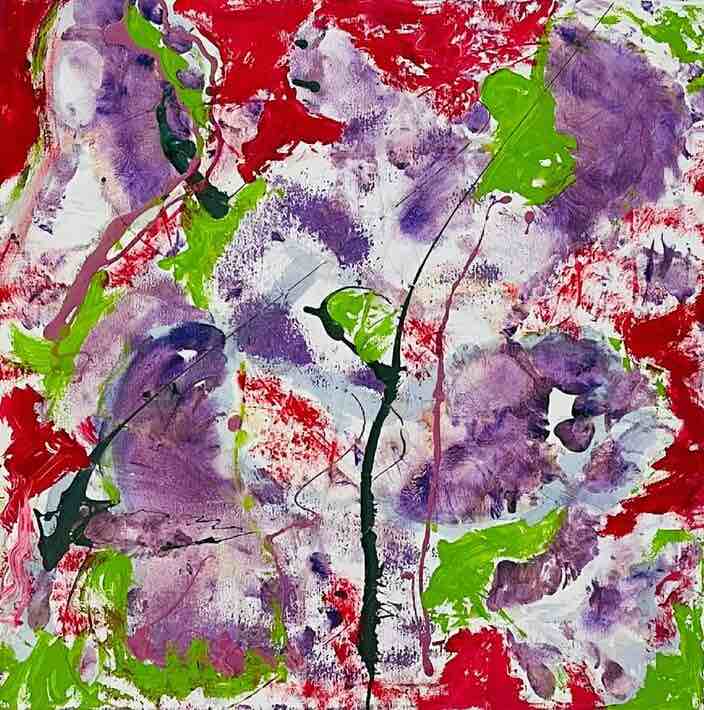
Le tonalità più delicate sono stese in maniera quasi materica, sono corpose e concrete grazie anche all’utilizzo di una sperimentale tecnica mista in cui vengono mescolati diversi mezzi come cemento, smalto per unghie, vernice spray per auto, colla, gesso e inchiostro; dal punto di vista esecutivo pertanto l’azione, compreso il Dripping, con cui esegue le sue tele, diviene fondamentale nel processo di emanazione dell’interiorità.
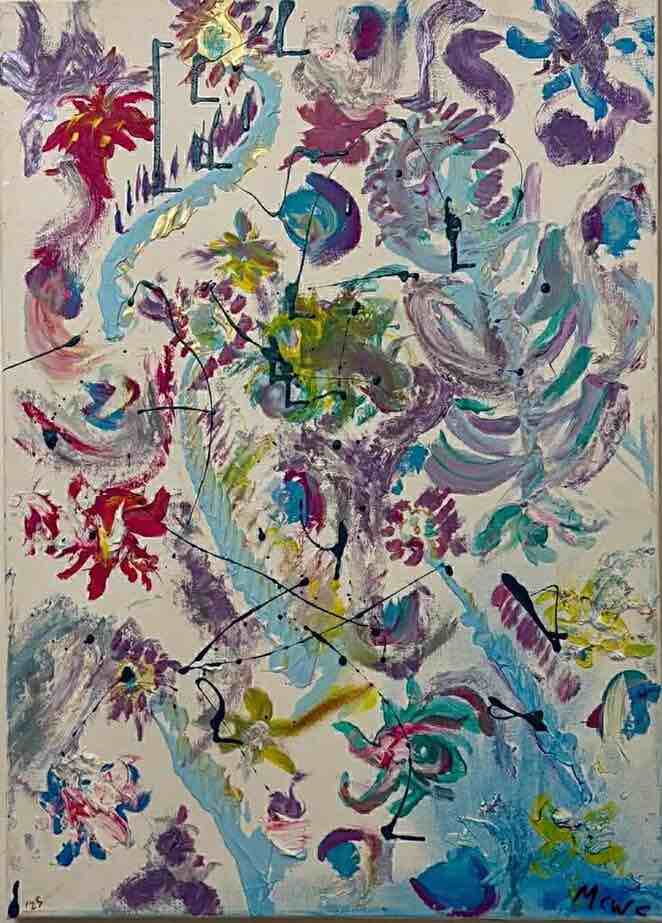
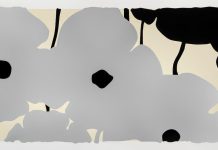
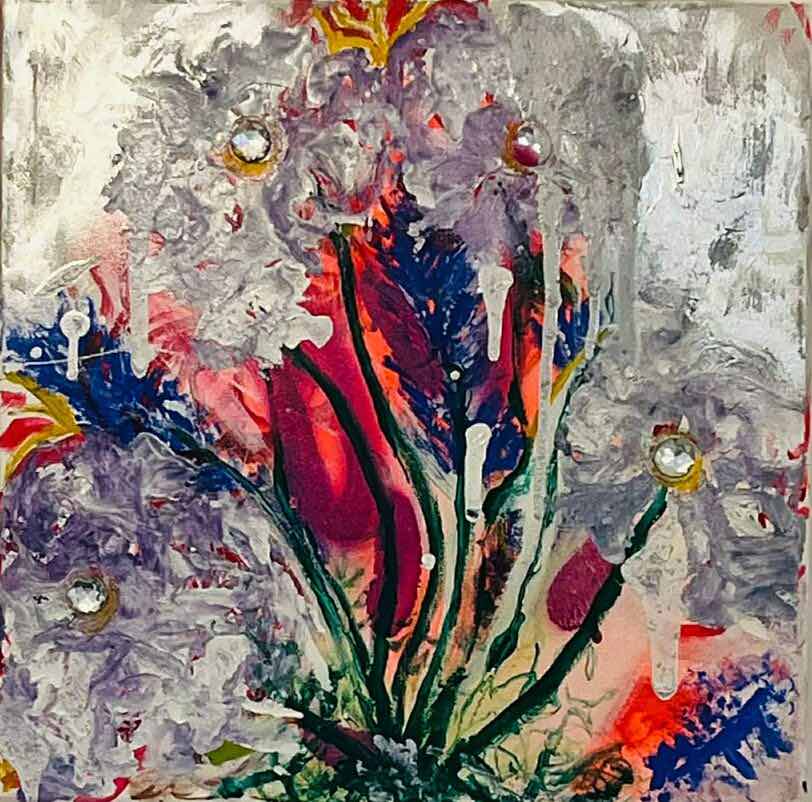
Nell’opera Dolce l’autrice racconta atmosfere delicate, armoniche, fatte di sensazioni soffici, le stesse nelle quali l’interiorità si lascia cullare per respirare tutto ciò che di positivo e di piacevole c’è nell’esistenza, quasi le pennellate dense e la sottile figurazione da cui emerge l’esigenza di vicinanza con la natura mettessero in luce la necessità di ritrovare la dimensione primordiale, quella in cui l’uomo lascia fuoriuscire la spontaneità perduta nel vivere contemporaneo. Lo sfondo bianco infonde un senso di purezza, di morbidezza su cui Mixa adagia la delicatezza floreale utilizzando colori pastello, completamente decontestualizzati ma funzionali a mettere in luce le sensazioni che lei stessa prova ogni volta che si perde in quel mondo magico e incantato.
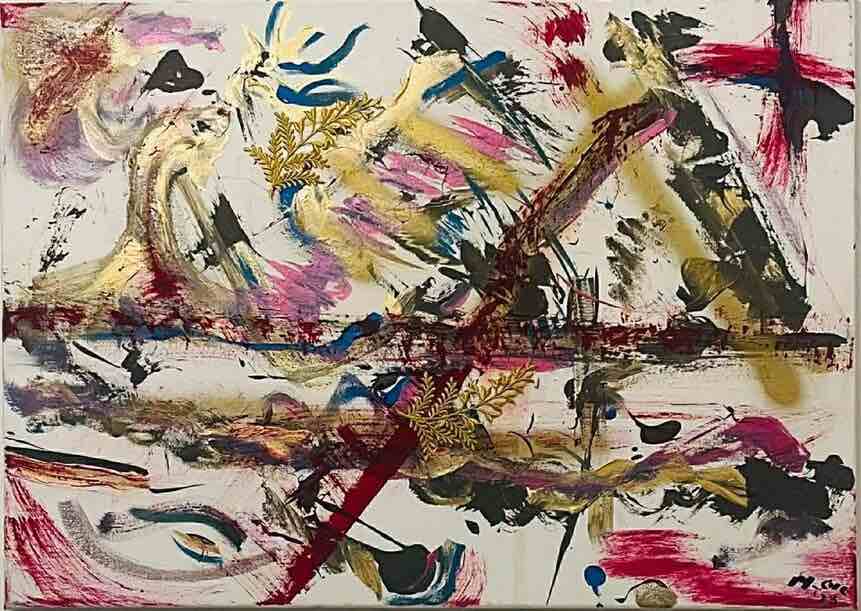
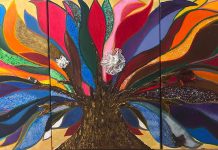
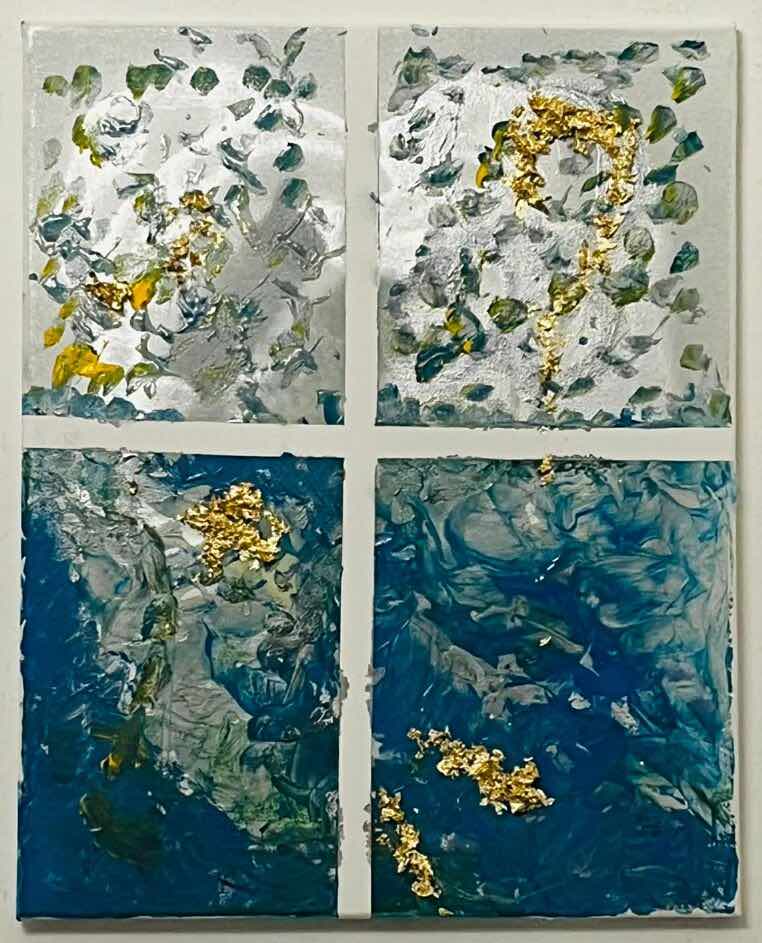
Altrettanto pieno di luce ma con un approccio realizzativo in cui viene introdotta la materia, è il dipinto Epiphany che mette in evidenza il senso letterario piuttosto che religioso dove il termine fa riferimento a una rivelazione, a una scoperta che può essere intesa come conoscenza di qualcosa di sé oppure come palesamento di qualcosa giunto dall’esterno per modificare il cammino, il percorso intrapreso in precedenza e che improvvisamente ha bisogno di prendere una direzione diversa. Il chiarore, l’utilizzo della foglia oro e la presenza di piccoli rametti che sembrano germogli indicano l’approccio aperto dell’autrice nei confronti del cambiamento, il quale non viene vissuto come una destabilizzazione dell’ordine precedente bensì come il sorgere di nuove e preziose opportunità.
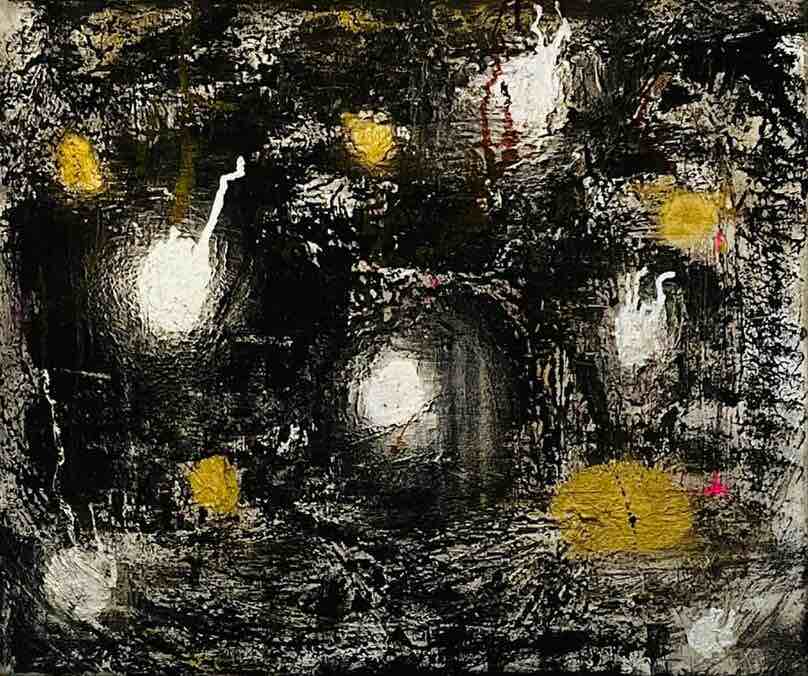
Ma l’esistenza non è solo luce, presenta anche quei passaggi di ombra inevitabili per attingere forza dall’energia che si rigenera grazie all’opposizione, così Mixa considera anche le emozioni meno positive, ne prende atto, le osserva, le interiorizza e poi le filtra con la sua luminosità interiore che le impedisce di soffermarsi sul buio perché la sua attitudine naturale è quella di focalizzarsi sul diradamento, sulla fine della notte, sia essa fisica che spirituale; la tela Into the abyss rappresenta esattamente il rovescio della medaglia, la consapevolezza che nella vita esistono gli alti ma anche i bassi, e soprattutto che le cadute fanno parte di quel sentiero evolutivo che ogni essere umano è chiamato a compiere. E dunque nel buio di questa tela si staglia la luce, quel bianco e quel giallo che impediscono all’interiorità di chiudersi completamente alla speranza, alla possibilità che tutto possa improvvisamente cambiare lasciandosi inondare dalla bellezza e dalle occasioni che proprio da quel momento di immobilità scaturiranno.
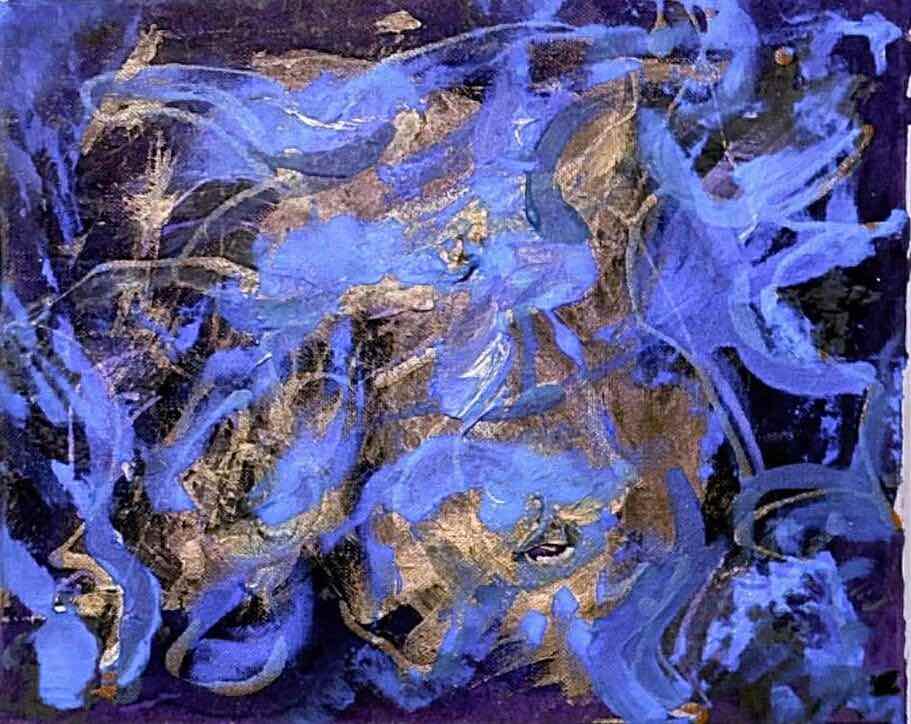
Harmony rappresenta la fase di passaggio, quell’istante in cui avviene la rinascita dell’anima dopo essere stata immersa nel cammino più difficoltoso ed è in virtù di esso che può raggiungere quell’equilibrio evocato dal titolo, perché in fondo l’armonia nasce da un bilanciamento tra il positivo e il negativo, tra l’incognito e la consapevolezza, tra la parte buona e quella meno buona che rende l’uomo così tanto umano. Qui l’autrice suggerisce in maniera delicata l’importanza dell’ascolto delle energie circostanti, ma anche la magia che si genera quando si è capaci di accettare ogni sfaccettatura del sé, e anche della realtà.
Mixa è pittrice, poetessa e ha al suo attivo la pubblicazione di un libro dedicato alla storia pittorica dei suoi nonni; la sua arte è stata esposta in televisione e all’Università di Malta, e in numerose mostre, sia a livello locale che internazionale, che le hanno fatto ottenere molti riconoscimenti. Sostiene cause benefiche come LAND Living Ability Not Disability, e a questo proposito, il 14 dicembre 2025 a La Valletta, Malta, avrà luogo una sua mostra personale dove esporrà opere il cui ricavato sarà devoluto a sostegno della bambina con disabilità Kate Ferriggi.
MICHELLE CASSAR WITH CAVARRA-CONTATTI
Email: michelle.cassar.222@gmail.com
Facebook: www.facebook.com/profile.php?id=592845454
Instagram: www.instagram.com/michelle_cassarcwc
Linkedin: www.linkedin.com/in/michelle-cassar-cavarra-3552b2156/
Michelle Cassar Wirth Cavarra’s extroverted brushstrokes, Abstract Expressionism amid the ups and downs of life
Attention to everything that appears inexplicable and undefined in their feelings allows some artists to seek a style that represents their innate need to let the incomprehensible freely surface in their consciousness and act as a link between an emotionality that cannot remain silent and a rationality that needs to get in touch with the most instinctive side of the self. The language most suited to this expressive need is the one without form, precisely because through the absence of limits, expressive constraints and formal rules, everything within the soul can gush out spontaneously and without any kind of logical conditioning. Today’s protagonist displays this type of pictorial approach and, in turn, chooses formlessness to express her highly communicative personality, which, through painting, manages to consider all the facets of existence.
The early decades of the 20th century introduced one of the most significant innovations in the art of all time, an avant-garde and experimental approach that renounced the reproduction of observed reality as the only viable path indicating new possibilities achievable through a different starting point, namely that of detachment from figurative narration in order to enter the dimension of abstraction. Abstract Art thus emerged as an alternative to the expressionist approach, where everything had to be pure emotion to the point of renouncing fidelity to the observed; here, however, the movements that marked the early years of the new style moved towards the absolute purity of the plastic gesture, depriving it of any subjectivity and emotion coming from the author. The choice to use specific geometric shapes, as in Piet Mondrian‘s De Stijl, or white backgrounds with unstable figures always borrowed from geometry, as in Kazimir Malevich‘s Suprematism, and in both cases emphasizing the rigor of primary colors, led on the one hand to affirming the superiority of the artistic gesture over images that could already be reproduced by the new photographic technique at that time, but on the other hand to self-limiting creativity and, above all, the emotion that needed to be expressed in the delicate period between the two wars.
Therefore, the natural evolution of Abstractionsim could only tend towards a union of the two attitudes, that of continuing to allow observed reality not to predominate on the canvas, as had been the case for all art prior to the 20th century, and that of introducing sensations that could also permeate Abstract Art, as hypothesised and experimented with by Vassily Kandinsky, considered the father of this pictorial style. Abstract Expressionism became the link between the two approaches, generating a true liberation from the geometric apparatus and entering the dimension of formlessness, whereby colors became the means through which the interpreters of the movement could express their true selves. From the United States, where the founders of the movement created their canvases in different ways, from Dripping to Color Field, from sign painting to monochrome, passing through the introduction of matter, the new style soon reached Europe, where it took on the name of Informal Art precisely because of its renunciation of any kind of recognizable form. The emotional impact was very strong and flowed from the artist to the innermost feelings of the observer, who found their own emotions simply by letting themselves go with the indefiniteness and color range chosen by the individual artist. Abstract Expressionism therefore conforms to the narrative intention, overwhelming as in the case of Jackson Pollock and his Dripping, calming and stimulating meditation as in Mark Rothko‘s evocative canvases and inducing reflection as in Barnett Newman‘s monochromes. Maltese artist Michelle Cassar Wirth Cavarra, known as Mixa, belongs to the world of Abstract Expressionism which she interprets according to her inner feelings, allowing her to display a chromatic communicativeness that adapts to the feelings and considerations that cross her mind and soul from time to time, transforming them into a narrative voice. Granddaughter of artists Lewis Wirth and Helen Cavarra, Mixa has breathed art since she was a child, being inspired by her family legacy while creating her own pictorial style that identified her regardless of her artistic roots.
Informal art allows the artist to explore in depth all the emotions that surround her and are aroused by the observation of nature in all its facets, highlighting her ability to always look at the positive side of the energies that surround her; even when events and circumstances seem to push her towards darkness, she manages to grasp the light, possibilities, and opportunities that reveal themselves to those who know how to take the best from existence. The more delicate shades are applied in an almost material way, they are full-bodied and concrete thanks to the use of an experimental mixed technique in which she merges different media such as cement, nail polish, car spray paint, glue, chalk, and ink; from an executive point of view, therefore, the action, including dripping, with which she executes her canvases, becomes fundamental in the process of emanating interiority. In the artwork Dolce, the author recounts delicate, harmonious atmospheres, made up of soft sensations, the same ones in which the inner self allows itself to be lulled to breathe in all that is positive and pleasant in existence, almost as if the dense brushstrokes and subtle figuration from which emerges the need for closeness to nature highlight the need to rediscover the primordial dimension, the one in which man allows to escape the spontaneity lost in contemporary life. The white background instills a sense of purity and softness on which Mixa lays her floral delicacy using pastel colors, completely decontextualized but functional in underlining the sensations she herself feels every time she loses in that magical and enchanted world. Equally full of light but with an approach that introduces matter, the painting Epiphany highlights the literary rather than religious meaning of the term, referring to a revelation, a discovery that can be understood as knowledge of something about oneself or as the manifestation of something that has come from outside to change the path, the journey previously undertaken, which suddenly needs to take a different direction. The brightness, the use of gold leaf, and the presence of small twigs that look like sprouts indicate the artist’s open approach to change, which is not experienced as a destabilization of the previous order but as the emergence of new and valuable opportunities.
But existence is not only light, it also presents those inevitable passages of shadow in order to draw strength from the energy that is regenerated thanks to opposition, thus Mixa also considers less positive emotions, takes note of them, observes them, internalizes them, and then filters them with her inner light, which prevents her from dwelling on the darkness because her natural attitude is to focus on the thinning of the clouds, on the end of the night, whether physical or spiritual; the painting Into the Abyss represents exactly the other side of the coin, the awareness that in life there are highs but also lows, and above all that falls are part of the evolutionary path that every human being is called to follow. And so, in the darkness of this canvas stands out light stands, that white and yellow that prevent the inner self from completely closing itself off to hope, to the possibility that everything can suddenly change, allowing itself to be flooded with beauty and opportunities that will spring forth from that very moment of immobility.
Harmony represents the transition phase, that instant when the soul is reborn after being immersed in the most difficult journey, and it is by virtue of this that it can achieve the balance evoked by the title, because ultimately harmony arises from a balance between the positive and the negative, between the unknown and awareness, between the good and the less good that makes man so human. Here, the author delicately suggests the importance of listening to the energies around, but also the magic that is generated when we are able to accept every facet of ourselves and of reality. Mixa is a painter and poet and has published a book dedicated to the pictorial history of her grandparents; her art has been featured on television and at the University of Malta, as well as in numerous exhibitions, both locally and internationally, which have earned her many awards. She supports charitable causes such as LAND Living Ability Not Disability, and in this regard, on December 14, 2025, in Valletta, Malta, she will hold a solo exhibition where she will display artworks whose incoms will be donated to support Kate Ferriggi, a child with disabilities.