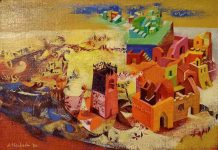


Esistono momenti in cui lasciarsi andare al puro sentire, a quell’impatto che sembra colpire l’interiorità esattamente nello stesso modo in cui si è propagato dall’autore di un’opera, e ne esistono altri in cui invece ciò che conta più di ogni altra cosa è soffermarsi, attraverso un’osservazione più lenta e riflessiva, sul senso profondo, sul messaggio che l’artista desidera raccontare con le proprie immagini, come se un’opera dovesse aprire una porta sul mondo dell’invisibile. Ciò che si trova al di sotto del velo superficiale deve emergere ed essere portato alla luce avvalendosi di una figurazione che possa trarre in inganno lo sguardo, attrarlo con la forza delle sensazioni suscitate per poi condurlo alla meditazione su quanto viene suggerito e tratteggiato in maniera velata. Questo è esattamente l’approccio pittorico di Natasa Bozovic che mescola tradizione con modernità in uno stile personale e particolare con il quale infonde alle sue tele l’emozione che non può fare a meno di raccontare.
Intorno alla fine del Diciannovesimo secolo fu chiaro che l’intenzione e la soggettività degli artisti non potevano più essere tenute ai margini della pittura, oppure lasciate trapelare in modo sottile e quasi timido bensì dovevano letteralemente irrompere, avvolgere le atmosfere narrate poiché in quel periodo di passaggio l’uomo stava cominciando a essere centrale nell’ambito della ricerca pittorica. In particolare furono due i movimenti che decisero di dare un punto di vista diverso sull’espressività, uno decisamente più colto e intimista che si proponeva di mettere in evidenza quei misteri e quegli enigmi su cui l’umanità da sempre si interrogava, il secondo invece focalizzava la sua attenzione su tutte quelle sensazioni che dovevano fuoriuscire in maniera spontanea, senza alcun filtro formale o razionale. La prima sfaccettatura interpretativa legata alle allegorie e al concetto era il Simbolismo, che presentava una figurazione ancora classica, aderente alle regole accademiche, eppure se ne distaccava per la caratteristica di mettere in risalto le deformazioni appartenenti alla psiche, le distorzioni legate agli incubi e alle paure che avvolgono la vita; Odilon Redon, con le sue figure antropomorfe nascoste dietro un’apparenza poetica e delicata fu uno dei maggiori esponenti del movimento. La seconda corrente che si distaccò invece in maniera netta da ogni tipo di schema tradizionale, ripudiando l’equilibrio estetico e l’utilizzo del colore come avvenuto fino a poco prima, fu l’Espressionismo nella sua prima radice Fauves, che concentrò tutta l’attenzione sul mondo interiore dell’esecutore di un’opera.
Henri Matisse realizzò, in quella prima fase della sua produzione, opere di forte impatto cromatico, senza prospettiva e prive di qualsiasi sfumatura perché il suo sentire doveva fuoriuscire in maniera forte, aggressiva quasi, come a sottolineare la ribellione del mondo dell’arte a tutta la rinuncia a poter esprimere l’interiorità degli autori che aveva contraddistinto le linee guida pittoriche fino a quel momento. Quella prima rivoluzione espressiva fu successivamente attenuata, ammorbidita nella sua prorompenza da alcuni interpreti che seppero tracciare un percorso personale gettando le basi alle varie sfaccettature appartenenti all’Espressionismo del Novecento; Marc Chagall utilizzò la tecnica per raccontare un mondo ingenuo e fiabesco, fatto di sentimenti buoni e di magia legata alla quotidianità, mentre Vincent Van Gogh sottolineò il suo desiderio di evasione, la necessità di trovare nella natura una via d’uscita a quella follia che aveva contraddistinto tutta la sua vita, e infine Paul Gauguin che scelse di narrare un mondo lontano da cui si sentiva incredibilmente affascinato e che poteva realizzare in tutta la sua spontaneità proprio grazie alle linee guida espressioniste in cui la raffinatezza narrativa doveva farsi da parte e lasciare spazio all’imediatezza delle sensazioni. L’artista montenegrina Natasa Bozovic nel corso dei suoi venti anni di carriera ha elaborato un linguaggio pittorico in cui mescola le linee guida dell’Espressionismo, di cui si avvale per tratteggiare le atmosfere intense e fortemente legate al suo mondo interiore, con un Simbolismo che emerge alcune volte in maniera più presente, quasi predominante sulla tela, altre invece sembra rimanere al di sotto della superficie, richiedendo all’osservatore un necessario sforzo di approfondimento che lo spinge a domandarsi cosa vi sia di sottinteso, di decontestualizzato e di strano nelle sue figurazioni.
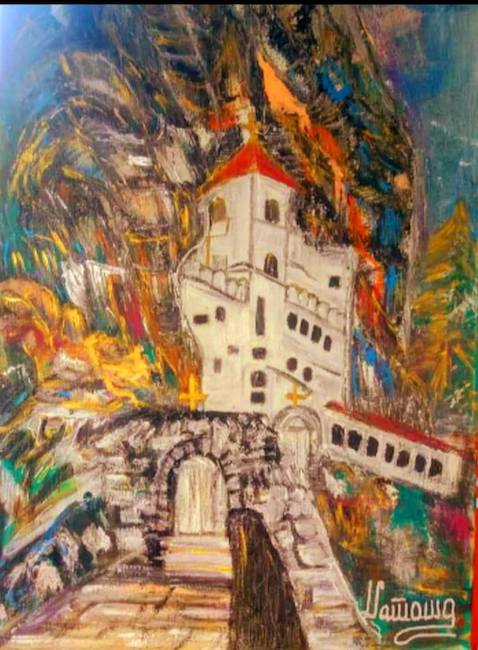
Dal punto di vista formale il risultato è un’alternanza di scelte cromatiche che si adeguano all’intenzione narrativa, alla sensazione che di volta in volta Natasa Bozovic desidera far emergere, ma anche una sperimentazione che le permette di introdurre la tecnica mista, e in particolare il collage, attraverso il quale estrapola e al contempo inserisce armonicamente figure e personaggi appartententi alla tradizione del suo paese. Pertanto dalle sue opere emerge una forte connessione tra passato e presente, tra protagonisti che sembrano attraversare il muro del tempo e ambientazioni che non possono fare a meno di essere influenzate dalle immagini in primo piano, come se il paesaggio circostante si assecondasse all’emozione emanata dai personaggi tanto quanto dall’autrice delle tele.
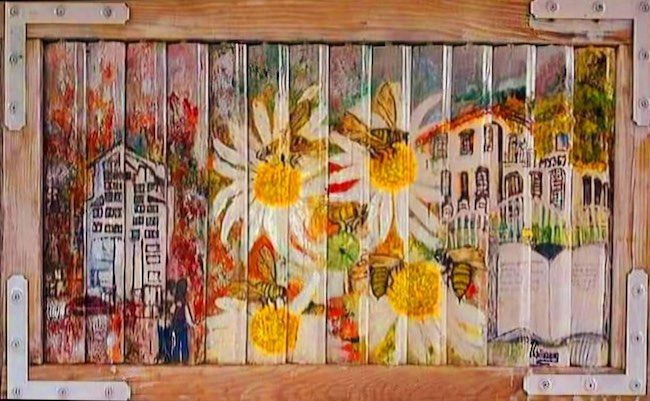
L’indefinitezza dei particolari, i colori prismatici e a volte fortemente sfumati dissolvono i paesaggi e con la loro vivacità sembrano voler andare a colpire in maniera diretta le corde interiori del fruitore che a quel punto perde la connessione con la realtà o con la necessità razionale di riconoscere i luoghi, per lasciarsi trasportare da quel mondo sospeso raccontato da Natasa Bozovic.
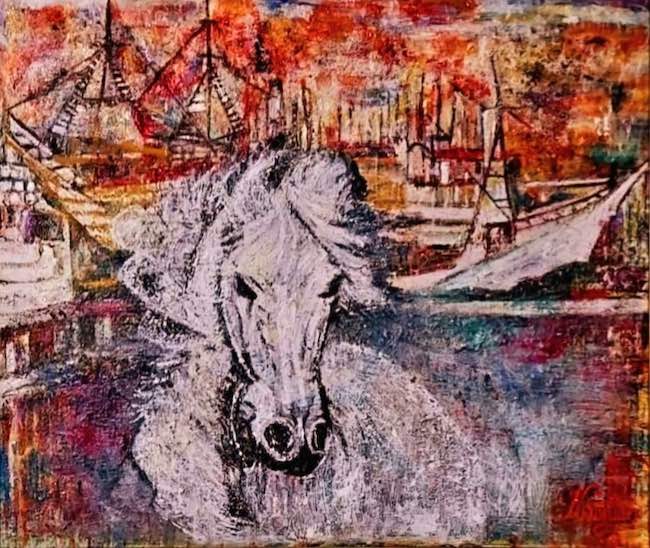
L’opera Horse mostra quanto forte sia questa tendenza decontestualizzante dell’autrice poiché il cavallo viene raffigurato in primo piano rispetto a un molo, un piccolo porto con attraccate le barche, come se l’animale si trovasse nell’acqua perché legato al senso di libertà del viaggio, dello spostamento, di quel rompere le briglie e fuggire oltrepassando i confini del conosciuto solo per sentire il vento agitare la criniera. Questa tela simboleggia la tendenza dell’essere umano a restare all’interno di un porto sicuro, quello rappresentato dalle vele ferme, e a scegliere di non muoversi piuttosto che trovare il coraggio di allontanarsi, ignorando quella spinta spontanea esistente nell’interiorità e rappresentata dal cavallo che gli farebbe sì rischiare di mettere in gioco tutto ma anche di trovare la propria vera strada, quella più affine alla sua natura più autentica. Il cielo rosso rappresenta dunque il sentimento contrastante tra ciò che la mente suggerisce, restare fermi, e ciò che invece l’istinto sa di dover mettere in atto per evolvere; nell’immobilità si genera la rabbia, il senso di impotenza, la consapevolezza di chiudersi in una gabbia che non può fare a meno di generare frustrazione che l’autrice traduce appunto con il colore rosso.
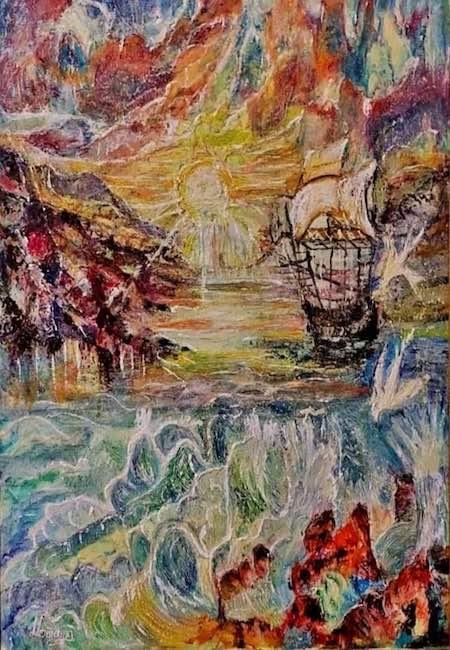
Lo stesso tema del viaggio è riproposto nel dipinto Sailboat dove però l’imbarcazione è in movimento, sta andando verso un incognito sospinto dalla fiducia che Natasa Bozovic evoca con il sole, con la lieve spuma delle onde, con un’esplosione di colori equivalente a un invito a non avere timore, a credere che anche lasciando alle spalle ciò che fino a poco prima ha accompagnato un percorso si può raggiungere una situazione più affine alle proprie caratteristiche oppure semplicemente funzionale alle modificazioni che il corso di ogni vita è chiamato a compiere. La scelta delle tonalità pastello è rassicurante, sembra esortare a togliere l’ancòra che appare spesso come una zavorra, e a navigare in un mare di possibilità e di opportunità.
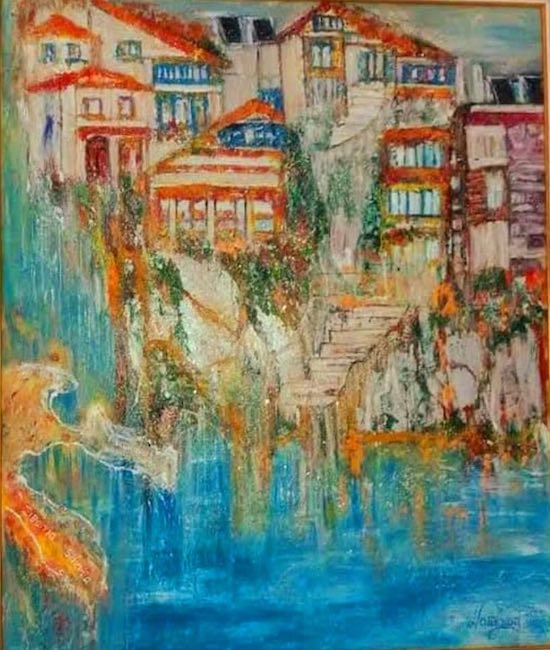
Anche quando racconta i paesaggi che hanno colpito la sua emotività, Natasa Bozovic non può fare a meno di avvolgerli di sensazioni, di tutte quelle tonalità irreali quanto fortemente interiori che le consentono di infondere sulla tela l’incanto e la solennità che ha provato davanti a quei panorami; questo è particolarmente evidente in Halkidiki (Greece), dove la dissoluzione della parte inferiore del dipinto sospende lo scorcio in una dimensione quasi immaginaria, il mare non lambisce la roccia bensì la ingloba nel suo cullare, quasi volesse comprendere nel suo dondolio anche l’incanto di quelle case che scendono dolcemente verso il mare e che rendono quel paesaggio unico agli occhi dell’autrice e di chiunque visiti e scopra la penisola Calcidica. Qui la gamma cromatica è più affine alla realtà perché in questo caso la sensazione è collegata alla contemplazione, al lasciar vagare lo sguardo sulla bellezza mozzafiato di un luogo dell’anima.
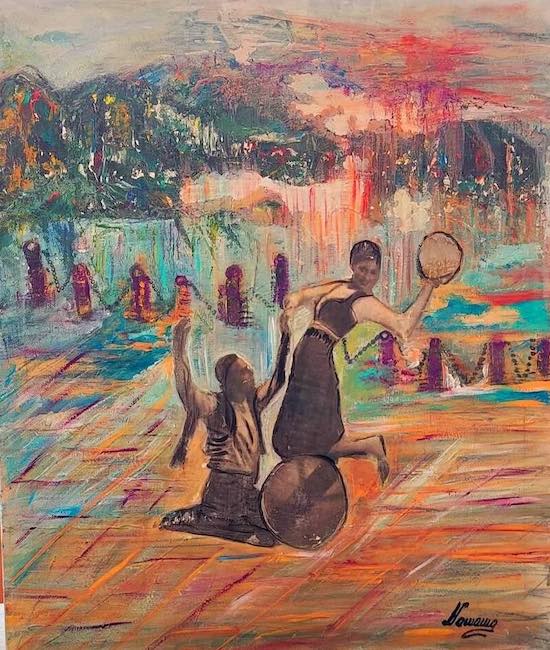
In Dance viene introdotto il collage attraverso il quale Natasa Bozovic mescola la realtà con l’immaginazione, il passato tradizionale con i tempi moderni che sfuma negli sfondi proprio per sottolineare quanto spesso siano proprio le radici a essere più importanti di ciò che è venuto dopo, come se l’essenziale fosse mantenere vivo il ricordo di quegli usi e costumi ma anche di quei valori in virtù dei quali l’individuo ha strutturato e costruito la propria esistenza e quella del proprio paese di appartenenza; la danza è una delle espressioni che ha accomunato tutti i popoli del mondo, proprio perché non aveva alcuna barriera di tipo linguistico e dunque ha potuto mantenere intatto lo spirito originario.
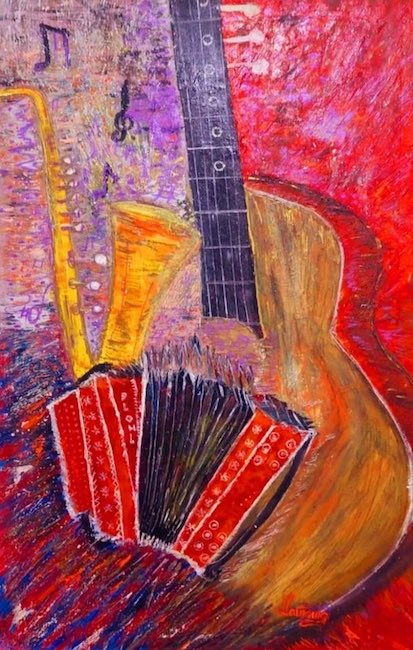
Natasa Bozovic si dedica professionalmente all’arte dal 2004 e da quel momento ha partecipato a mostre d’arte, sia personali che collettive, saloni, simposi d’arte internazionali e mostre collettive, sia nel suo Paese che all’estero. Ha ricevuto numerosi premi e riconoscimenti, tra cui il Golden Trophy al Global International Art Competition in Egitto.
NATASA BOZOVIC-CONTATTI
Email: natasabozovic1101@gmail.com
Facebook: www.facebook.com/natasa.bozovic.589
Instagram: www.instagram.com/natsa_bozovic/
Natasa Bozovic’s Symbolist Expressionism, when meaning subtly emerges from emotion
There are moments when letting go to the pure feel, to that impact that seems to strike the inner self in exactly the same way as it was propagated by the author of a work, and there are others when what matters most is to linger, through slower and more reflective observation, on the deeper meaning, on the message that the artist wishes to convey with his images, as if a work were to open a door to the world of the invisible. What lies beneath the superficial veil must emerge and be brought to light using a figuration that can deceive the gaze, attract it with the force of the sensations aroused, and then lead it to meditate on what is suggested and outlined in a veiled manner. This is exactly the pictorial approach of Natasa Bozovic, who mixes tradition with modernity in a personal and particular style with which she infuses her canvases with the emotion that she cannot help but convey.
Towards the end of the 19th century, it became clear that the intention and subjectivity of artists could no longer be kept on the margins of painting, or letting leak out in a subtle and almost shy way, but they had to literally burst in, enveloping the atmospheres narrated, because in that period of transition man was beginning to take center stage in the field of pictorial research. In particular, there were two movements that decided to offer a different perspective on expressiveness, one decidedly more cultured and intimate, aiming to highlight the mysteries and enigmas that humanity had always wondered about, while the other focused its attention on all those sensations that had to emerge spontaneously, without any formal or rational filter. The first interpretative facet linked to allegories and concepts was Symbolism, which presented a still classical figuration, adhering to academic rules, yet distancing itself from them by highlighting the deformations belonging to the psyche, the distortions linked to the nightmares and fears that envelop life. Odilon Redon, with his anthropomorphic figures hidden behind a poetic and delicate appearance, was one of the leading exponents of the movement.
The second movement, which broke away completely from any kind of traditional pattern, rejecting aesthetic balance and the use of color as had been the case until then, was Expressionism in its early Fauves root, who focused all his attention on the inner world of the author of an artwork. In that early phase of his career, Henri Matisse created works with a strong chromatic impact, without perspective and devoid of any nuance, because his feelings had to come out in a strong, almost aggressive way, as if to emphasize the rebellion of the art world against the renunciation of the possibility to express the inner world of the artists that had characterized the pictorial guidelines up to that point. That first expressive revolution was subsequently attenuated, softened in its impetuosity by some interpreters who were able to chart a personal course, laying the foundations for the various facets of 20th-century Expressionism; Marc Chagall used the technique to depict a naive, fairy-tale world, made up of good feelings and magic linked to everyday life, while Vincent Van Gogh emphasized his desire for escape, the need to find in nature a way out of the madness that had marked his entire life and finally, Paul Gauguin, who chose to narrate a distant world that fascinated him incredibly and that he was able to realize in all its spontaneity thanks to the expressionist guidelines in which narrative refinement had to take a back seat and leave room for the immediacy of sensations.
Over the course of her twenty-year career, Montenegrin artist Natasa Bozovic has developed a pictorial language where she mixes the guidelines of Expressionism, which she uses to sketch intense atmospheres strongly linked to her inner world, with Symbolism, that sometimes emerges in a more present, almost predominant way on the canvas, while at other times it seems to remain beneath the surface, requiring the observer to make a necessary effort of deepening understanding that prompts him to wonder what is implied, decontextualized, and strange in her figurations. From a formal point of view, the result is an alternation of color choices that adapt to the narrative intention, to the feeling that Natasa Bozovic wishes to bring out from time to time, but also an experimentation that allows her to introduce mixed media, and in particular collage, through which she extrapolates and at the same time harmoniously inserts figures and characters belonging to the tradition of her country. Therefore, her artworks reveal a strong connection between past and present, between protagonists who seem to cross the wall of time and settings that cannot help but be influenced by the images in the foreground, as if the surrounding landscape were in tune with the emotions emanating from the characters as much as from the author of the canvases. The vagueness of the details and the prismatic and sometimes strongly nuanced colors dissolve the landscapes, and with their liveliness seem to want to strike a direct chord with the viewer who then loses connection with reality or with the rational need to recognize places, allowing himself to be carried away by the suspended world depicted by Natasa Bozovic. The artwork Horse shows how strong this decontextualizing tendency of the author is, as the horse is depicted in the foreground in front of a pier, a small harbor with boats moored, as if the animal were in the water because it is linked to the sense of freedom of travel, of movement, of breaking free and escaping beyond the boundaries of the known just to feel the wind ruffling its mane.
This canvas symbolizes the human tendency to remain within a safe harbor, represented by the stationary sails, and to choose not to move rather than find the courage to leave, ignoring that spontaneous urge within him, represented by the horse, which would make him risk everything but also find his true path, the one most in tune with his authentic nature. The red sky therefore represents the conflicting feelings between what the mind suggests, to remain still, and what instinct knows must be done in order to evolve; immobility generates anger, a sense of helplessness, the awareness of being locked in a cage that cannot help but generate frustration, which the author translates precisely with the color red. The same theme of travel is revisited in the painting Sailboat, where, however, the ship is in motion, heading towards the unknown, driven by the confidence that Natasa Bozovic evokes with the sun, with the gentle foam of the waves, with an explosion of colors equivalent to an invitation not to be afraid, to believe that even by leaving behind what until recently accompanied a journey, one can reach a situation more in line with one’s characteristics or simply functional to the changes that the course of every life is called upon to make.
The choice of pastel shades is reassuring, seeming to exhort to weigh anchor, which often appears as a ballast, and sail into a sea of possibilities and opportunities. Even when depicting landscapes that have struck her emotionally, Natasa Bozovic cannot help but envelop them in sensations, in all those shades that are as unreal as they are deeply personal, allowing her to infuse the canvas with the enchantment and solemnity she felt when faced with those views; this is particularly evident in Halkidiki (Greece), where the dissolution of the lower part of the painting suspends the view in an almost imaginary dimension, the sea does not lap against the rock but envelops it in its cradle, as if it wanted to include in its rocking motion the enchantment of those houses that gently descend towards the sea and make that landscape unique in the eyes of the artist and anyone who visits and discovers the Chalkidiki peninsula.
Here, the color range is closer to reality because, in this case, the sensation is linked to contemplation, to letting one’s gaze wander over the breathtaking beauty of a place of the soul. In Dance is introduced collage through which Natasa Bozovic mixes reality with imagination, the traditional past with modern times, which fades into the background precisely to emphasize how often roots are more important than what came after, as if the essential thing were to keep alive the memory of those customs and traditions, but also of those values by virtue of which individuals have structured and built their own existence and that of their country of origin. Dance is one of the expressions that has united all the peoples of the world, precisely because it had no linguistic barriers and was therefore able to keep its original spirit intact. Natasa Bozovic has been professionally involved in art since 2004 and since then has participated in art exhibitions, both solo and group, salons, international art symposiums, and group exhibitions, both in her own country and abroad. She has received numerous awards and recognitions, including the Golden Trophy at the Global International Art Competition in Egypt.