
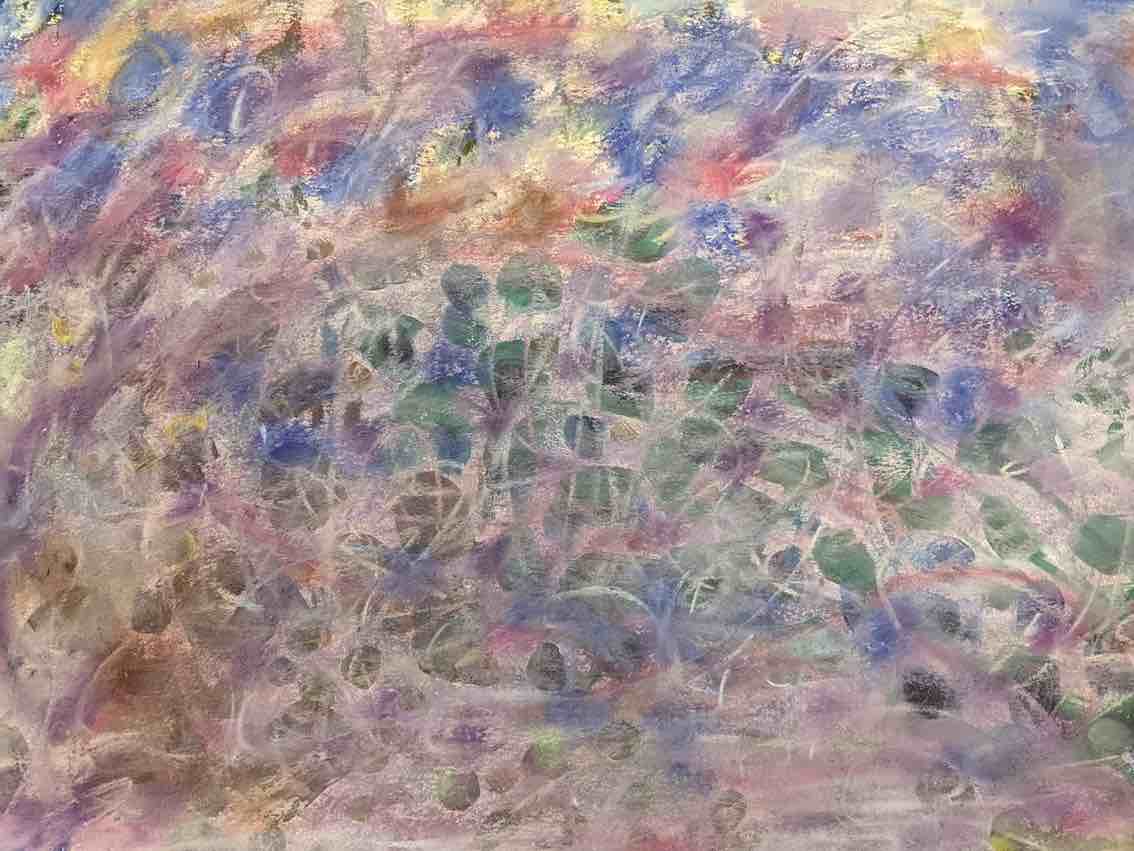
La spontaneità e l’immediatezza sembrano essere andate perdute in un mondo contemporaneo che corre verso obiettivi sempre più materiali, verso un pragmatismo che induce l’individuo ad allontanarsi dalla semplicità del vivere, e verso un materialismo edonista in virtù del quale tutto viene messo in secondo piano rispetto all’apparire. L’essere, la vera essenza umana, richiede invece uno sforzo di approfondimento ma anche una capacità di lasciarsi avvolgere dalla bellezza intorno a sé, quella distante da ogni artificialità proprio perché appartenente a quella realtà trascurata che avvolge e ospita l’uomo, incapace troppo spesso di coglierne l’incanto. Dunque per alcuni artisti tornare verso quel contatto atavico e primordiale con il mondo che circonda l’individuo a prescindere dalla sua capacità di apprezzarne le piccole meraviglie, equivale a mettere in luce il legame con tutte quelle sfumature interiori che emergono esattamente in virtù della delicatezza visiva che la natura genera. Questo è il percorso espressivo di Christine Toda che pone la flora al centro di una ricerca pittorica in cui la morbidezza narrativa invade letteralmente la tela non solo con la delicatezza impalpabile dei fiori ma anche con le tonalità eterogenee dei colori, quasi a sottolineare quante sfaccettature emozionali possono liberarsi dalla pura contemplazione di una natura costantemente presente e avvolgente.
Tra la fine dell’Ottocento e gli inizi del Novecento si sviluppò in tutta Europa un movimento che intendeva mettere il buon gusto e la raffinatezza al centro dell’arte, trasformando la sinuosità della natura, dei fiori e dei sottili rami delle piante, in simbolo della celebrazione dell’armonia e del benessere che dominava il periodo precedente alla prima guerra mondiale. L’Art Nouveau, questo fu il nome del movimento nato in Francia, si diffuse ben presto a tutti gli altri stati europei assumendo sfaccettature differenti sulla base della tendenza espressiva degli artisti che vi aderirono; dunque laddove in Francia e in Italia mantenne un aspetto puramente estetico, fortemente stilizzato e sempre abbinato a figure femminili eteree e quasi inarrivabili, in Austria si fuse a una spiritualità latente ma anche a una raffigurazione più sontuosa da un lato ma più introspettiva dall’altro introducendo, come nelle opere di Gustav Klimt, padre della Secessione Viennese, concetti romantici ed emozionali che inducono alla riflessione. I suoi alberi, la foglia oro con cui adornava le intense tele infondevano nell’osservatore la sensazione di trovarsi in una dimensione superiore, celestiale, da cui faceva fatica a distaccarsi. Qualche decennio dopo fu la statunitense Georgia O’Keeffe a mettere i fiori al centro della propria arte, ingrandendoli ossessivamente fino a farli diventare a volte attori unici di un dipinto, come se divenissero un invito a entrare in quel mondo magico e tenue ignorato nella corsa al progresso di quel periodo, e che grazie alla sua interpretazione pittorica riuscivano a concentrare l’attenzione sull’approfondimento visivo.
Il suo stile iniziale, il Precisionismo, tese così verso un’astrazione che tuttavia non rinunciava alla figurazione funzionale a dare risalto alla natura. In tempi più recenti è stato Damien Hirst a celebrare l’esplosione magica dei fiori attraverso un approccio pittorico che da un lato si avvale dell’impulsività esecutiva dell’Action Painting e dall’altro della contemplazione tipica delle culture orientali, come nella serie Cherry Blossom dedicata alla fioritura dei ciliegi del Giappone. Qui i colori sono intensi, sfaccettati, vivaci, materici, e mettono in evidenza non solo la bellezza lirica dei petali che si interconnettono sulla tela, ma anche la caducità di una vita che deve essere sperimentata e vissuta nel momento presente prima che essa sfugga esattamente come fanno i fiori al sopraggiungere del vento forte. L’artista canadese Christine Toda raccoglie l’eredità dei suoi predecessori e continua la tradizione di mettere al centro della sua ricerca pittorica la natura, in particolar modo la flora, che diviene il suo personale modo per esplorare la propria interiorità, quell’anima che ha bisogno di morbidezza e di leggerezza per essere in grado di lasciarsi andare e di manifestare le più intense sfaccettature.
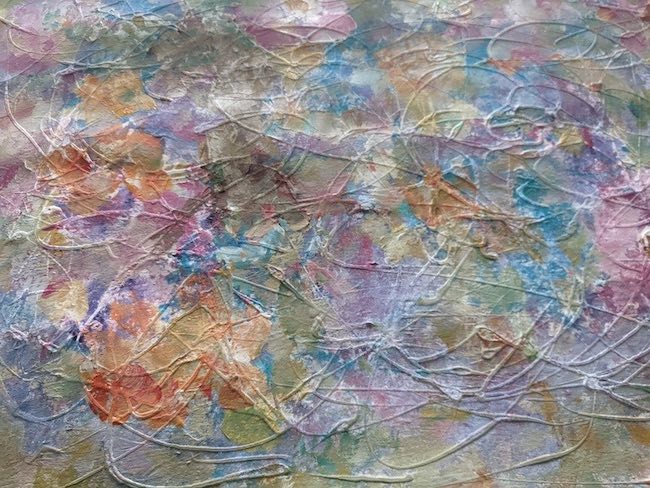
Lo stile attraverso cui esprime questo forte orientamento verso la bellezza incontaminata del mondo dei fiori, la loro purezza e il legame con l’universo emozionale che proprio in virtù di quella visione di purezza e di colori viene sollecitato è l’Espressionismo Astratto che però in lei prende un’accezione poetica, morbida e immediata dal punto di vista esecutivo, proseguendo la tradizione femminile del movimento di cui furono grandi rappresentanti Helen Frankentalher e Joan Mitchell ma avvicinandosi all’approccio miniaturista di Damien Hirst.
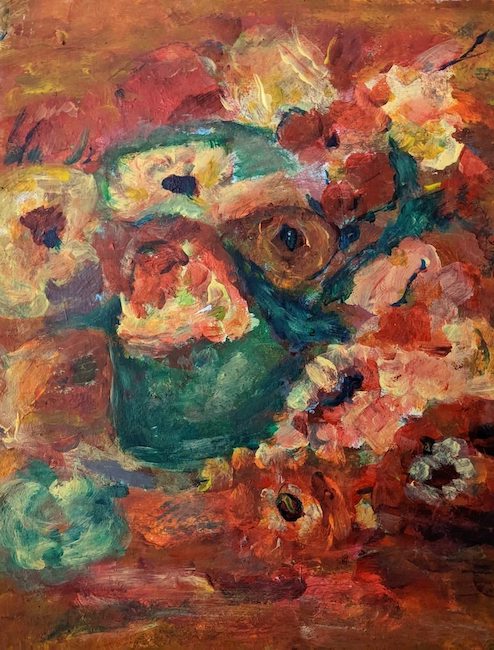
I fiori di Christine Toda invadono la tela, la riempiono e diventano sfumati nella loro sovrapposizione, l’esplosione cromatica avvolge lo sguardo e poi lo attrae verso la mescolanza di materiali di cui l’autrice si avvale creando così livelli e strati differenti di osservazione; acrilico, acquerello, pastello, inchiostro e a volte gesso, mostrano quanto la tecnica dell’autrice abbia bisogno di spaziare e di ampliare le opportunità coloristiche quanto descrittive di un osservato il più vicino possibile alla sua visione del mondo. Una particolare condizione oculare le permette infatti di vedere un milione di tonalità in più rispetto a tutti gli altri, calandola costantemente in una realtà caleidoscopica che lei ha trasformato in un’incredibile risorsa artistica e fonte di ispirazione per la vivacità tonale con cui affronta ogni suo dipinto.
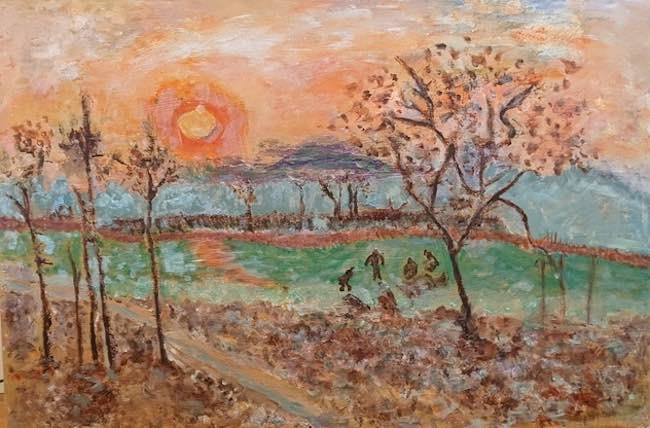
Le opere divengono dunque opportunità visiva di entrare in un universo incredibilmente variopinto, sfumato e soffice, che fa da sfondo a riflessioni filosofiche, spirituali, esistenziali, esplicitate da Christine Toda attraverso i titoli che qui divengono suggerimenti sulla direzione emozionale da lei intrapresa e che può essere spunto di approfondimento per il fruitore.
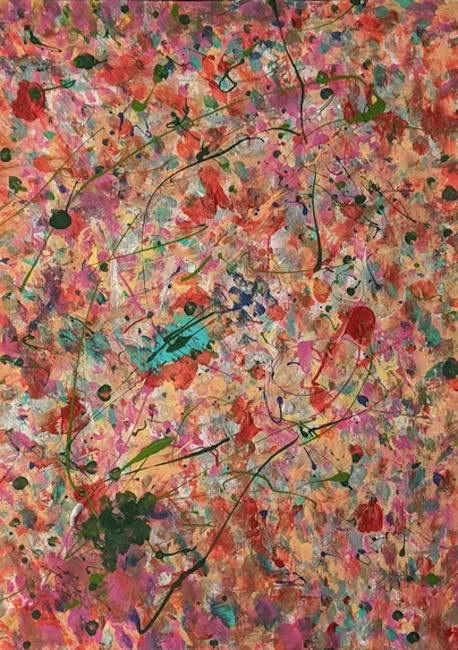
Il dipinto From flow to flourish è emblematico proprio di questa doppia valenza delle opere dell’autrice, sottolineando quanto la poliedricità cromatica possa essere porta di ingresso all’attitudine a lasciarsi trascinare da quella molteplicità, a permettere alle infinite possibilità dell’esistenza di entrare nella consapevolezza dell’individuo che solo a quel punto potrà comprendere quanto seguire il flusso energetico appartenente all’universo, e per riflesso alla natura, costituisca quell’evoluzione che condurrà verso la fioritura interiore. Qui dunque si svela il forte Simbolismo delle tele di Christine Toda, quell’interconnessione con tutto ciò che di sottile esiste e circonda l’essere umano il quale solo dopo essersi arreso al fluire degli eventi può scoprire l’opportunità derivante dallo scoprire di poter scoprire nuovi lati di sé.
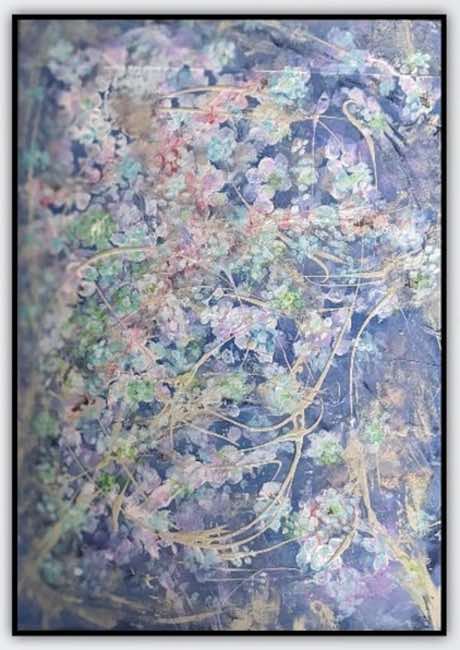
In Lines of communication la gamma cromatica è più leggera, impalpabile, il riferimento alla sinuosità degli steli delle opere Art Nouveau è più evidente e mette lascia affiorare un altro tra i temi più attuali inseriti dall’autrice nelle sue tele, quello dell’incomunicabilità generata dall’avvento di una tecnologia che è trascesa dal suo compito originario, cioè quello di servire e di facilitare la vita, passando a gestire di fatto ogni singolo istante fino al punto di essere una gabbia fatta di isolamento, illusione e rifugio per la solitudine. Di fatto è esattamente la sua presenza ad aver indotto molte persone a chiudersi in se stesse invece di vincere la timidezza o il disagio per cercare il contatto umano che nel secolo scorso era fondamentale; eppure l’individuo non potrà mai sentirsi appagato dalla mancanza di veri legami, di reali connessioni che esaltano le virtù individuali e permettono ai sentimenti di fiorire e di avvolgere esattamente come fanno i fiori delicati protagonisti della tela.
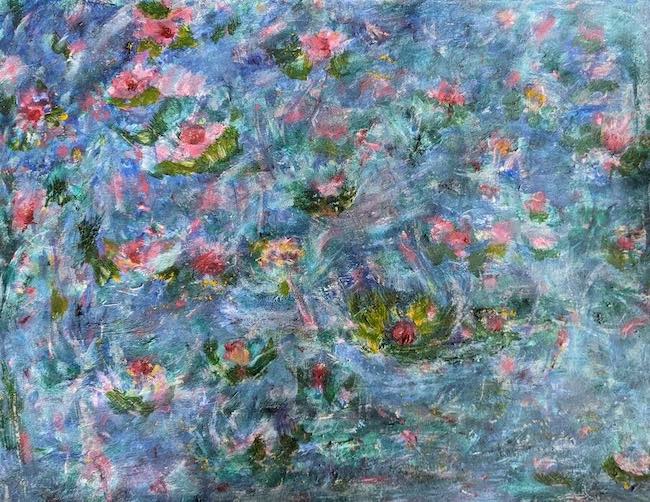
In Wandering through è impossibile non pensare alle ninfee impressioniste di Claude Monet sebbene l’opera di Christine Toda perda l’accezione puramente estetica dell’Impressionismo e sposti la percezione verso il senso più profondo, verso l’introspezione sollecitata dal titolo e concretizzata attraverso la mancanza di riferimento visivo a un luogo specifico che distrarrebbe dall’evanescenza dei soggetti principali. I fiori non vengono definiti, vengono accennati, sussurrati, come se dovessero stendere un manto su cui possano posarsi i pensieri e le sensazioni dell’osservatore che ha bisogno di perdersi in essi per potersi collegare empaticamente al momento creativo dell’autrice condividendone il piacere di lasciarsi andare alla spontaneità emozionale. La fluttuazione in questo dipinto viene resa in virtù della presenza dei fiori su tutta la superficie della tela, come se non esistesse una base e una parte superiore, come se non vi fosse un inizio e una fine, poiché dal punto di vista simbolico e spirituale non possono esservi limiti al pensiero e al vagare della mente; eppure non si può fare a meno di considerare che i pensieri a cui si riferisce l’autrice nel titolo, non siano tanto razionali quanto impulsivi, intuitivi, caotici persino nel loro susseguirsi liberi, e pertanto legati a quell’anima troppo spesso lasciata in silenzio nel vivere contemporaneo.
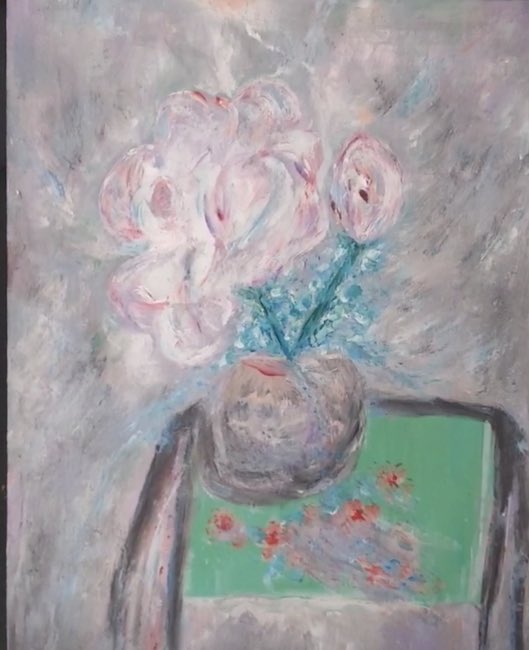
Christine Toda ha al suo attivo la partecipazione a mostre collettive sul territorio canadese ed è stata inserita nell’Atlante dell’Arte Contemporanea Giunti 2025 MoMa Edition.
CHRISTINE TODA-CONTATTI
Email: chrissy.toda@gmail.com
Facebook: www.facebook.com/christine.tods.1
Instagram: www.instagram.com/christodallyinspired/
Christine Toda’s floral universe, to underline the connection between nature and the soul
Spontaneity and immediacy seem to have been lost in a contemporary world that races toward increasingly material goals, toward a pragmatism that leads individuals to drift away from the simplicity of life, and toward a hedonistic materialism in which everything takes a back seat to appearances. The being, the true human essence, requires instead an effort to delve deeper but also an ability to let oneself be enveloped by the beauty around, far removed from any artificiality precisely because it belongs to that neglected reality that surrounds and shelters the man, which is all too often incapable of grasping its enchantment. Thus, for some artists, returning to that atavistic and primordial connection with the world surrounding the individual, regardless of their ability to appreciate its small wonders, is equivalent to highlighting the bond with all those inner nuances that emerge precisely because of the visual delicacy that nature generates. This is the artistic path of Christine Toda, who places flora at the center of a painterly exploration in which narrative softness literally permeates the canvas, not only through the intangible delicacy of the flowers but also through the varied hues of color, as if to underscore just how many emotional facets can be unleashed by the mere contemplation of a nature that is constantly present and all-encompassing.
Between the late Nineteenth and early Twentieth centuries, a movement developed throughout Europe that sought to place good taste and refinement at the center of art, transforming the sinuosity of nature, of flowers and slender plant branches, into a symbol celebrating the harmony and well-being that prevailed in the period preceding the First World War. Art Nouveau, as the movement which originated in France came to be known, soon spread to all other European countries, taking on different forms depending on the expressive tendencies of the artists who embraced it; thus, while in France and Italy it retained a purely aesthetic character, highly stylized and always paired with ethereal, almost unattainable female figures, in Austria it merged with a latent spirituality as well as a depiction that was more sumptuous on the one hand yet more introspective on the other, introducing as in the works of Gustav Klimt, the father of the Vienna Secession, romantic and emotional concepts that invite reflection. His trees and the gold leaf with which he adorned his vivid canvases instilled in the viewer the sensation of being in a higher, celestial dimension, from which it was difficult to detach oneself.
A few decades later, it was the American artist Georgia O’Keeffe who placed flowers at the center of her art, enlarging them obsessively to the point where they sometimes became the sole subjects of a painting, as if inviting viewers to enter that magical, delicate world that had been overlooked in the rush toward progress of that era, and which, thanks to her painterly interpretation, succeeded in focusing attention on visual exploration. Her early style, Precisionism, thus leaned toward abstraction without, however, abandoning figuration which served to highlight nature. In more recent times, it was Damien Hirst who celebrated the magical explosion of flowers through a painterly approach that, on the one hand, draws on the impulsive execution of Action Painting and, on the other, on the contemplation typical of Eastern cultures, as in the Cherry Blossom series dedicated to the blooming of Japan’s cherry trees. Here, the colors are intense, multifaceted, vibrant, and textured, highlighting not only the lyrical beauty of the petals intertwining on the canvas but also the transience of a life that must be experienced and lived in the present moment before it slips away just as flowers do when a strong wind blows. Canadian artist Christine Toda carries on the legacy of her predecessors, continuing the tradition of placing nature at the art of her artistic research and in particular flora that becomes her personal means of exploring her inner self, that soul which needs softness and lightness to be able to let go and reveal its most intense facets.
The style through which she expresses this strong orientation toward the unspoiled beauty of the world of flowers, their purity, and the connection to the emotional universe, which is evoked precisely by that vision of purity and color, is Abstract Expressionism that, in her work, takes on a poetic, soft, and immediate meaning from an executive point of view, continuing the movement’s feminine tradition, of which Helen Frankenthaler and Joan Mitchell were great representatives, while drawing closer to Damien Hirst’s miniaturist approach. Christine Toda’s flowers overrun the canvas, filling it and blurring as they overlap; the explosion of color envelops the gaze, then draws it toward the blend of materials the artist employs, thereby creating distinct levels and layers of observation; acrylic, watercolor, pastel, ink, and sometimes chalk demonstrate how the artist’s technique requires her to explore and expand both the coloristic and descriptive possibilities of a subject observed as closely as possible to her own vision of the world. In fact, a unique eye condition allows her to see a million more shades than anyone else, constantly immersing her in a kaleidoscopic reality that she has transformed into an incredible artistic resource and a source of inspiration for the vibrant tonal range with which she approaches each of her paintings. Her works thus become a visual opportunity to enter an incredibly colorful, nuanced, and soft universe, which serves as a backdrop for philosophical, spiritual, and existential reflections explicitly stated by Christine Toda throught the titles which here function as hints about the emotional direction she has taken and can serve as a starting point for deeper exploration by the viewer.
The painting From Flow to Flourish is emblematic of this twofold function in the artist’s works, underscoring how chromatic versatility can serve as a gateway to the willingness to let oneself be carried away by that multiplicity, to allow the infinite possibilities of existence to enter the consciousness of the individual that can understand how following the energetic flow belonging to the universe and, by extension, to nature, constitutes the very evolution that will lead to inner flourishing. Here, then, is revealed the powerful Symbolism of Christine Toda’s canvases, that interconnection with all that is subtle and surrounds the human being, who only after surrendering to the flow of events can discover the opportunity that comes from realizing they can uncover new aspects of himself. In Lines of Communication, the color palette is lighter and more ethereal, the reference to the sinuous lines of Art Nouveau stems is more evident, bringing to the surface another of the most timely themes the artist incorporates into her canvases, the incommunicability generated by the advent of technology that has transcended its original purpose, namely to serve and facilitate life, to the point of effectively managing every single moment, till the point to become a cage made of isolation, illusion, and a refuge for solitude.
In fact, it is precisely its presence that has led many people to withdraw into themselves rather than overcome their shyness or discomfort to seek the human contact that was fundamental in the last century; yet the individual can never feel fulfilled by the lack of true bonds, of real connections that enhance individual virtues and allow feelings to blossom and envelop, just as the delicate flowers at the center of the canvas do. In Wandering Through, it is impossible not to think of Claude Monet’s Impressionist water lilies, even though Christine Toda’s work moves beyond the purely aesthetic aspect of Impressionism and shifts the viewer’s perception toward a deeper meaning, toward the introspection suggested by the title and brought to life through the absence of any visual reference to a specific place that might distract from the evanescence of the main subjects. The flowers are not clearly defined, they are merely hinted at, whispered, as if they were meant to spread a mantle upon which might rest the thoughts and sensations of the viewer who needs to lose himself into them in order to empathically connect with the artist’s creative moment, sharing in the pleasure of letting go and surrendering to emotional spontaneity. The sense of fluctuation in this painting is achieved through the presence of flowers across the entire surface of the canvas, as if there were no base or top, no beginning or end, for from a symbolic and spiritual perspective, there can be no limits to thought or the wandering of the mind; yet one cannot help but consider that the thoughts to which the artist refers in the title are not so much rational as they are impulsive, intuitive, even chaotic in their free succession, and therefore linked to that soul all too often silenced in contemporary life. Christine Toda has participated in group exhibitions across Canada and has been included in the Giunti 2025 MoMa Edition Atlas of Contemporary Art.