
Talvolta il messaggio artistico ha bisogno di giungere all’osservatore nella maniera più asciutta possibile, epurato da qualsiasi virtuosismo pittorico poiché è solo attraverso la sostanza, l’astrazione dalla realtà osservata, che alcuni autori riescono a trovare il linguaggio più affine alla propria visione del mondo e di tutto ciò che passa sotto alla loro lente visiva e poi, di conseguenza, creativa. Scegliere un approccio pittorico diretto e immediato consente a questo tipo di interpreti di sintonizzare la propria arte sull’immediatezza, sull’esplicitazione che induce il grande pubblico a comprenderne l’estetica senza aver bisogno di scoprire un enigma, di interpretare un significato o uno stato d’animo, piuttosto lasciandosi avvolgere dalla purezza di un’immagine accattivante e coinvolgente nel suo aspetto più esteriore. Questo è esattamente l’approccio creativo di Donald Sultan che attinge ai rivoluzionari movimenti della metà del secolo scorso, così come all’utilizzo di materiali e superfici moderni e dinamici attraverso cui realizzare opere accessibili e facilmente fruibili.
Intorno alla fine degli anni Quaranta del Novecento, negli Stati Uniti si respirava un’aria nuova, quella dell’uscita dalla grande depressione del 1929 e dalla guerra europea che aveva visto l’intervento statunitense al fronte, permettendo alle famiglie di recuperare un potere economico perso in precedenza e a una nuova classe media di emergere; in questo contesto si delineò anche un inedito approccio all’arte che potesse andare incontro ai gusti di quella nuova fetta di popolazione e che si conformasse alla nuova fiducia e all’atteggiamento positivo verso il futuro. La Pop Art fondata da Andy Warhol scelse pertanto di mettere al centro le nuove icone, i miti del cinema, i personaggi del mondo dei fumetti, i prodotti di largo consumo reperibili nei supermercati, proprio per raggiungere quella parte di persone fino a poco prima escluse dall’arte precedente, più intellettuale e bisognosa di una preparazione per essere compresa, preparazione che la classe media non aveva. Non solo, i supporti utilizzati e l’invenzione della serigrafia permisero a Andy Warhol di produrre delle serie numerate che potevano pertanto avere un prezzo più basso rispetto a quello di un pezzo unico.
Autori come Roy Lichtenstein, più legato al mondo dei fumetti, Robert Rauschenber che invece fu il pioniere dell’introduzione del collage nell’opera, e James Rosenquist con la rappresentazione di simboli USA come le patatine fritte, le bevande e le abitudini di quegli anni, furono tutti simboli di un mondo culturale che stava cambiando e comprendendo di dover uscire dalla nicchia in cui si era rifugiato per scendere in strada a emozionare la gente comune. Questo fu anche l’intento di un altro fenomeno, parallelo e sostenuto proprio dalla lungimiranza di Andy Warhol, quello della Street Art che addirittura decise di manifestare sui muri il messaggio dei singoli interpreti; dall’irruenza violenta e densa di rabbia di Jean-Michel Basquiat alle immagini essenziali e basiche di Keith Haring dove la realtà appariva come un gioco pur nascondendo messaggi intensi, la Street Art mescolò inizialmente le sue sorti allo stesso filone della Pop Art, sebbene formalmente diversa da essa, perché ciò che contava per entrambe era coinvolgere il pubblico e chiunque guardasse i lavori degli autori del nuovo modo di fare arte. Al di là del metodo esecutivo e dei supporti, la Pop Art di Warhol mescolò i colori Fauves ed espressionisti a una figurazione che si avvicinava al Realismo, perché era necessario che i suoi soggetti fossero visibili e riconoscibili dal fruitore, dunque il risultato doveva conquistare al primo sguardo, facendo desiderare di avere in casa una delle icone protagoniste, come le sue celeberrime Marylin Monroe ed Elisabeth Taylor o i più consumistici Zuppa Campbell e detersivo Brillo, a un pubblico che desiderava acquistare colori vivaci e intensi in armonia con la spensieratezza e la fiducia nel futuro che contraddistingueva quel periodo storico. L’artista statunitense Donald Sultan può considerarsi erede della tradizione Pop Art della metà del Novecento, sia per lo stile asciutto ed essenziale e sia per l’attitudine a utilizzare supporti insoliti, aggiungendo però una filosofia più contemporanea che lo vede introdurre materie inedite per comporre le sue opere in cui prime attrici sono le nature morte, quelle piante e quei fiori ingranditi attraverso la sua lente osservativa e stilizzati per infondere lo stesso effetto divertente e moderno delle opere di Andy Warhol.
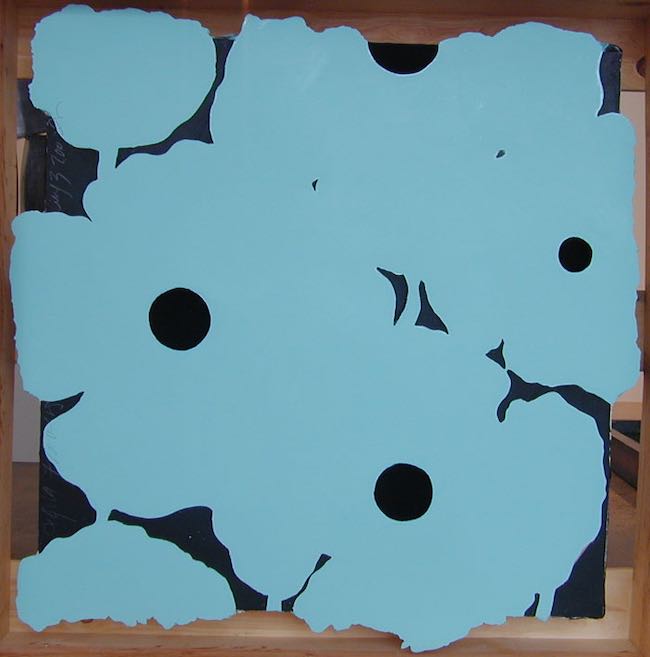
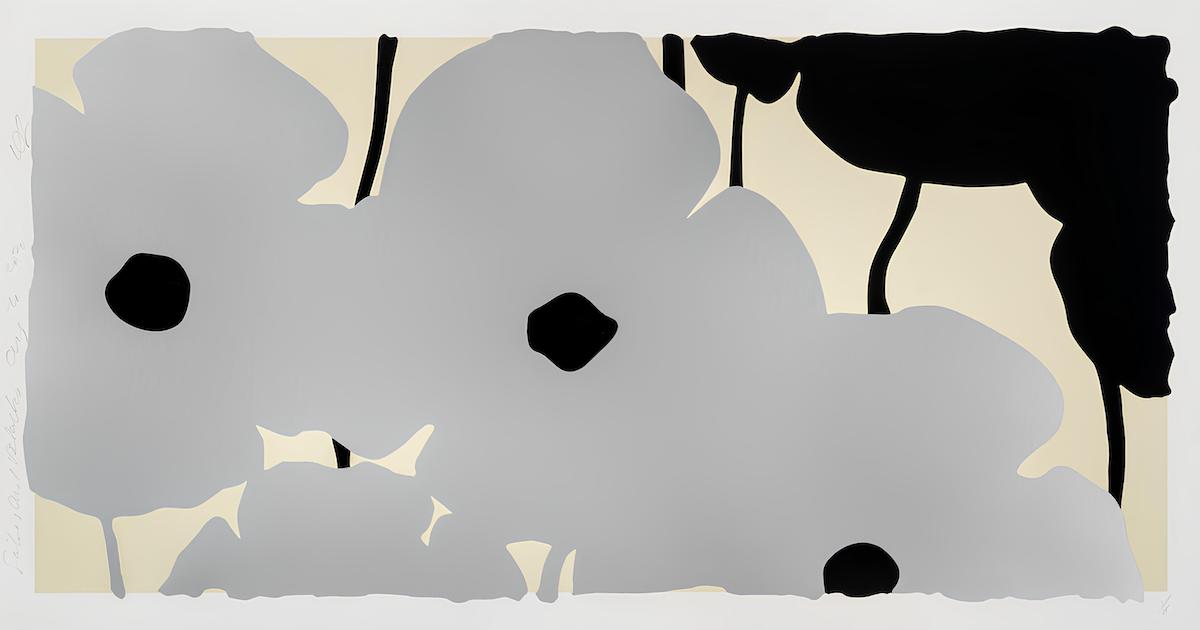
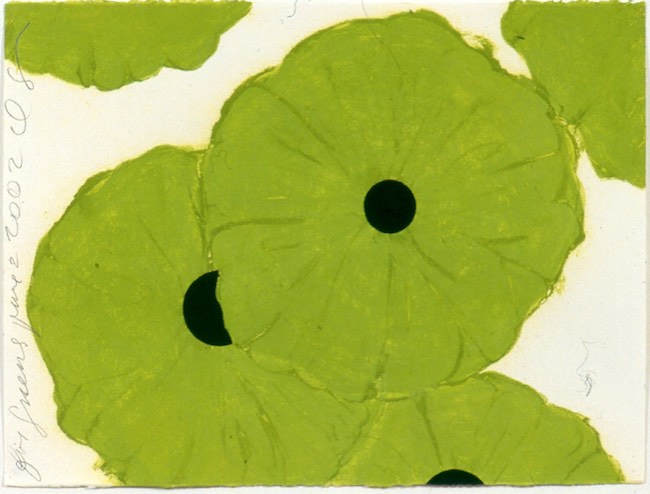
Diversamente dal Postimpressionismo di fine Ottocento, di cui Paul Cézanne fu uno dei maggiori rappresentanti, in Donald Sultan la natura non è messa in risalto all’interno di un ambiente domestico, né raccontata nella sua sfaccettatura più autentica, al contrario qui è protagonista assoluta e rappresentata in un’immagine ravvicinata fin quasi a perderne le sembianze tendendo pertanto verso un Astrattismo Geometrico singolare in cui si ha la sensazione di trovarsi davanti al negativo di una pellicola fotografica. Ma poi viene introdotto il colore, e allora il contorno si riempie di vivacità o di delicatezza, sulla base della gamma cromatica scelta, mostrando quanto un semplice simbolo, un fiore, abbia il potere di ravvivare l’interiorità e di conquistare il gusto estetico anche nella sua immediatezza ed essenzialità narrativa, o forse proprio grazie a essa.
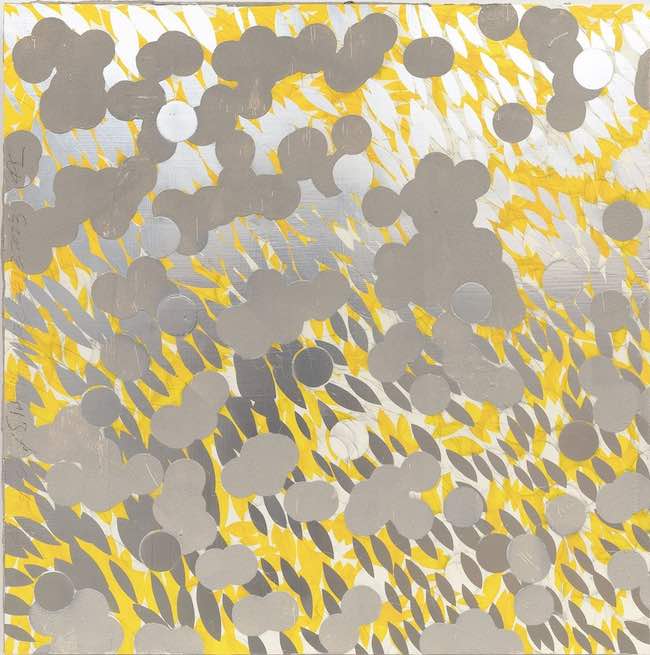
David Sultan utilizza per le sue opere materiali industriali come il catrame per tetti, l’alluminio, il linoleum e lo smalto con cui stratifica, incide, leviga e costruisce i propri dipinti creando composizioni di grande formato dove emergono i contrasti.
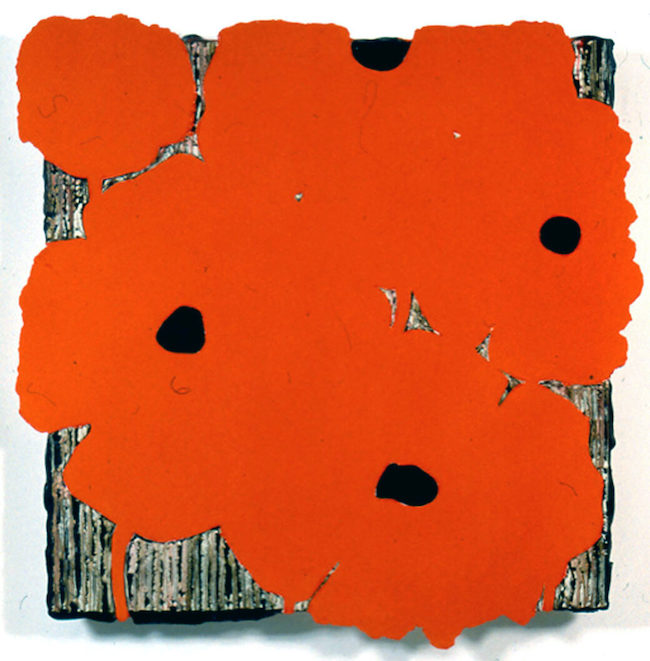
Bellezza e ruvidità della superficie, natura e artificialità, realismo e astrazione sono gli opposti su cui l’autore si basa per dare vita a una produzione artistica che rende protagonisti i fiori ma anche gli oggetti di uso quotidiano e le fabbriche in disuso; a emergere in maniera chiara è la terra di mezzo in cui si collocano le opere di Sultan, cioè quel confine tra astrazione e figurazione che contribuisce a rendere le sue opere non solo immediatamente riconoscibili ma anche uniche per il processo creativo utilizzato e attraverso il quale riduce all’essenziale, stilizza le immagini avvicinando l’oggetto alla geometricità a cui si contrappone la morbidezza di un colore fondamentale per ammorbidire il risultato finale, pur mantenendone la semplificazione e la sintesi visiva.
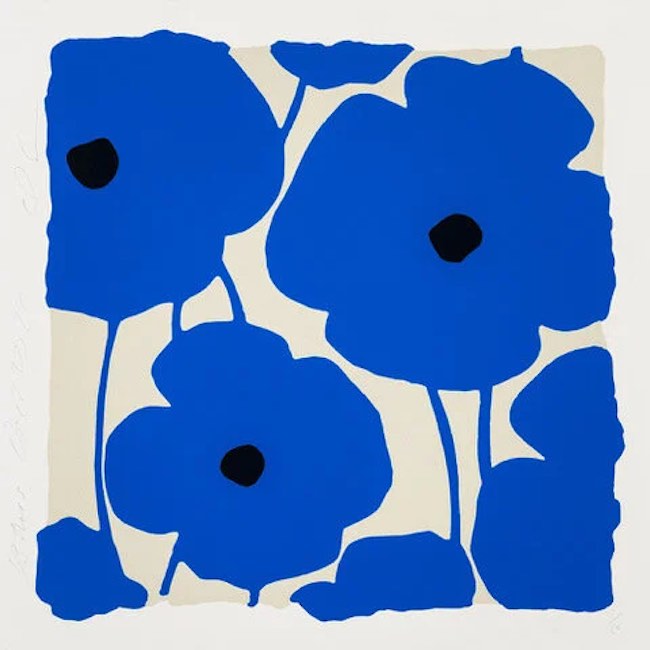
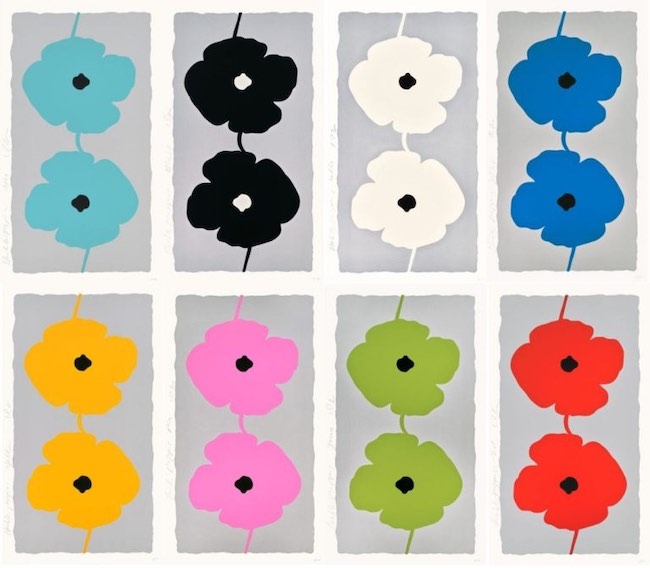
Anche i supporti utilizzati escono dagli schemi tradizionali e si collocano all’interno di quelle scelte ribelli compiute dagli esponenti della Pop Art del Novecento per i quali l’arte deve poter essere espressa su qualsiasi superficie, sia essa una tela, un foglio plastificato, una tavola o un cartone senza per questo perdere il suo valore intrinseco; la produzione in serie numerate si allaccia, a sua volta, all’intento di Andy Warhol di essere accessibile al maggior numero di persone possibile, come se questo contribuisse a rendere l’arte più democratica, più in grado di allietare con la sua presenza le case delle persone, tanto quanto la Pop e la Street Art del secolo scorso volevano diffondere il loro messaggio di semplicità o di spontaneità tra le persone comuni. La predilezione verso i fiori si manifesta in particolar modo nelle grandi tele di cui sono protagonisti i papaveri, declinati con colori insoliti e innaturali e proprio per questo assolutamente divertenti e accattivanti, e le mimose che invece mostrano un’attitudine più poetica dell’autore, una romantica delicatezza latente che proprio attraverso questi impalpabili fiori emerge.
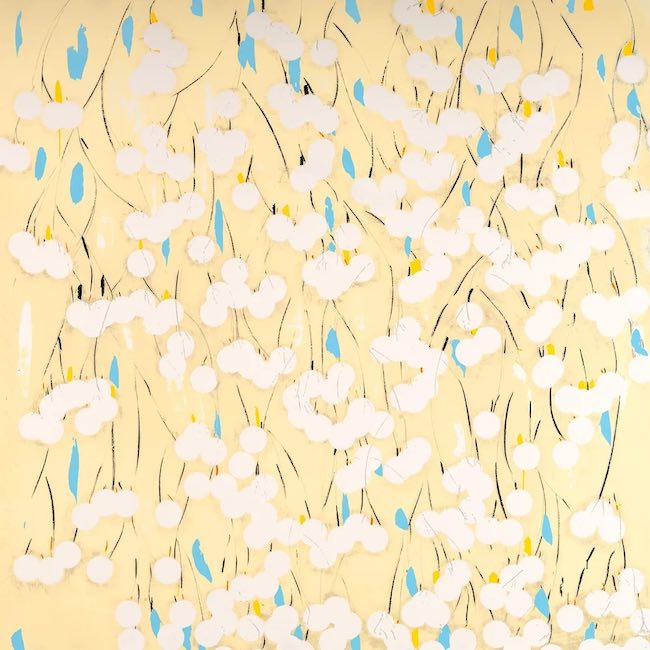
Laddove i papaveri sono infatti fortemente stilizzati ed essenzializzati nella forma fin quasi a raggiungere la basicità dell’Astrattismo Geometrico, per le mimose invece Donald Sultan non riesce a modificarne completamente il colore perché farlo significherebbe rinunciare a una sofficità che indurrebbe l’osservatore a perdersi dentro un mondo troppo astratto che non sarebbe affine e conforme all’intento creativo dell’autore. La sua attitudine Pop Art si rivela anche nella produzione di serie di multipli all’interno di un un’unica opera, come nel caso dei papaveri, così come nel saper trasportare la stilizzazione e al contempo la vivacità cromatica nelle grandi sculture; interessato alla natura così come viene considerata all’interno di una società consumistica, la produzione di David Sultan si focalizza sulla rappresentazione di un oggetto o di un’idea pertanto un fiore, una fabbrica o un frutto vengono adattati alla tendenza dei tempi moderni e contemporanei.
Il contrasto tra le forme naturali e organiche con i materiali industriali induce a osservare la delicatezza delle sue opere contraddistinte tuttavia da una struttura pesante quasi le sue forme floreali fossero una metafora del percorso dell’essere umano che mostra solo e unicamente il proprio lato superficiale, dunque stilizzato e affascinante se guardato dall’esterno, mentre all’interno porta con sé le fragilità e le zavorre di convinzioni e abitudini acquisite senza le quali si sentirebbe disorientato.
Donald Sultan è nato ad Asheville, nella Carolina del Nord, nel 1951 e le sue opere fanno parte di numerose collezioni pubbliche quali l’Art Institute of Chicago, l’Hirshhorn Museum and Sculpture Garden, il Metropolitan Museum of Art, il Museum of Fine Arts di Boston, il MoMA e il Solomon R. Guggenheim Museum.
DONALD SULTAN-CONTATTI
Email: sultanstudio@gmail.com
Sito web: www.donaldsultanstudio.com/
Facebook: www.facebook.com/donald.sultan
Instagram: www.instagram.com/donaldsultan/
Between Pop and Street Art the essential nature of Donald Sultan’s still lifes
Sometimes an artistic message needs to reach the viewer in the most straightforward way possible, stripped of any painterly virtuosity, because it is only through substance, the abstraction from observed reality, that certain artists manage to find the language most attuned to their vision of the world and of everything that passes under their visual and, consequently, creative lens. Choosing a direct and immediate painterly approach allows this type of artist to attune their art to immediacy, to a clarity that enables the general public to grasp its aesthetics without needing to unravel a riddle, interpret a meaning, or decipher a mood, but rather by letting themselves be enveloped by the purity of an image that is captivating and engaging in its most outward appearance. This is precisely Donald Sultan’s creative approach, which draws on the revolutionary movements of the mid-20th century, as well as the use of modern and dynamic materials and surfaces through which to create accessible and easily enjoyed works.
Around the late 1940s, a new spirit was in the air in the United States, one of emerging from the Great Depression of 1929 and the European war in which the U.S. had fought on the front lines, allowing families to regain the economic power they had previously lost and enabling a new middle class to emerge; in this context took shape also a novel approach to art that would cater to the tastes of this new segment of the population and reflect the newfound confidence and positive outlook toward the future. Pop Art, founded by Andy Warhol, therefore chose to focus on new icons, movie stars, comic book characters, and mass-market products found in supermarkets, precisely to reach that segment of the population that, until recently, had been excluded from earlier art forms, which were more intellectual and required to be understood a certain level of education that the middle class lacked. Not only that, but the media used and the invention of silkscreen printing allowed Andy Warhol to produce numbered series that could therefore be priced lower than a one-of-a-kind piece. Artists such as Roy Lichtenstein, who was more closely associated with the world of comics, Robert Rauschenberg, who pioneered the use of collage in art, and James Rosenquist, with his depictions of American symbols such as French fries, soft drinks, and the customs of that era, were all symbols of a cultural world that was changing and realizing it needed to break out of the niche it had retreated into and take to the streets to inspire ordinary people.
This was also the intent behind another parallel phenomenon, driven precisely by Andy Warhol’s foresight, Street Art which even chose to express the messages of individual artists on walls; from Jean-Michel Basquiat’s violent, rage-filled intensity to Keith Haring’s simple, minimalist images where reality appeared as a game while concealing intense messages, Street Art initially intertwined its fate with that of Pop Art, though formally distinct from it, because what mattered to both was engaging the public and anyone who viewed the works of the creators of this new way of making art. Beyond his technique and choice of media, Warhol’s Pop Art blended Fauves and Expressionist colors with a figurative style that approached Realism, because it was essential that his subjects be visible and recognizable to the viewer; so the result had to captivate at first glance, making an audience eager to have one of the iconic works, such as his famous Marilyn Monroe and Elizabeth Taylor portraits or the more consumerist Campbell’s Soup and Brillo scouring powder, in their homes.
This audience sought to acquire vivid, intense colors that harmonized with the carefree spirit and confidence in the future that characterized that historical period. The American artist Donald Sultan can be considered an heir to the mid-20th-century Pop Art tradition, both for his clean, minimalist style and his tendency to use unusual media, while adding a more contemporary philosophy that sees him introducing novel materials to compose his works, in which still lifes take center stage, those plants and flowers magnified through his observant lens and stylized to evoke the same playful and modern effect as Andy Warhol’s artworks. Unlike late-19th-century Post-Impressionism, of which Paul Cézanne was one of the leading figures, in Donald Sultan’s work nature is not highlighted within a domestic setting, nor is it depicted in its most authentic form; on the contrary, here it is the absolute protagonist and is represented in such close-up detail that it almost loses its features, thus tending toward a unique form of Geometric Abstractionism in which one has the sensation of looking at the negative of a photographic film.
But then color is introduced, and the outline fills with vibrancy or delicacy, depending on the chosen color palette, demonstrating how a simple symbol, a flower, has the power to enliven the inner self and captivate the aesthetic sensibility even in its immediacy and narrative simplicity, or perhaps precisely because of it. David Sultan uses industrial materials such as roofing tar, aluminum, linoleum, and enamel in his works, with which he layers, etches, smooths, and constructs his paintings, creating large-scale compositions where contrasts emerge. The beauty and roughness of the surface, nature and artificiality, realism and abstraction are the opposites upon which the artist draws to bring to life an artistic body of work that features flowers as well as everyday objects and abandoned factories; to emerge is the middle ground in which Sultan’s works are situated is the boundary between abstraction and figuration that helps make his paintigs not only immediately recognizable but also unique due to the creative process he employs, through which he reduces them to their essence, he stylizes images by bringing the subject closer to geometric forms, contrasted by the tenderness of a primary color that serves to soften the final result, while maintaining its simplification and visual synthesis. Even the media he uses break with traditional conventions and align with the rebellious choices made by 20th-century Pop Art artists, for whom art must be able to be expressed on any surface be it canvas, laminated paper, wood, or cardboard without thereby losing its intrinsic value; the production of numbered series, in turn, ties in with Andy Warhol’s intent to be accessible to as many people as possible, as if this contributed to making art more democratic, more capable of brightening people’s homes with its presence, just as Pop Art and Street Art of the last century sought to spread their message of simplicity and spontaneity among ordinary people.
His fondness for flowers is particularly evident in the large canvases featuring poppies, rendered in unusual, unnatural colors that make them utterly playful and captivating, and mimosas, which instead reveal the artist’s more poetic side, a latent romantic delicacy that emerges precisely through these ethereal flowers. While the poppies are, in fact, highly stylized and reduced to their essential form, almost to the point of reaching the minimalism of Geometric Abstraction, Donald Sultan is unable to completely alter the color of the mimosas, as doing so would mean sacrificing a softness that would lead the viewer to lose himself in a world too abstract and would not align with the artist’s creative intent. His Pop Art sensibility is also evident in the production of series of multiples within a single work, as in the case of the poppies, as well as in his ability to convey both stylization and vibrant color in his large sculptures; interested in nature as it is perceived within a consumerist society, David Sultan’s work focuses on the representation of an object or an idea thus, a flower, a factory, or a fruit is adapted to the trends of modern and contemporary times. The contrast between natural, organic forms and industrial materials draws the viewer’s attention to the delicacy of his works, which are nonetheless characterized by a heavy structure, as if his floral forms were a metaphor for the journey of the human being who reveals only and exclusively its superficial side, and thus stylized and captivating when viewed from the outside, while on the inside he carries the fragility and the burdens of acquired beliefs and habits, without which he would feel disoriented. Donald Sultan was born in Asheville, North Carolina, in 1951, and his works are part of numerous public collections, including the Art Institute of Chicago, the Hirshhorn Museum and Sculpture Garden, the Metropolitan Museum of Art, the Museum of Fine Arts in Boston, MoMA, and the Solomon R. Guggenheim Museum