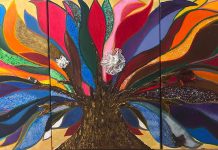


Il mondo culturale e artistico ha da sempre costituito un mezzo universale per coltivare le emozioni, per lasciarsi trasportare dalla bellezza e dall’armonia anche in periodi in cui il mondo intorno sembrava voler andare verso una direzione diversa; tutte le espressioni artistiche nel corso dei decenni sono evolute adeguandosi ai tempi e alle mode eppure alcune di esse hanno mantenuto la capacità di oltrepassare i secoli mantenendo la loro autenticità originaria. Questo è il caso della pittura più figurativa, ma anche della danza e della musica, discipline che Angela Cutolo fonde insieme nel suo approccio pittorico per celebrare l’incanto e la perfezione di tutte le manifestazioni in cui l’anima si eleva verso l’ascolto, verso la contemplazione della bellezza e verso la celebrazione di tutto ciò che permette all’individuo di accantonare la quotidianità per tendere verso una straordinarietà possibile.
Nel corso della storia dell’arte di ogni tempo la danza ha esercitato in molti autori un fascino irresistibile poiché sapeva unire la grazia dei movimenti alla malìa della musica e sebbene vi furono diversi pittori che dedicarono diverse tele a questa disciplina anche ben prima della metà dell’Ottocento, verso la fine del secolo si distinse la produzione dell’impressionista Edgar Degas che consacrò la sua vita artistica alla riproduzione di ballerine di danza classica ai cui spettacoli lui amava assistere sia dalla platea che da dietro le quinte. La leggerezza e l’impalpabilità del tratto pittorico tipico dell’Impressionismo enfatizzava la grazia e la leggiadria delle protagoniste dei suoi dipinti che segnarono l’inizio di una nuova epoca con cui gli artisti intendevano celebrare la piacevolezza della vita. Negli Stati Uniti fu Everett Shinn, appartenente al primo Realismo americano, a raccontare il mondo dei teatri e della danza riprendendo il tema delle ballerine di Degas. Ma anche l’arte Fauves ebbe in Matisse un grande estimatore delle atmosfere danzanti, reinterpretate secondo il suo stile essenziale e stilizzato per celebrare la gioia che si poteva trovare nelle piccole cose.
Per il Naïf fu il celeberrimo Fernando Botero a dedicare molte tele al tango, più vicino al suo paese di nascita, mentre per il Realismo più contemporaneo, e sempre parlando di tango, Fabian Perez dedica in sostanza tutta la sua produzione pittorica alla rappresentazione di ballerini nelle atmosfere fumose e affascinanti delle milonghe. Medesima diffusione ebbe la riproduzione di musicisti immortalati durante le loro performance, a cui molti grandi rappresentanti del Ventesimo secolo vollero dedicare tele permeate dalla passione e dal trasporto provato dagli esecutori durante le loro esibizioni. Il Cubismo raccontò nel suo modo singolare e quasi analitico non solo gli strumenti musicali, ma anche scene di esibizioni che rimasero impresse nella storia dell’arte proprio in virtù dell’eccentricità espressiva. Nell’epoca contemporanea il racconto della musicalità si concentra in particolar modo sulle atmosfere jazz, per il fascino che rivestono le sue melodie e anche per le ambientazioni fumose ma incredibilmente ammalianti che lo contraddistinguono, trovando nel francese Pierre Farel, espressionista, e nel realista statunitense Brent Lynch, due tra i maggiori autori che hanno dedicato e continuano a dedicare opere alle serate jazz, ai suoi musicisti, alle sue cantanti e a tutto ciò che appartiene alla realtà dei locali dove si suona quella coinvolgente musica.
Laddove Farel mostra il senso di comunità, descrive la gioia condivisa di trovarsi e socializzare in quei luoghi, utilizzando la caratteristica di non descrivere i volti lasciando ai corpi il compito di esprimere le emozioni provate dai personaggi, Lynch invece ha uno stile fortemente realista attraverso il quale lascia trapelare il trasporto e la passionalità delle cantanti e dei suonatori mentre sono intenti nelle loro performance. La pittrice romana Angela Cutolo ha consolidato nel tempo un linguaggio pittorico realista attraverso il quale desidera far fuoriuscire la bellezza, l’armonia, l’energia di altre due discipline artistiche, la danza e la musica, narrandole con una perfezione descrittiva che induce lo sguardo inizialmente a soffermarsi sull’impatto visivo, poi a contemplare l’armonia dei corpi e delle movenze che appaiono vive sulla tela, quasi l’autrice fosse in grado di immortalare l’istante di pausa tra un passo e l’altro, tra una nota e l’altra, tra il prima e il dopo di quel momento magico a cui lei ha scelto di dedicare un dipinto.
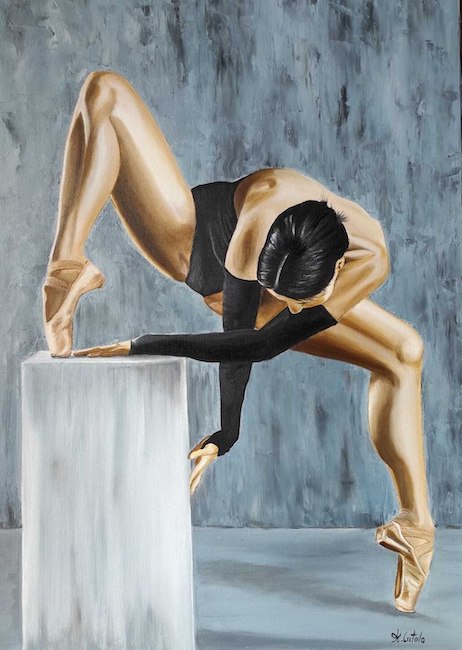
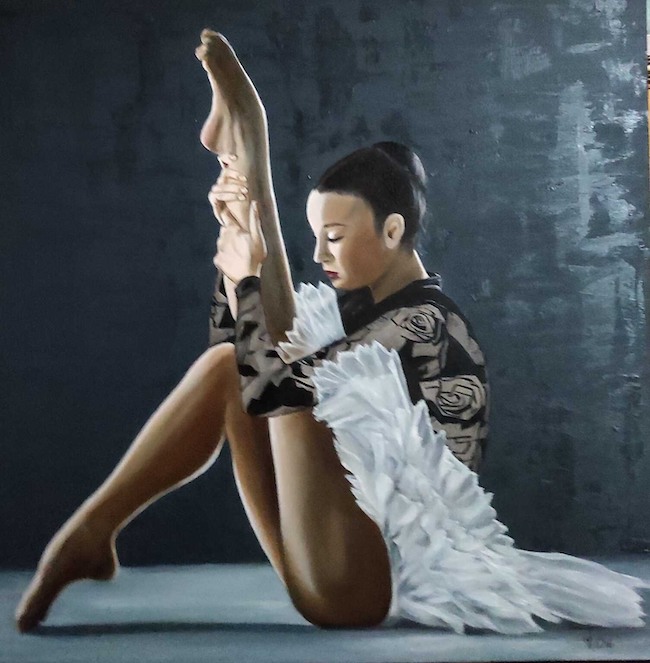
La gamma cromatica è reale, perfettamente conforme all’osservato, ma ciò che colpisce di Angela Cutolo è la sua capacità di descrivere la forza dei muscoli che si contraggono durante le pose plastiche che immortala, quasi fuoriuscisse dalla tela tutta l’energia necessaria a sollevare e trattenere il corpo in posizioni innaturali quanto esteticamente belle; nelle opere dedicate alla danza, gli sfondi sono neutri perché l’evocazione è quella del palcoscenico teatrale dove le ballerine si esibiscono, guidando l’attenzione dell’osservatore proprio verso il centro della scena, come se si trovassero sotto il fascio di luce dell’occhio di bue che mette in ombra l’area circostante per focalizzarsi sull’azione che si sta svolgendo in primo piano.
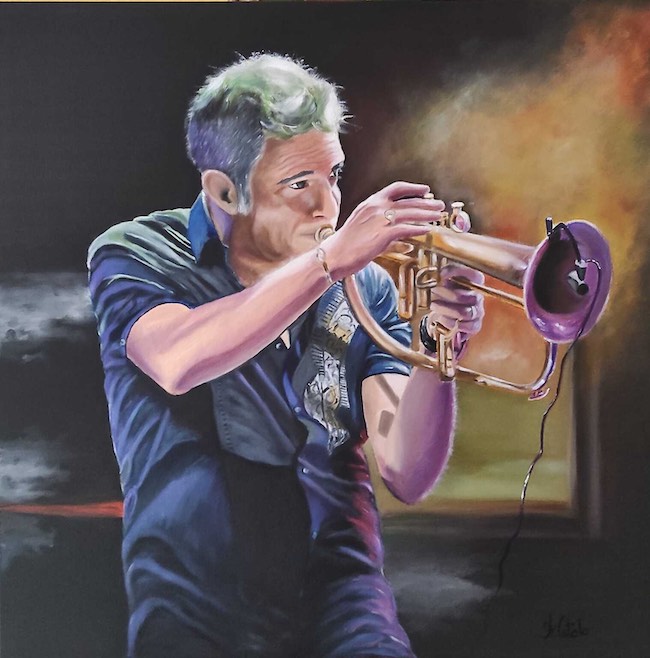
Per quanto riguarda la serie di opere dedicate alla musica, Angela Cutolo esplora ogni tipo di azione, ogni tipo di genere musicale, quasi a sottolineare quanto essenziale sia l’emozione suscitata da questa disciplina artistica non solo tra chi la ascolta ma anche, e soprattutto, per chi la suona; l’autrice mette infatti in evidenza il trasporto dei suonatori, la fusione quasi totale tra le loro mani e gli strumenti con cui eseguono le esibizioni, senza preoccuparsi di tutto ciò che ruota intorno perché ciò che conta è liberare le note e diffondere il coinvolgimento che esse generano. Qui gli sfondi sono sfumati ma reali, gli artisti a volte sono ripresi in strada, altre durante concerti di cui Angela Cutolo evidenzia le atmosfere fumose ma sempre focalizzando l’attenzione sull’energia interiore che si sprigiona nel momento in cui ogni artista tocca il proprio strumento musicale, quello attraverso cui sa di far nascere il tutto dal nulla.
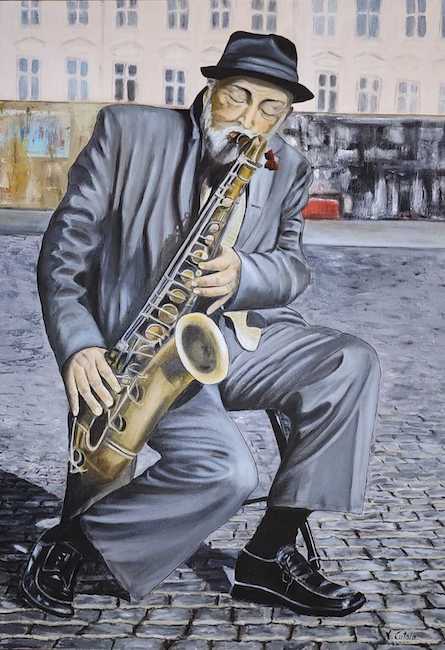
Il dipinto Street in Jazz mostra quel totale rapimento provato dall’uomo mentre suona il sassofono, che emana note magiche in grado di affascinare chiunque passi nei dintorni; tuttavia Angela Cutolo non racconta i passanti che sostano per bearsi della musica, lei si concentra solo e unicamente sull’immagine del musicista, quasi volesse catturare quelle note irriproducibili attraverso un dipinto. Eppure sembra di poter ascoltarne l’eco, in qualche modo l’autrice riesce a trasportare l’osservatore in quel preciso frangente per ammirare la melodia e anche la passione con cui l’elegante signore si dedica alla pratica che lo rende felice.
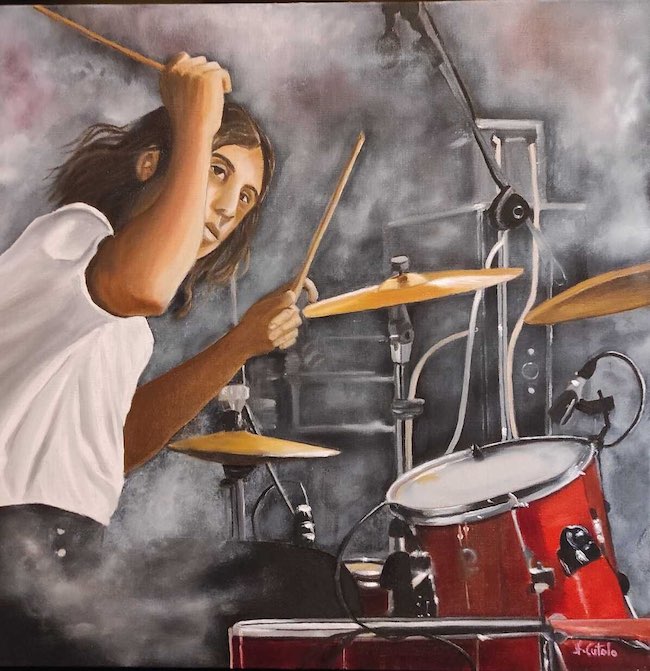
Time to Rock è invece più dinamica, il batterista è nel pieno della sua performance e sta osservando i suoi colleghi della band per essere in piena sintonia con gli altri suoni, ma d’altro canto non può trattenere quella vitalità da cui si sente permeato quando tiene in mano le bacchette e si lascia andare al ritmo che proprio dal suo strumento fuoriesce divenendo fondamentale per l’intera performance concertistica. Qui lo sfondo è quello fumoso del palco e dunque Angela Cutolo avvolge il ragazzo delle sfumature, della sottile nuvola generata dalla nebbia mista a polvere e sudore che contraddistingue quelle performance artistiche.
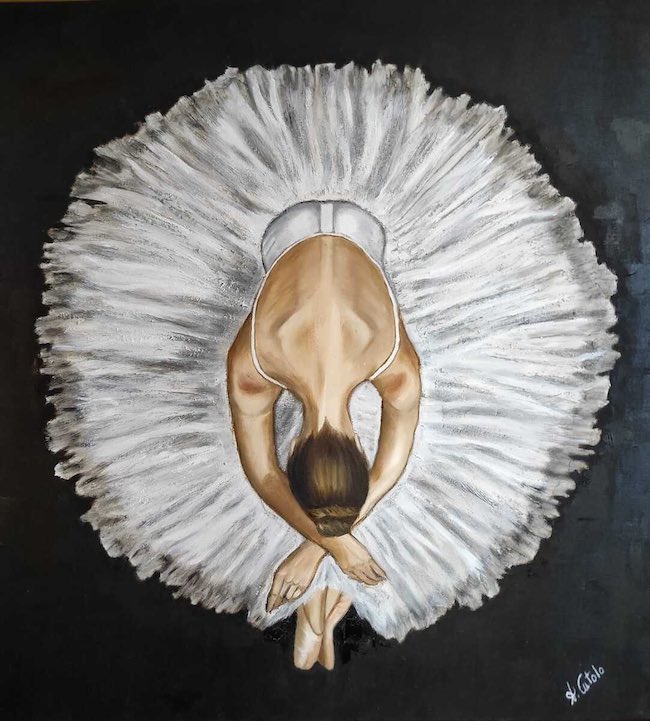
In Anima fragile siamo invece nell’universo della danza classica e l’autrice si immagina con un punto di vista dall’alto, mettendo in evidenza la sofficità del tutù, che si lega simbolicamente alla leggerezza dell’anima, e la posa della ballerina raccolta in se stessa, ripiegata a volersi proteggere e dunque a tutelare una fragilità interiore che non corrisponde alla mancanza di forza, bensì semplicemente a una sensibilità che troppo spesso non trova sufficiente empatia in un esterno troppo cinico e indelicato per non ferirla. Il tratto pittorico di Angela Cutolo si sofferma e sottolinea in particolar modo l’impalpabilità del tutù per evidenziare la delicatezza che l’immagine della giovane donna, in quella particolare posa, non può fare a meno di evocare.
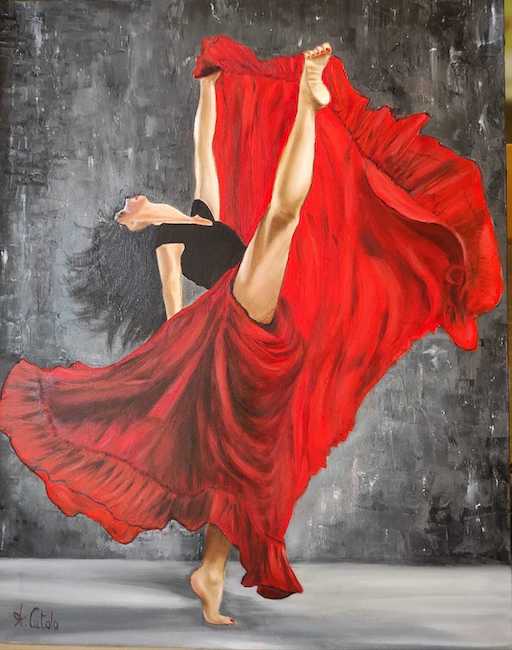
In Voglio vederti danzare invece viene messa in evidenza la forza, la determinazione, la concentrazione nell’eseguire un passo in cui l’equilibrio, la concentrazione e l’espressività del corpo sono fondamentali per il tipo di performance che la giovane sta eseguendo; qui infatti siamo nell’ambito della danza contemporanea dove la tecnica induce le ballerine a rimanere in elevazione, ad alternare morbidezza e rigidità per enfatizzare il flusso energetico che dal corpo deve raggiungere lo spettatore. La passionalità viene sottolineata dalla lunga gonna rossa e si lega a quell’esortazione quasi imperativa del titolo che Angela Cutolo sceglie per denominare l’opera, e si propaga a tutto il corpo e alla posa completamente affine alla sensazione provata dall’autrice nel momento in cui ha posato lo sguardo su quella scena emozionante.
Angela Cutolo è stata educata all’arte dal nonno pittore e nel corso degli anni, da autodidatta, ha sperimentato varie tecniche misurandosi anche con il vetro e la ceramica, oltre che sulla tela, sempre mantenendo il suo approccio realista; ha partecipato a mostre personali e collettive a Roma e nel Lazio, è stata per molti anni artista ospite nelle mostre dell’Associazione Cento Pittori di via Margutta di cui, dal 2025, è diventata socia ordinaria.
ANGELA CUTOLO-CONTATTI
Email: sinaina@libero.it
Sito web: https://lnx.centopittoriviamargutta.it/cutolo-angela/
Facebook: www.facebook.com/amgela.cutolopittrice
The magic of dance and the involvement of music in Angela Cutolo’s Realism
The cultural and artistic world has always been a universal means of cultivating emotions, of letting be carried away by beauty and harmony even in periods when the world around seemed to be moving in a different direction. All artistic expressions have evolved over the decades, adapting to the times and fashions, yet some of them have retained the ability to transcend the centuries while maintaining their original authenticity. This is the case with more figurative painting, but also with dance and music, disciplines that Angela Cutolo blends together in her pictorial approach to celebrate the enchantment and perfection of all manifestations in which the soul rises to listen, to contemplate beauty, and to celebrate everything that allows the individual to set aside everyday life and strive toward a possible extraordinary.
Throughout the history of art, dance has exerted an irresistible fascination on many artists because it combines the grace of movement with the enchantment of music and although several painters had devoted numerous canvases to this discipline even before the mid-19th century, towards the end of the century stood out the work of the Impressionist Edgar Degas stood out who devoted his artistic life to depicting ballet dancers, whose performances he loved to watch both from the audience and from behind the scenes. The lightness and intangibility of the pictorial style typical of Impressionism emphasized the grace and elegance of the protagonists of his paintings, which marked the beginning of a new era in which artists sought to celebrate the pleasures of life. In the United States, it was Everett Shinn, a member of the first American Realism movement, who depicted the world of theater and dance, taking up the theme of Degas‘ ballerinas. But the Fauves art movement also had a great admirer of dancing atmospheres in Matisse, who reinterpreted them in his own essential and stylized style to celebrate the joy that could be found in small things. In the Naïf movement, it was the famous Fernando Botero who dedicated many canvases to tango, closer to his country of birth, while in more contemporary Realism, and still on the subject of tango, Fabian Perez essentially dedicated his entire pictorial production to the representation of dancers in the smoky and fascinating atmospheres of the milongas. The reproduction of musicians immortalized during their performances enjoyed the same popularity, with many great artists of the 20th century dedicating paintings to them, imbued with the passion and enthusiasm felt by the executors during their performances.
Cubism depicted not only musical instruments in its unique and almost analytical way, but also scenes of small concerts that remained etched in art history precisely because of their expressive eccentricity. In the contemporary era, the narrative of musicality focuses in particular on jazz atmospheres, due to the charm of its melodies and also the smoky but incredibly captivating settings that distinguish it, finding in the French expressionist Pierre Farel and the American realist Brent Lynch two of the major artists who have dedicated and continue to dedicate works to jazz evenings, its musicians, its singers, and everything that belongs to the reality of the clubs where this engaging music is played. Where Farel shows a sense of community, describing the shared joy of meeting and socializing in those places, using the characteristic of not describing faces, leaving it to the bodies to express the emotions felt by the characters, Lynch, on the other hand has a strongly realistic style through which he conveys the enthusiasm and passion of singers and musicians as they perform. The Roman painter Angela Cutolo has consolidated over time a realistic pictorial language through which she seeks to bring out the beauty, harmony, and energy of two other artistic disciplines, dance and music, narrating them with a descriptive perfection that initially draws the eye to the visual impact, then to contemplate the harmony of the bodies and movements that appear alive on the canvas, as if the artist were able to immortalize the moment of pause between one step and another, between one note and another, between the before and after of that magical moment to which she has chosen to dedicate a painting.
The color range is real, perfectly consistent with what is observed, but what is striking about Angela Cutolo is her ability to describe the strength of the muscles that contract during the plastic poses she immortalizes, almost as if all the energy needed to lift and hold the body in positions that are as unnatural as they are aesthetically beautiful were spilling out of the canvas; in the works dedicated to dance, the backgrounds are neutral because the evocation is that of the theater stage where the dancers exhibit, guiding the viewer’s attention right to the center of the scene, as if they were under the spotlight that casts the surrounding area into shadow to focus on the action taking place in the foreground. As for the series of works dedicated to music, Angela Cutolo explores every type of action and every type of musical genre, as if to emphasize how essential the emotion aroused by this artistic discipline is, not only for those who listen to it but also, and above all, for those who play it; the author highlights the transport of the musicians, the almost total fusion between their hands and the instruments with which they perform, without worrying about everything else around them because what matters is to release the notes and spread the involvement they generate.
Here the backgrounds are blurred but real, the artists are sometimes photographed in the street, sometimes during concerts, where Angela Cutolo highlights the smoky atmosphere but always focuses attention on the inner energy that is released when each artist touches their musical instrument, that through which they know they can create something out of nothing. The painting Street in Jazz shows the total rapture experienced by the man as he plays the saxophone, which emanates magical notes capable of captivating anyone passing by; however, Angela Cutolo does not depict the passers-by who stop to enjoy the music, she focuses solely and exclusively on the image of the musician, as if she wanted to capture those irreproducible notes through a painting. Yet it seems to hear their echo, somehow the artist manages to transport the observer to that precise moment to admire the melody and also the passion with which the elegant gentleman devotes himself to the practice that makes him happy. Time to Rock is more dynamic, the drummer is in the middle of his performance and is watching his bandmates to be in complete harmony with the other sounds, but on the other hand he cannot hold back the vitality that permeates him when he holds the drumsticks in his hands and lets himself go to the rhythm that flows from his instrument, becoming fundamental to the entire concert performance.
Here, the backdrop is the smoky stage, and so Angela Cutolo envelops the boy in shades, in the subtle cloud generated by the fog mixed with dust and sweat that characterizes those artistic performances. In Anima fragile (Frigile soul) we are in the world of classical dance and the author imagines herself from a bird’s-eye view, highlighting the softness of the tutu, which is symbolically linked to the lightness of the soul, and the pose of the ballerina gathered in on herself, folded over as if to protect herself and thus safeguard an inner fragility that does not correspond to a lack of strength, but simply to a sensitivity that too often finds insufficient empathy in an outside world that is too cynical and indelicate not to hurt her. Angela Cutolo‘s pictorial style lingers and emphasizes in particular the intangibility of the tutu to highlight the delicacy that the image of the young woman, in that particular pose, cannot help but evoke.
In Voglio vederti danzare (I want to see you dance), on the other hand, the emphasis is on strength, determination, and concentration in performing a step in which balance, concentration, and expressivness of the body are fundamental to the type of performance the young woman is executing; here, in fact, we are in the realm of contemporary dance, where technique requires dancers to remain elevated, alternating between softness and rigidity to emphasize the flow of energy that must reach the viewer from the body. The passion is emphasized by the long red skirt and is linked to the almost imperative exhortation of the title that Angela Cutolo chooses to name the work, spreading to the whole body and the pose, which is completely in tune with the feeling experienced by the author when she laid her eyes on that emotioning scene. Angela Cutolo was educated in art by her painter grandfather and, over the years, as a self-taught artist, she has experimented with various techniques, trying her hand at glass and ceramics as well as canvas, always maintaining her realistic approach. She has participated in solo and group exhibitions in Rome and Lazio, and for many years she was a guest artist in the exhibitions of the Associazione Cento Pittori di Via Margutta, of which she became a full member in 2025.