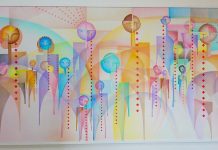


L’epoca contemporanea presenta caratteristiche talmente contrastanti da indurre molti artisti a doversi misurare necessariamente con diverse sfaccettature che possano permettere alla propria natura sensibile di raccontare il proprio punto di vista, quello attraverso cui la pittura e la scultura divengono filtro osservativo e al contempo mezzo emanatore con cui comunicare verso l’esterno. La scelta della cifra stilistica diviene dunque secondaria, anche se funzionale, all’esigenza di narrare tutto ciò che lo sguardo coglie e poi interiorizza lasciando fuoriuscire quelle sensazioni assorbite costituenti il mondo emozionale dentro cui ogni autore si immerge ogni volta che si pone davanti alla tela. Il protagonista di oggi svela una particolare ammirazione verso il mondo femminile, che descrive con tutta l’intensità di un semplice sguardo o di un’inclinazione della testa, senza però trascurare di mettere in evidenza alcuni episodi del tempo presente che hanno profondamente colpito la sua anima.
Il ritratto è stato per lungo tempo predominante nella pittura, e anche nella scultura, delle epoche precedenti a quella considerata moderna, poiché i committenti erano esponenti dell’aristocrazia per cui avere un dipinto eseguito da uno dei protagonisti del mondo artistico dell’epoca era considerato un simbolo di affermazione sociale; la ricerca della perfezione formale e dell’equilibrio estetico induceva tuttavia gli autori pre-ottocenteschi a trascurare quella personalizzazione, quell’interpretazione soggettiva dell’esecutore dell’opera che divenne invece via via più fondamentale a partire dall’Ottocento. Nel momento in cui, in particolare con il Realismo, l’artista cessò di essere un mero esecutore di raffigurazioni in interni e cominciò a uscire interessandosi alla vita più semplice, quella che si poteva intravedere nelle strade tra le persone meno abbienti, tra i lavoratori nei campi e tra chi pur arrangiandosi per sopravvivere riusciva a sorridere, inevitabilmente iniziò a immettere nelle tele il suo punto di vista, le sue impressioni e le sensazioni ricevute.
Sebbene il Realismo sia considerato come un approccio pittorico oggettivo, non si può non considerare quanto le tele di Gustave Courbet, di Jean-Francois Millet e di Antonio Rotta fossero permeate di quell’atmosfera soggettiva proveniente dal sentire profondo dell’autore. Quel movimento costituì un vero e proprio giro di boa nel mondo artistico di metà Ottocento perché fu il fulcro delle interpretazioni successive del Simbolismo, dove si mise in evidenza il rapporto tra essere umano ed energie sottili della natura con cui inevitabilmente egli si trovava a interagire, dell’Impressionismo, in cui la ricerca della resa più impeccabile delle atmosfere reali mise di fatto in primo piano le sensazioni visive che l’esecutore riceveva nel momento in cui si trovava le immagini davanti agli occhi, e la Nuova Oggettività tedesca, fortemente connessa con il Realismo Magicoitaliano, in cui veniva raccontata una forma dentro cui si nascondevano altre intenzioni, emozioni e pensieri intuibili dagli sguardi straniati ed enigmatici dei protagonisti ritratti. Con l’avanzare del Ventesimo secolo e a seguito degli eventi disastrosi generati dai due conflitti mondiali, l’arte cominciò a sfumare i confini inizialmente ben distinti tra i vari movimenti, a mettere al centro della sua ricerca l’essere umano con le sue fragilità e le sue paure che si concretizzarono in un Esistenzialismo trasversale, appartenente cioè a vari stili persino opposti in precedenza come l’Espressionismo e il Realismo, ma che ormai dovevano conciliarsi concettualmente per permettere all’arte di essere più in linea con la ritrovata dimensione del nuovo Umanesimo che dagli orrori delle guerre stava fuoriuscendo.
A quel punto il ritratto si andò perdendo per ampliarsi all’ambiente circostante che era diventato essenziale per il sentire dell’uomo, come nelle atmosfere rarefatte e silenziose del Realismo Americano di Edward Hopper. L’artista di origini leccesi Donato Marra, ormai da anni residente in Svizzera, ritorna alla tradizione del Realismo, a quella tendenza a mettere il ritratto al centro di una ricerca pittorica in cui la resa dell’osservato viene ammorbidita, mediata e arricchita dall’empatia artistica attraverso la quale ogni dettaglio, ogni sguardo, ogni sensazione viene filtrato e rimandato al fruitore dopo essere stato interiorizzato dall’esecutore.
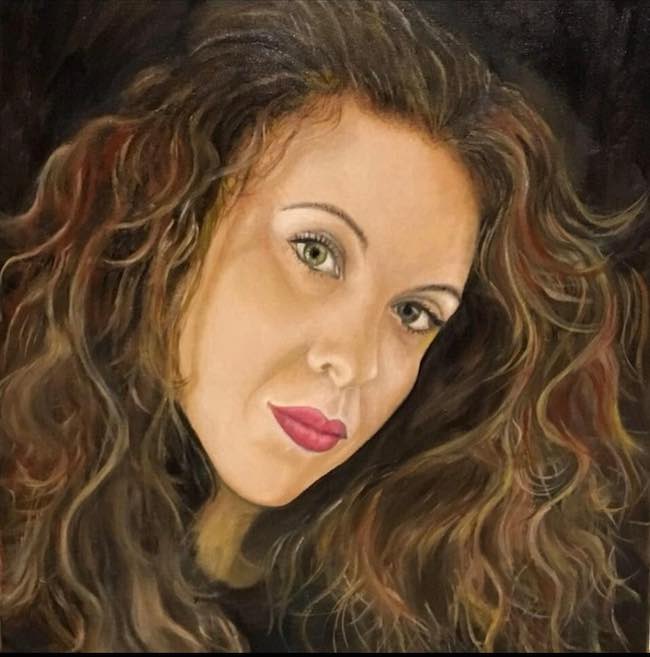
Gli sfondi spesso scuri sono funzionali a non lasciarsi distrarre dalle ambientazioni circostanti bensì mettono in luce l’espressione più autentica, quella che traspare dagli occhi anche quando la posa o l’atteggiamento vorrebbero lasciar intendere tutt’altro; l’attenzione al dettaglio che contraddistingue l’approccio pittorico realista si fonde dunque a quel soggettivismo che aveva cominciato a insinuarsi nell’arte figurativa intorno alla metà dell’Ottocento e che nello stile di Donato Marra trova conferma e spessore.
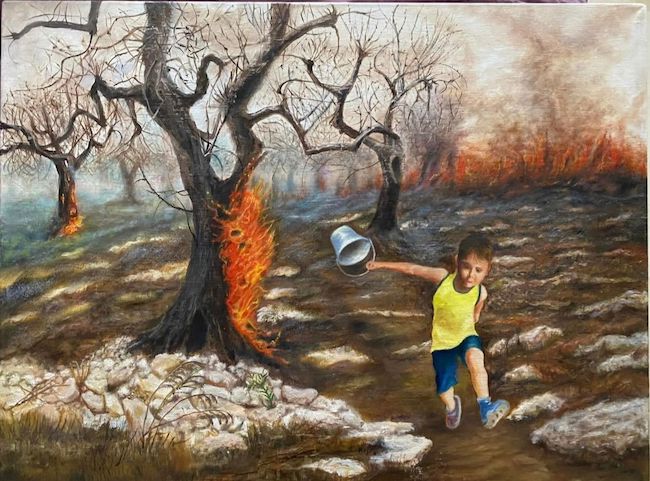
La descrizione esatta e fedele sfuma a volte in un Simbolismo che esclude ogni soprannaturalità, ogni riferimento al mistero inspiegabile nascosto nella natura, piuttosto si sofferma sulla suggestione che emerge da una realtà a volte dolorosa e spiacevole, come se la narrazione amplificasse l’inspiegabilità della miserabilità di un essere umano troppo spesso guidato da arrivismi e dal superficiale egoismo che gli impedisce di rendersi conto di tutte le implicazioni delle sue azioni.
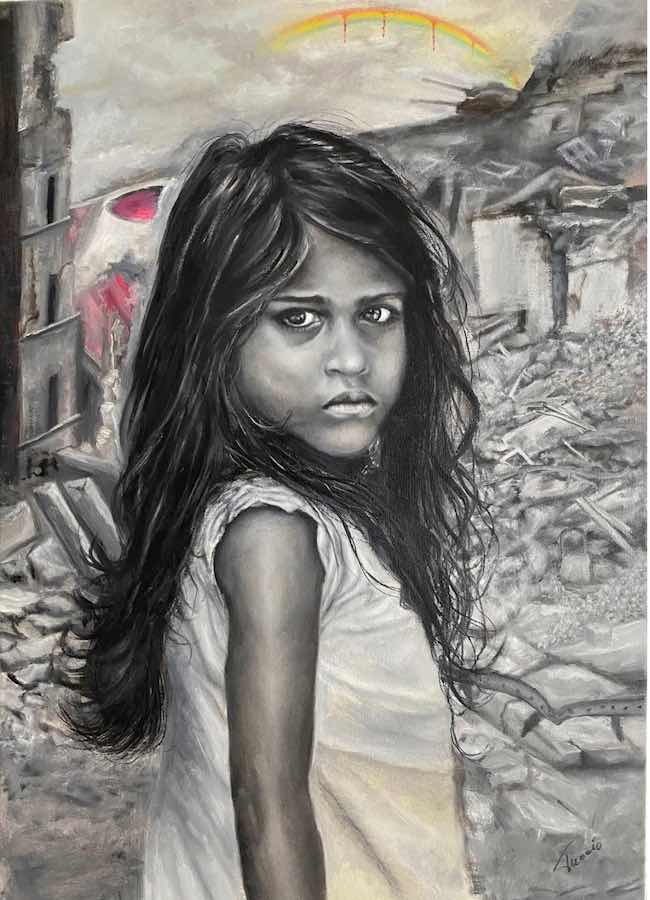
L’opera Macerie nel cuore è forse la più densa di significato della serie di tele presentate in questo testo perché racconta della devastazione che ogni guerra porta con sé, della desolazione e della rabbia che traspare dallo sguardo della bambina in primo piano per essersi vista strappare via l’infanzia, la spensieratezza a causa di adulti che hanno perduto umanità e rispetto per la vita. La scelta della scala di grigi per raccontare le macerie alle spalle della bimba è funzionale a enfatizzare la distruzione più completa di tutto ciò che in precedenza era vita, era traffico nelle strade, era profumo di cibo che fuoriusciva dalle finestre aperte delle abitazioni. Sullo sfondo un arcobaleno, simbolo dell’infanzia e dei sogni, sbiadito e sanguinante eppure con la forza ancora di solcare il cielo plumbeo, quasi Donato Marra volesse suggerire che da qualche parte, prima o poi, sopraggiungerà la possibilità di rinascita anche da quell’orrore.

Altra opera con una forte accezione simbolista, sebbene per ragioni diverse, è La pizzica dove il Realismo sovrappone gli strati di realtà e mette sullo stesso piano visivo la figura di una danzatrice su una pedana costituita dal tamburello tipico del ballo pugliese, e la musicista in dimensioni molto più grandi, dunque quasi decontestualizzata, intenta a lasciarsi guidare dalla magia delle note che escono dal suo violino. La linea comune pertanto è sì il condividere la medesima esibizione ma soprattutto l’emozionalità e la passionalità con cui entrambe eseguono la loro performance, come fossero avvolte e trascinate dal fuoco sacro dell’arte, quella scintilla in grado di amplificare le sensazioni e di trasformare ogni occasione in una connessione con il proprio io più autentico. Qui lo sfondo è scuro, decisamente nero nella base e più sfumato nella parte alta, sottolineando l’ascesa verso l’alto dell’intensità ardente che viene emanata dalle due donne.
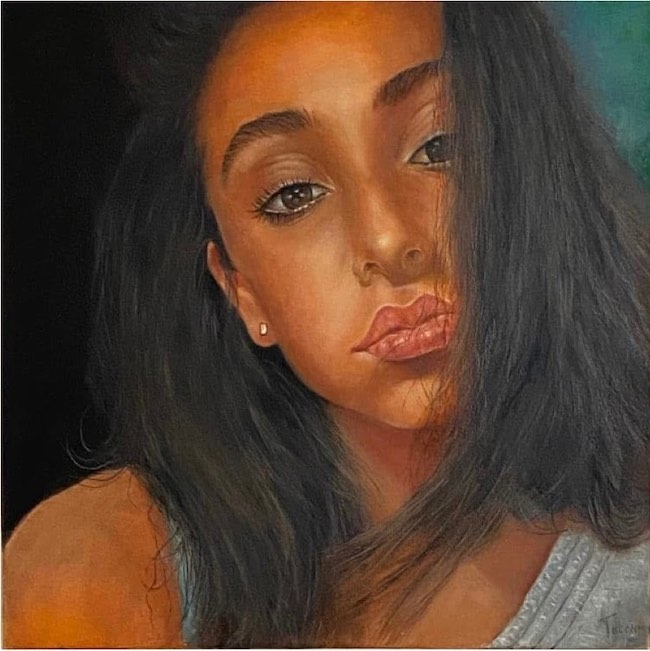
Nel ritratto invece emerge il Realismo più puro, più tradizionale, dove si evidenzia l’attenzione al dettaglio di Donato Marra, la maestria nella descrizione dei particolari più minuti eppure fondamentali nella resa complessiva delle tele come nel dipinto Elisa dove i capelli che incorniciano il volto della protagonista divengono cornice perfetta del punto focale dell’immagine, quello sguardo di cui l’autore mette in luce la profondità. Malgrado l’apparenza annoiata e forse un po’ spavalda, come spesso gli adolescenti sanno essere, ciò che colpisce è la luminosità che si cela dietro il marrone degli occhi attraverso i quali si svela una natura completamente diversa, timida, dolce, riflessiva e bisognosa di rassicurazioni su un futuro che appare troppo incerto alla sua età. Lo sfondo nero sembra scomparire al cospetto della presenza predominante della figura femminile, come se persino il buio si facesse da parte davanti alla purezza e alla freschezza di una vita all’inizio del suo cammino.
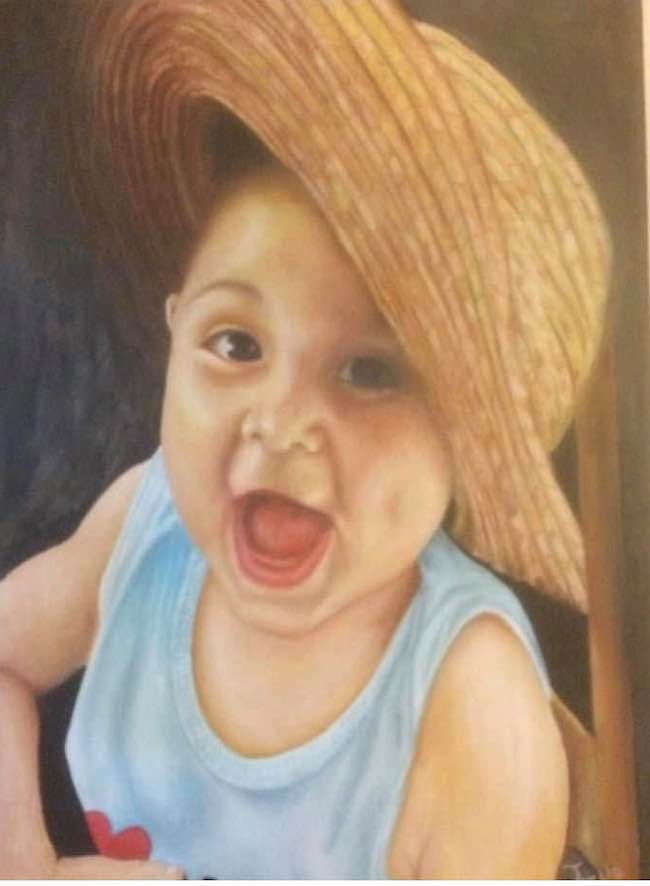
In Joele a essere protagonista è invece un bambino di cui Donato Marra coglie l’immediatezza, la spontaneità senza alcuno dei filtri che si vanno a stratificare man mano che si consolida il percorso di crescita; il sorriso del bambino è contagioso, riempie la superficie dell’opera e ne fuoriesce, come se quella serenità fosse un suggerimento per l’adulto di portare sempre con sé quella parte gioiosa e spensierata dell’infanzia, quell’appagamento legato alle piccole cose che l’uomo contemporaneo dimentica troppo velocemente in una società in cui tutto deve avere uno scopo materiale, un fine ultimo completamente distante dalla vera essenza.
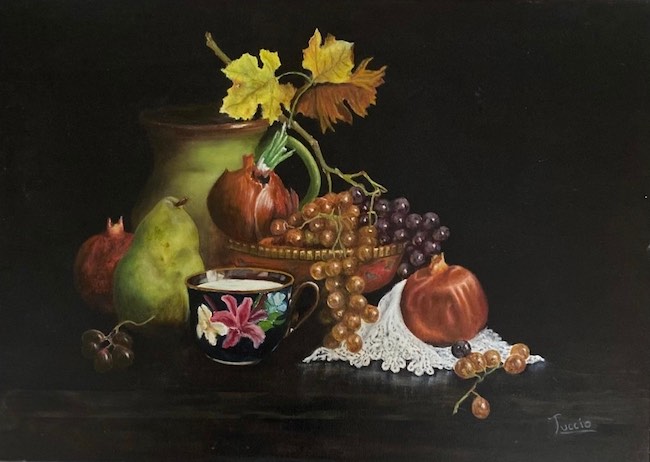
Donato Marra, che dipinge prevalentemente con la tecnica a olio, ha al suo attivo la partecipazione a mostre collettive in Italia e all’estero.
DONATO MARRA-CONTATTI
Email: donato.marra@yahoo.com
Facebook: www.facebook.com/donato.marra.94
Instagram: www.instagram.com/marra.donato/
Intense portraits of Realism by Donato Marra, blending an admiring observation of the female world with flashes of contemporary relevance
The contemporary era presents such contrasting characteristics that it compels many artists to grapple with diverse facets that allow their sensitive nature to articulate their own point of view, the one through which painting and sculpture become both an observational filter and a medium for communicating outwardly. The choice of stylistic signature thus becomes secondary, even if functional, to the need to narrate everything the gaze captures and then internalizes, allowing to emerge those absorbed sensations that constitute the emotional world into which every artist immerses each time he stands before the canvas. Today’s protagonist reveals a particular admiration for the female world which he depicts with all the intensity of a simple glance or a tilt of the head, without neglecting to highlight certain episodes of the present time that have deeply touched his soul.
Portrait dominated for a long time dominated painting, and also sculpture, in the periods preceding the modern era, since buyers were members of the aristocracy for whom having a painting created by one of the leading figures of the art world of the time was considered a symbol of social status; the pursuit of formal perfection and aesthetic balance, however, led pre-nineteenth-century artists to neglect that personalization, that subjective interpretation by the artist, which instead became increasingly fundamental starting in the Nineteenth century. At the moment when, particularly with Realism, the artist ceased to be a mere executor of interior scenes and began to venture out taking an interest in simpler life, the one that was possible to see in the streets among the less wealthy, among field workers, and among those who while struggling to survive still managed to smile, he inevitably began to incorporate his own perspective, impressions, and sensations into his canvases.
Although Realism is considered an objective painterly approach, one cannot help but note how deeply the canvases of Gustave Courbet, Jean-François Millet, and Antonio Rotta were imbued with that subjective atmosphere stemming from the artist’s deepest feelings. That movement marked a true turning point in the art world of the mid-19th century because it served as the cornerstone for subsequent interpretations of Symbolism, which highlighted the relationship between human beings and the subtle energies of nature with which they inevitably interacted, of Impressionism, in which the quest for the most flawless rendering of real atmospheres effectively brought to the forefront the visual sensations that the the artist received the moment the images appeared before their eyes, and German New Objectivity, closely linked to Italian Magic Realism, which depicted a form concealing other intentions, emotions, and thoughts that could be intuited from the alienated and enigmatic gazes of the portrayed subjects.
As the Twentieth century progressed and after the disastrous events generated by the two world wars, art began to blur the initially well-defined boundaries between the various movements, placing at the center of its exploration the human being with all his fragility and fears which concretized into a transversal Existentialism, that is, belonging to various styles that had previously been even opposed, such as Expressionism and Realism, but which now had to reconcile conceptually to allow art to be more in line with the rediscovered dimension of the new Humanism that was emerging from the horrors of war. At that point the portrait began to fade, giving way to the surrounding environment, which had become essential to the man’s sensibility, much like the rarefied and silent atmospheres of Edward Hopper’s American Realism.
The artist Donato Marra, originally from Lecce and now a long-time resident of Switzerland, returns to the tradition of Realism, to that tendency to place the portrait at the center of a painterly exploration in which the depiction of the subject is softened, mediated and enriched by artistic empathy through which every detail, every gaze, every sensation is filtered and conveyed to the viewer after being internalized by the artist. The often-dark backgrounds serve to prevent distraction from the surrounding settings, instead highlighting the most authentic expression, the one that shines through the eyes even when the pose or the attitude might suggest something entirely different; the attention to detail that characterizes the realist painterly approach thus merges with the subjectivism that had begun to creep into figurative art around the mid-19th century and which finds confirmation and depth in Donato Marra’s style.
The precise and faithful description sometimes gives way to a Symbolism that excludes any supernatural element, any reference to the inexplicable mystery hidden in nature, rather, it dwells on the suggestion that emerges from a reality that is at times painful and unpleasant, as if the narrative were amplifying the inexplicability of the misery of a human being too often driven by ambition and superficial selfishness that prevents him from realizing all the implications of his actions. The artwork Macerie nel cuore is perhaps the most profound in meaning among the series of canvases presented in this text because it tells of the devastation that every war brings with it, of the desolation and anger that shine through the gaze of the little girl in the foreground who has seen her childhood and carefree spirit torn away by adults who have lost their humanity and respect for life. The choice of a gray scale to depict the rubble behind the girl serves to emphasize the complete destruction of everything that once was life, traffic on the streets, scent of food wafting from the open windows of homes.
In the background, a rainbow, symbol of childhood and dreams, faded and bloodstained, yet still powerful enough to cut through the leaden sky, as if Donato Marra were suggesting that somewhere, sooner or later, the possibility of rebirth will emerge even from that horror. Another work with a strong symbolist connotation, though for different reasons, is La pizzica, where Realism overlays layers of reality and places on the same visual plane the figure of a dancer on a platform formed by the tambourine typical of Apulian dance, and the musician in much larger dimensions, thus almost decontextualized, intent on letting herself be guided by the magic of the notes emerging from her violin. The common thread, therefore, is of course the sharing of the same performance, but above all the emotionality and passion with which both execute their performance, as if enveloped and carried away by the sacred fire of art, that spark capable of amplifying sensations and transforming every occasion into a connection with one’s most authentic self. Here the background is dark, decidedly black at the base and more nuanced at the top, emphasizing the upward ascent of the fiery intensity emanating from the two women.
In the portrait however emerges the purest, most traditional Realism, highlighting Donato Marra’s attention to detail and his mastery in depicting the minutest yet most fundamental particulars in the overall rendering of the canvases, as in the painting Elisa, where the hair framing the protagonist’s face becomes the perfect frame for the focal point of the image, that gaze whose depth the artist brings to light. Despite her appearance bored and perhaps slightly, as teenagers often can be, what strikes the viewer is the radiance hidden behind the brown of her eyes, through which is revealed a completely different nature, shy, sweet, reflective, and in need of reassurance about a future that seems too uncertain at her age. The black background seems to fade away in the face of the female figure’s dominant presence, as if even the darkness were stepping aside before the purity and freshness of a life just beginning its journey. In Joele however, the protagonist is a child whose immediacy and spontaneity Donato Marra captures without any of the filters that accumulate as the journey of growing up takes shape; the child’s smile is contagious, it fills the surface of the work and spills over, as if that serenity were a suggestion for adults to always carry with them that joyful, carefree part of childhood, that fulfillment tied to the little things that contemporary people forget too quickly in a society where everything must have a material purpose, an ultimate goal completely detached from true essence. Donato Marra, who paints primarily in oils, has participated in group exhibitions in Italy and abroad.