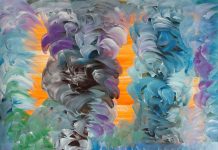

Spesso l’espressione pittorica non riesce a soffermarsi solo e unicamente sull’immagine osservata, sulla sua riproduzione o sul distacco da essa attraverso l’adozione di uno stile completamente privo di forma, bensì ha bisogno di andare a esplorare i concetti più analitici e scientifici che possono rivelarsi attraverso esplicitazioni decisamente particolari e funzionali a permettere, agli autori che hanno questo tipo di approccio, di seguire il loro filo logico ed esplorativo in virtù del quale a essere predominante su qualsiasi aspetto formale è proprio l’esplicazione di quelle teorie narrative. Tanto quanto accadde nelle correnti avanguardiste del primo Novecento, Fred Ama scende all’interno del significato semplicistico del fare arte, perché per lui non è possibile restare legati alla bidimensionalità della tela e alla sua funzione puramente decorativa, né si può galleggiare sulla superficie di un visibile che può essere conosciuto e scoperto solo andando a togliere graudalmente gli strati che lo compongono.
I primi decenni del Ventesimo secolo furono letteralmente una fucina di idee e di sperimentazioni che determinarono un cambiamento radicale nel modo di intendere l’arte e il gesto plastico che non poteva più rispondere alle regole tradizionali, sia in virtù delle innovazioni esecutive già sperimentate alla fine dell’Ottocento, sia perché il progresso che stava attraversando il mondo civilizzato e la velocità con cui si susseguivano le scoperte tecnologiche necessitavano trovare spazio anche nella disciplina artistica. I movimenti più radicali ampliarono le teorie sulla scomposizione dell’immagine, legata solo e unicamente al tratto della pennellata nell’Impressionismo, estremizzandole ed enfatizzandole attraverso sperimentazioni che permettessero di creare stili moderni, al passo con i tempi e distanti da un’osservazione oggettiva della realtà. A compiere le rivoluzioni più incisive, pur rimanendo connessi al visibile, furono due movimenti formalmente vicini ma concettualmente e cromaticamente distanti, il Futurismo e il Cubismo, poiché mentre il primo voleva sottolineare l’ottimismo e la fiducia verso il domani che si andava delineando e cercare un modo per rappresentare la rapidità di una vita segnata da ritmi completamente diversi dai precedenti, il Cubismo invece si concentrò sulla realizzazione di piani visivi che potessero mostrare al fruitore la visione simultanea delle tre dimensioni. Dunque il Futurismo introdusse il movimento mentre il Cubismo mostrò come l’arte potesse essere stravolta nella forma e divenire oggetto di studio, di analisi e di approfondimento scientifico il cui risultato era un aspetto insolito ma incredibilmente affascinante. Il medesimo atteggiamento analitico fu adottato dai grandi maestri fondatori dell’Arte Astratta in tutte le sue sfaccettature, da quella più rigorosa del De Stijl a quella più emozionale dell’Astrattismo Lirico, mostrando come attraverso la logica e lo studio un dipinto potesse essere molto di più di una mera riproduzione di ciò che lo sguardo poteva cogliere intorno a sé, diventando piuttosto ricerca approfondita sul senso più intrinseco e profondo dell’atto plastico. Quel tipo di procedimento mentale fu lo stesso che indusse gli autori aderenti ad altri movimenti più o meno coevi, come il Dadaismo, la Bauhaus, l’Arte Povera fino ad arrivare alla successiva Computer Art, a esplorare il rapporto con l’esterno, con ciò che deve accogliere o che può divenire sorprendentemente arte, compresa la correlazione tra discipline apparentemente isolate le une dalle altre eppure in grado di entrare in sinergia. Malgrado nell’epoca contemporanea sia prevalentemente scomparsa l’attitudine degli artisti a riunirsi per creare gruppi che portino avanti linee guida comuni e identificative, vi sono tuttavia autori che hanno bisogno di sperimentare nuovi linguaggi, inediti modi di interpretare un’arte che sembra aver già detto tutto, e lo fanno in maniera autonoma, indipendente e solitaria; questo è il caso del cileno Fred Ama che studia e approfondisce le tematiche estrapolate dal Cubismo per scendere verso un’analisi più attuale, più evoluta perché figlia di un tempo diverso che sa attingere al passato senza divenirne riproduzione bensì creando un filone di pensiero nuovo e maturo proprio in virtù dello studio delle esperienze precedenti.
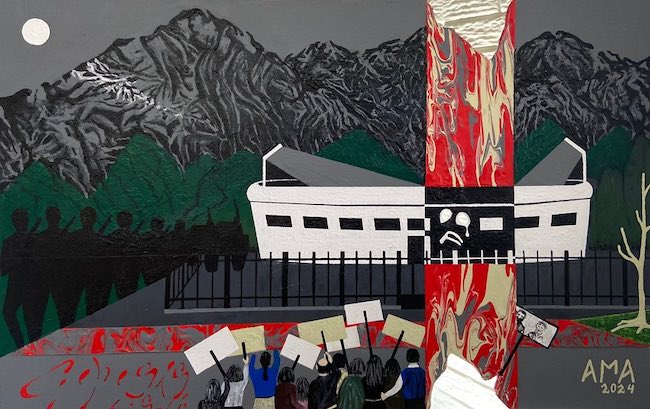
Dal punto di vista puramente formale le sue opere sono suddivise in maniera quasi netta tra Suprapittorialismo, un concetto per il quale la pittura e la non pittura, lo sfondo e il non sfondo, la non tela e la parete sono uniti quasi allo stesso modo in cui il Dadaismo concentrava i suoi sforzi sulla rappresentazione della non-arte, e la Deep Painting che oltrepassa il Cubismo in cui le superfici erano raffigurate nello stesso piano visivo introducendo il concetto di simultaneità e di annullamento della prospettiva, per tendere verso un’esigenza di profondità intesa nel senso di scendere allo strato più essenziale del visibile, letteralmente spogliando l’immagine di tutti i livelli che la compongono.
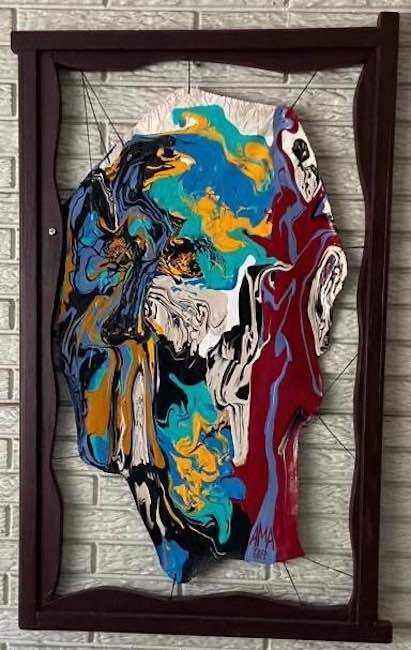
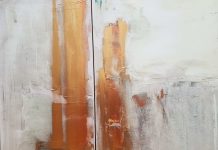
Laddove il Suprapittorialismo può spaziare da una figurazione espressionista e cupa nella gamma cromatica perché necessitante di raccontare nella maniera più diretta e cruda possibile le difficoltà e le problematiche appartenenti al vivere contemporaneo, oppure scegliere un approccio informale dove a essere messo in evidenza è il rapporto tra opera e spazio circostante dove essa si incastona in maniera insolita nei bordi e nelle cornici talvolta con parti vuote per cui il muro entra a far parte della tela, la Deep Painting ha bisogno invece di una narrazione più affine alla realtà per mostrare come la destrutturazione compiuta da Fred Ama sia in grado di scendere fino in fondo allo scheletro delle cose.
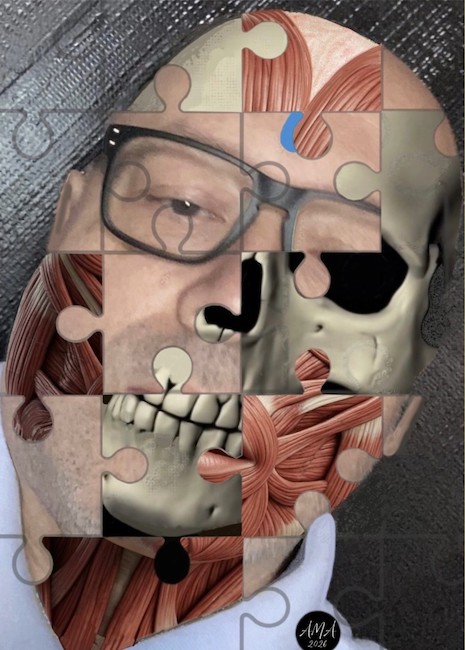
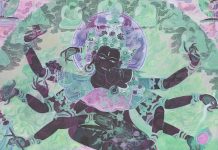
Esattamente come in Deep Self Portait dove l’autore rappresenta un se stesso suddiviso in sezioni del piano frontale, come se queste fossero tessere di un puzzle alcune delle quali scavate su diversi livelli di profondità che mostrano il tessuto muscolare e osseo sottostante. Questo approccio diventa un mezzo di conoscenza, un’esperienza di arricchimento che va oltre ciò che può essere visto e scende verso un’esplorazione e una consapevolezza più profonda. La filosofia del Deep Painting sfida la convenzione della realtà osservabile che rimane superficiale e interpretabile, per andare a scoprire, in modo analitico e scientifico, ciò che si trova al di sotto, parallelamente a quanto compiuto da altri artisti che invece si immergono nel mondo dell’anima e delle emozioni; Fred Ama mostra così quanto anche attraverso la riflessione e il rigore della mente e della logica possa essere possibile percorrere un cammino di approfondimento similare sebbene diverso nel risultato visibile.
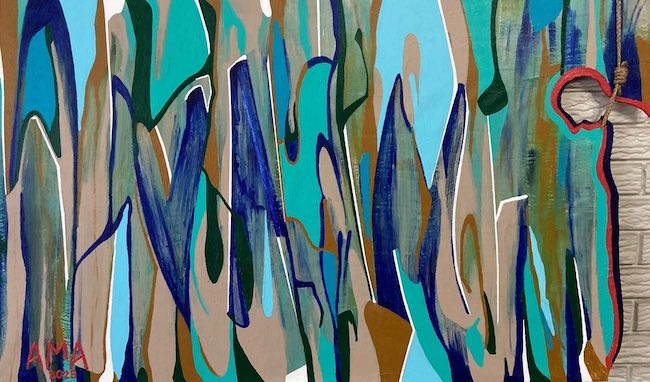
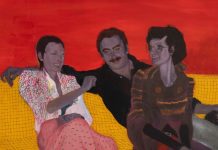
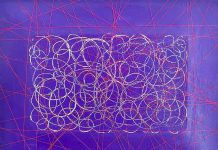
El Ahorcado, así, cerca de la vida surge la muerte è una tipica opera suprapittorialista poiché accanto alla parte informale in cui le linee quasi geometriche e in colori diversi accostati gli uni agli altri come a creare un senso di caos, di confusione che circonda il protagonista, Fred Ama prepara lo sguardo al vuoto con il quale descrive l’individuo che dà il titolo al dipinto, un impiccato che forse non è riuscito ad adattarsi al brusio, al giudizio, al formalismo superficiale del vivere contemporaneo. Il personaggio non è dipinto, bensì rappresentato in negativo attraverso il vuoto, la tela è stata ritagliata per permettere al muro di entrare a far parte dell’opera, mostrando quanto la continuità con lo spazio circostante sia armonica e possibile perché la parete è parte attiva del significato stesso dell’opera. Ma a contraddistinguere la produzione pittorica di Fred Ama è anche un’analisi cruda, disincantata, sociologica sul vivere contemporaneo, messo in evidenza attraverso personaggi deformi i cui volti esprimono tutto il loro disagio e che possono essere ricollegati, dal punto di vista figurativo, al primo Cubismo di Pablo Picasso, e anche attraverso colori scuri, forti contrasti e una bidimensionalità fumettistica dalla quale però non può fare a meno di fuoriuscire la chiara critica a una società troppo crudele, troppo noncurante delle esigenze del singolo perché concentrata a creare un’inquietante omologazione.
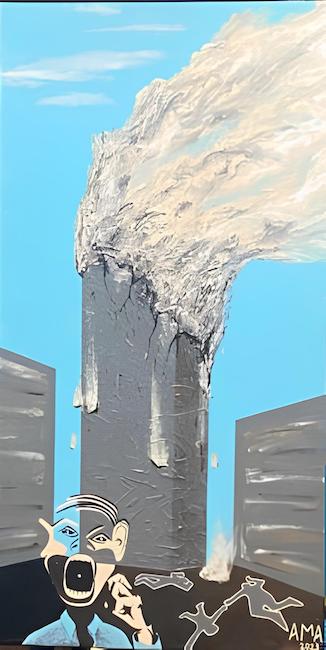
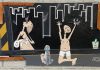
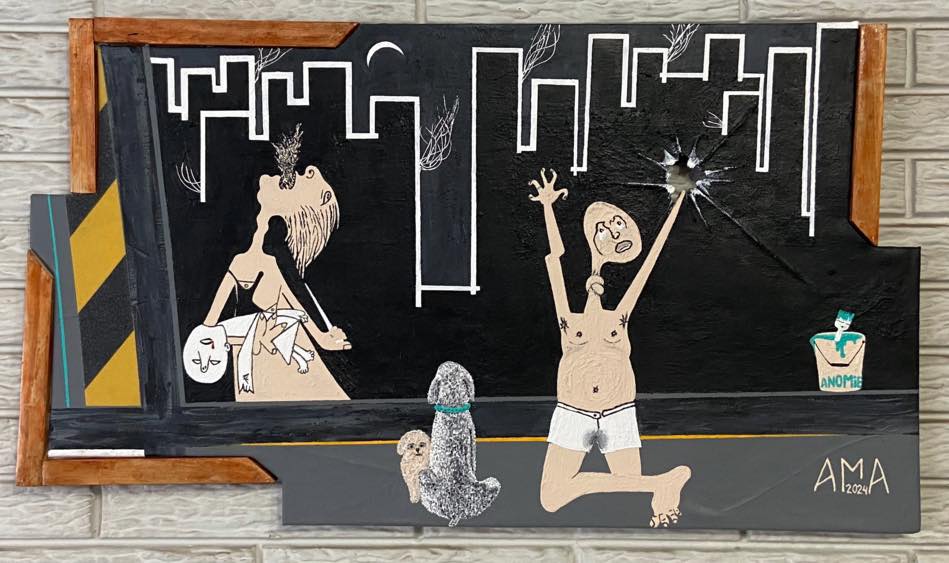
A questa serie di lavori appartiene Tears Rain 2 in cui Fred Ama esplora la connessione tra la disperazione di un evento recente, come la distruzione delle torri gemelle del 2001, e la sensazione simile provata dalla gente di un secolo fa, quando le persone avevano a che fare con le devastazioni delle guerre mondiali e gli artisti non potevano fare a meno di misurarsi con quelle stesse emozioni. Il personaggio nell’opera infatti ricorda, nel suo grido e nella sua espressione di terrore, l’uomo dell’Urlo di Edvard Munch, ma in questo caso la sua espressione non è generalizzata o appartenente a un malessere interiore che prescinde da un episodio specifico, piuttosto qui è contestualizzata all’evento disastroso e orribile che si sta verificando davanti allo sguardo del protagonista, generando morte e devastazione di uno dei simboli della civiltà occidentale. La sua immagine è in trasparenza, come se l’autore volesse sottolineare quanto egli sia sopravvissuto per un solo soffio, mettendo in luce anche la tematica dell’esiguità della vita umana che può essere annullata a causa della follia di qualcuno.
Fred Ama, laureatosi a Santiago del Cile in Filosofia e in Arte, ha teorizzato e creato movimenti pittorici d’avanguardia che puntano ad ampliare i confini della visualità, tra cui il Suprapittorialismo, il Neo-posterismo e la Deep-Painting; le sue prime esposizioni e installazioni sperimentali legate alla ridefinizione del rapporto figura-sfondo e dello spazio della parete di supporto sono nate all’interno dei percorsi di ricerca visuale della Pontificia Università Cattolica del Cile (PUC), successivamente ha esposto in Italia, in Argentina e in Cile.
FRED AMA-CONTATTI
Email: fredama.art@gmail.com
Sito web: https://fredama.art/
Facebook: www.facebook.com/FredAMA.Art/
Instagram: www.instagram.com/fredama.art/
Fred Ama’s disenchanted and raw perspective, between Suprapictorialism and Deep Painting to explore the very essence of art
Often pictorial expression cannot limit solely to the observed image, its reproduction, or a detachment from it through the adoption of a style completely devoid of form, rather, it has to explore the more analytical and scientific concepts that can be revealed through distinctly specific and functional representations, allowing artists who adopt this approach to follow their logical and exploratory thread, by virtue of which the elaboration of those narrative theories takes precedence over any formal aspect. Just as occurred in the avant-garde movements of the early twentieth century, Fred Ama delves into the simplistic meaning of making art, because for him it is not possible to remain bound to the two-dimensionality of the canvas and its purely decorative function, nor can one float on the surface of a visible reality that can be known and discovered only by gradually peeling away the layers that compose it.
The first decades of the Twentieth century were literally a hotbed of ideas and experimentation that brought about a radical change in the way art and the plastic gesture were understood, a change that could no longer conform to traditional rules both because of the technical innovations already explored in the late nineteenth century, and because the progress sweeping through the civilized world and the rapid succession of technological discoveries required a place within the realm of art as well. The most radical movements expanded upon theories regarding the decomposition of the image, which in Impressionism had been linked solely to the brushstroke, taking to extremes and emphasizing them through experiments that enabled the creation of modern styles in pace with the times and diverged from an objective observation of reality.
The most incisive revolutions, even if remaining connected to the visible, were carried out by two movements formally similar but conceptually and chromatically distant, Futurism and Cubism, because while the former sought to emphasize optimism and confidence in the emerging future and to find a way to represent the rapid pace of a life marked by rhythms completely different from those of the past, Cubism, on the other hand, focused on creating visual planes that could offer the viewer a simultaneous perception of all three dimensions. Thus Futurism introduced movement while Cubism demonstrated how art could be radically transformed in form and become the subject of study, analysis, and scientific inquiry resulting in an unusual yet incredibly fascinating appearance.
The same analytical approach was adopted by the great founding masters of Abstract Art in all its facets, from the most rigorous De Stijl to the more emotional Lyrical Abstraction, demonstrating how through logic and study a painting could be much more than a mere reproduction of what the eye could perceive around it, becoming instead an in-depth exploration of the most intrinsic and profound meaning of the plastic act. That same mental process was what led artists affiliated with other more or less contemporary movements, such as Dadaism, the Bauhaus, Arte Povera, and even the subsequent Computer Art, to explore their relationship with the external world, with what it must embrace or what can surprisingly become art, including the interrelationship between disciplines that appear isolated from one another yet are capable of entering into synergy. Although in the contemporary era the tendency for artists to come together to form groups that pursue common, defining principles has largely disappeared, there are nevertheless artists who feel the need to experiment with new languages, unprecedented ways of interpreting an art form that seems to have already said it all, and they do so autonomously, independently, and on their own; this is the case with the Chilean artist Fred Ama, who studies and explores themes drawn from Cubism to arrive at a more contemporary, more evolved analysis born of a different era that draws on the past without merely reproducing it, but rather creates a new and mature line of thought precisely through the study of previous experiences. From a purely formal standpoint, his works are divided almost sharply between Suprapictorialism, a concept in which painting and non-painting, background and non-background, non-canvas and wall are united in much the same way that Dadaism focused its efforts on the representation of non-art, and Deep Painting which goes beyond Cubism, where surfaces were depicted on the same visual plane, by introducing the concept of simultaneity and the elimination of perspective, in order to move toward a demand for depth understood as descending to the most essential layer of the visible, literally stripping the image of all the levels that compose it.
While Suprapictorialism can range from an expressionist figurative style with a somber color palette, necessitary for the need to depict the difficulties and issues of contemporary life in the most direct and raw manner possible, or choose an informal approach that highlights the relationship between the artwork and the surrounding space where the piece is set in an unusual way against edges and frames, sometimes incorporating empty areas so that the wall itself becomes part of the canvas, Deep Painting, on the other hand, requires a narrative closer to reality to demonstrate how the deconstruction carried out by Fred Ama is capable of delving all the way down to the very skeleton of things. Exactly as in Deep Self-Portrait, where the artist depicts himself divided into sections on the frontal plane, as if these were pieces of a puzzle, some of which are carved out at different depths, revealing the underlying muscle and bone tissue. This approach becomes a means of knowledge, an enriching experience that goes beyond what can be seen and delves into a deeper exploration and awareness. The philosophy of Deep Painting challenges the convention of observable reality, that remains superficial and open to interpretation, to go and discover through analytical and scientific means what lies beneath, in parallel with the work of other artists who, instead, immerse themselves in the world of the soul and emotions; Fred Ama thus demonstrates how, even through reflection and the rigor of the mind and logic, it is possible to embark on a similar path of exploration, albeit one that yields a different visible result.
El Ahorcado, así, cerca de la vida surge la muerte is a typical example of suprapictorialist art for alongside the informal element in which nearly geometric lines in different colors are juxtaposed to create a sense of chaos and confusion surrounding the protagonist, Fred Ama prepares the viewer’s gaze for the void through which he depicts the individual who gives the painting its title, a hanged man who perhaps failed to adapt to the clamor, the judgment, and the superficial formalism of contemporary life. The figure is not painted but rather represented in negative through the void, the canvas has been cut out to allow the wall to become part of the work, demonstrating how harmonious and natural the continuity with the surrounding space is, since the wall is an active component of the work’s very meaning. But what also distinguishes Fred Ama’s paintings is a raw, disenchanted, sociological analysis of contemporary life, highlighted through deformed figures whose faces express all their distress and which, from a figurative standpoint, can be linked to Pablo Picasso’s early Cubism, as well as through dark colors, strong contrasts, and a comic-book-like two-dimensionality from which, however, emerge inevitably a clear critique of a society that is overly cruel and indifferent to the needs of the individual, focused instead on creating a disturbing uniformity.
To this series of artworks belongs Tears Rain 2 in which Fred Ama explores the connection between the despair caused by a recent event, such as the destruction of the Twin Towers in 2001, and the similar feelings experienced by people a century ago, when they were grappling with the devastation of the world wars and artists could not help but confront those same emotions. In fact, the figure in the painting, in his scream and expression of terror, is reminiscent of the man in Edvard Munch’s The Scream, but in this case his expression is not generalized or rooted in an inner malaise unrelated to a specific episode, rather here it is contextualized within the disastrous and horrific event unfolding before the protagonist’s eyes, bringing death and devastation to one of the symbols of Western civilization.
His image is rendered transparent, as if the artist wished to underline how he survived by the skin of his teeth, while also highlighting the fragility of human life which can be wiped out by the madness of a single individual. Fred Ama, who earned degrees in Philosophy and Art in Santiago of Chile, has theorized and created avant-garde painting movements that aim to expand the boundaries of visuality, including Suprapictorialism, Neo-Posterism, and Deep-Painting; his early exhibitions and experimental installations focused on redefining the figure-ground relationship and the space of the supporting wall, emerged from visual research programs at the Pontifical Catholic University of Chile (PUC); he subsequently exhibited in Italy, Argentina, and Chile.